Betaseron Kit
Product Images NDC 50419-524

15 FDA label images from Bayer Healthcare Pharmaceuticals Inc. · Packaging, Regulatory Labels, and Product Appearance

Product Visual Gallery

This gallery contains 15 technical images submitted to the FDA as part of the official labeling for Betaseron (NDC 50419-524). Unlike standard consumer photos, these assets often include clinical data figures, molecular chemical structures, and official manufacturer packaging layouts.

As provided by Bayer Healthcare Pharmaceuticals Inc., these visuals offer a comprehensive scientific overview of the product's physical and chemical identity, aiding pharmacists and researchers in product verification and study.

FDA Label Image

Figure_1 (4b57da8f 163c 4ff7 95c8 849d9c77653d 01)

Figure_1 (4b57da8f 163c 4ff7 95c8 849d9c77653d 01)
A bar chart comparing percent change in MRI lesion area between Betaseron 0.25 mg and placebo groups. The chart shows the distribution percentage of patients with various ranges of change in MRI area, indicating a median change of -1.1% for Betaseron (n=95) and +16.5% for placebo (n=100). The x-axis represents percent change ranges, while the y-axis shows the percentage of patients.*
FDA Label Image

Figure_2 (4b57da8f 163c 4ff7 95c8 849d9c77653d 02)

Figure_2 (4b57da8f 163c 4ff7 95c8 849d9c77653d 02)
A Kaplan-Meier plot comparing the percentage of second exacerbations over time between Betaseron (interferon beta-1b) and placebo groups. The graph shows cumulative exacerbation percentages from Day 0 to Day 710, indicating a lower incidence for Betaseron compared to placebo, with statistical significance (p < 0.0001) and a hazard ratio of 0.53.*
FDA Label Image

Figure Betaseron Single-use Pdp (Image 01)

Figure Betaseron Single-use Pdp (Image 01)
Betaseron (interferon beta-1b) 0.3 mg per vial injection kit carton by Bayer HealthCare Pharmaceuticals Inc. The label indicates the product is for subcutaneous injection and contains a single-use vial with a 0.3 mg dosage per vial. The carton includes instructions for use and storage and states no U.S. standard of potency applies.*
FDA Label Image

Figure A (Image 02)

Figure A (Image 02)
An instructional illustration labeled Figure A showing components of a Betaseron kit, including a vial, alcohol prep pads, a pre-filled diluent syringe, a vial adapter with a 30 gauge needle attached, and a puncture-resistant sealable container noted as not provided within the package.*
FDA Label Image

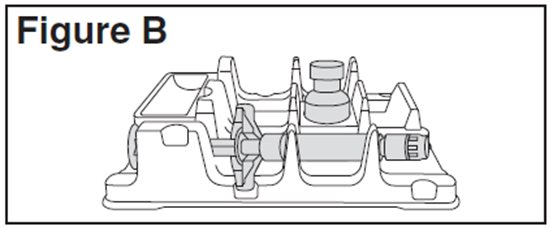
Figure B (Image 03)

Figure B (Image 03)
An illustration labeled Figure B showing a tray with compartments holding various medical components. The components include what appear to be vials and syringes arranged in a molded plastic holder, likely part of a pharmaceutical kit for administration.*
FDA Label Image

Figure C (Image 04)

Figure C (Image 04)
Figure C is a black and white line illustration showing a step in assembling or using a medical kit. It depicts a hand removing or inserting a pen-like device into a rectangular tray with compartments, likely part of the Betaseron interferon beta-1b kit by Bayer HealthCare Pharmaceuticals.*
FDA Label Image

Figure D (Image 05)

Figure D (Image 05)
An instructional illustration labeled Figure D shows two hands holding a syringe and a vial or device, demonstrating a twisting or connecting motion by the right hand on the component near the syringe tip.*
FDA Label Image

Figure E (Image 06)

Figure E (Image 06)
An instructional diagram labeled Figure E showing how to attach or disconnect a syringe to a vial adapter by rotating the syringe and pulling it away, with arrows indicating the direction of movement.*
FDA Label Image

Figure F (Image 07)

Figure F (Image 07)
Instructional illustration showing hands holding a syringe and vial, with an arrow indicating the plunger should be pulled back. The image is labeled as Figure F and appears to demonstrate a step in preparing a Betaseron injection kit.*
FDA Label Image

Figure G (Image 08)

Figure G (Image 08)
An instructional line drawing labeled 'Figure G' showing a person holding a syringe-like device with both hands. The image depicts the proper way to hold and operate the device, with an arrow indicating the direction to push or pull a component.*
FDA Label Image

Figure H (Image 09)

Figure H (Image 09)
An instructional diagram labeled Figure H showing a syringe partially filled with liquid up to the 1 mL mark. The syringe includes a needle and a vial attached to its side. An arrow points to the liquid level inside the syringe barrel.*
FDA Label Image

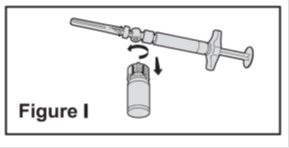
Figure I (Image 10)

Figure I (Image 10)
An instructional illustration labeled Figure I showing a syringe above a vial, indicating the motion of inserting or attaching the syringe needle into the vial for drawing medication or preparing an injection.*
FDA Label Image

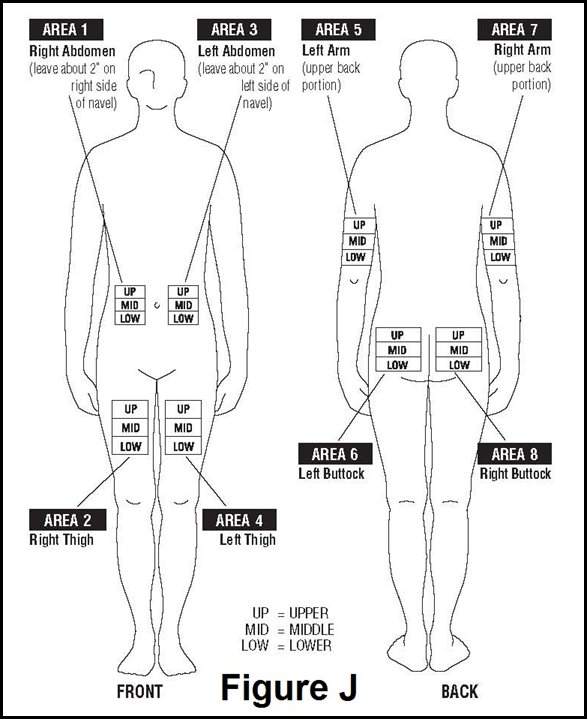
Figure J (Image 11)

Figure J (Image 11)
An illustration showing eight injection site areas on a human body for medication administration. The areas are labeled as Right Abdomen, Right Thigh, Left Abdomen, Left Thigh, Left Arm, Left Buttock, Right Arm, and Right Buttock, with subdivisions indicating upper, middle, and lower portions in each area.*
FDA Label Image

Figure K (Image 12)

Figure K (Image 12)
An instructional illustration labeled Figure K showing a hand holding a syringe poised above the back of the opposite hand, demonstrating an injection technique likely related to Betaseron interferon beta-1b kit administration.*
FDA Label Image

Figure L (Image 13)

Figure L (Image 13)
An instructional diagram labeled 'Figure L' showing a pair of hands. One hand holds a pen-like device or syringe vertically while the other hand steadies or prepares an object beneath it. The illustration suggests a step in a medical preparation or injection procedure.*

* About these descriptions: Image descriptions on this page are generated by automated AI analysis of the product label images from the manufacturer's FDA label submission (SPL). They are provided for reference only and may contain errors or omissions. Always rely on the printed label itself and the official FDA labeling, and consult a pharmacist or healthcare professional with any questions about this product.