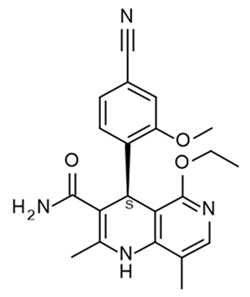
The target daily dose of Kerendia is 20 mg orally.
The target daily dose of Kerendia for heart failure (LVEF ≥ 40%) is dependent on renal function (eGFR) at initiation of Kerendia treatment (see Table 3).
- The target daily dose is 40 mg orally once daily if eGFR at initiation is ≥ 60 mL/min/1.73m2.
- The target daily dose is 20 mg orally once daily if eGFR at initiation is ≥ 25 to < 60 mL/min/1.73m2.
Measure serum potassium and eGFR 4 weeks after initiating treatment and adjust dose (see Table 3). Measure serum potassium and eGFR 4 weeks after a dose adjustment and monitor periodically throughout treatment, and adjust the dose as needed (see Table 3) [see Warnings and Precautions (5.1 & 5.2) and Drug Interactions (7.1)].
Table 3: Dose Adjustment Based on Current Serum Potassium Concentration, eGFR, and Current Dose (Heart Failure (LVEF ≥ 40%)) | Current Kerendia Dose |
|---|
| 10 mg once daily | 20 mg once daily | 40 mg once daily |
|---|
Current
Serum Potassium (mEq/L) | < 5.0 | Increase the dose to 20 mg once daily If eGFR has decreased by more than 30% compared to previous measurement, maintain current dose. | Maintain 20 mg once daily if eGFR < 60 mL/min/1.73m2 at initiation.
Otherwise increase the dose to 40 mg once daily | Maintain 40 mg once daily. |
| ≥ 5.0 to < 5.5 | Maintain current dose. |
| ≥ 5.5 to < 6.0 | Withhold Kerendia.
Restart at 10 mg once daily when serum potassium < 5.5 mEq/L. | Decrease to 10 mg once daily. | Decrease to 20 mg once daily. |
| ≥ 6.0 | Withhold Kerendia.
Restart at 10 mg once daily when serum potassium < 5.5 mEq/L.If repeated serum potassium measurements are ≥5.5 mEq/L, restart Kerendia at 10 mg once daily when serum potassium < 5.0 mEq/L. |
CKD associated with T2DM
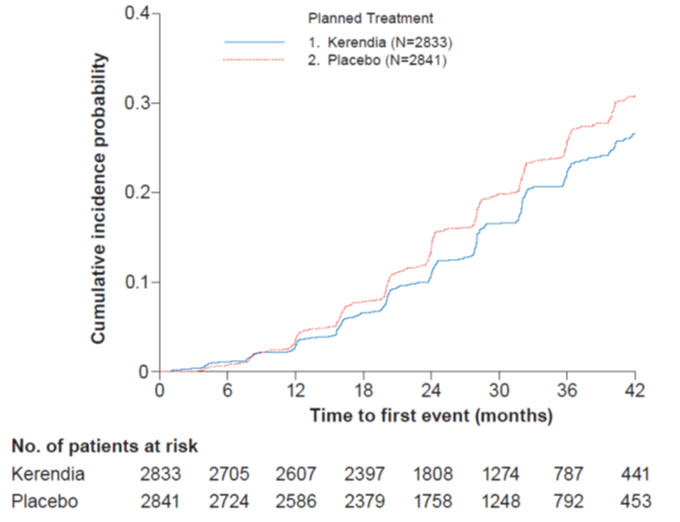
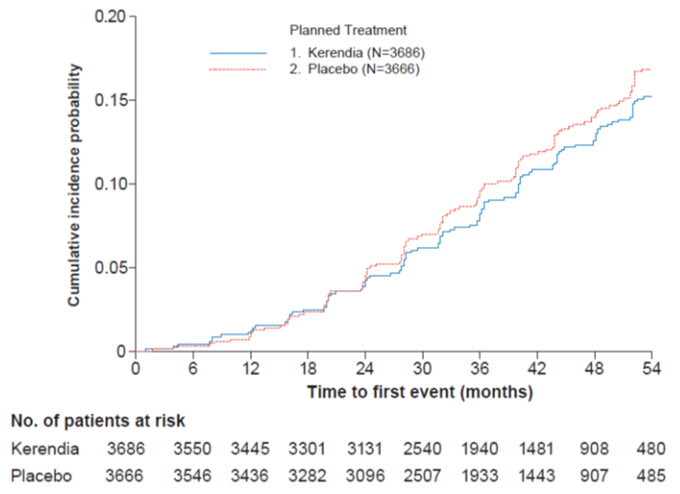
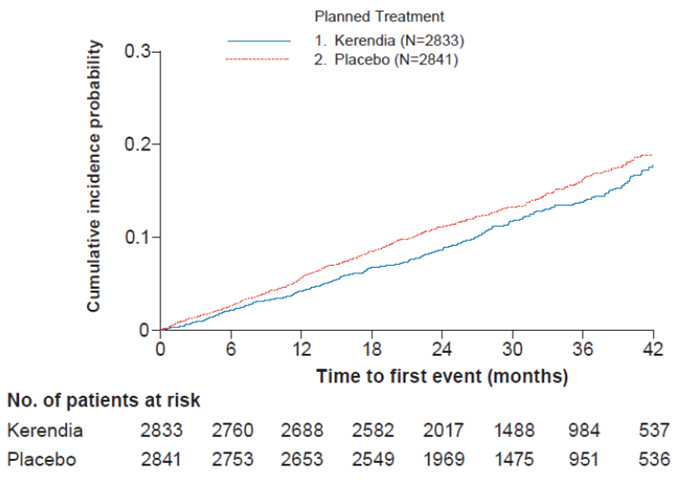
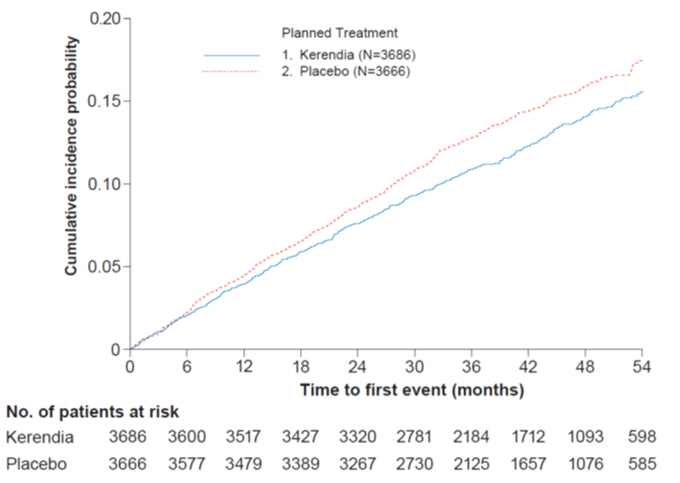
The safety of Kerendia in patients with CKD associated with T2DM was evaluated in 2 randomized, double-blind, placebo-controlled, multicenter pivotal phase 3 studies, FIDELIO-DKD and FIGARO-DKD, in which a total of 6510 patients were treated with 10 or 20 mg once daily over a mean duration of 2.2 and 2.9 years, respectively.
Overall, serious adverse events occurred in 32% of patients receiving Kerendia and in 34% of patients receiving placebo in the FIDELIO-DKD study; the findings were similar in the FIGARO-DKD study. Permanent discontinuations due to adverse events also occurred in a similar proportion of patients in the two studies (6-7% of patients receiving Kerendia and in 5-6% of patients receiving placebo).
The most frequently reported (≥ 10%) adverse reaction was hyperkalemia [see Warnings and Precautions (5.1)]. Hospitalization due to hyperkalemia for the Kerendia group was 0.9% vs 0.2% in the placebo group across both studies. Hyperkalemia led to permanent discontinuation of treatment in 1.7% receiving Kerendia versus 0.6% of patients receiving placebo across both studies.
Table 4 shows adverse reactions that occurred more commonly on Kerendia than on placebo, and in at least 1% of patients treated with Kerendia.
Table 4: Adverse reactions reported in ≥ 1% of patients on Kerendia and more frequently than placebo (Pooled data from FIDELIO-DKD and FIGARO-DKD)| Adverse reactions | Kerendia
N=6510
n (%) | Placebo
N=6489
n (%) |
|---|
| Hyperkalemia | 912 (14.0) | 448 (6.9) |
| Hypotension | 302 (4.6) | 194 (3.0) |
| Hyponatremia | 82 (1.3) | 47 (0.7) |
CKD associated with T1DM
The safety of Kerendia in patients with CKD associated with T1DM was evaluated in the randomized, double-blind, placebo-controlled, multicenter pivotal phase 3 study, FINE-ONE. In this study, 119 patients received Kerendia (10 mg or 20 mg) once daily over a mean duration of treatment of 5.9 months.
The overall safety profile of Kerendia in the FINE-ONE study was consistent with the adverse reactions reported in patients with CKD associated with T2DM (Table 4).
Heart Failure with LVEF ≥ 40%
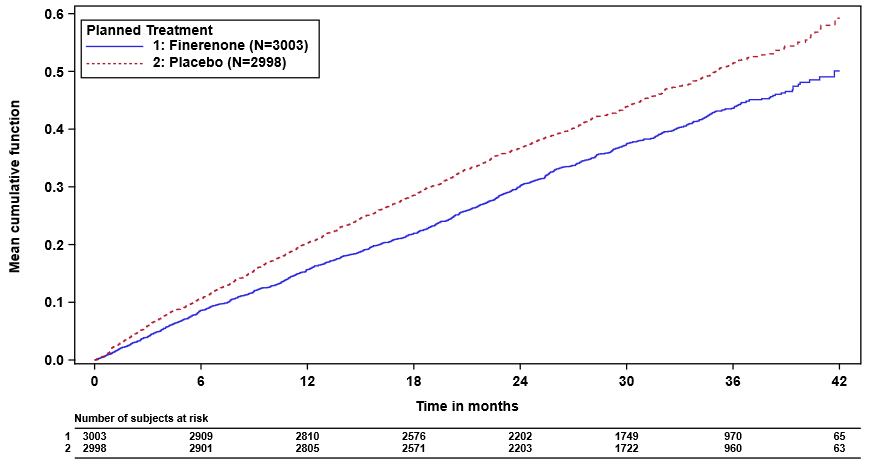
The safety of Kerendia in patients with heart failure (LVEF ≥ 40%) was evaluated in the randomized, double-blind, placebo-controlled, multicenter pivotal phase 3 study, FINEARTS-HF, in which a total of 2,993 patients were treated with 10 mg, 20 mg, or 40 mg once daily of Kerendia with a mean duration of treatment of 2.3 years.
The overall safety profile of Kerendia in the FINEARTS-HF study was largely consistent with the adverse reactions reported in patients with CKD and T2DM (Table 4). However, adverse reactions related to worsening renal function were reported more frequently in the Kerendia group (18%) compared with placebo (12%) in FINEARTS-HF. The most frequently reported adverse reactions included renal impairment (7% vs. 4%), eGFR decreased (5% vs. 4%), acute kidney injury (4% vs. 2%) and renal failure (3% vs. 2%). The majority of events were reported to be mild to moderate. These events led to dose modifications in 9% of patients receiving Kerendia versus 4% of patients receiving placebo. Hospitalization due to events related to worsening of renal function for the Kerendia group was 2.0% versus 1.3% in the placebo group.
Laboratory Test
Initiation of Kerendia may cause an initial small increase in blood creatinine levels (mean change <0.1 mg/dL) and a small decrease in eGFR (mean change 2-3 mL/min) that occurs within the first 4 weeks of starting therapy and then stabilizes. These changes were reversible after treatment discontinuation. Initiation of Kerendia may also cause a small increase in serum uric acid. This increase appears to attenuate over time.
Strong CYP3A4 Inhibitors
Kerendia is a CYP3A4 substrate. Concomitant use with a strong CYP3A4 inhibitor increases finerenone exposure [see Clinical Pharmacology (12.3)], which may increase the risk of Kerendia adverse reactions. Concomitant use of Kerendia with strong CYP3A4 inhibitors is contraindicated [see Contraindications (4)]. Avoid concomitant intake of grapefruit or grapefruit juice.
Moderate and Weak CYP3A4 Inhibitors
Kerendia is a CYP3A4 substrate. Concomitant use with a moderate or weak CYP3A4 inhibitor increases finerenone exposure [see Clinical Pharmacology (12.3)], which may increase the risk of Kerendia adverse reactions. Monitor serum potassium during drug initiation or dosage adjustment of either Kerendia or the moderate or weak CYP3A4 inhibitor, and adjust Kerendia dosage as appropriate [see Dosage and Administration (2.3) and Drug Interactions (7.2)].
Strong and Moderate CYP3A4 Inducers
Kerendia is a CYP3A4 substrate. Concomitant use of Kerendia with a strong or moderate CYP3A4 inducer decreases finerenone exposure [see Clinical Pharmacology (12.3)], which may reduce the efficacy of Kerendia. Avoid concomitant use of Kerendia with strong or moderate CYP3A4 inducers.
CYP2C8 Substrates
Kerendia is a weak CYP2C8 inhibitor at 40 mg. Kerendia increases exposure of CYP2C8 substrates at 40 mg dose [see Clinical Pharmacology (12.3)], which may increase the risk of adverse reactions related to these substrates. Monitor patients more frequently for adverse reactions caused by sensitive CYP2C8 substrates if Kerendia 40 mg is co-administered with such substrates since minimal concentration changes may lead to serious adverse reactions.
Risk Summary
There are no available data on Kerendia use in pregnancy to evaluate for a drug-associated risk of major birth defects, miscarriage, or adverse maternal or fetal outcomes. Animal studies have shown developmental toxicity at exposures about 2 times those expected in humans (see Data). The clinical significance of these findings is unclear.
The estimated background risk of major birth defects and miscarriage for the indicated population is unknown. All pregnancies have a background risk of birth defect, loss or other adverse outcomes. In the U.S. general population, the estimated background risk of major birth defects and miscarriage in clinically recognized pregnancies is 2 to 4% and 15 to 20%, respectively.
Data
Animal Data
In the embryo-fetal toxicity study in rats, finerenone resulted in reduced placental weights and signs of fetal toxicity, including reduced fetal weights and retarded ossification at the maternal toxic dose of 10 mg/kg/day corresponding to an AUCunbound of at least 7 times that in humans. At 30 mg/kg/day, the incidence of visceral and skeletal variations was increased (slight edema, shortened umbilical cord, slightly enlarged fontanelle) and one fetus showed complex malformations including a rare malformation (double aortic arch) at an AUCunbound of about 10 times that in humans at the 40 mg dose and about 25 times that in humans at the 20 mg dose. The doses free of any findings (low dose in rats, high dose in rabbits) provide safety margins of 4 to 5 times for the AUCunbound expected in humans.
When rats were exposed during pregnancy and lactation in the pre- and postnatal developmental toxicity study, increased pup mortality and other adverse effects (lower pup weight, delayed pinna unfolding) were observed at about 2 or 4 times the AUCunbound expected in humans at the dose of 40 mg and 20 mg, respectively. In addition, the offspring showed slightly increased locomotor activity, but no other neurobehavioral changes starting at about 2 or 4 times the AUCunbound expected in humans at the dose of 40 mg and 20 mg, respectively. The dose free of findings provides a safety margin of about 2 times for the AUCunbound expected in humans for the 20 mg dose and is in the therapeutic range for the 40 mg dose.
Risk Summary
There are no data on the presence of finerenone or its metabolite in human milk, the effects on the breastfed infant or the effects of the drug on milk production. In a pre- and postnatal developmental toxicity study in rats, increased pup mortality and lower pup weight were observed at about 2 times the AUCunbound expected in humans. These findings suggest that finerenone is present in rat milk [see Use in Specific Populations (8.1) and Data]. When a drug is present in animal milk, it is likely that the drug will be present in human milk. Because of the potential risk to breastfed infants from exposure to Kerendia, avoid breastfeeding during treatment and for 1 day after treatment.
Cardiac Electrophysiology
At a dose 2 times the maximum approved recommended dose, finerenone does not prolong the QT interval to any clinically relevant extent.
Absorption
Finerenone is completely absorbed after oral administration but undergoes metabolism resulting in absolute bioavailability of 44%. Finerenone Cmax was achieved between 0.5 and 1.25 hours after dosing.
Effect of Food
There was no clinically significant effect on finerenone AUC following administration with high fat, high calorie food.
Distribution
The volume of distribution at steady-state (Vss) of finerenone is 52.6 L. Plasma protein binding of finerenone is 92%, primarily to serum albumin, in vitro.
Elimination
The terminal half-life of finerenone is about 2 to 3 hours, and the systemic blood clearance is about 25 L/h.
Metabolism
Finerenone is primarily metabolized by CYP3A4 (90%) and to a lesser extent by CYP2C8 (10%) to inactive metabolites.
Excretion
About 80% of the administered dose is excreted in urine (<1% as unchanged) and approximately 20% in feces (< 0.2% as unchanged).
Specific Populations
There are no clinically significant effects of age (18 to 86 years), sex, race/ethnicity (White, Asian, Black, and Hispanic), or weight (54 to 126 kg) on the pharmacokinetics of finerenone.
Renal Impairment
There were no clinically relevant differences in finerenone AUC or Cmax values in patients with eGFR 15 to < 90 mL/min/1.73m2 compared to eGFR ≥ 90 mL/min/1.73m2. For dosing recommendations based on eGFR and serum potassium levels [see Dosage and Administration (2)].
Hepatic Impairment
There was no clinically significant effect on finerenone exposure in cirrhotic patients with mild hepatic impairment (Child Pugh A).
Finerenone mean AUC was increased by 38% and Cmax was unchanged in cirrhotic patients with moderate hepatic impairment (Child Pugh B) compared to healthy control subjects.
The effect of severe hepatic impairment (Child Pugh C) on finerenone exposure was not studied.
Drug Interaction Studies
Clinical Studies and Model-Informed Approaches
Strong CYP3A Inhibitors: Concomitant use of itraconazole (strong CYP3A4 inhibitor) was predicted to increase finerenone AUC by > 400%.
Moderate CYP3A Inhibitors: Concomitant use of erythromycin (moderate CYP3A4 inhibitor) increased finerenone mean AUC and Cmax by 248% and 88%, respectively. Concomitant use of verapamil (moderate CYP3A4 inhibitor) increased finerenone mean AUC and Cmax by 170% and 122%, respectively.
Weak CYP3A Inhibitors: Concomitant use of amiodarone (weak CYP3A4 inhibitor) increased finerenone AUC by 21%.
Strong or Moderate CYP3A Inducers: Concomitant use of efavirenz (moderate CYP3A4 inducer) and rifampicin (strong CYP3A4 inducer) was predicted to decrease finerenone AUC by 80% and 90%, respectively.
CYP3A4 Substrates: Concomitant use of multiple finerenone 40 mg doses once daily with midazolam (sensitive CYP3A4 substrate) increased the mean AUC by 31% with no effect on Cmax. There were no clinically significant differences in the pharmacokinetics of midazolam when used concomitantly with multiple finerenone 20 mg doses once daily.
CYP2C8 Substrates: Concomitant use of multiple finerenone 40 mg doses once daily with repaglinide (sensitive CYP2C8 substrate) increased the mean AUC and Cmax of repaglinide by 59% and 30%, respectively. There were no clinically significant differences in the pharmacokinetics of repaglinide when used concomitantly with multiple finerenone 20 mg doses once daily.
Other Drugs: No clinically significant differences in the pharmacokinetics of the following drugs were observed or predicted when used concomitantly with finerenone: S-warfarin (CYP2C9 substrate), digoxin (P-gp substrate), and rosuvastatin (BCRP and OATP substrate). There was no clinically significant difference in finerenone pharmacokinetics when used concomitantly with gemfibrozil (strong CYP2C8 inhibitor).
© 2021, Bayer HealthCare Pharmaceuticals Inc., All rights reserved.
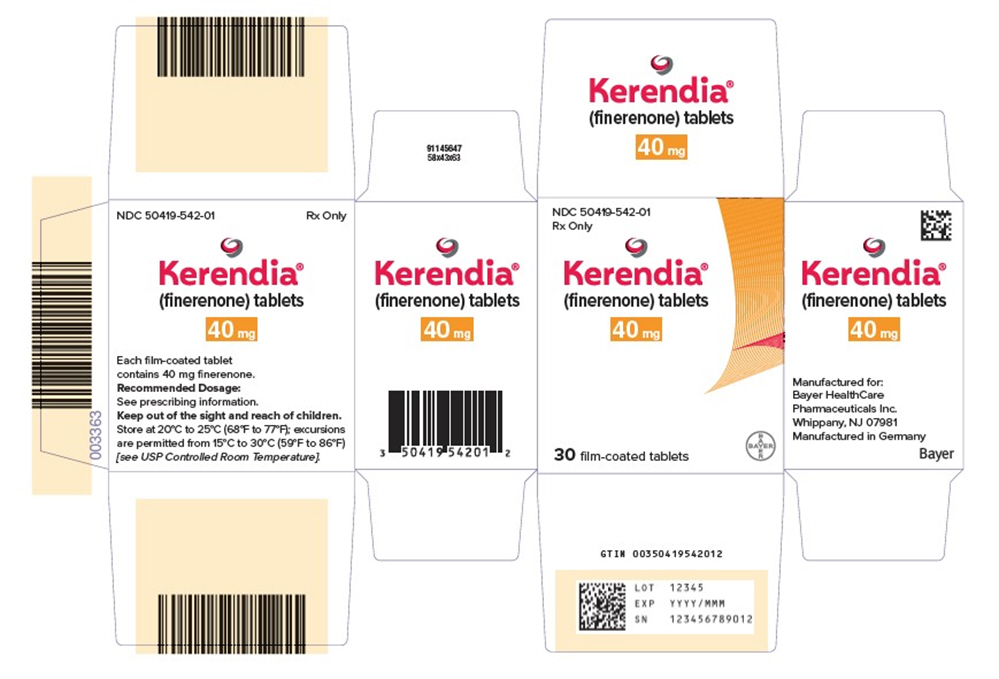
Manufactured for:
Bayer HealthCare Pharmaceuticals Inc.
Whippany, NJ 07981
Manufactured in Germany