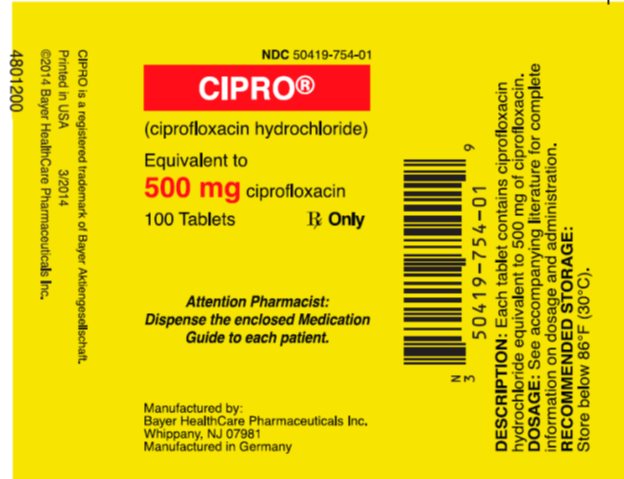
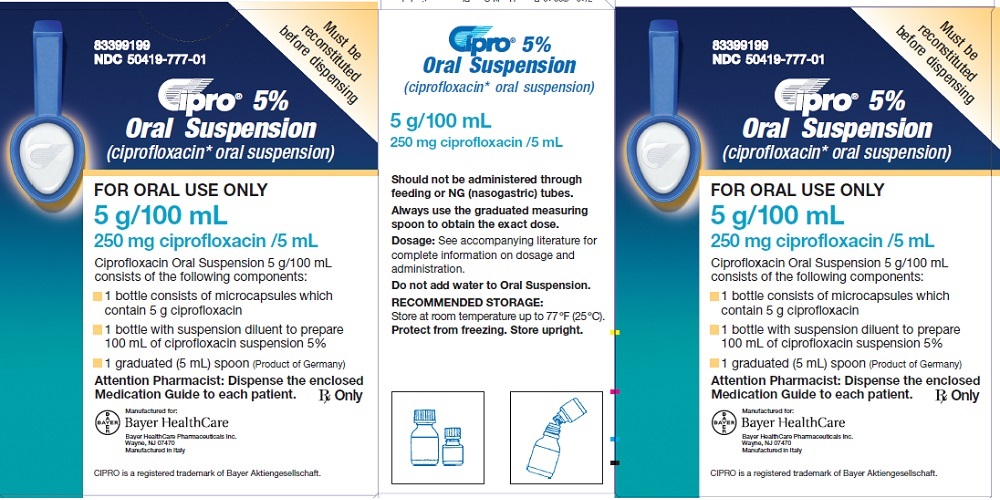
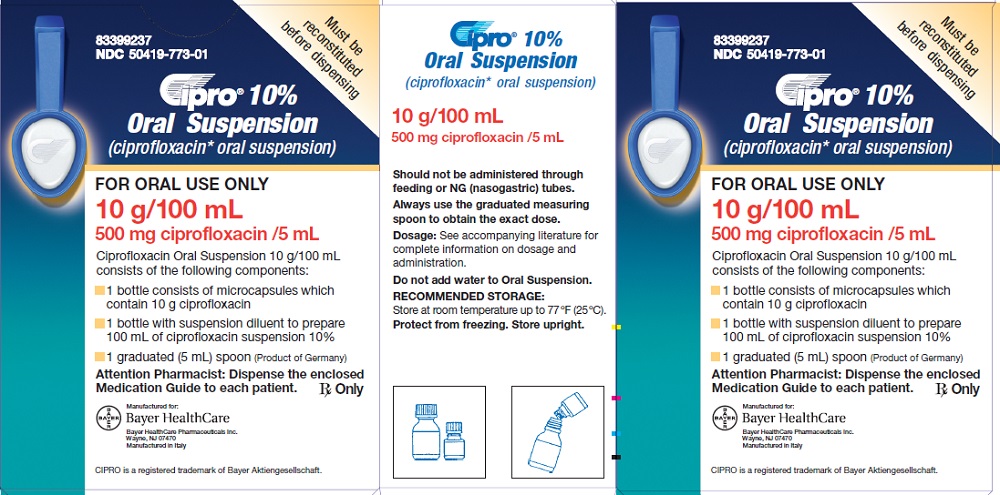
Medication Guide CIPRO® (Sip-row) (ciprofloxacin hydrochloride) tablets, for oral use CIPRO® (Sip-row) (ciprofloxacin) for oral suspension |
Read this Medication Guide before you start taking CIPRO and each time you get a refill. There may be new information. This information does not take the place of talking to your healthcare provider about your medical condition or your treatment. |
What is the most important information I should know about CIPRO? CIPRO, a fluoroquinolone antibacterial medicine, can cause serious side effects. Some of these serious side effects can happen at the same time and could result in death. If you get any of the following serious side effects while you take CIPRO, you should stop taking CIPRO immediately and get medical help right away. - 1.Tendon rupture or swelling of the tendon (tendinitis).
- Tendon problems can happen in people of all ages who take CIPRO. Tendons are tough cords of tissue that connect muscles to bones. Symptoms of tendon problems may include:
- opain
- oswelling
- otears and swelling of the tendons including the back of the ankle (Achilles), shoulder, hand, thumb, or other tendon sites.
- The risk of getting tendon problems while you take CIPRO is higher if you:
- oare over 60 years of age
- oare taking steroids (corticosteroids)
- ohave had a kidney, heart or lung transplant.
- Tendon problems can happen in people who do not have the above risk factors when they take CIPRO.
- Other reasons that can increase your risk of tendon problems can include:
- ophysical activity or exercise
- okidney failure
- otendon problems in the past, such as in people with rheumatoid arthritis (RA).
- Stop taking CIPRO immediately and get medical help right away at the first sign of tendon pain, swelling or inflammation. The most common area of pain and swelling is the Achilles tendon at the back of your ankle. This can also happen with other tendons.
- Tendon rupture can happen while you are taking or after you have finished taking CIPRO. Tendon ruptures can happen within hours or days of taking CIPRO and have happened up to several months after people have finished taking their fluoroquinolone.
- Stop taking CIPRO immediately and get medical help right away if you get any of the following signs or symptoms of a tendon rupture:
- ohear or feel a snap or pop in a tendon area
- obruising right after an injury in a tendon area
- ounable to move the affected area or bear weight
- The tendon problems may be permanent.
- 2.Changes in sensation and possible nerve damage (Peripheral Neuropathy). Damage to the nerves in arms, hands, legs, or feet can happen in people who take fluoroquinolones, including CIPRO. Stop taking CIPRO immediately and talk to your healthcare provider right away if you get any of the following symptoms of peripheral neuropathy in your arms, hands, legs, or feet:
|
| |
CIPRO may need to be stopped to prevent permanent nerve damage. - 3.Central Nervous System (CNS) effects. Mental health problems and seizures have been reported in people who take fluoroquinolone antibacterial medicines, including CIPRO. Tell your healthcare provider if you have a history of seizures before you start taking CIPRO. CNS side effects may happen as soon as after taking the first dose of CIPRO. Stop taking CIPRO immediately and talk to your healthcare provider right away if you get any of these side effects, or other changes in mood or behavior:
|
- Seizures
- Hear voices, see things, or sense things that are not there (hallucinations)
- Feel agitated
- Tremors
- Feel anxious or nervous
- Confusion
- Depression
- Reduced awareness of surroundings
| - Trouble sleeping
- Nightmares
- Feel lightheaded or dizzy
- Feel more suspicious (paranoia)
- Suicidal thoughts or acts
- Headaches that will not go away, with or without blurred vision
- Memory problems
- False or strange thoughts or beliefs (delusions)
|
These changes may be permanent. 4. Worsening of myasthenia gravis (a problem that causes muscle weakness). Fluoroquinolones like CIPRO may cause worsening of myasthenia gravis symptoms, including muscle weakness and breathing problems. Tell your healthcare provider if you have a history of myasthenia gravis before you start taking CIPRO. Call your healthcare provider right away if you have any worsening muscle weakness or breathing |
What is CIPRO? CIPRO is a fluoroquinolone antibacterial medicine used in adults age 18 years and older to treat certain infections caused by certain germs called bacteria. These bacterial infections include: |
| - obone and joint infection
| - ocervical and urethral gonorrhea, uncomplicated
|
- ochronic prostate infection
| | - opeople with a low white blood cell count and a fever
|
- olower respiratory tract infection
| - ointra-abdominal infection, complicated
| |
| | |
| | |
- Studies of CIPRO for use in the treatment of plague and anthrax were done in animals only, because plague and anthrax could not be studied in people.
- CIPRO should not be used in people with acute exacerbation of chronic bronchitis, acute uncomplicated cystitis, and sinus infections, if there are other treatment options available.
- CIPRO should not be used as the first choice of antibacterial medicine to treat lower respiratory tract infections caused by a certain type of bacterial called Streptococcus pneumoniae.
- CIPRO is also used in children younger than 18 years of age to treat complicated urinary tract and kidney infections or who may have breathed in anthrax germs, have plague or have been exposed to plague germs.
- Children younger than 18 years of age have a higher chance of getting bone, joint, or tendon (musculoskeletal) problems such as pain or swelling while taking CIPRO. CIPRO should not be used as the first choice of antibacterial medicine in children under 18 years of age.
|
Who should not take CIPRO? Do not take CIPRO if you: |
What should I tell my healthcare provider before taking CIPRO? Before you take CIPRO, tell your healthcare provider about all your medical conditions, including if you: - have tendon problems. CIPRO should not be used in people who have a history of tendon problems.
- have a disease that causes muscle weakness (myasthenia gravis). CIPRO should not be used in people who have a known history of myasthenia gravis.
- have liver problems.
- have central nervous system problems (such as epilepsy).
- have nerve problems. CIPRO should not be used in people who have a history of a nerve problem called peripheral neuropathy have or anyone in your family has an irregular heartbeat, or heart attack, especially a condition called “QT prolongation”.
- have low blood potassium (hypokalemia) or low magnesium (hypomagnesemia).
- have or have had seizures.
- have kidney problems. You may need a lower dose of CIPRO if your kidneys do not work well.
- have diabetes or problems with low blood sugar (hypoglycemia).
- have joint problems including rheumatoid arthritis (RA).
- have trouble swallowing pills.
- are pregnant or plan to become pregnant. It is not known if CIPRO will harm your unborn baby.
- are breastfeeding or plan to breastfeed. CIPRO passes into your breast milk.
- oYou should not breastfeed during treatment with CIPRO and for 2 days after taking your last dose of CIPRO. You may pump your breast milk and throw it away during treatment with CIPRO and for 2 days after taking your last dose of CIPRO.
- oIf you are taking CIPRO for inhalation anthrax, you and your healthcare provider should decide whether you can continue breastfeeding while taking CIPRO.
Tell your healthcare provider about all the medicines you take, including prescription and over-the-counter medicines, vitamins, and herbal supplements. - CIPRO and other medicines can affect each other causing side effects.
- Especially tell your healthcare provider if you take:
- oa steroid medicine.
- oan anti-psychotic medicine.
- oa tricyclic antidepressant.
- oa water pill (diuretic).
- otheophylline (such as Theo-24®, Elixophyllin®, Theochron®, Uniphyl®, Theolair®).
- oa medicine to control your heart rate or rhythm (antiarrhythmics).
- oan oral anti-diabetes medicine.
- ophenytoin (Fosphenytoin Sodium®, Cerebyx®, Dilantin-125®, Dilantin®, Extended Phenytoin Sodium®, Prompt Phenytoin Sodium®, Phenytek®).
- ocyclosporine (Gengraf®, Neoral®, Sandimmune®, Sangcya®).
- oa blood thinner (such as warfarin, Coumadin®, Jantoven®).
- omethotrexate (Trexall®).
- oropinirole (Requip®).
- oclozapine (Clozaril®, Fazaclo® ODT®).
- oa Non-Steroidal Anti-Inflammatory Drug (NSAID). Many common medicines for pain relief are NSAIDs. Taking an NSAID while you take CIPRO or other fluoroquinolones may increase your risk of central nervous system effects and seizures.
- osildenafil (Viagra®, Revatio®).
- oduloxetine.
- oproducts that contain caffeine.
- oprobenecid (Probalan®, Col-probenecid ®).
- Certain medicines may keep CIPRO Tablets and CIPRO Oral Suspension from working correctly. Take CIPRO Tablets and Oral Suspension either 2 hours before or 6 hours after taking these medicines, vitamins, or supplements:
- oan antacid, multivitamin, or other medicine or supplements that has magnesium, calcium, aluminum, iron, or zinc.
- osucralfate (Carafate®).
- odidanosine (Videx®, Videx EC®).
Ask your healthcare provider for a list of these medicines if you are not sure. Know the medicines you take. Keep a list of them to show your healthcare provider and pharmacist when you get a new medicine.
|
How should I take CIPRO? - Take CIPRO exactly as your healthcare provider tells you to take it.
- Your healthcare provider will tell you how much CIPRO to take and when to take it.
- CIPRO can be taken with or without food.
- CIPRO should not be taken with dairy products (like milk or yogurt) or calcium-fortified juices alone but may be taken with a meal that contains these products.
- Drink plenty of fluids while taking CIPRO.
- Do not skip any doses of CIPRO, or stop taking it, even if you begin to feel better, until you finish your prescribed treatment unless:
- oyou have tendon problems. See “What is the most important information I should know about CIPRO?”
- oyou have nerve problems. See “What is the most important information I should know about CIPRO?”
- oyou have central nervous system problems. See “What is the most important information I should know about CIPRO?”
- oyou have a serious allergic reaction. See “What are the possible side effects of CIPRO?”
- oyour healthcare provider tells you to stop taking CIPRO.
- Taking all of your CIPRO doses will help make sure that all of the bacteria are killed. Taking all of your CIPRO doses will help lower the chance that the bacteria will become resistant to CIPRO. If you become resistant to CIPRO, CIPRO and other antibacterial medicines may not work for you in the future.
- If you take too much CIPRO, call your healthcare provider or get medical help right away.
- CIPRO is supplied as a scored tablet (CIPRO Tablets), oral suspension (CIPRO Oral Suspension), extended-release tablet (CIPRO XR) and injection for intravenous infusion (CIPRO IV). Read and follow the instructions below for the type of CIPRO your healthcare provider has prescribed for you.
CIPRO Tablets: - CIPRO Tablets comes as 250 mg and 500 mg scored tablets that can be taken whole or may be broken in half at the scored line. Your healthcare provider will tell you how much CIPRO Tablets to take and if you will need to break CIPRO Tablets in half to get your prescribed dose.
- Take CIPRO Tablets in the morning and evening at about the same time each day. Do not crush or chew the tablet. Tell your healthcare provider if you cannot swallow the tablet.
- If you miss a dose of CIPRO Tablets and it is:
- o6 hours or more until your next scheduled dose, take your missed dose right away. Then take the next dose at your regular time.
- oless than 6 hours until your next scheduled dose, do not take the missed dose. Take the next dose at your regular time.
- Do not take 2 doses of CIPRO Tablets at 1 time to make up for a missed dose. If you are not sure about when to take CIPRO Tablets after a missed dose, ask your healthcare provider or pharmacist.
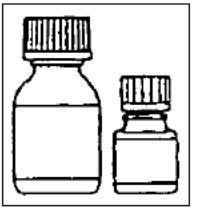
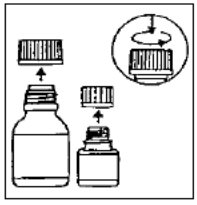
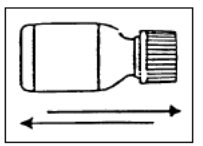
CIPRO Oral Suspension: - Take CIPRO Oral Suspension in the morning and evening at about the same time each day. Shake the CIPRO Oral Suspension bottle well each time before use for about 15 seconds to make sure the suspension is mixed well. Close the bottle completely after use.
- If you miss a dose of CIPRO Oral Suspension and it is:
- o6 hours or more until your next scheduled dose, take your missed dose right away. Then take the next dose at your regular time.
- oless than 6 hours until your next scheduled dose, do not take the missed dose. Take the next dose at your regular time.
- Do not take 2 doses of CIPRO Oral Suspension at 1 time to make up for a missed dose. If you are not sure about when to take CIPRO Oral Suspension after a missed dose, ask your healthcare provider or pharmacist.
|
What should I avoid while taking CIPRO? - CIPRO can make you feel dizzy and lightheaded. Do not drive, operate machinery, or do other activities that require mental alertness or coordination until you know how CIPRO affects you.
- Avoid sunlamps, tanning beds, and try to limit your time in the sun. CIPRO can make your skin sensitive to the sun (photosensitivity) and the light from sunlamps and tanning beds. You could get a severe sunburn, blisters or swelling of your skin. If you get any of these symptoms while you take CIPRO, call your healthcare provider right away. You should use a sunscreen and wear a hat and clothes that cover your skin if you have to be in sunlight.
|
What are the possible side effects of CIPRO? CIPRO may cause serious side effects, including: - See “What is the most important information I should know about CIPRO?”
- Serious allergic reactions. Serious allergic reactions, including death, can happen in people taking fluoroquinolones, including CIPRO, even after only 1 dose. Stop taking CIPRO and get emergency medical help right away if you get any of the following symptoms of a severe allergic reaction:
|
How should I store CIPRO? CIPRO Tablets |
General Information about the safe and effective use of CIPRO. Medicines are sometimes prescribed for purposes other than those listed in a Medication Guide. Do not use CIPRO for a condition for which it is not prescribed. Do not give CIPRO to other people, even if they have the same symptoms that you have. It may harm them. This Medication Guide summarizes the most important information about CIPRO. If you would like more information about CIPRO, talk with your healthcare provider. You can ask your healthcare provider or pharmacist for information about CIPRO that is written for health professionals. |
What are the ingredients in CIPRO? CIPRO Tablets: - Active ingredient: ciprofloxacin hydrochloride
- Inactive ingredients: cornstarch, crospovidone, hypromellose, magnesium stearate, microcrystalline cellulose, polyethylene glycol, silicon dioxide, and titanium dioxide.
CIPRO Oral Suspension: - Active ingredient: ciprofloxacin
- Inactive ingredients:
- oMicrocapsules contains: hypromellose, magnesium stearate, methacrylic acid copolymer, and Polysorbate 20 and povidone.
- oDiluent contains: medium-chain triglycerides, sucrose, soy-lecithin, water, and strawberry flavor.
Manufactured for: Bayer HealthCare Pharmaceuticals Inc. Whippany, NJ 07981 CIPRO is a registered trademark of Bayer Aktiengesellschaft. Rx Only ©1987 Bayer HealthCare Pharmaceuticals Inc. For more information, call 1-1-888-842-2937.
|