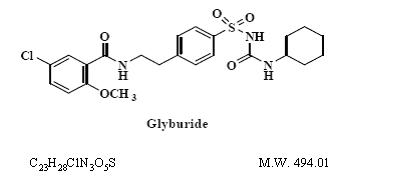
Your doctor has prescribed glyburide and metformin hydrochloride to treat your type 2 diabetes. This is also known as non-insulin-dependent diabetes mellitus.
Q2. What is type 2 diabetes?
People with diabetes are not able to make enough insulin and/or respond normally to the insulin their body does make. When this happens, sugar (glucose) builds up in the blood. This can lead to serious medical problems, including kidney damage, amputations, and blindness. Diabetes is also closely linked to heart disease. The main goal of treating diabetes is to lower your blood sugar to a normal level.
Q3. Why is it important to control type 2 diabetes?
The main goal of treating diabetes is to lower your blood sugar to a normal level. Studies have shown that good control of blood sugar may prevent or delay complications, such as heart disease, kidney disease, or blindness.
Q4. How is type 2 diabetes usually controlled?
High blood sugar can be lowered by diet and exercise, a number of oral medications, and insulin injections. Before taking glyburide and metformin hydrochloride you should first try to control your diabetes by exercise and weight loss. Even if you are taking glyburide and metformin hydrochloride, you should still exercise and follow the diet recommended for your diabetes.
Q5. Does glyburide and metformin hydrochloride work differently from other glucose-control medications?
Yes, it does. Glyburide and metformin hydrochloride combines 2 glucose-lowering drugs, glyburide and metformin. These 2 drugs work together to improve the different metabolic defects found in type 2 diabetes. Glyburide lowers blood sugar primarily by causing more of the body’s own insulin to be released, and metformin lowers blood sugar, in part, by helping your body use your own insulin more effectively. Together, they are efficient in helping you to achieve better glucose control.
Q6. What happens if my blood sugar is still too high?
When blood sugar cannot be lowered enough by glyburide and metformin hydrochloride your doctor may prescribe injectable insulin or take other measures to control your diabetes.
Q7. Can glyburide and metformin hydrochloride cause side effects?
Glyburide and metformin hydrochloride, like all blood sugar-lowering medications, can cause side effects in some patients. Most of these side effects are minor. However, there are also serious, but rare, side effects related to glyburide and metformin hydrochloride (see Q9-Q13).
Q8. What are the most common side effects of glyburide and metformin hydrochloride?
The most common side effects of glyburide and metformin hydrochloride are normally minor ones such as diarrhea, nausea, and upset stomach. If these side effects occur, they usually occur during the first few weeks of therapy. Taking your glyburide and metformin hydrochloride with meals can help reduce these side effects.
Less frequently, symptoms of hypoglycemia (low blood sugar), such as lightheadedness, dizziness, shakiness, or hunger may occur. The risk of hypoglycemic symptoms increases when meals are skipped, too much alcohol is consumed, or heavy exercise occurs without enough food. Following the advice of your doctor can help you to avoid these symptoms.
Q9. Are there any serious side effects that glyburide and metformin hydrochloride can cause?
People who have a condition known as glucose-6-phosphate dehydrogenase (G6PD) deficiency and who take glyburide and metformin hydrochloride may develop hemolytic anemia (fast breakdown of red blood cells). G6PD deficiency usually runs in families. Tell your doctor if you or any members of your family have been diagnosed with G6PD deficiency before you start taking glyburide and metformin hydrochloride.
Glyburide and metformin hydrochloride rarely causes serious side effects. The most serious side effect that glyburide and metformin hydrochloride can cause is called lactic acidosis.
Q10. What is lactic acidosis and can it happen to me?
Metformin, one of the medicines in glyburide and metformin hydrochloride tablets can cause a rare but serious condition called lactic acidosis (a buildup of an acid in the blood) that can cause death. Lactic acidosis is a medical emergency and must be treated in the hospital.
Q11. Are there other risk factors for lactic acidosis?
Most people who have had lactic acidosis with metformin have other things that, combined with the metformin, led to the lactic acidosis. Tell your doctor if you have any of the following, because you have a higher chance for getting lactic acidosis with glyburide and metformin hydrochloride if you:
- have severe kidney problems, or your kidneys are affected by certain x-ray tests that use injectable dye
- have liver problems
- drink alcohol very often, or drink a lot of alcohol in short-term “binge” drinking
- get dehydrated (lose a large amount of body fluids). This can happen if you are sick with a fever, vomiting, or diarrhea. Dehydration can also happen when you sweat a lot with activity or exercise and do not drink enough fluids
- have surgery
- have a heart attack, severe infection, or stroke
The best way to keep from having a problem with lactic acidosis from metformin is to tell your doctor if you have any of the problems in the list above. Your doctor may decide to stop your glyburide and metformin hydrochloride for a while if you have any of these things.
Q12. What are the symptoms of lactic acidosis?
Call your doctor right away if you have any of the following symptoms, which could be signs of lactic acidosis:
- you feel cold in your hands or feet
- you feel dizzy or lightheaded
- you have a slow or irregular heartbeat
- you feel very weak or tired
- you have unusual (not normal) muscle pain
- you have trouble breathing
- you feel sleepy or drowsy
- you have stomach pains, nausea or vomiting
Q13. What does my doctor need to know to decrease my risk of lactic acidosis?
Before you take glyburide and metformin hydrochloride, tell your doctor if you:
- have severe kidney problems
- have liver problems
- have heart problems, including congestive heart failure
- drink alcohol very often, or drink a lot of alcohol in short term “binge” drinking
- are going to get an injection of dye or contrast agents for an x-ray procedure. Glyburide and metformin hydrochloride may need to be stopped for a short time. Talk to your doctor about when you should stop glyburide and metformin hydrochloride and when you should start glyburide and metformin hydrochloride again.
- have any other medical conditions
Q14. Can I take glyburide and metformin hydrochloride with other medications?
Remind your doctor that you are taking glyburide and metformin hydrochloride when any new drug is prescribed or a change is made in how you take a drug already prescribed. Glyburide and metformin hydrochloride may interfere with the way some drugs work and some drugs may interfere with the action of glyburide and metformin hydrochloride.
Do not take glyburide and metformin hydrochloride if you are taking bosentan used for pulmonary arterial hypertension (PAH), which is high blood pressure in the vessels of the lungs.
Q15. What if I become pregnant while taking glyburide and metformin hydrochloride?
Tell your doctor if you plan to become pregnant or have become pregnant. As with other oral glucose-control medications, you should not take glyburide and metformin hydrochloride during pregnancy.
Usually your doctor will prescribe insulin while you are pregnant. As with all medications, you and your doctor should discuss the use of glyburide and metformin hydrochloride if you are nursing a child.
Q16. How do I take glyburide and metformin hydrochloride?
Your doctor will tell you how many glyburide and metformin hydrochloride tablets to take and how often. This should also be printed on the label of your prescription. You will probably be started on a low dose of glyburide and metformin hydrochloride and your dosage will be increased gradually until your blood sugar is controlled.
Q17. Where can I get more information about glyburide and metformin hydrochloride?
This leaflet is a summary of the most important information about glyburide and metformin hydrochloride. If you have any questions or problems, you should talk to your doctor or other healthcare provider about type 2 diabetes as well as glyburide and metformin hydrochloride and its side effects. There is also a leaflet (package insert) written for health professionals that your pharmacist can let you read.
For more information, call Rising Health, LLC at 1-833-395-6928.
Trademarks are the property of their respective owners.
Distributed by:
Rising Health, LLC
Saddle Brook, NJ 07663
Made in India
Code: TS/DRUGS/19/1993
Revised: 12/2017