Aripiprazole
Product Images NDC 50436-0897
View Photos of Packaging, Regulatory Labels, and Product Appearance
Product Visual Gallery
This gallery contains 10 technical images submitted to the FDA as part of the official labeling for Aripiprazole (NDC 50436-0897). Unlike standard consumer photos, these assets often include clinical data figures, molecular chemical structures, and official manufacturer packaging layouts.
As provided by Unit Dose Services, these visuals offer a comprehensive scientific overview of the product's physical and chemical identity, aiding pharmacists and researchers in product verification and study.
Product Images & Figures Index
Fig-1 (Aripiprazole Tablets 2)
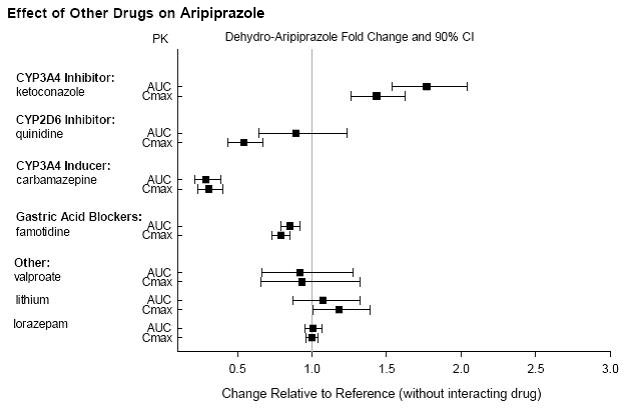
This text provides information on the effect of other drugs on Aripiprazole, including inhibitors, inducers, and blockers. The included drugs are Etoconazole, Quinidine, Carbamazepine, Famotidine, and Lorazepam. The text also includes a chart showing the fold change and 90% confidence intervals for changes in Aripiprazole relative to a reference, without the interacting drug.*
Fig-2 (Aripiprazole Tablets 3)
This is a table showing the effect of different drugs on the drug Aripiprazole. The drugs are categorized as inhibitors or inducers of enzymes that affect the metabolism of Aripiprazole. The inhibitors include Ketoconazole and Y206 Inhibitor, while the inducer is Carbamazepine. Other drugs such as Famotine, Vaproae, Hum Auc, and Lorazepam are also mentioned. The table also shows the fold change and percentage of change of Aripiprazole with and without interacting drugs.*
Fig-3 (Aripiprazole Tablets 4)
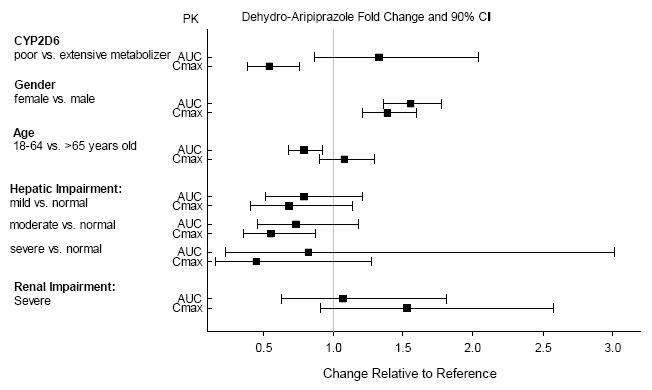
This text describes a chart or table showing the effect of aripiprazole on other drugs. It identifies specific drugs and enzymes such as CYP2D6, UGT1A4, and dextromethorphan, and indicates their fold change and 90% confidence interval. It also features a graph with data points ranging from 0 to 25 on the x-axis and a change relative to the reference on the y-axis.*
Fig-4 (Aripiprazole Tablets 5)
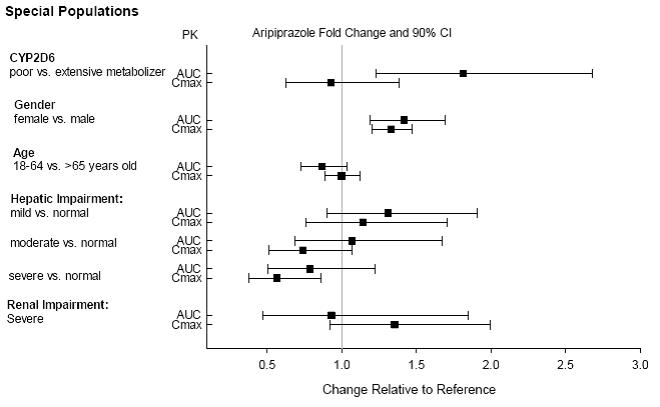
This text appears to be describing different subgroups or populations based on various characteristics such as metabolizer status, gender, age, and liver/renal impairment. There is also a mention of "Avipiprazole Fold Change" with some corresponding data points. It is unclear what the purpose of this description is or how the information may be used without additional context.*
Fig-5 (Aripiprazole Tablets 6)
Fig-6 (Aripiprazole Tablets 7)
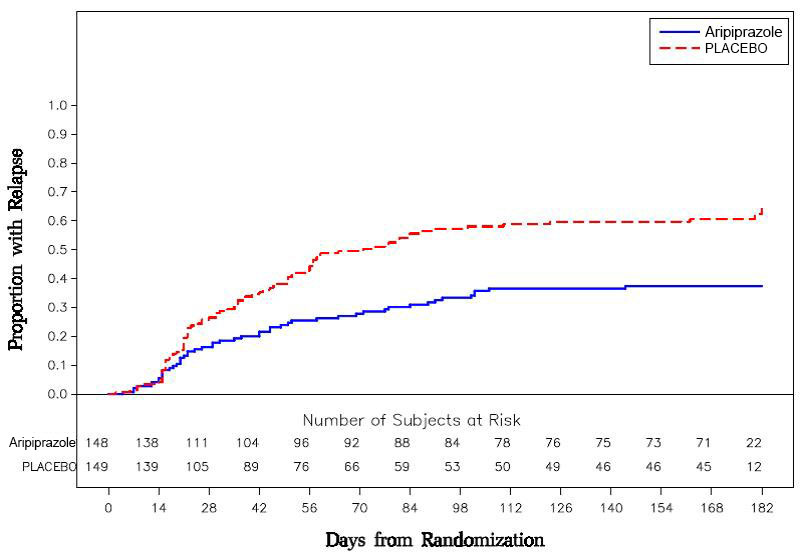
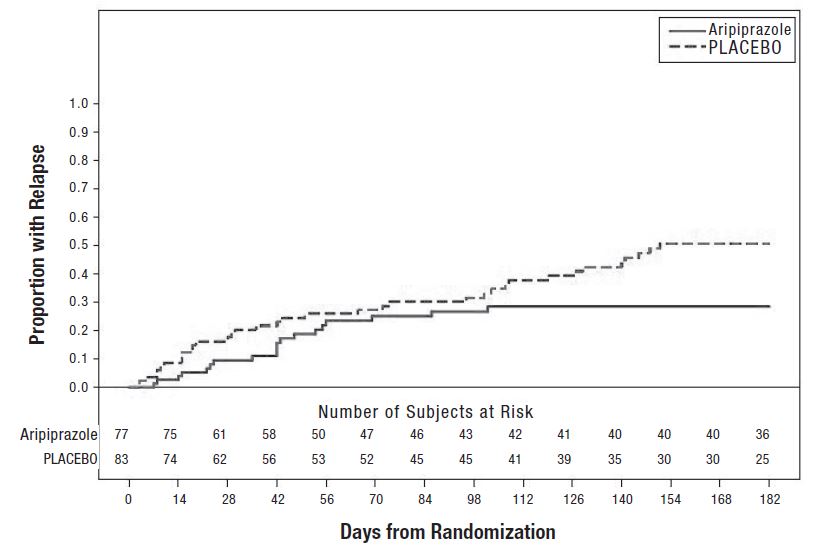
This seems to be a chart or graph showing the proportion of patients who experienced a relapse during a treatment with Avipiprazole compared to a placebo. The x-axis shows the number of days from randomization and the y-axis shows the percentage of patients. The data is presented in two lines, one for Avipiprazole and one for the placebo, with dots indicating the percentage of patients experiencing a relapse at each time point.*
01 (Aripiprazole Tablets 8)
0102 (Aripiprazole Tablets 9)
The given text seems to be a chart representing the relapse proportions for subjects treated with Aripiprazole and Placebo. The chart shows the proportion of subjects that relapse over time, with the number of subjects at risk noted below the chart. The x-axis represents the number of days from randomization, and the y-axis represents the proportion with relapse. A useful interpretation of the chart is not possible without additional context about the study.*
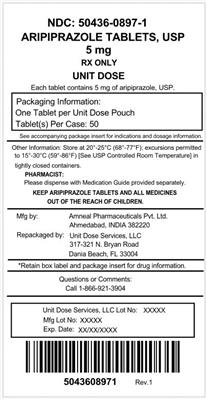
Label Image (Lbl504360897)
* These product label images have been analyzed using experimental machine learning. Please verify findings with the primary label text.