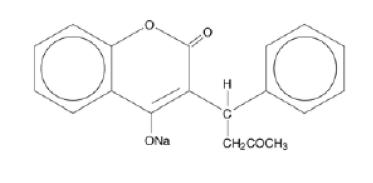
Other
- Warfarin sodium can cause major or fatal bleeding [see Warnings and Precautions (5.1)].
- Perform regular monitoring of INR in all treated patients [see Dosage and Administration (2.1)].
- Drugs, dietary changes, and other factors affect INR levels achieved with warfarin sodium therapy [see Drug Interactions (7)].
- Instruct patients about prevention measures to minimize risk of bleeding and to report signs and symptoms of bleeding [see Patient Counseling Information (17)].
- Prophylaxis and treatment of venous thrombosis and its extension, pulmonary embolism (PE).
- Prophylaxis and treatment of thromboembolic complications associated with atrial fibrillation (AF) and/or cardiac valve replacement.
- Reduction in the risk of death, recurrent myocardial infarction (MI), and thromboembolic events such as stroke or systemic embolization after myocardial infarction.
- 1 mg are pink, oval, flat, beveled edge, uncoated tablets debossed with the logo of ‘WAR’, ‘1’ and bisect on one side and plain on other side.
- 2 mg are lavender, oval, flat, beveled edge, uncoated tablets debossed with the logo of ‘WAR’, ‘2’ and bisect on one side and plain on other side.
- 2.5 mg are green, oval, flat, beveled edge, uncoated tablets debossed with the logo of ‘WAR’, ‘2½’ and bisect on one side and plain on other side.
- 3 mg are tan, oval, flat, beveled edge, uncoated tablets debossed with the logo of ‘WAR’, ‘3’ and bisect on one side and plain on other side.
- 4 mg are blue, oval, flat, beveled edge, uncoated tablets debossed with the logo of ‘WAR’, ‘4’ and bisect on one side and plain on other side.
- 5 mg are peach, oval, flat, beveled edge, uncoated tablets debossed with the logo of ‘WAR’, ‘5’ and bisect on one side and plain on other side.
- 6 mg are teal, oval, flat, beveled edge, uncoated tablets debossed with the logo of ‘WAR’, ‘6’ and bisect on one side and plain on other side.
- 7.5 mg are yellow, oval, flat, beveled edge, uncoated tablets debossed with the logo of ‘WAR’, ‘7½’ and bisect on one side and plain on other side.
- 10 mg are white to off white, oval, flat, beveled edge, uncoated tablets debossed with the logo of ‘WAR’, ‘10’ and bisect on one side and plain on other side.
- Pregnancy
- Hemorrhagic tendencies or blood dyscrasias
- Recent or contemplated surgery of the central nervous system or eye, or traumatic surgery resulting in large open surfaces [ see Warnings and Precautions ( )] 5.7
- Bleeding tendencies associated with:
- Threatened abortion, eclampsia, and preeclampsia
- Unsupervised patients with conditions associated with potential high level of non-compliance
- Spinal puncture and other diagnostic or therapeutic procedures with potential for uncontrollable bleeding
- Hypersensitivity to warfarin or to any other components of this product (e.g., anaphylaxis) [see Adverse Reactions ( )] 6
- Major regional or lumbar block anesthesia
- Malignant hypertension
- Hemorrhage [see , and Boxed WarningWarnings and Precautions ( ), 5.1Overdosage ( )] 10
- Necrosis of skin and other tissues [see Warnings and Precautions ( )] 5.2
- Systemic atheroemboli and cholesterol microemboli [see Warnings and Precautions ( )] 5.3
- Other adverse reactions to warfarin sodium include:
- Immune system disorders: hypersensitivity/allergic reactions (including urticaria and anaphylactic reactions)
- Vascular disorders: vasculitis
- Hepatobiliary disorders: hepatitis elevated liver enzymes. Cholestatic hepatitis has been associated with concomitant administration of warfarin sodium and ticlopidine.
- Gastrointestinal disorders: nausea, vomiting, diarrhea, taste perversion, abdominal pain, flatulence, bloating
- Skin disorders: rash, dermatitis (including bullous eruptions), pruritus, alopecia
- Respiratory disorders: tracheal or tracheobronchial calcification
- General disorders: chills
Warfarin sodium tablets,USP are indicated for:
Limitations of Use
Warfarin sodium tablets, USP have no direct effect on an established thrombus, nor does it reverse ischemic tissue damage. Once a thrombus has occurred, however, the goals of anticoagulant treatment are to prevent further extension of the formed clot and to prevent secondary thromboembolic complications that may result in serious and possibly fatal sequelae.
Warfarin sodium tablets are contraindicated in women who are pregnant except in pregnant women with mechanical heart valves, who are at high risk of thromboembolism [ Warfarin sodium tablets can cause fetal harm when administered to a pregnant woman. Warfarin sodium tablets exposure during pregnancy causes a recognized pattern of major congenital malformations (warfarin embryopathy and fetotoxicity), fatal fetal hemorrhage, and an increased risk of spontaneous abortion and fetal mortality. If warfarin sodium tablets are used during pregnancy or if the patient becomes pregnant while taking this drug, the patient should be apprised of the potential hazard to a fetus [see and see Warnings and Precautions ( ) and Use in Specific Populations ( )]. 5.58.1Warnings and Precautions ( ) 5.6Use in Specific Populations ( )]. 8.1
− Active ulceration or overt bleeding of the gastrointestinal, genitourinary, or respiratory tract
− Central nervous system hemorrhage
− Cerebral aneurysms, dissecting aorta
− Pericarditis and pericardial effusions
− Bacterial endocarditis
The following serious adverse reactions to warfarin sodium are discussed in greater detail in other sections of the labeling:
Drugs may interact with warfarin sodium through pharmacodynamic or pharmacokinetic mechanisms. Pharmacodynamic mechanisms for drug interactions with warfarin sodium are synergism (impaired hemostasis, reduced clotting factor synthesis), competitive antagonism (vitamin K), and alteration of the physiologic control loop for vitamin K metabolism (hereditary resistance). Pharmacokinetic mechanisms for drug interactions with warfarin sodium are mainly enzyme induction, enzyme inhibition, and reduced plasma protein binding. It is important to note that some drugs may interact by more than one mechanism.
More frequent INR monitoring should be performed when starting or stopping other drugs, including botanicals, or when changing dosages of other drugs, including drugs intended for short-term use (e.g., antibiotics, antifungals, corticosteroids) [see ]. Boxed Warning
Consult the labeling of all concurrently used drugs to obtain further information about interactions with warfarin sodium or adverse reactions pertaining to bleeding.
Manufactured by:
Cadila Healthcare Ltd.
Ahmedabad, India
Distributed by:
Zydus Pharmaceuticals USA Inc.
Pennington, NJ 08534
Rev.:06/12
Revision Date: 2012/06/25
Manufactured by:
Cadila Healthcare Ltd.
Ahmedabad, India
Distributed by:
Zydus Pharmaceuticals USA Inc.
Pennington, NJ 08534
Rev.:06/12
Revision Date: 2012/06/25