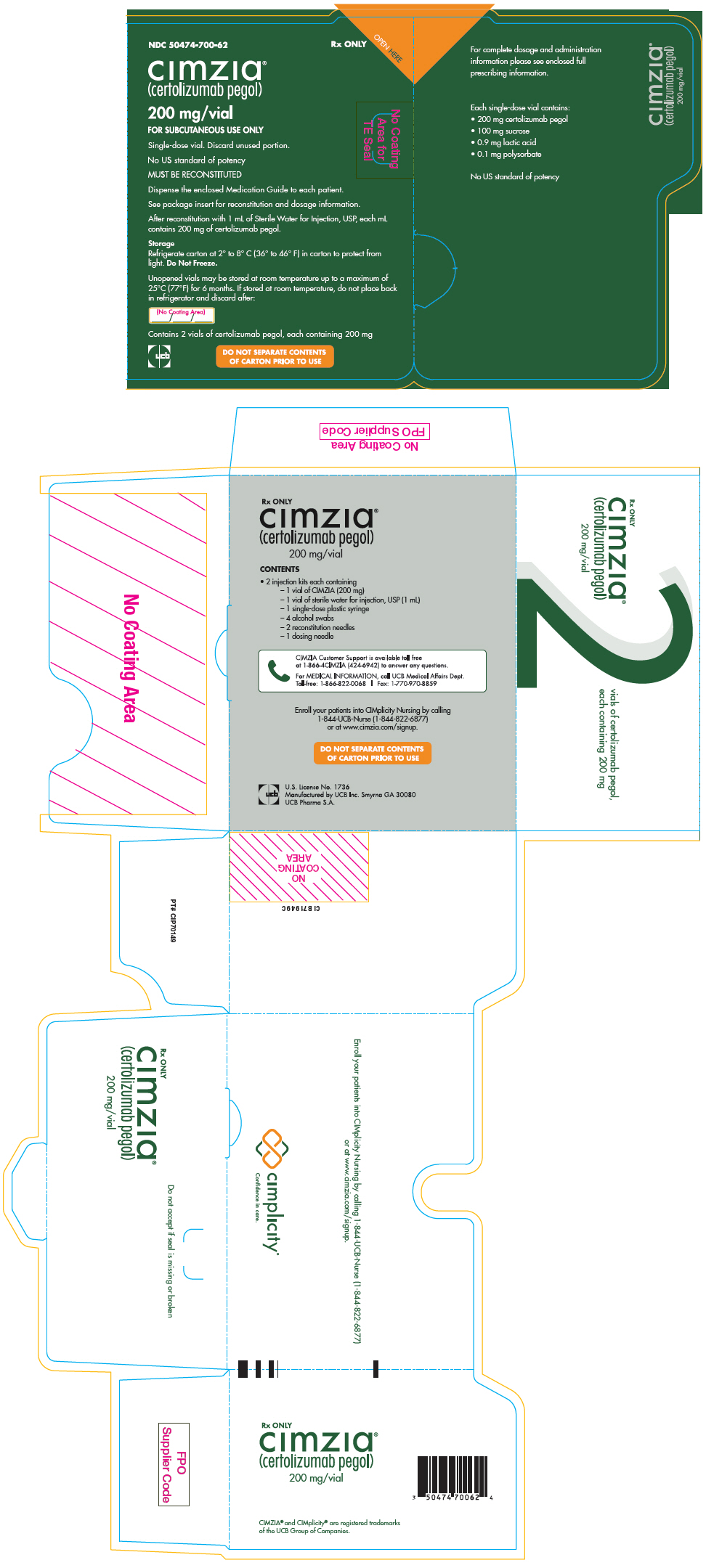
For Injection: 200 mg of lyophilized powder in a single-dose vial for reconstitution
Injection: 200 mg/mL clear to opalescent, colorless to pale yellow solution in a single-dose prefilled syringe
Tuberculosis
Cases of reactivation of tuberculosis or new tuberculosis infections have been observed in patients receiving CIMZIA, including patients who have previously or concomitantly received treatment for latent or active tuberculosis. Reports included cases of pulmonary and extrapulmonary (i.e., disseminated) tuberculosis. Evaluate patients for tuberculosis risk factors and test for latent infection prior to initiating CIMZIA and periodically during therapy.
Treatment of latent tuberculosis infection prior to therapy with TNF-blocking agents has been shown to reduce the risk of tuberculosis reactivation during therapy. Prior to initiating CIMZIA, assess if treatment for latent tuberculosis is needed; and consider an induration of 5 mm or greater a positive tuberculin skin test result, even for patients previously vaccinated with Bacille Calmette-Guerin (BCG).
Consider anti-tuberculosis therapy prior to initiation of CIMZIA in patients with a past history of latent or active tuberculosis in whom an adequate course of treatment cannot be confirmed, and for patients with a negative test for latent tuberculosis but having risk factors for tuberculosis infection. Despite previous or concomitant treatment for latent tuberculosis, cases of active tuberculosis have occurred in patients treated with CIMZIA. Some patients who have been successfully treated for active tuberculosis have redeveloped tuberculosis while being treated with CIMZIA. Consultation with a physician with expertise in the treatment of tuberculosis is recommended to aid in the decision of whether initiating anti-tuberculosis therapy is appropriate for an individual patient.
Strongly consider tuberculosis in patients who develop a new infection during CIMZIA treatment, especially in patients who have previously or recently traveled to countries with a high prevalence of tuberculosis, or who have had close contact with a person with active tuberculosis.
Monitoring
Patients should be closely monitored for the development of signs and symptoms of infection during and after treatment with CIMZIA, including the development of tuberculosis in patients who tested negative for latent tuberculosis infection prior to initiating therapy. Tests for latent tuberculosis infection may also be falsely negative while on therapy with CIMZIA.
CIMZIA should be discontinued if a patient develops a serious infection or sepsis. A patient who develops a new infection during treatment with CIMZIA should be closely monitored, undergo a prompt and complete diagnostic workup appropriate for an immunocompromised patient, and appropriate antimicrobial therapy should be initiated.
Invasive Fungal Infections
For patients who reside or travel in regions where mycoses are endemic, invasive fungal infection should be suspected if they develop a serious systemic illness. Appropriate empiric antifungal therapy should be considered while a diagnostic workup is being performed. Antigen and antibody testing for histoplasmosis may be negative in some patients with active infection. When feasible, the decision to administer empiric antifungal therapy in these patients should be made in consultation with a physician with expertise in the diagnosis and treatment of invasive fungal infections and should take into account both the risk for severe fungal infection and risks of antifungal therapy.
Adverse Reactions Most Commonly Leading to Discontinuation of Treatment in Premarketing Controlled Trials
The proportion of patients with Crohn's disease who discontinued treatment due to adverse reactions in the controlled clinical studies was 8% for CIMZIA and 7% for placebo. The most common adverse reactions leading to the discontinuation of CIMZIA (for at least 2 patients and with a higher incidence than placebo) were abdominal pain (0.4% CIMZIA, 0.2% placebo), diarrhea (0.4% CIMZIA, 0% placebo), and intestinal obstruction (0.4% CIMZIA, 0% placebo).
The proportion of patients with rheumatoid arthritis who discontinued treatment due to adverse reactions in the controlled clinical studies was 5% for CIMZIA and 2.5% for placebo. The most common adverse reactions leading to discontinuation of CIMZIA were tuberculosis infections (0.5%); and pyrexia, urticaria, pneumonia, and rash (0.3%).
Controlled Studies with Crohn's Disease
The data described below reflect exposure to CIMZIA at 400 mg subcutaneous dosing in studies of patients with Crohn's disease. In the safety population in controlled studies, a total of 620 patients with Crohn's disease received CIMZIA at a dose of 400 mg, and 614 subjects received placebo (including subjects randomized to placebo in Study CD2 following open label dosing of CIMZIA at Weeks 0, 2, 4). In controlled and uncontrolled studies, 1,564 patients received CIMZIA at some dose level, of whom 1,350 patients received 400 mg CIMZIA. Approximately 55% of subjects were female, 45% were male, and 94% were Caucasian. The majority of patients in the active group were between the ages of 18 and 64.
During controlled clinical studies, the proportion of patients with serious adverse reactions was 10% for CIMZIA and 9% for placebo. The most common adverse reactions (occurring in ≥ 5% of CIMZIA-treated patients, and with a higher incidence compared to placebo) in controlled clinical studies with CIMZIA were upper respiratory infections (e.g. nasopharyngitis, laryngitis, viral infection) in 20% of CIMZIA-treated patients and 13% of placebo-treated patients, urinary tract infections (e.g. bladder infection, bacteriuria, cystitis) in 7% of CIMZIA-treated patients and in 6% of placebo-treated patients, and arthralgia (6% CIMZIA, 4% placebo).
Other Adverse Reactions
The most commonly occurring adverse reactions in controlled trials of Crohn's disease were described above. Other serious or significant adverse reactions reported in controlled and uncontrolled studies in Crohn's disease and other diseases, occurring in patients receiving CIMZIA at doses of 400 mg or other doses include:
Blood and lymphatic system disorders: Anemia, leukopenia, lymphadenopathy, pancytopenia, and thrombophilia.
Cardiac disorders: Angina pectoris, arrhythmias, atrial fibrillation, cardiac failure, hypertensive heart disease, myocardial infarction, myocardial ischemia, pericardial effusion, pericarditis, stroke and transient ischemic attack.
Eye disorders: Optic neuritis, retinal hemorrhage, and uveitis.
General disorders and administration site conditions: Bleeding and injection site reactions.
Hepatobiliary disorders: Elevated liver enzymes and hepatitis.
Immune system disorders: Alopecia totalis.
Psychiatric disorders: Anxiety, bipolar disorder, and suicide attempt.
Renal and urinary disorders: Nephrotic syndrome and renal failure.
Reproductive system and breast disorders: Menstrual disorder.
Skin and subcutaneous tissue disorders: Dermatitis, erythema nodosum, and urticaria.
Vascular disorders: Thrombophlebitis, vasculitis.
Controlled Studies with Rheumatoid Arthritis
CIMZIA was studied primarily in placebo-controlled trials and in long-term follow-up studies. The data described below reflect the exposure to CIMZIA in 2,367 RA patients, including 2,030 exposed for at least 6 months, 1,663 exposed for at least one year and 282 for at least 2 years; and 1,774 in adequate and well-controlled studies. In placebo-controlled studies, the population had a median age of 53 years at entry; approximately 80% were females, 93% were Caucasian and all patients were suffering from active rheumatoid arthritis, with a median disease duration of 6.2 years. Most patients received the recommended dose of CIMZIA or higher.
Table 1 summarizes the reactions reported at a rate of at least 3% in patients treated with CIMZIA 200 mg every other week compared to placebo (saline formulation), given concomitantly with methotrexate.
Table 1: Adverse Reactions Reported by ≥3% of Patients Treated with CIMZIA Dosed Every Other Week during Placebo-Controlled Period of Rheumatoid Arthritis Studies, with Concomitant Methotrexate.Adverse Reaction
(Preferred Term) | Placebo+ MTX EOW = Every other Week, MTX = Methotrexate. (%)
N =324 | CIMZIA 200 mg EOW + MTX(%)
N =640 |
|---|
| Upper respiratory tract infection | 2 | 6 |
| Headache | 4 | 5 |
| Hypertension | 2 | 5 |
| Nasopharyngitis | 1 | 5 |
| Back pain | 1 | 4 |
| Pyrexia | 2 | 3 |
| Pharyngitis | 1 | 3 |
| Rash | 1 | 3 |
| Acute bronchitis | 1 | 3 |
| Fatigue | 2 | 3 |
Hypertensive adverse reactions were observed more frequently in patients receiving CIMZIA than in controls. These adverse reactions occurred more frequently among patients with a baseline history of hypertension and among patients receiving concomitant corticosteroids and non-steroidal anti-inflammatory drugs.
Patients receiving CIMZIA 400 mg as monotherapy every 4 weeks in rheumatoid arthritis controlled clinical trials had similar adverse reactions to those patients receiving CIMZIA 200 mg every other week.
Other Adverse Reactions
Other infrequent adverse reactions (occurring in less than 3% of RA patients) were similar to those seen in Crohn's disease patients.
Psoriatic Arthritis Clinical Study
CIMZIA has been studied in 409 patients with psoriatic arthritis (PsA) in a placebo-controlled trial. The safety profile for patients with PsA treated with CIMZIA was similar to the safety profile seen in patients with RA and previous experience with CIMZIA.
Ankylosing Spondylitis Clinical Study
CIMZIA has been studied in 325 patients with axial spondyloarthritis of whom the majority had ankylosing spondylitis (AS) in a placebo-controlled study (AS-1). The safety profile for patients in study AS-1 treated with CIMZIA was similar to the safety profile seen in patients with RA.
Infections
The incidence of infections in controlled studies in Crohn's disease was 38% for CIMZIA-treated patients and 30% for placebo-treated patients. The infections consisted primarily of upper respiratory infections (20% for CIMZIA, 13% for placebo). The incidence of serious infections during the controlled clinical studies was 3% per patient-year for CIMZIA-treated patients and 1% for placebo-treated patients. Serious infections observed included bacterial and viral infections, pneumonia, and pyelonephritis.
The incidence of new cases of infections in controlled clinical studies in rheumatoid arthritis was 0.91 per patient-year for all CIMZIA-treated patients and 0.72 per patient-year for placebo-treated patients. The infections consisted primarily of upper respiratory tract infections, herpes infections, urinary tract infections, and lower respiratory tract infections. In the controlled rheumatoid arthritis studies, there were more new cases of serious infection adverse reactions in the CIMZIA treatment groups, compared to the placebo groups (0.06 per patient-year for all CIMZIA doses vs. 0.02 per patient-year for placebo). Rates of serious infections in the 200 mg every other week dose group were 0.06 per patient-year and in the 400 mg every 4 weeks dose group were 0.04 per patient-year. Serious infections included tuberculosis, pneumonia, cellulitis, and pyelonephritis. In the placebo group, no serious infection occurred in more than one subject. There is no evidence of increased risk of infections with continued exposure over time [see Warnings and Precautions (5.1)].
Tuberculosis and Opportunistic Infections
In completed and ongoing global clinical studies in all indications including 5,118 CIMZIA-treated patients, the overall rate of tuberculosis is approximately 0.61 per 100 patient-years across all indications.
The majority of cases occurred in countries with high endemic rates of TB. Reports include cases of miliary, lymphatic, peritoneal, as well as pulmonary TB. The median time to onset of TB for all patients exposed to CIMZIA across all indications was 345 days. In the studies with CIMZIA in RA, there were 36 cases of TB among 2,367 exposed patients, including some fatal cases. Rare cases of opportunistic infections have also been reported in these clinical trials [see Warnings and Precautions (5.1)].
Malignancies
In clinical studies of CIMZIA, the overall incidence rate of malignancies was similar for CIMZIA-treated and control patients. For some TNF blockers, more cases of malignancies have been observed among patients receiving those TNF blockers compared to control patients [see Warnings and Precautions (5.2)].
Heart Failure
In placebo-controlled and open-label rheumatoid arthritis studies, cases of new or worsening heart failure have been reported for CIMZIA-treated patients. The majority of these cases were mild to moderate and occurred during the first year of exposure [see Warnings and Precautions (5.3)].
Autoantibodies
In clinical studies in Crohn's disease, 4% of patients treated with CIMZIA and 2% of patients treated with placebo that had negative baseline ANA titers developed positive titers during the studies. One of the 1,564 Crohn's disease patients treated with CIMZIA developed symptoms of a lupus-like syndrome.
In clinical trials of TNF blockers, including CIMZIA, in patients with RA, some patients have developed ANA. Four patients out of 2,367 patients treated with CIMZIA in RA clinical studies developed clinical signs suggestive of a lupus-like syndrome. The impact of long-term treatment with CIMZIA on the development of autoimmune diseases is unknown [see Warnings and Precautions (5.9)].
Immunogenicity
Patients with Crohn's disease were tested at multiple time points for antibodies to certolizumab pegol during Studies CD1 and CD2. In patients continuously exposed to CIMZIA,the overall percentage of patients who were antibody positive to CIMZIA on at least one occasion was 8%; approximately 6% were neutralizing in vitro. No apparent correlation of antibody development to adverse events or efficacy was observed. Patients treated with concomitant immunosuppressants had a lower rate of antibody development than patients not taking immunosuppressants at baseline (3% and 11%, respectively). The following adverse events were reported in Crohn's disease patients who were antibody-positive (N = 100) at an incidence at least 3% higher compared to antibody-negative patients (N = 1,242): abdominal pain, arthralgia, edema peripheral, erythema nodosum, injection site erythema, injection site pain, pain in extremity, and upper respiratory tract infection.
In two long-term (up to 7 years of exposure), open-label Crohn's disease studies, overall 23% (207/903) of patients developed antibodies against certolizumab pegol on at least one occasion. Of the 207 patients who were antibody positive, 152 (73%) had a persistent reduction of drug plasma concentration, which represents 17% (152/903) of the study population. The data from these two studies do not suggest an association between the development of antibodies and adverse events.
The overall percentage of patients with antibodies to certolizumab pegol detectable on at least one occasion was 7% (105 of 1,509) in the rheumatoid arthritis placebo-controlled trials. Approximately one third (3%, 39 of 1,509) of these patients had antibodies with neutralizing activity in vitro. Patients treated with concomitant immunosuppressants (MTX) had a lower rate of antibody development than patients not taking immunosuppressants at baseline. Patients treated with concomitant immunosuppressant therapy (MTX) in RA-I, RA-II, RA-III had a lower rate of neutralizing antibody formation overall than patients treated with CIMZIA monotherapy in RA-IV (2% vs. 8%). Both the loading dose of 400 mg every other week at Weeks 0, 2 and 4 and concomitant use of MTX were associated with reduced immunogenicity.
Antibody formation was associated with lowered drug plasma concentration and reduced efficacy. In patients receiving the recommended CIMZIA dosage of 200 mg every other week with concomitant MTX, the ACR20 response was lower among antibody positive patients than among antibody-negative patients (Study RA-I, 48% versus 60%; Study RA-II 35% versus 59%, respectively). In Study RA-III, too few patients developed antibodies to allow for meaningful analysis of ACR20 response by antibody status. In Study RA-IV (monotherapy), the ACR20 response was 33% versus 56%, antibody-positive versus antibody-negative status, respectively [see Clinical Pharmacology (12.3)]. No association was seen between antibody development and the development of adverse events.
The data reflect the percentage of patients whose test results were considered positive for antibodies to certolizumab pegol in an ELISA, and are highly dependent on the sensitivity and specificity of the assay. The observed incidence of antibody (including neutralizing antibody) positivity in an assay is highly dependent on several factors, including assay sensitivity and specificity, assay methodology, sample handling, timing of sample collection, concomitant medications, and underlying disease. For these reasons, comparison of the incidence of antibodies to certolizumab pegol with the incidence of antibodies to other products may be misleading.
Hypersensitivity Reactions
The following symptoms that could be compatible with hypersensitivity reactions have been reported rarely following CIMZIA administration to patients: angioedema, dermatitis allergic, dizziness (postural), dyspnea, hot flush, hypotension, injection site reactions, malaise, pyrexia, rash, serum sickness, and (vasovagal) syncope [see Warnings and Precautions (5.4)].
Pregnancy Exposure Registry
There is a pregnancy exposure registry that monitors pregnancy outcomes in women exposed to CIMZIA during pregnancy. For more information, healthcare providers or patients can contact:
MotherToBaby Pregnancy Studies conducted by the Organization of Teratology Information Specialists (OTIS). The OTIS AutoImmune Diseases Study at 1-877-311-8972 or visit http://mothertobaby.org/pregnancy-studies/
Risk Summary
Limited data from the ongoing pregnancy registry on use of CIMZIA in pregnant women are not sufficient to inform a risk of major birth defects or other adverse pregnancy outcomes. However, certolizumab pegol plasma concentrations obtained from two studies of CIMZIA use during the third trimester of pregnancy demonstrated that placental transfer of certolizumab pegol was negligible in most infants at birth, and low in other infants at birth (see Data). There are risks to the mother and fetus associated with active rheumatoid arthritis or Crohn's disease. The theoretical risks of administration of live or live-attenuated vaccines to the infants exposed in utero to CIMZIA should be weighed against the benefits of vaccinations (see Clinical Considerations). No adverse developmental effects were observed in animal reproduction studies during which pregnant rats were administered intravenously a rodent anti-murine TNFα pegylated Fab' fragment (cTN3 PF) similar to certolizumab pegol during organogenesis at up to 2.4 times the recommended human dose of 400 mg every four weeks.
The estimated background risk of major birth defects and miscarriage for the indicated population(s) are unknown. All pregnancies have a background risk of birth defect, loss, or other adverse outcomes. In the U.S. general population, the estimated background risks of major birth defects and miscarriage in clinically recognized pregnancies are 2 to 4% and 15 to 20%, respectively.
Clinical Considerations
Disease-Associated Maternal and/or Embryo/Fetal Risk
Published data suggest that the risk of adverse pregnancy outcomes in women with rheumatoid arthritis or Crohn's disease is correlated with maternal disease activity and that active disease increases the risk of adverse pregnancy outcomes, including fetal loss, preterm delivery (before 37 weeks of gestation), low birth weight (less than 2500 g) and small for gestational age birth.
Fetal/Neonatal Adverse Reactions
Due to its inhibition of TNFα, CIMZIA administered during pregnancy could affect immune responses in the in utero-exposed newborn and infant. The clinical significance of BLQ or low levels is unknown for in utero-exposed infants. Additional data available from one exposed infant suggest that CIMZIA may be eliminated at a slower rate in infants than in adults (see Data). The safety of administering live or live-attenuated vaccines in exposed infants is unknown.
Data
Human Data
A limited number of pregnancies have been reported in the ongoing pregnancy exposure registry. Due to the small number of CIMZIA-exposed pregnancies with known outcomes (n=54), no meaningful comparisons between the exposed group and control groups may be conducted to determine an association with CIMZIA and major birth defects or adverse pregnancy outcomes.
A multicenter clinical study was conducted in 16 women treated with CIMZIA at a maintenance dose of 200 mg every 2 weeks or 400 mg every 4 weeks during the third trimester of pregnancy for rheumatological diseases or Crohn's disease. The last dose of CIMZIA was given on average 11 days prior to delivery (range 1 to 27 days). Certolizumab pegol plasma concentrations were measured in samples from mothers and infants using an assay that can measure certolizumab pegol concentrations at or above 0.032 mcg/mL. Certolizumab pegol plasma concentrations measured in the mothers at delivery (range: 4.96 to 49.4 mcg/mL) were consistent with non-pregnant women's plasma concentrations in Study RA-I [see Clinical Studies (14.2)]. Certolizumab pegol plasma concentrations were not measurable in 13 out of 15 infants at birth. The concentration of certolizumab pegol in one infant was 0.0422 mcg/mL at birth (infant/mother plasma ratio of 0.09%). In a second infant, delivered by emergency Caesarean section, the concentration was 0.485 mcg/mL (infant/mother plasma ratio of 4.49%). At Week 4 and Week 8, all 15 infants had no measurable concentrations. Among 16 exposed infants, one serious adverse reaction was reported in a neonate who was treated empirically with intravenous antibiotics due to an increased white blood cell count; blood cultures were negative. The certolizumab pegol plasma concentrations for this infant were not measurable at birth, Week 4, or Week 8.
In another clinical study conducted in 10 pregnant women with Crohn´s disease treated with CIMZIA (400 mg every 4 weeks for every mother), certolizumab pegol concentrations were measured in maternal blood as well as in cord and infant blood at the day of birth with an assay that can measure concentrations at or above 0.41 mcg/mL. The last dose of CIMZIA was given on average 19 days prior to delivery (range 5 to 42 days). Plasma certolizumab pegol concentrations ranged from not measurable to 1.66 mcg/mL in cord blood and 1.58 mcg/mL in infant blood; and ranged from 1.87 to 59.57 mcg/mL in maternal blood. Plasma certolizumab pegol concentrations were lower (by at least 75%) in the infants than in mothers suggesting low placental transfer of certolizumab pegol. In one infant, the plasma certolizumab pegol concentration declined from 1.02 to 0.84 mcg/mL over 4 weeks suggesting that certolizumab pegol may be eliminated at a slower rate in infants than adults.
Animal Data
Because certolizumab pegol does not cross-react with mouse or rat TNFα, reproduction studies were performed in rats using a rodent anti-murine TNFα pegylated Fab' fragment (cTN3 PF) similar to certolizumab pegol. Animal reproduction studies have been performed in rats during organogenesis at intravenous doses up to 100 mg/kg (about 2.4 times the recommended human dose of 400 mg, based on the surface area) and have revealed no evidence of harm to the fetus due to cTN3 PF.
Risk Summary
In a multicenter clinical study of 17 lactating women treated with CIMZIA at 200 mg every 2 weeks or 400 mg every 4 weeks, minimal certolizumab pegol concentrations were observed in breast milk. No serious adverse reactions were noted in the 17 infants in the study. There are no data on the effects on milk production. In a separate study, certolizumab pegol concentrations were not detected in the plasma of 9 breastfed infants at 4 weeks post-partum (see Data). The developmental and health benefits of breastfeeding should be considered along with the mother's clinical need for CIMZIA and any potential adverse effects on the breastfed infant from CIMZIA or from the underlying maternal condition.
Data
A multicenter clinical study designed to evaluate breast milk was conducted in 17 lactating women who were at least 6 weeks post-partum and had received at least 3 consecutive doses of CIMZIA 200 mg every 2 weeks or 400 mg every 4 weeks for rheumatological disease or Crohn's disease. The effects of certolizumab pegol on milk production were not studied. The concentration of certolizumab pegol in breast milk was not measurable in 77 (56 %) of the 137 samples taken over the dosing periods using an assay that can measure certolizumab pegol concentrations at or above 0.032 mcg/mL. The median of the estimated average daily infant doses was 0.0035 mg/kg/day (range: 0 to 0.01 mg/kg/day). The percentage of the maternal dose (200 mg CIMZIA dosed once every 2 weeks), that reaches an infant ranged from 0.56% to 4.25% based on samples with measurable certolizumab pegol concentration. No serious adverse reactions were noted in the 17 breastfed infants in the study.
In a separate study, plasma certolizumab pegol concentrations were collected 4 weeks after birth in 9 breastfed infants whose mothers had been currently taking CIMZIA (regardless of being exclusively breastfed or not). Certolizumab pegol in infant plasma was not measurable i.e., below 0.032 mcg/mL.
Absorption
A total of 126 healthy subjects received doses of up to 800 mg certolizumab pegol subcutaneously (sc) and up to 10 mg/kg intravenously (IV) in four pharmacokinetic studies. Data from these studies demonstrate that single intravenous and subcutaneous doses of certolizumab pegol have predictable dose-related plasma concentrations with a linear relationship between the dose administered and the maximum plasma concentration (Cmax), and the Area Under the certolizumab pegol plasma concentration versus time Curve (AUC). A mean Cmax of approximately 43 to 49 mcg/mL occurred at Week 5 during the initial loading dose period using the recommended dose regimen for the treatment of patients with rheumatoid arthritis (400 mg sc at Weeks 0, 2 and 4 followed by 200 mg every other week).
Certolizumab pegol plasma concentrations were broadly dose-proportional and pharmacokinetics observed in patients with rheumatoid arthritis and Crohn's disease were consistent with those seen in healthy subjects.
Following subcutaneous administration, peak plasma concentrations of certolizumab pegol were attained between 54 and 171 hours post-injection. Certolizumab pegol has bioavailability (F) of approximately 80% (ranging from 76% to 88%) following subcutaneous administration compared to intravenous administration.
Distribution
The steady state volume of distribution (Vss) was estimated as 6 to 8 L in the population pharmacokinetic analysis for patients with Crohn's disease and patients with rheumatoid arthritis.
Metabolism
The metabolism of certolizumab pegol has not been studied in human subjects. Data from animals indicate that once cleaved from the Fab' fragment the PEG moiety is mainly excreted in urine without further metabolism.
Elimination
PEGylation, the covalent attachment of PEG polymers to peptides, delays the metabolism and elimination of these entities from the circulation by a variety of mechanisms, including decreased renal clearance, proteolysis, and immunogenicity. Accordingly, certolizumab pegol is an antibody Fab' fragment conjugated with PEG in order to extend the terminal plasma elimination half-life (t1/2) of the Fab'. The terminal elimination phase half-life (t1/2) was approximately 14 days for all doses tested. The clearance following IV administration to healthy subjects ranged from 9.21 mL/h to 14.38 mL/h. The clearance following sc dosing was estimated 17 mL/h in the Crohn's disease population PK analysis with an inter-subject variability of 38% (CV) and an inter-occasion variability of 16%. Similarly, the clearance following sc dosing was estimated as 21.0 mL/h in the RA population PK analysis, with an inter-subject variability of 30.8% (%CV) and inter-occasion variability 22.0%. The route of elimination of certolizumab pegol has not been studied in human subjects. Studies in animals indicate that the major route of elimination of the PEG component is via urinary excretion.
Special Populations
Population pharmacokinetic analysis was conducted on data from patients with rheumatoid arthritis and patients with Crohn's disease, to evaluate the effect of age, race, gender, methotrexate use, concomitant medication, creatinine clearance and presence of anti-certolizumab antibodies on pharmacokinetics of certolizumab pegol.
Only bodyweight and presence of anti-certolizumab antibodies significantly affected certolizumab pegol pharmacokinetics. Pharmacokinetic exposure was inversely related to body weight but pharmacodynamic exposure-response analysis showed that no additional therapeutic benefit would be expected from a weight-adjusted dose regimen. The presence of anti-certolizumab antibodies was associated with a 3.6-fold increase in clearance.
Age: Pharmacokinetics of certolizumab pegol was not different in elderly compared to young adults.
Gender: Pharmacokinetics of certolizumab pegol was similar in male and female subjects.
Renal Impairment: Specific clinical studies have not been performed to assess the effect of renal impairment on the pharmacokinetics of CIMZIA. The pharmacokinetics of the PEG (polyethylene glycol) fraction of certolizumab pegol is expected to be dependent on renal function but has not been assessed in renal impairment. There are insufficient data to provide a dosing recommendation in moderate and severe renal impairment.
Race: A specific clinical study showed no difference in pharmacokinetics between Caucasian and Japanese subjects.
Drug Interaction Studies
Methotrexate pharmacokinetics is not altered by concomitant administration with CIMZIA in patients with rheumatoid arthritis. The effect of methotrexate on CIMZIA pharmacokinetics was not studied. However, methotrexate-treated patients have lower incidence of antibodies to CIMZIA. Thus, therapeutic plasma levels are more likely to be sustained when CIMZIA is administered with methotrexate in patients with rheumatoid arthritis.
Formal drug-drug interaction studies have not been conducted with CIMZIA upon concomitant administration with corticosteroids, nonsteroidal anti-inflammatory drugs, analgesics or immunosuppressants.
Study CD1
Study CD1 was a randomized placebo-controlled study in 662 patients with active Crohn's disease. CIMZIA or placebo was administered at Weeks 0, 2, and 4 and then every four weeks to Week 24. Assessments were done at Weeks 6 and 26. Clinical response was defined as at least a 100-point reduction in CDAI score compared to baseline, and clinical remission was defined as an absolute CDAI score of 150 points or lower.
The results for Study CD1 are provided in Table 2. At Week 6, the proportion of clinical responders was statistically significantly greater for CIMZIA-treated patients compared to controls. The difference in clinical remission rates was not statistically significant at Week 6. The difference in the proportion of patients who were in clinical response at both Weeks 6 and 26 was also statistically significant, demonstrating maintenance of clinical response.
Table 2 Study CD1 – Clinical Response and Remission, Overall Study Population| Timepoint | % Response or Remission (95% CI) |
|---|
Placebo
(N = 328) | CIMZIA 400 mg
(N = 331) |
|---|
| Week 6 |
| Clinical Response Clinical response is defined as decrease in CDAI of at least 100 points, and clinical remission is defined as CDAI ≤ 150 points | 27% (22%, 32%) | 35% (30%, 40%) p-value < 0.05 logistic regression test |
| Clinical Remission | 17% (13%, 22%) | 22% (17%, 26%) |
| Week 26 |
| Clinical Response | 27% (22%, 31%) | 37% (32%, 42%) |
| Clinical Remission | 18% (14%, 22%) | 29% (25%, 34%) |
| Both Weeks 6 & 26 |
| Clinical Response | 16% (12%, 20%) | 23% (18%, 28%) |
| Clinical Remission | 10% (7%, 13%) | 14% (11%, 18%) |
Study CD2
Study CD2 was a randomized treatment-withdrawal study in patients with active Crohn's disease. All patients who entered the study were dosed initially with CIMZIA 400 mg at Weeks 0, 2, and 4 and then assessed for clinical response at Week 6 (as defined by at least a 100-point reduction in CDAI score). At Week 6, a group of 428 clinical responders was randomized to receive either CIMZIA 400 mg or placebo, every four weeks starting at Week 8, as maintenance therapy through Week 24. Non-responders at Week 6 were withdrawn from the study. Final evaluation was based on the CDAI score at Week 26. Patients who withdrew or who received rescue therapy were considered not to be in clinical response. Three randomized responders received no study injections, and were excluded from the ITT analysis.
The results for clinical response and remission are shown in Table 3. At Week 26, a statistically significantly greater proportion of Week 6 responders were in clinical response and in clinical remission in the CIMZIA-treated group compared to the group treated with placebo.
Table 3 Study CD2 - Clinical Response and Clinical Remission| | % Response or Remission (95% CI) |
|---|
| | CIMZIA 400 mg ×3 + Placebo
N = 210 | CIMZIA
400 mg
N = 215 |
|---|
| Week 26 |
| Clinical Response Clinical response is defined as decrease in CDAI of at least 100 points, and clinical remission is defined as CDAI ≤ 150 points | 36% (30%, 43%) | 63% (56%, 69%) p < 0.05 |
| Clinical Remission | 29% (22%, 35%) | 48% (41%, 55%) |
Baseline use of immunosuppressants or corticosteroids had no impact on the clinical response to CIMZIA.
Clinical Response
The percent of CIMZIA-treated patients achieving ACR20, 50, and 70 responses in Studies RA-I and RA-IV are shown in Table 4. CIMZIA-treated patients had higher ACR20, 50 and 70 response rates at 6 months compared to placebo-treated patients. The results in study RA-II (619 patients) were similar to the results in RA-I at Week 24. The results in study RA-III (247 patients) were similar to those seen in study RA-IV. Over the one-year Study RA-I, 13% of CIMZIA-treated patients achieved a major clinical response, defined as achieving an ACR70 response over a continuous 6-month period, compared to 1% of placebo-treated patients.
Table 4: ACR Responses in Studies RA-I, and RA-IV (Percent of Patients) | Study RA-I
Methotrexate Combination
(24 and 52 weeks) | Study RA-IV
Monotherapy
(24 weeks) |
|---|
| Response | Placebo + MTX | CIMZIA CIMZIA administered every 2 weeks preceded by a loading dose of 400 mg at Weeks 0, 2 and 4 200 mg + MTX
q 2 weeks | CIMZIA 200 mg + MTX - Placebo + MTX | Placebo | CIMZIA CIMZIA administered every 4 weeks not preceded by a loading dose regimen 400 mg
q 4 weeks | CIMZIA 400 mg - Placebo |
|---|
| N=199 | N=393 | (95% CI) 95% Confidence Intervals constructed using the large sample approximation to the Normal Distribution. | N=109 | N=111 | (95% CI) |
|---|
| ACR20 | | | | | | |
| Week 24 | 14% | 59% | 45% (38%, 52%) | 9% | 46% | 36% (25%, 47%) |
| Week 52 | 13% | 53% | 40% (33%, 47%) | N/A | N/A | |
| ACR50 | | | | | | |
| Week 24 | 8% | 37% | 30% (24%, 36%) | 4% | 23% | 19% (10%, 28%) |
| Week 52 | 8% | 38% | 30% (24%, 37%) | N/A | N/A | |
| ACR70 | | | | | | |
| Week 24 | 3% | 21% | 18% (14%, 23%) | 0% | 6% | 6% (1%, 10%) |
| Week 52 | 4% | 21% | 18% (13%, 22%) | N/A | N/A | |
| Major Clinical Response Major clinical response is defined as achieving ACR70 response over a continuous 6-month period | 1% | 13% | 12% (8%, 15%) | | | |
Table 5: Components of ACR Response in Studies RA-I and RA-IV | Study RA-I | Study RA-IV |
|---|
| Parameter For Study RA-I, median is presented. For Study RA-IV, mean (SD) is presented except for CRP which presents geometric mean | Placebo +
MTX
N=199 | CIMZIA CIMZIA administered every 2 weeks preceded by a loading dose of 400 mg at Weeks 0, 2 and 4 200 mg + MTX q 2 weeks
N=393 | Placebo
N=109 | CIMZIA CIMZIA administered every 4 weeks not preceded by a loading dose regimen 400 mg q 4 weeks
Monotherapy
N=111 |
|---|
| Baseline | Week 24 | Baseline | Week 24 | Baseline | Week 24 | Baseline | Week 24 |
|---|
| Number of tender joints (0-68) | 28 | 27 | 29 | 9 | 28 (12.5) | 24 (15.4) | 30 (13.7) | 16 (15.8) |
| Number of swollen joints (0-66) | 20 | 19 | 20 | 4 | 20 (9.3) | 16 (12.5) | 21 (10.1) | 12 (11.2) |
| Physician global assessment Study RA-I - Visual Analog Scale: 0 = best, 100 = worst. Study RA-IV - Five Point Scale: 1 = best, 5 = worst | 66 | 56 | 65 | 25 | 4 (0.6) | 3 (1.0) | 4 (0.7) | 3 (1.1) |
| Patient global assessment | 67 | 60 | 64 | 32 | 3 (0.8) | 3 (1.0) | 3 (0.8) | 3 (1.0) |
| Pain Patient Assessment of Arthritis Pain. Visual Analog Scale: 0 = best, 100 = worst | 65 | 60 | 65 | 32 | 55 (20.8) | 60 (26.7) | 58 (21.9) | 39 (29.6) |
| Disability index (HAQ) Health Assessment Questionnaire Disability Index; 0 = best, 3 = worst, measures the patient's ability to perform the following: dress/groom, arise, eat, walk, reach, grip, maintain hygiene, and maintain daily activity
All values are last observation carried forward. | 1.75 | 1.63 | 1.75 | 1.00 | 1.55 (0.65) | 1.62 (0.68) | 1.43 (0.63) | 1.04 (0.74) |
CRP (mg/L)
| 16.0 | 14.0 | 16.0 | 4.0 | 11.3 | 13.5 | 11.6 | 6.4 |
The percent of patients achieving ACR20 responses by visit for Study RA-I is shown in Figure 1. Among patients receiving CIMZIA, clinical responses were seen in some patients within one to two weeks after initiation of therapy.
| Figure 1 Study RA-I ACR20 Response Over 52 Weeks The same patients may not have responded at each time point |
|
Radiographic Response
In Study RA-I, inhibition of progression of structural damage was assessed radiographically and expressed as the change in modified Total Sharp Score (mTSS) and its components, the Erosion Score (ES) and Joint Space Narrowing (JSN) score, at Week 52, compared to baseline. CIMZIA inhibited the progression of structural damage compared to placebo plus MTX after 12 months of treatment as shown in Table 6. In the placebo group, 52% of patients experienced no radiographic progression (mTSS ≤0.0) at Week 52 compared to 69% in the CIMZIA 200 mg every other week treatment group. Study RA-II showed similar results at Week 24.
Table 6: Radiographic Changes at 6 and 12 months in Study RA-I | Placebo + MTX
N=199
Mean (SD) | CIMZIA 200 mg + MTX
N=393
Mean (SD) | CIMZIA 200 mg + MTX –
Placebo + MTX
Mean Difference |
|---|
| An ANCOVA was fitted to the ranked change from baseline for each measure with region and treatment as factors and rank baseline as a covariate. |
| mTSS | | | |
| Baseline | 40 (45) | 38 (49) | -- |
| Week 24 | 1.3 (3.8) | 0.2 (3.2) | -1.1 |
| Week 52 | 2.8 (7.8) | 0.4 (5.7) | -2.4 |
| Erosion Score | | | |
| Baseline | 14 (21) | 15 (24) | -- |
| Week 24 | 0.7 (2.1) | 0.0 (1.5) | -0.7 |
| Week 52 | 1.5 (4.3) | 0.1 (2.5) | -1.4 |
| JSN Score | | | |
| Baseline | 25 (27) | 24 (28) | -- |
| Week 24 | 0.7 (2.4) | 0.2 (2.5) | -0.5 |
| Week 52 | 1.4 (5.0) | 0.4 (4.2) | -1.0 |
Physical Function Response
In studies RA-I, RA-II, RA-III, and RA-IV, CIMZIA-treated patients achieved greater improvements from baseline than placebo-treated patients in physical function as assessed by the Health Assessment Questionnaire – Disability Index (HAQ-DI) at Week 24 (RA-II, RA-III and RA-IV) and at Week 52 (RA-I).
Clinical Response
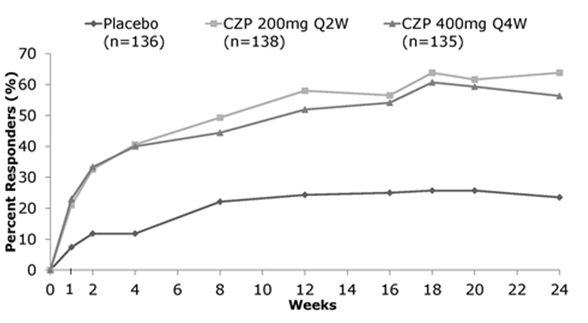
The percentage of CIMZIA-treated patients achieving ACR20, 50 and 70 responses in study PsA001 are shown in Table 7. ACR20 response rates at weeks 12 and 24 were higher for each CIMZIA dose group relative to placebo (95% confidence intervals for CIMZIA 200 mg minus placebo at weeks 12 and 24 of (23%, 45%) and (30%, 51%), respectively and 95% confidence intervals for CIMZIA 400 mg minus placebo at weeks 12 and 24 of (17%, 39%) and (22%, 44%), respectively). The results of the components of the ACR response criteria are shown in Table 8.
Patients with enthesitis at baseline were evaluated for mean improvement in Leeds Enthesitis Index (LEI). CIMZIA-treated patients receiving either 200 mg every 2 weeks or 400 mg every 4 weeks showed a reduction in enthesitis of 1.8 and 1.7, respectively as compared with a reduction in placebo-treated patients of 0.9 at week 12. Similar results were observed for this endpoint at week 24. Treatment with CIMZIA resulted in improvement in skin manifestations in patients with PsA. However, the safety and efficacy of CIMZIA in the treatment of patients with plaque psoriasis has not been established.
Table 7: ACR Responses in Study PsA001 (Percent of Patients)| Response Results are from the randomized set. Non-responder Imputation (NRI) is used for patients who escaped therapy or had missing data. | Placebo | CIMZIA CIMZIA administered every 2 weeks preceded by a loading dose of 400 mg at Weeks 0, 2 and 4 200 mg
Q2W | CIMZIA CIMZIA administered every 4 weeks preceded by a loading dose of 400 mg at Weeks 0, 2 and 4 400 mg
Q4W |
|---|
| N=136 | N=138 | N=135 |
|---|
| ACR20 | | | |
| Week 12 | 24% | 58% | 52% |
| Week 24 | 24% | 64% | 56% |
| ACR50 | | | |
| Week 12 | 11% | 36% | 33% |
| Week 24 | 13% | 44% | 40% |
| ACR70 | | | |
| Week 12 | 3% | 25% | 13% |
| Week 24 | 4% | 28% | 24% |
Table 8: Components of ACR Response in Study PsA001| Parameter | Placebo Results are from the entire placebo group
N=136 | CIMZIA CIMZIA administered every 2 weeks preceded by a loading dose of 400 mg at Weeks 0, 2 and 4 200 mg Q2W
N=138 | CIMZIA CIMZIA administered every 4 weeks preceded by a loading dose of 400 mg at Weeks 0, 2 and 4 400 mg Q4W
N=135 |
|---|
| Baseline | Week 12 | Baseline | Week 12 | Baseline | Week 12 |
|---|
| All values presented represent the mean |
| Results are from the randomized set (either with imputation or observed case) |
| Number of tender joints (0-68) Last Observation Carried Forward is used for missing data, early withdrawals or placebo escape | 20 | 17 | 22 | 11 | 20 | 11 |
| Number of swollen joints (0-66) | 10 | 9 | 11 | 4 | 11 | 5 |
| Physician global assessment, Patient and Physician Global Assessment of Disease Activity, VAS 0=best 100= worst | 59 | 44 | 57 | 25 | 58 | 29 |
| Patient global assessment, | 57 | 50 | 60 | 33 | 60 | 40 |
| Pain, The Patient Assessment of Arthritis Pain, VAS 0=no pain and 100= most severe pain | 60 | 50 | 60 | 33 | 61 | 39 |
| Disability index (HAQ), The HAQ-DI, 4 point scale 0=without difficulty and 3=unable to do | 1.30 | 1.15 | 1.33 | 0.87 | 1.29 | 0.90 |
| CRP (mg/L) | 18.56 | 14.75 | 15.36 | 5.67 | 13.71 | 6.34 |
The percent of patients achieving ACR20 responses by visit for PsA001 is shown in Figure 2.
| Randomized Set. Non-responder imputation used for patients with missing data or those who escaped therapy. |
| Figure 2: Study PsA001-ACR20 Response Over 24 Weeks The same patients may not have responded at each time point. |
|
Radiographic Response
In study PsA001, inhibition of progression of structural damage was assessed radiographically and expressed as the change in modified total Sharp score (mTSS) and its components, the Erosion Score (ES) and Joint Space Narrowing score (JSN) at week 24, compared to baseline. The mTSS score was modified for psoriatic arthritis by addition of hand distal interphalangeal (DIP) joints.
Patients treated with CIMZIA 200 mg every other week demonstrated greater reduction in radiographic progression compared with placebo-treated patients at Week 24 as measured by change from baseline in total modified mTSS Score (estimated mean score was 0.18 in the placebo group compared with -0.02 in the CIMZIA 200 mg group; 95% CI for the difference was (-0.38, -0.04)). Patients treated with CIMZIA 400 mg every four weeks did not demonstrate greater inhibition of radiographic progression compared with placebo-treated patients at Week 24.
Physical Function Response
In Study PsA001, CIMZIA-treated patients showed improvement in physical function as assessed by the Health Assessment Questionnaire – Disability Index (HAQ-DI) at Week 24 as compared to placebo (estimated mean change from baseline was 0.19 in the placebo group compared with 0.54 in the CIMZIA 200 mg group; 95% CI for the difference was (-0.47, -0.22) and 0.46 in the CIMZIA 400 mg group; 95% CI for the difference was (-0.39, -0.14)).
Clinical Response
In study AS-1, at Week 12, a greater proportion of AS patients treated with CIMZIA 200 mg every 2 weeks or 400 mg every 4 weeks achieved ASAS 20 response compared to AS patients treated with placebo (Table 9). Responses were similar in patients receiving CIMZIA 200 mg every 2 weeks and CIMZIA 400 mg every 4 weeks. The results of the components of the ASAS response criteria and other measures of disease activity are shown in Table 10.
Table 9: ASAS Responses in AS patients at Weeks 12 and 24 in study AS-1| Parameters | Placebo
N=57 | CIMZIA CIMZIA administered every 2 weeks preceded by a loading dose of 400 mg at Weeks 0, 2 and 4 200 mg every 2 weeks
N=65 | CIMZIA CIMZIA administered every 4 weeks preceded by a loading dose of 400 mg at Weeks 0, 2 and 4 400 mg every 4 weeks
N=56 |
|---|
| All percents reflect the proportion of patients who responded in the full analysis set |
| ASAS20 | | | |
| Week 12 | 37% | 57% | 64% |
| Week 24 | 33% | 68% | 70% |
| ASAS40 | | | |
| Week 12 | 19% | 40% | 50% |
| Week 24 | 16% | 48% | 59% |
Table 10: Components of the ASAS response criteria and other measures of disease activity in AS patients at baseline and Week 12 in study AS-1 | Placebo
N=57 | CIMZIA CIMZIA administered every 2 weeks preceded by a loading dose of 400 mg at Weeks 0, 2 and 4 200 mg every 2 weeks
N=65 | CIMZIA CIMZIA administered every 4 weeks preceded by a loading dose of 400 mg at Weeks 0, 2 and 4 400 mg every 4 weeks
N=56 |
|---|
| Baseline | Week 12 | Baseline | Week 12 | Baseline | Week 12 |
|---|
| All values presented represent the mean in the full analysis set |
| ASAS20 response criteria | | | | | | |
| -Patient Global Assessment (0-10) | 6.9 | 5.6 | 7.3 | 4.2 | 6.8 | 3.8 |
| -Total spinal pain (0-10) | 7.3 | 5.8 | 7.0 | 4.3 | 6.9 | 4.0 |
| -BASFI (0-10) BASFI is Bath Ankylosing Spondylitis Functional Index | 6.0 | 5.2 | 5.6 | 3.8 | 5.7 | 3.8 |
| -Inflammation (0-10) | 6.7 | 5.5 | 6.7 | 3.8 | 6.4 | 3.4 |
| BASDAI (0-10) BASDAI is Bath Ankylosing Spondylitis Disease Activity Index | 6.4 | 5.4 | 6.5 | 4.0 | 6.2 | 3.7 |
| BASMI BASMI is Bath Ankylosing Spondylitis Metrology Index | 4.8 | 4.4 | 4.2 | 3.6 | 4.3 | 3.9 |
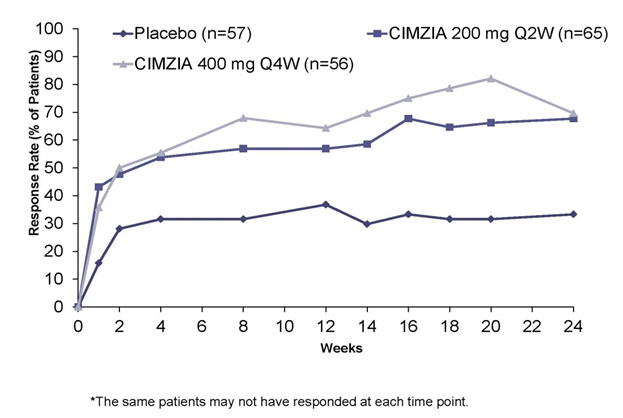
The percent of AS patients achieving ASAS20 responses by visit for Study AS001 is shown in Figure 3. Among patients receiving CIMZIA, clinical responses were seen in some AS patients within one to two weeks after initiation of therapy.
Figure 3: Study AS-1: ASAS20 response over 24 weeks in AS patients *
Lyophilized Powder for Reconstitution:
NDC 50474-700-62
CIMZIA (certolizumab pegol) for injection is supplied as a sterile white, lyophilized powder in a single-dose vial for subcutaneous use.
Pack Content| Qty. | Item |
|---|
| 2 | Type I glass vials with rubber stopper and overseals each containing 200 mg of lyophilized CIMZIA for reconstitution. |
| 2 | 2 mL Type I glass vials containing 1 mL sterile Water for Injection |
| 2 | 3 mL plastic syringes |
| 4 | 20 gauge needles (1 inch) |
| 2 | 23 gauge needles (1 inch) |
| 8 | Alcohol swabs |
Prefilled Syringe
NDC 50474-710-79
CIMZIA (certolizumab pegol) injection is supplied as a sterile, clear to opalescent, colorless to pale yellow solution in a single-dose prefilled syringe for subcutaneous use.
2 alcohol swabs and 2 single use prefilled glass syringes with a fixed 25 ½ gauge thin-wall needle, each containing 200 mg (1 mL) of CIMZIA.
Prefilled Syringe Starter Kit
NDC 50474-710-81
6 alcohol swabs and 6 single dose prefilled glass syringes with a fixed 25 ½ gauge thin-wall needle. The Starter Kit contains 3 sets of 2 prefilled syringes to provide sufficient drug supply for the initial 3 induction doses at the start of treatment. Each prefilled syringe contains 200 mg (1 mL) of CIMZIA.
When necessary, CIMZIA prefilled syringes may be stored at room temperature up to 77°F (25°C) in the original carton to protect from light for a single period of up to 7 days. Once a CIMZIA prefilled syringe has been stored at room temperature, do not place back in refrigerator. Write the date removed from the refrigerator in the space provided on the carton and discard if not used within the 7-day period.
Immunosuppression
Inform patients that CIMZIA may lower the ability of the immune system to fight infections. Instruct patients of the importance of contacting their doctor if they develop any symptoms of infection, including tuberculosis and reactivation of hepatitis B virus infections.
Counsel patients about the possible risk of lymphoma and other malignancies while receiving CIMZIA.
Allergic Reactions
Advise patients to seek immediate medical attention if they experience any symptoms of severe allergic reactions. Advise latex-sensitive patients that the needle shield inside the removable cap of the CIMZIA prefilled syringe contains 7% epoxyprene, a derivative of natural rubber latex.
Other Medical Conditions
Advise patients to report any signs of new or worsening medical conditions such as heart disease, neurological disease, or autoimmune disorders. Advise patients to report promptly any symptoms suggestive of a cytopenia such as bruising, bleeding, or persistent fever.
Manufactured by:
UCB, Inc.
1950 Lake Park Drive
Smyrna, GA 30080
US License No. 1736
This Medication Guide has been approved by the U.S. Food and Drug Administration.
Product manufactured by:
UCB, Inc.
1950 Lake Park Drive
Smyrna, GA 30080
US License No. 1736
Revised: March 2018