Other
Serious Infusion-Related Reactions
- DANYELZA can cause serious infusion reactions, including cardiac arrest, anaphylaxis, hypotension, bronchospasm, and stridor. Infusion reactions of any Grade occurred in 94-100% of patients. Severe infusion reactions occurred in 32-68% and serious infusion reactions occurred in 4 - 18% of patients in DANYELZA clinical studies
[see
Warnings and Precautions (5.1)].
- Premedicate prior to each DANYELZA infusion as recommended and monitor patients for at least 2 hours following completion of each infusion. Reduce the rate, interrupt infusion, or permanently discontinue DANYELZA based on severity [see Dosage and Administration (2.2, 2.3), Contraindications (4), and Warnings and Precautions (5.1)].
Neurotoxicity
- DANYELZA can cause severe neurotoxicity, including severe neuropathic pain, transverse myelitis and reversible posterior leukoencephalopathy syndrome (RPLS). Pain of any Grade occurred in 94-100% of patients in DANYELZA clinical studies
[see
Warnings and Precautions (5.2)].
- Premedicate to treat neuropathic pain as recommended. Permanently discontinue DANYELZA based on the adverse reaction and severity [see Dosage and Administration (2.2, 2.3)and Warnings and Precautions (5.2)].
Missed Dose
If a DANYELZA dose is missed, administer the missed dose the following week by Day 10. Administer GM-CSF 500 µg /m 2/day on the first day of the DANYELZA infusion, and on the day before and on the day of the second and third infusion, respectively (i.e. a total of 5 days with 500 µg /m 2/day).
Pain Management Prior to and During Infusion[see Warnings and Precautions (5.2)]:
- Five days prior to the first infusion of DANYELZA in each cycle, initiate a 12-day course (Day -4 through Day 7) of prophylactic medication for neuropathic pain, such as gabapentin.
- Administer oral opioids 45-60 minutes prior to initiation of each DANYELZA infusion and additional intravenous opioids as needed for breakthrough pain during the infusion.
- Consider use of ketamine for pain that is not adequately controlled by opioids.
- Administer intravenous corticosteroids (e.g. methylprednisolone 2 mg/kg with maximum dose of 80 mg or equivalent corticosteroid dose) 30 minutes to 2 hours prior to the first infusion of DANYELZA. Administer corticosteroid premedication for subsequent infusions if a severe infusion reaction occurred with the previous infusion or during the previous cycle.
- Administer an antihistamine, an H2 antagonist, acetaminophen and an antiemetic 30 minutes prior to each infusion.
Premedication: Reduce Risk of Infusion-Related Reactions and Nausea/Vomiting[see Warnings and Precautions (5.1)and Adverse Reactions (6.1)] .
Pain
Pain, including abdominal pain, bone pain, neck pain, and extremity pain, occurred in 100% of patients in Study 201 and 94% of patients in Study 12-230. Grade 3 pain occurred in 72% of patients in Study 201. One patient in Study 201 (4%) required interruption of an infusion due to pain. Pain typically began during the infusion of DANYELZA and lasted a median of less than one day in Study 201 (range less than one day and up to 62 days) [see Adverse Reactions (6.1)] .
Premedicate with drugs that treat neuropathic pain (e.g., gabapentin) and oral opioids. Administer intravenous opioids as needed for breakthrough pain [see Dosage and Administration (2.2)]. Permanently discontinue DANYELZA based on severity [see Dosage and Administration (2.3)].
Transverse Myelitis
Transverse myelitis has occurred with DANYELZA. Permanently discontinue DANYELZA in patients who develop transverse myelitis [see Dosage and Administration (2.3)] .
Reversible Posterior Leukoencephalopathy Syndrome (RPLS)
Reversible posterior leukoencephalopathy syndrome (RPLS) (also known as posterior reversible encephalopathy syndrome or PRES) occurred in 2 (2.8%) patients in Study 12-230. Events occurred 2 and 7 days following completion of the first cycle of DANYELZA. Monitor blood pressure during and following DANYELZA infusion and assess for neurologic symptoms [see Warnings and Precautions (5.3)] . Permanently discontinue DANYELZA in case of symptomatic RPLS [see Dosage and Administration (2.3)and Adverse Reactions (6.1)] .
Peripheral Neuropathy
Peripheral neuropathy, including peripheral sensory neuropathy, peripheral motor neuropathy, paresthesia, and neuralgia, occurred in 32% of patients in Study 201 and in 25% of patients in Study 12-230. Most signs and symptoms of neuropathy began on the day of the infusion and neuropathy lasted a median of 5.5 days (range 0 to 22 days) in Study 201 and 0 days (range 0 to 22 days) in Study 12-230 [see Adverse Reactions (6.1)] .
Permanently discontinue DANYELZA based on severity [see Dosage and Administration (2.3)] .
Neurological Disorders of the Eye
Neurological disorders of the eye including unequal pupils, blurred vision, accommodation disorder, mydriasis, visual impairment, and photophobia occurred in 24% of patients in Study 201 and 19% of patients in Study 12-230. Neurological disorders of the eye lasted a median of 17 days (range 0 to 84 days) in Study 201 with two patients (8%) experiencing an event that had not resolved at the time of data cutoff, and a median of 1 day (range less than one day to 21 days) in Study 12-230. Permanently discontinue DANYELZA based on severity [see Dosage and Administration (2.3)and Adverse Reactions (6.1)].
Prolonged Urinary Retention
Urinary retention occurred in 1 (4%) patient in Study 201 and in 3 patients (4%) in Study 12-230. All events in both studies occurred on the day of an infusion of DANYELZA and lasted between 0 and 24 days. Permanently discontinue DANYELZA in patients with urinary retention that does not resolve following discontinuation of opioids [see Dosage and Administration (2.3)and Adverse Reactions (6.1)].
Study 201
In Study 201, among 25 patients who received DANYELZA in combination with GM-CSF, 12% were exposed for 6 months or longer and none were exposed for greater than one year.
Serious adverse reactions occurred in 32% of patients who received DANYELZA in combination with GM-CSF. Serious adverse reactions in more than one patient included anaphylactic reaction (12%) and pain (8%). Permanent discontinuation of DANYELZA due to an adverse reaction occurred in 12% of patients. Adverse reactions resulting in permanent discontinuation of DANYELZA included anaphylactic reaction (8%) and respiratory depression (4%).
Dosage interruptions of DANYELZA due to an adverse reaction occurred in 84% of patients. Adverse reactions requiring dosage interruption in > 10% of patients included hypotension and bronchospasm.
Table 4 summarizes adverse reactions in Study 201.
Table 4. Adverse Reactions (>10%) in Patients with Refractory or Relapsed High-Risk Neuroblastoma in Bone or Bone Marrow Who Received DANYELZA with GM-CSF in Study 201 DANYELZA with GM-CSF Adverse reactions were graded using CTCAE version 4.0.
(n=25)Adverse Reaction All Grades
(%)Grade 3 or 4
(%)Body system General disorders and administration site conditions Pain Pain includes pain, abdominal pain, pain in extremity, bone pain, neck pain, back pain, and musculoskeletal pain.
100 72 Infusion-related reaction Infusion-related reaction includes hypotension, bronchospasm, flushing, wheezing, stridor, urticaria, dyspnea, pyrexia, infusion-related reaction, face edema, edema mouth, tongue edema, lip edema, respiratory tract edema, chills, hypoxia, pruritis and rash occurring on the day of infusion or the day following an infusion.
100 68 Edema 28 0 Fatigue Fatigue includes fatigue, asthenia.
28 0 Pyrexia Pyrexia not occurring on the day of infusion or the day following an infusion
28 0 Respiratory, thoracic and mediastinal disorders Cough 60 0 Rhinorrhea 24 0 Vascular disorders Hypertension 44 4 Gastrointestinal disorders Vomiting 60 4 Diarrhea 56 8 Nausea 56 0 Skin and subcutaneous tissue disorders Urticaria Urticaria, not occurring on the day of infusion or the day following an infusion
32 4 Cardiac disorders Tachycardia Tachycardia includes sinus tachycardia and tachycardia
84 4 Nervous system disorders Peripheral neuropathy Peripheral neuropathy includes peripheral sensory neuropathy, paresthesia, neuralgia.
32 0 Headache 28 8 Depressed level of consciousness 24 16 Eye disorders Neurological disorders of the eye Neurological disorders of the eye includes unequal pupils, blurred vision, and mydriasis.
24 0 Immune system disorders Anaphylactic reaction 12 12 Metabolism and nutrition disorders Decreased appetite 16 0 Infections and infestations Influenza 12 0 Rhinovirus infection 12 0 Upper respiratory tract infection 12 0 Investigations Weight decreased 12 0 Psychiatric disorders Anxiety 12 0 Clinically relevant adverse reactions occurring in ≤10% of patients who received DANYELZA with GM-CSF included peripheral edema (8%).
Table 5 summarizes the laboratory abnormalities in Study 201.
Table 5. Selected Laboratory Abnormalities (>20%) Worsening from Baseline in Patients with Refractory or Relapsed High-Risk Neuroblastoma in Bone or Bone Marrow Who Received DANYELZA with GM-CSF in Study 201 Laboratory Abnormality DANYELZA with GM-CSF The table presents laboratory parameters with available grading according to CTCAE version 4.0. Baseline evaluation was the last non-missing value prior to first DANYELZA dosing. Each test incidence is based on the number of patients who had both a baseline value and at least one on-study laboratory measurement (range: 23 to 24 patients).
n=25All Grades
(%)Grade 3 or 4
(%)Chemistry Decreased potassium 63 8 Decreased albumin 50 0 Increased alanine aminotransferase 42 8 Decreased sodium 29 0 Hematology Decreased lymphocytes 74 30 Decreased platelet count 65 17 Decreased neutrophils 61 39 Decreased hemoglobin 48 4 Study 12-230
In Study 12-230, among 72 patients who received DANYELZA in combination with GM-CSF, 32% were exposed for 6 months or longer and 8% were exposed for greater than one year.
Serious adverse reactions occurred in 40% of patients who received DANYELZA in combination with GM-CSF. Serious adverse reactions in > 5% of patients included hypertension (14%), hypotension (11%), and pyrexia (8%). Permanent discontinuation of DANYELZA due to an adverse reaction occurred in 8% of patients. Four (6%) patients permanently discontinued DANYELZA due to hypertension and one (1.4%) patient discontinued due to RPLS.
Table 6 summarizes adverse reactions in Study 12-230.
Table 6. Adverse Reactions (>10%) in Patients with Refractory or Relapsed High-Risk Neuroblastoma in Bone or Bone Marrow Who Received DANYELZA with GM-CSF in Study 12-230 DANYELZA with GM-CSF In Study 12-230, all adverse reactions occurring in Cycle 1 and 2, and adverse reactions of ≥ Grade 3 severity occurring in subsequent cycles were reported. In the dose finding phase, Grade 2 unexpected adverse reactions were also reported for Cycles 3 and later.
,Adverse reactions were graded using CTCAE version 4.0.
(n=72)Adverse Reaction All Grades
(%)Grade 3 or 4
(%)Body system General disorders and administration site conditions Infusion-related reaction Infusion-related reaction includes hypotension, bronchospasm, flushing, wheezing, stridor, urticaria, dyspnea, pyrexia, face edema, periorbital edema, lip swelling, swollen tongue, chills, hypoxia, pruritis, rash maculopapular and rash erythematous occurring on the day of infusion or the day following an infusion.
94 32 Pain Pain includes pain, abdominal pain, pain in extremity, bone pain, neck pain, back pain, non-cardiac chest pain, flank pain, and musculoskeletal pain.
94 2.8 Fatigue Fatigue includes fatigue, asthenia.
44 0 Injection site reaction 28 0 Localized edema 25 0 Pyrexia Pyrexia not occurring on the day of infusion or the day following an infusion.
11 0 Vascular disorders Hypertension 28 7 Gastrointestinal disorders Vomiting 63 2.8 Nausea 57 1.4 Diarrhea 50 4.2 Constipation 15 0 Skin and subcutaneous tissue disorders Erythema multiforme 33 0 Hyperhidrosis 17 0 Erythema 11 0 Respiratory, thoracic and mediastinal disorders Cough 57 0 Oropharyngeal pain 15 0 Rhinorrhea 15 0 Nervous system disorders Peripheral neuropathy Peripheral neuropathy includes peripheral sensory neuropathy, peripheral motor neuropathy, paresthesia, neuralgia.
25 0 Headache 18 0 Lethargy 14 0 Metabolism and nutrition disorders Decreased appetite 53 4.2 Cardiac disorders Sinus tachycardia 44 1.4 Psychiatric disorders Anxiety 26 0 Irritability 25 0 Investigations Breath sounds abnormal 15 0 Injury and procedural complications Contusion 15 0 Infections and infestations Rhinovirus infection 14 0 Enterovirus infection 13 0 Eye Disorders Neurological disorders of the eye Neurological disorders of the eye includes unequal pupils, blurred vision, accommodation disorder, visual impairment and photophobia.
19 0 Clinically relevant adverse reactions in ≤10% of patients who received DANYELZA with GM-CSF included apnea (4.2%), hypopnea (2.8%), generalized edema (2.8%), peripheral edema (8.3%), and device related infection (4.2%).
Table 7 summarizes the laboratory abnormalities in Study 12-230.
Table 7. Selected Laboratory Abnormalities (>20%) Worsening from Baseline in Patients with Refractory or Relapsed High-Risk Neuroblastoma in Bone or Bone Marrow Who Received DANYELZA with GM-CSF in Study 12-230 Laboratory Abnormality DANYELZA with GM-CSF The table presents laboratory parameters with available grading according to CTCAE version 4.0. Baseline evaluation was the last non-missing value prior to first DANYELZA dosing. Each test incidence is based on the number of patients who had both a baseline value and at least one on-study laboratory measurement (range 19 to 72 patients).
n=72All Grades
(%)Grade 3 or 4
(%)Chemistry Increased glucose 74 0 Decreased albumin 68 7 Decreased calcium 64 8 Increased alanine aminotransferase 55 9 Decreased magnesium 54 0 Increased aspartate aminotransferase 49 4 Decreased phosphate 47 5 Decreased potassium 47 32 Decreased sodium 38 6 Decreased glucose 29 8 Hematology Decreased lymphocytes 79 56 Decreased hemoglobin 76 42 Decreased neutrophils 72 46 Decreased platelets 71 40 Risk Summary
Based on its mechanism of action, DANYELZA may cause fetal harm when administered to pregnant women [see Clinical Pharmacology (12.1)]. There are no available data on the use of DANYELZA in pregnant women and no animal reproduction studies have been conducted with DANYELZA. IgG1 monoclonal antibodies are transported across the placenta in a linear fashion as pregnancy progresses, with the largest amount transferred during the third trimester. Advise pregnant women of potential risk to a fetus.
In the U.S. general population, the estimated background risk of major birth defects and miscarriage in clinically recognized pregnancies is 2% to 4% and 15% to 20%, respectively.
Risk Summary
There are no data on the presence of naxitamab-gqgk in human milk or its effects on the breastfed child, or on milk production, however, human IgG is present in human milk. Because of the potential for serious adverse reactions in a breastfed child from DANYELZA, advise women not to breastfeed during treatment and for 2 months after the last dose of DANYELZA.
Pregnancy Testing
Verify pregnancy status in females of reproductive potential prior to initiating DANYELZA.
Contraception
Females
Advise females of reproductive potential to use effective contraception during treatment and for 2 months after the last dose of DANYELZA.
Elimination
The mean terminal half-life of naxitamab-gqgk was 8.2 days.
Metabolism
Naxitamab-gqgk is expected to be metabolized into small peptides by catabolic pathways.
Specific Populations
Population pharmacokinetic analyses suggest that age (range: 1 to 34 years), sex and race have no clinically important effect on the clearance (CL) of naxitamab-gqgk. The naxitamab-gqgk systemic exposure (AUC) at 150 mg/day (450 mg per cycle) for patients with body weight over 50 kg is not expected to differ clinically from that of the naxitamab-gqgk exposures at 3 mg/kg/day (9 mg/kg per cycle) for patients with body weight of 30 - 50 kg.
Study 201
The efficacy of DANYELZA in combination with GM-CSF was evaluated in Study 201 (NCT03363373), a multicenter open-label, single arm trial, in a subpopulation of patients who had refractory or relapsed high-risk neuroblastoma in the bone or bone marrow and demonstrated a partial response, minor response, or stable disease to prior therapy. Patients with progressive disease were excluded. All patients received at least one systemic therapy to treat disease outside of the bone or bone marrow prior to enrollment. Patients received DANYELZA 9 mg/kg/cycle administered as three separate intravenous infusions of 3 mg/kg on Days 1, 3 and 5 of each cycle. Patients received GM-CSF subcutaneously at 250 µg/m 2/day on Days -4 to 0 and at 500 µg/m 2/day on Days 1 to 5. Preplanned radiation to the primary site was allowed.
The major efficacy outcome measure was overall response rate (ORR) according to the revised International Neuroblastoma Response Criteria (INRC), as determined by independent pathology and imaging review and confirmed by at least one subsequent assessment. An additional efficacy outcome measure was duration of response (DOR).
Of the 22 patients included in the efficacy analysis, 64% had refractory disease and 36% had relapsed disease; the median age was 5 years (range 3 to 10 years), 59% were male; 45% were White, 50% were Asian and 5% were Black. MYCN amplification was present in 14% of patients and 86% of patients were International Neuroblastoma Staging System (INSS) stage 4 at time of diagnosis. Disease sites included 59% in the bone only, 9% in bone marrow only, and 32% in both. Prior therapies included surgery (91%), chemotherapy (95%), radiation (36%), autologous stem cell transplant (ASCT) (18%), and anti-GD2 antibody treatment (18%).
Efficacy results for Study 201 are described in Table 8.
Table 8. Efficacy Results from Study 201 DANYELZA with GM-CSF
(n=22)CI = confidence interval
NE: not estimable.Overall response rate Overall response rate is defined as a complete or partial response according to the revised INRC (2017) that was confirmed by at least one subsequent assessment. Responses were observed in the bone, bone marrow, or both bone and bone marrow.
(95% CI)45%
(24%, 68%)Complete response rate 36% Partial response rate 9% Duration of response Median (95% CI), months 6.2 (4.9, NE) Responders with DOR ≥ 6 months 30% In an exploratory analysis in the subset of patients previously treated with an anti-GD2 antibody (n=4), one patient demonstrated a confirmed complete response and no patients demonstrated a partial response.
Study 12-230
The efficacy of DANYELZA in combination with GM-CSF was evaluated in Study 12-230 (NCT01757626), a single center, open-label, single arm trial, in a subpopulation of patients who had relapsed or refractory high-risk neuroblastoma in bone or bone marrow and demonstrated a partial response, minor response, or stable disease to prior therapy. Patients with progressive disease were excluded. All patients received at least one systemic therapy to treat disease outside of the bone or bone marrow prior to enrollment. Patients were required to have received at least one dose of DANYELZA at a dose of 3 mg/kg or greater per infusion and have evaluable disease at baseline according to independent review per the revised INRC.
Patients received DANYELZA 9 mg/kg/cycle administered as three separate intravenous infusions of 3 mg/kg (on Days 1, 3 and 5) in the first week of each cycle. Patients received GM-CSF subcutaneously at 250 µg/m 2/day on Days -4 to 0 and at 500 µg/m 2/day on Days 1 to 5. Radiation to non-target bony lesions and soft tissue lesions was permitted at the investigator's discretion; assessment of response excluded sites that received radiation. The major efficacy outcome measures were overall response rate (ORR) and duration of response (DOR), as determined by independent pathology and imaging review according to the revised INRC and confirmed by at least one subsequent assessment.
Of the 38 patients included in the efficacy analysis, 55% had relapsed neuroblastoma and 45% had refractory disease; 50% were male, the median age was 5 years (range 2 to 23 years), 74% were White, 8% Asian and 5% were Black, 5% Native American/American Indian/Alaska Native, 3% other races and 5% was not available. MYCN-amplification was present in 16% of patients and most patients were International Neuroblastoma Staging System (INSS) stage 4 (95%). Fifty percent (50%) of patients had disease involvement in the bone only, 11% only in bone marrow, and 39% in both. Prior therapies included surgery (100%), chemotherapy (100%), radiation (47%), autologous stem cell transplant (ASCT) (42%), and anti-GD2 antibody treatment (58%).
Efficacy results are provided in Table 9.
Table 9. Efficacy Results from Study 12-230 DANYELZA with GM-CSF
(n=38)CI = confidence interval Overall response rate Overall response rate is defined as a complete or partial response according to the revised INRC (2017) that was confirmed by at least one subsequent assessment. Responses were observed in the bone, bone marrow, or both bone and bone marrow.
(95% CI)34%
(20%, 51%)Complete response rate 26% Partial response rate 8% Duration of Response Responders with DOR ≥ 6 months 23% In an exploratory analysis in the subset of patients previously treated with an anti-GD2 antibody (n=22), the ORR was 18% (95% CI 5%, 40%), with no patients having a documented response of 6 months or greater.
Serious Infusion-Related Reactions
Advise patients and caregivers that DANYELZA can cause serious infusion-related reactions and anaphylaxis and to immediately report any signs or symptoms, such as facial or lip swelling, urticaria, or difficulty breathing, that occur during or following the infusion [see Warnings and Precautions (5.1)] .
Neurotoxicity
Advise patients and caregivers that DANYELZA can cause neurotoxicity, including severe pain, peripheral neuropathy, neurological disorders of the eye, prolonged urinary retention, transverse myelitis, and reverse posterior leukoencephalopathy syndrome. Advise patients to contact their healthcare provider for any new or worsening neurological symptoms [see Warnings and Precautions (5.2)].
Myocarditis
Advise patients and caregivers that myocarditis has been seen in patients taking DANYELZA and to report any signs or symptoms, such as chest pain, shortness of breath or abnormal heart rhythms during treatment with DANYELZA [see Warnings and Precautions (5.3)].
Hypertension
Advise patients and caregivers that DANYELZA can cause hypertension and to immediately report signs or symptoms of hypertension [see Warnings and Precautions (5.4)].
Orthostatic Hypotension
Advise patients and caregivers that DANYELZA can cause severe low blood pressure when standing after sitting or lying down. Advise patients and caregivers to report any signs or symptoms, such as dizziness, lightheadedness or fainting during treatment with DANYELZA [see Warnings and Precautions (5.5)].
Embryo-Fetal Toxicity[see Warnings and Precautions (5.6)and Use in Specific Populations (8.1, 8.3)] .
Advise females of reproductive potential, including pregnant women, of the potential risk to the fetus.
Advise females of reproductive potential to inform their healthcare provider of a known or suspected pregnancy and to use effective contraception during treatment with and for 2 months after the last dose of DANYELZA.
Lactation
Advise women not to breastfeed during treatment with DANYELZA and for 2 months after the last dose [see Use in Specific Populations (8.2)].
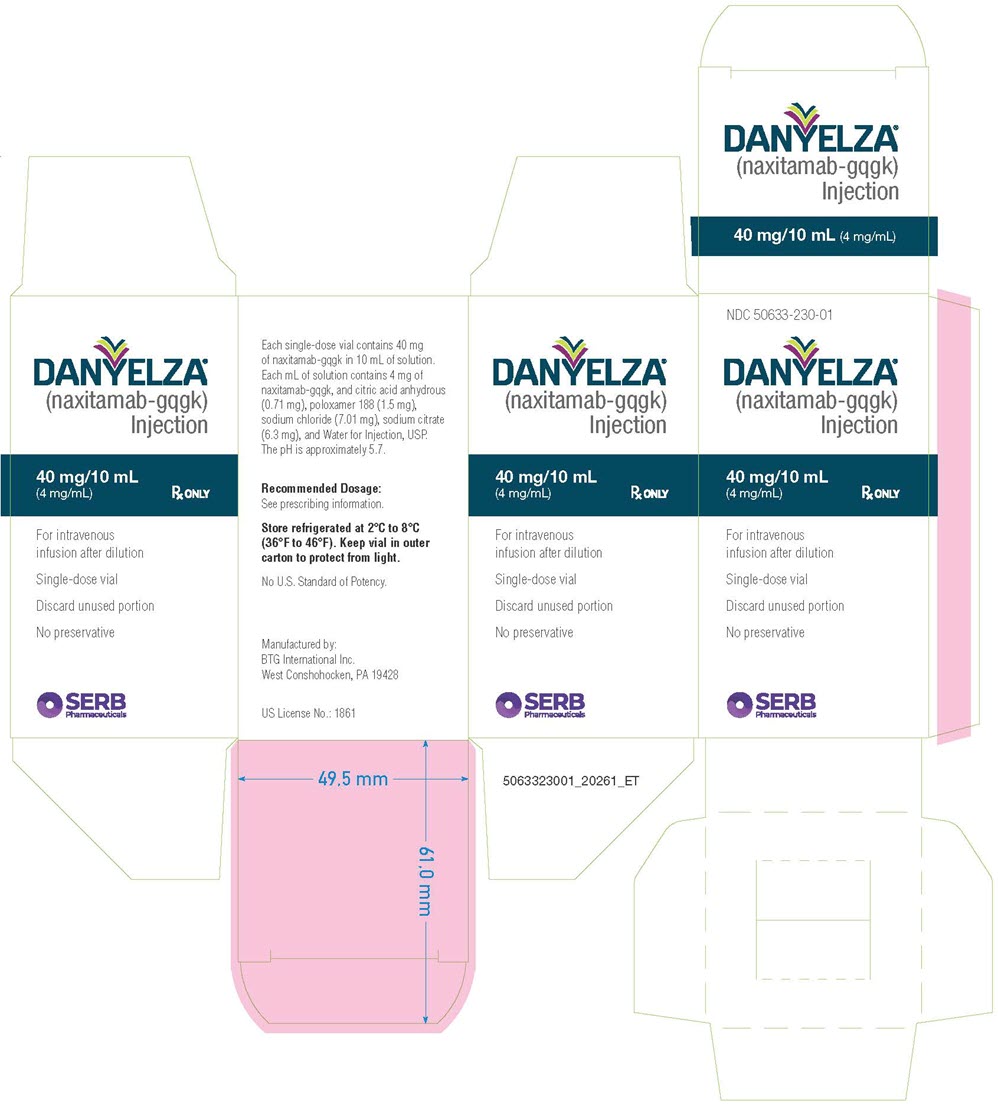
Manufactured by:
BTG International Inc.West Conshohocken, PA 19428
US License No. 1861 - Premedicate to treat neuropathic pain as recommended. Permanently discontinue DANYELZA based on the adverse reaction and severity [see Dosage and Administration (2.2, 2.3)and Warnings and Precautions (5.2)].
- Premedicate prior to each DANYELZA infusion as recommended and monitor patients for at least 2 hours following completion of each infusion. Reduce the rate, interrupt infusion, or permanently discontinue DANYELZA based on severity [see Dosage and Administration (2.2, 2.3), Contraindications (4), and Warnings and Precautions (5.1)].