HOW POTASSIUM IODIDE WORKS
Certain forms of iodine help your thyroid gland work right. Most people get the iodine they need from foods like iodized salt or fish. The thyroid can "store" or hold only a certain amount of iodine.
In a nuclear radiation emergency, radioactive iodine may be released in the air. This material may be breathed or swallowed. It may enter the thyroid gland and damage it. The damage would probably not show itself for years. Children are most likely to have thyroid damage.
If you take KI, it will block or reduce the chances that radioactive iodine will enter your thyroid gland.
WHO SHOULD NOT TAKE POTASSIUM IODIDE
People should avoid KI if they are allergic to iodine, have dermatitis herpetiformis or hypocomplementemic vasculitis, or have nodular thyroid disease with heart disease, because these conditions may increase the chances of side effects to iodine.
HOW AND WHEN TO TAKE POTASSIUM IODIDE
KI should be taken as soon as possible after public officials tell you. If you are told to repeat the dose, you should take the second dose 24 hours after the first dose. Do not take it sooner. More KI will not help you because the thyroid can "hold" only certain amounts of iodine. Taking more than 1 dose per day will increase the chances of side effects. The public officials will tell you how many days to take KI. You should take KI until the chances of major exposure to radioactive iodine by breathing or swallowing stops.
SIDE EFFECTS
Short-term use of KI at the recommended dose is safe. You should not take this drug for longer than you are told.
Possible side effects include: swelling of the salivary glands, nausea, vomiting, diarrhea, stomach ache, fever, headache, metallic taste, and allergic reactions. Allergic reactions can include
- skin rashes such as hives
- swelling of various parts of the body such as the face, lips, tongue, throat, hands or feet
- fever with joint pain
- trouble breathing, speaking or swallowing
- wheezing or shortness of breath
Get medical attention right away if you have trouble breathing, speaking or swallowing; wheezing; shortness of breath; or swelling of the mouth, tongue or throat.
Taking iodide, in rare cases, may cause overactivity of the thyroid gland, underactivity of the thyroid gland, or enlargement of the thyroid gland (goiter). Symptoms of an overactive thyroid gland may include an irregular heart beat and chest pain. Patients with thyroid disease are more likely to get these side effects. Babies under 1 month of age are more likely to get an underactive thyroid gland (hypothyroidism).
WHAT TO DO IF SIDE EFFECTS OCCUR
Stop taking KI and call a doctor if you have one or more of the following symptoms:
- swelling of the face, hands or feet
- fever and joint pain
- skin rash
Stop taking KI and get medical help right away if you have one or more of the following symptoms:
- trouble breathing, speaking or swallowing
- shortness of breath or wheezing
- swelling of the lips, tongue or throat
- irregular heart beat or chest pain
HOW SUPPLIED
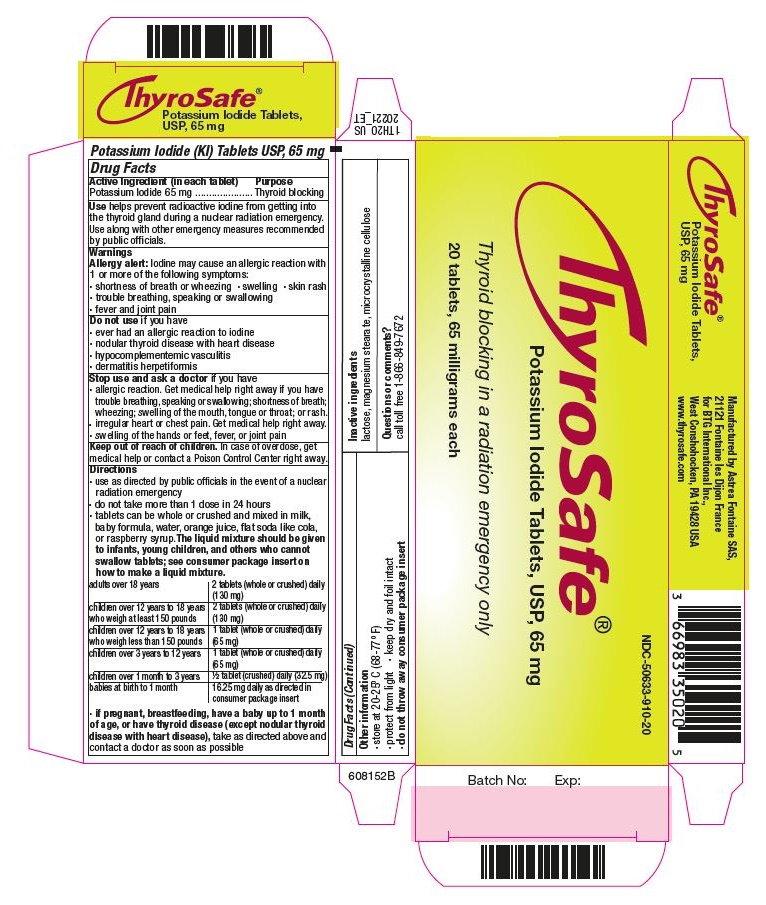
ThyroSafe® (potassium iodide, USP) tablets. Packages of 10 and 20 tablets. Each white, round, cross-scored tablet contains 65 mg potassium iodide. Store at 20-25° C (68-77° F). Keep dry and foil intact.
Manufactured by Astrea Fontaine SAS,
21121 Fontaine les Dijon, France
for BTG International Inc., West Conshohocken, PA 19428 USA
1-866-849-7672.
www.thyrosafe.com.
Revised 02/2022
Drug Facts
Other information
- store at 20-25° C (68-77° F)
- protect from light
- keep dry and foil intact
- do not throw away consumer package insert