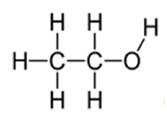
Ethanol (of alcohol beverages) was added to Group 1 International Agency for Research on Cancer (IARC) Carcinogenicity Ratings (IARC monographs). Substances in this group are either carcinogenic to humans, or there is sufficient evidence of carcinogenicity in experimental animals and strong evidence in exposed humans that the substance acts through a relevant mechanism of carcinogenicity. Alcohol consumption has been associated with various cancers, including liver, esophageal, breast, prostate, and colorectal cancer. Since dehydrated alcohol injection is not expected to reach the systemic circulation following administration into a septal artery during percutaneous transluminal septal myocardial ablation, the recommended clinical use of the drug product is not expected to have carcinogenic risk in patients.
Literature reports suggest that ethanol is not mutagenic in the in vitro bacterial reverse mutation (Ames) assay or in vitro chromosomal aberration assays. Ethanol is metabolized to acetaldehyde, which is a known mutagen.
There are no data from either animal or human studies regarding potential for the impairment of fertility.