Levetiracetam Tablet, Film Coated
Product Images NDC 51079-821

12 FDA label images from Mylan Institutional Inc. · Packaging, Regulatory Labels, and Product Appearance

Product Visual Gallery

This gallery contains 12 technical images submitted to the FDA as part of the official labeling for Levetiracetam (NDC 51079-821). Unlike standard consumer photos, these assets often include clinical data figures, molecular chemical structures, and official manufacturer packaging layouts.

As provided by Mylan Institutional Inc., these visuals offer a comprehensive scientific overview of the product's physical and chemical identity, aiding pharmacists and researchers in product verification and study.

FDA Label Image

Formula Calculation For Patients With Renal Impairment (A518c4f5 8b66 4770 B971 3534d581ca99 02)

Formula Calculation For Patients With Renal Impairment (A518c4f5 8b66 4770 B971 3534d581ca99 02)
A pharmacokinetic formula panel showing the calculation for creatinine clearance (CLcr) based on age, weight, serum creatinine, and an adjustment factor for female patients. The formula applies to the context of levetiracetam dosing consideration.*
FDA Label Image

Then Clcr Is Adjusted For Body Surface Area (bsa) As Follows (A518c4f5 8b66 4770 B971 3534d581ca99 03)

Then Clcr Is Adjusted For Body Surface Area (bsa) As Follows (A518c4f5 8b66 4770 B971 3534d581ca99 03)
An illustration showing a formula for calculating creatinine clearance normalized to body surface area (BSA). The formula divides creatinine clearance (mL/min) by the subject's BSA (m²) and multiplies by 1.73 to give creatinine clearance in mL/min/1.73m².*
FDA Label Image

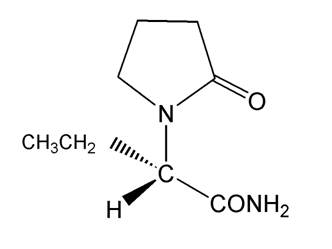
Levetiracetam Structural Formula (A518c4f5 8b66 4770 B971 3534d581ca99 04)

Levetiracetam Structural Formula (A518c4f5 8b66 4770 B971 3534d581ca99 04)
Chemical structure of levetiracetam, showing the molecular arrangement including a pyrrolidone ring, an ethyl side chain, and an amide functional group.*
FDA Label Image

Levetiracetam Oral Solution Weight-based Dosing Calculation For Pediatric Patients (Image 01)

Levetiracetam Oral Solution Weight-based Dosing Calculation For Pediatric Patients (Image 01)
The image shows a dosing calculation formula used to determine the total daily dose in milliliters per day based on the daily dose in milligrams per kilogram per day multiplied by patient weight in kilograms, divided by 100 mg/mL. This formula relates to the concentration of levetiracetam oral solution or suspension.*
FDA Label Image

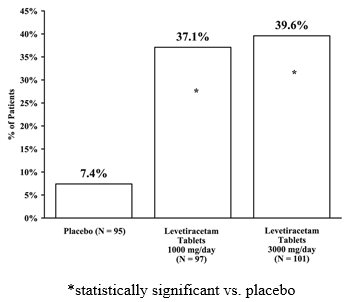
Figure 1: Responder Rate (≥ 50% Reduction From Baseline) In Study 1 (Image 02)

Figure 1: Responder Rate (≥ 50% Reduction From Baseline) In Study 1 (Image 02)
A bar chart comparing the percentage of patients for placebo and two doses of Levetiracetam tablets, 1000 mg/day and 3000 mg/day. The vertical axis shows percentage of patients, with placebo at 7.4%, 1000 mg/day at 37.1%, and 3000 mg/day at 39.6%. Statistical significance is noted for both Levetiracetam doses versus placebo.*
FDA Label Image

Figure 2: Responder Rate (≥ 50% Reduction From Baseline) In Study 2: Period A (Image 03)

Figure 2: Responder Rate (≥ 50% Reduction From Baseline) In Study 2: Period A (Image 03)
A bar chart comparing patient percentages across three groups: Placebo (6.3%, N=111), Levetiracetam Tablets 1000 mg/day (20.8%, N=106), and Levetiracetam Tablets 2000 mg/day (35.2%, N=165). Statistically significant differences versus placebo are indicated for both Levetiracetam groups.*
FDA Label Image

Figure 3: Responder Rate (≥ 50% Reduction From Baseline) In Study 3 (Image 04)

Figure 3: Responder Rate (≥ 50% Reduction From Baseline) In Study 3 (Image 04)
A bar graph comparing the percentage of patients between two groups: placebo and Levetiracetam tablets 3000 mg/day. The placebo group shows 14.4% while the Levetiracetam group shows 39.4%, with an asterisk indicating a statistically significant difference versus placebo. Patient numbers for each group are also displayed.*
FDA Label Image

Figure 4: Responder Rate (≥ 50% Reduction From Baseline) In Study 4 (Image 05)

Figure 4: Responder Rate (≥ 50% Reduction From Baseline) In Study 4 (Image 05)
Bar chart comparing the percentage of patients between placebo (97 patients) and Levetiracetam Tablets (101 patients). The chart shows 19.6% for placebo and 44.6% for Levetiracetam Tablets, with a notation indicating statistical significance versus placebo.*
FDA Label Image

Figure 5: Responder Rate For All Patients Ages 1 Month To < 4 Years (≥ 50% Reduction From Baseline) In Study 5 (Image 06)

Figure 5: Responder Rate For All Patients Ages 1 Month To < 4 Years (≥ 50% Reduction From Baseline) In Study 5 (Image 06)
A bar graph comparing the percentage of patients experiencing an effect between placebo and Levetiracetam tablets. The y-axis shows percentage of patients from 0% to 45%. Placebo group (N=51) shows 19.6%, while Levetiracetam tablets group (N=58) shows 43.1%. A note indicates the difference is statistically significant versus placebo.*
FDA Label Image

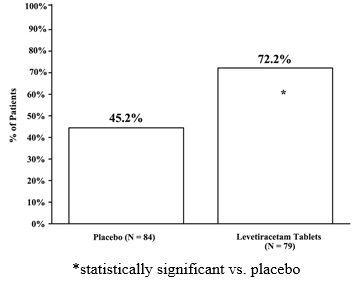
Figure 6: Responder Rate (≥ 50% Reduction From Baseline) In Pgtc Seizure Frequency Per Week In Study 7 (Image 07)

Figure 6: Responder Rate (≥ 50% Reduction From Baseline) In Pgtc Seizure Frequency Per Week In Study 7 (Image 07)
A bar graph comparing the percentage of patients in two groups: Placebo (N=84) with 45.2% and Levetiracetam Tablets (N=79) with 72.2%, indicating a statistically significant difference versus placebo.*
FDA Label Image

Levetiracetam 500 mg Tablets Unit Carton Label (Image 08)

Levetiracetam 500 mg Tablets Unit Carton Label (Image 08)
Levetiracetam 500 mg film-coated tablets label from Mylan Institutional Inc. The label shows the tablet imprint 'M 61S' and includes details like prescription use, quantity of 100 tablets (10 x 10), storage temperature instructions (20° to 25°C), and manufacturer information stating Mylan Pharmaceuticals Inc., Morgantown, WV, USA, with the product made in India.*
FDA Label Image

Serialized Unit Carton (Image 09)

Serialized Unit Carton (Image 09)
Packaging label for Levetiracetam 500 mg unit-dose tablet by Mylan Institutional Inc. The label features a blue background with usage instructions, warnings, and distribution information. It includes a section for lot number and expiration date, plus a QR code. The packaging is for institutional use and is not child resistant.*

* About these descriptions: Image descriptions on this page are generated by automated AI analysis of the product label images from the manufacturer's FDA label submission (SPL). They are provided for reference only and may contain errors or omissions. Always rely on the printed label itself and the official FDA labeling, and consult a pharmacist or healthcare professional with any questions about this product.