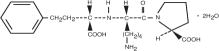
During baseline-controlled clinical trials, in patients receiving digitalis and diuretics, single doses of Lisinopril Tablets resulted in decreases in pulmonary capillary wedge pressure, systemic vascular resistance and blood pressure accompanied by an increase in cardiac output and no change in heart rate.
In two placebo controlled, 12-week clinical studies using doses of Lisinopril Tablets up to 20 mg, Lisinopril Tablets as adjunctive therapy to digitalis and diuretics improved the following signs and symptoms due to congestive heart failure: edema, rales, paroxysmal nocturnal dyspnea and jugular venous distention. In one of the studies, beneficial response was also noted for: orthopnea, presence of third heart sound and the number of patients classified as NYHA Class III and IV. Exercise tolerance was also improved in this study. The once-daily dosing for the treatment of congestive heart failure was the only dosage regimen used during clinical trial development and was determined by the measurement of hemodynamic response. A large (over 3000 patients) survival study, the ATLAS Trial, comparing 2.5 and 35 mg of lisinopril in patients with heart failure, showed that the higher dose of lisinopril had outcomes at least as favorable as the lower dose.
Lisinopril Tablets are indicated as adjunctive therapy in the management of heart failure in patients who are not responding adequately to diuretics and digitalis.
In patients with heart failure treated with lisinopril for up to four years, discontinuation of therapy due to clinical adverse experiences occurred in 11.0% of patients. In controlled studies in patients with heart failure, therapy was discontinued in 8.1% of patients treated with lisinopril for 12 weeks, compared to 7.7% of patients treated with placebo for 12 weeks.
The following table lists those adverse experiences which occurred in greater than 1% of patients with heart failure treated with lisinopril or placebo for up to 12 weeks in controlled clinical trials, and more frequently on lisinopril than placebo.
| | | Controlled Trials |
| | LISINOPRIL | Placebo |
| | (n=407) | (n-155) |
| | Incidence | Incidence |
| | (discontinuation) | (discontinuation) |
| | 12 weeks | 12 weeks |
| Body as a Whole | | |
| Chest Pain | 3.4 (0.2) | 1.3 (0.0) |
| Abdominal Pain | 2.2 (0.7) | 1.9 (0.0) |
| Cardiovascular | | |
| Hypotension | 4.4 (1.7) | 0.6 (0.6) |
| Digestive | | |
| Diarrhea | 3.7 (0.5) | 1.9 (0.0) |
| | | |
| Nervous/Psychiatric | | |
| Dizziness | 11.8 (1.2} | 4.5 (1.3) |
| Headache | 4.4 (0.2) | 3.9 (0.0) |
| Respiratory | | |
| Upper Respiratory Infection | 1.5 (0.0) | 1.3 (0.0) |
| | | |
| Skin | | |
| Rash | 1.7 (0.5) | 0.6 (0.6) |
Also observed at > 1% with Lisinopril Tablets but more frequent or as frequent on placebo than Lisinopril Tablets in controlled trials were asthenia, angina pectoris, nausea, dyspnea, cough, and pruritus.
Worsening of heart failure, anorexia, increased salivation, muscle cramps, back pain, myalgia, depression, chest sound abnormalities, and pulmonary edema were also seen in controlled clinical trials, but were more common on placebo than Lisinopril Tablets.
In the two-dose ATLAS trial in heart failure patients, withdrawals due to adverse events were not different between the low and high groups, either in total number of discontinuation (17-18%) or in rare specific events (<1%). The following adverse events, mostly related to ACE inhibition, were reported more commonly in the high dose group:
% of patients Events | High Dose (N=1568) | Low Dose (N=1596) |
Dizziness | 18.9 | 12.1 |
Hypotension | 10.8 | 6.7 |
Creatinine increased | 9.9 | 7.0 |
Hyperkalemia | 6.4 | 3.5 |
NPNi increased | 9.2 | 6.5 |
Syncope | 7.0 | 5.1 |
i NPN = non-protein nitrogen |
Lisinopril Tablets are indicated as adjunctive therapy with diuretics and (usually) digitalis. The recommended starting dose is 5 mg once a day. When initiating treatment with lisinopril in patients with heart failure, the initial dose should be administered under medical observation, especially in those patients with low blood pressure (systolic blood pressure below 100 mmHg). The mean peak blood pressure lowering occurs six to eight hours after dosing. Observation should continue until blood pressure is stable. The concomitant diuretic dose should be reduced, if possible, to help minimize hypovolemia which may contribute to hypotension. (See WARNINGS and PRECAUTIONS, Drug Interactions.) The appearance of hypotension after the initial dose of Lisinopril Tablets does not preclude subsequent careful dose titration with the drug, following effective management of the hypotension.
The usual effective dosage range is 5 to 40 mg per day administered as a single daily dose. The dose of Lisinopril Tablets can be increased by increments of no greater than 10 mg, at intervals of no less than 2 weeks to the highest tolerated dose, up to a maximum of 40 mg daily. Dose adjustment should be based on the clinical response of individual patients.