Trikafta Kit
FDA Label NDC 51167-106

39 label sections · Submitted to the FDA by Vertex Pharmaceuticals Incorporated · Indications, Dosage, Usage, and Precautions

Structured Product Label

The following Structured Product Label (SPL) was submitted to the FDA by Vertex Pharmaceuticals Incorporated for the product Trikafta (NDC 51167-106). This document serves as the official prescribing information, containing essential scientific data and clinical materials required for healthcare providers and patients.

This specific version of the label includes detailed information regarding warning: drug-induced liver injury and liver failure, 1 indications and usage, 2.1 recommended laboratory testing prior to trikafta initiation and during treatment, 2.2 recommended dosage in adults and pediatric patients aged 2 years and older, 2.3 recommended dosage for patients with hepatic impairment, 2.4 dosage modification for patients taking drugs that are cyp3a inhibitors, 2.5 recommendations regarding missed dose(s), other, and other regulatory disclosures. Use the navigation below to review specific sections of the FDA submission.

Label Section Quick Index

Warning: Drug-Induced Liver Injury And Liver Failure

TRIKAFTA can cause serious and potentially fatal drug-induced liver injury. Cases of liver failure leading to transplantation and death have been reported in patients with and without a history of liver disease taking TRIKAFTA, in both clinical trials and the postmarketing setting [see Adverse Reactions (6)]. Liver injury has been reported within the first month of therapy and up to 15 months following initiation of TRIKAFTA.

Assess liver function tests (ALT, AST, alkaline phosphatase, and bilirubin) in all patients prior to initiating TRIKAFTA. Assess liver function tests every month during the first 6 months of treatment, then every 3 months for the next 12 months, then at least annually thereafter. Consider more frequent monitoring for patients with a history of liver disease or liver function test elevations at baseline [see Dosage and Administration (2.1), Warnings and Precautions (5.1), Adverse Reactions (6) and Use in Specific Populations (8.7)].

Interrupt TRIKAFTA for significant elevations in liver function tests or in the event of signs or symptoms of liver injury. Consider referral to a hepatologist. Follow patients closely with clinical and laboratory monitoring until abnormalities resolve. If abnormalities resolve, resume treatment only if the benefit is expected to outweigh the risk. Closer monitoring is advised after resuming TRIKAFTA [see Warnings and Precautions (5.1)].

TRIKAFTA should not be used in patients with severe hepatic impairment (Child-Pugh Class C). TRIKAFTA is not recommended in patients with moderate hepatic impairment (Child-Pugh Class B). If used, use with caution at a reduced dosage and monitor patients closely [see Dosage and Administration (2.3), Warnings and Precautions (5.1), Adverse Reactions (6), Use in Specific Populations (8.7) and Clinical Pharmacology (12.3)].

1 Indications And Usage

TRIKAFTA is indicated for the treatment of cystic fibrosis (CF) in adult and pediatric patients aged 2 years and older who have a clinical diagnosis of CF and who have at least one variant in the cystic fibrosis transmembrane conductance regulator (CFTR) gene that is either responsive based on clinical and/or in vitro data (see Table 6) or results in production of CFTR protein [see Clinical Pharmacology (12.1)].

If the patient's genotype is unknown, an FDA-cleared CF genetic test should be used to confirm the presence of at least one variant in the CFTR gene that is either responsive based on clinical and/or in vitro data or results in production of CFTR protein.

2.1 Recommended Laboratory Testing Prior To Trikafta Initiation And During Treatment

Prior to initiating TRIKAFTA, obtain liver function tests (ALT, AST, alkaline phosphatase, and bilirubin) for all patients. Monitor liver function tests every month during the first 6 months of treatment, then every 3 months for the next 12 months, then at least annually thereafter. Consider more frequent monitoring for patients with a history of liver disease or liver function test elevations at baseline [see Warnings and Precautions (5.1) and Use in Specific Populations (8.7)].

2.2 Recommended Dosage In Adults And Pediatric Patients Aged 2 Years And Older

Recommended dosage for adult and pediatric patients aged 2 years and older is provided in Table 1. Administer TRIKAFTA tablets (swallow the tablets whole) or oral granules orally with fat-containing food, in the morning and in the evening approximately 12 hours apart. Examples of meals or snacks that contain fat are those prepared with butter or oils or those containing eggs, peanut butter, cheeses, nuts, whole milk, or meats [see Clinical Pharmacology (12.3)].

Administer each dose of TRIKAFTA oral granules immediately before or after ingestion of fat-containing food. Mix entire contents of each packet of oral granules with one teaspoon (5 mL) of age-appropriate soft food or liquid that is at or below room temperature. Some examples of soft food or liquids include pureed fruits or vegetables, yogurt, applesauce, water, milk, or juice. Once mixed, the product should be consumed completely within one hour.

Table 1: Recommended Dosage of TRIKAFTA for Adult and Pediatric Patients Aged 2 Years and Older
AgeWeightOral Morning DoseOral Evening Dose
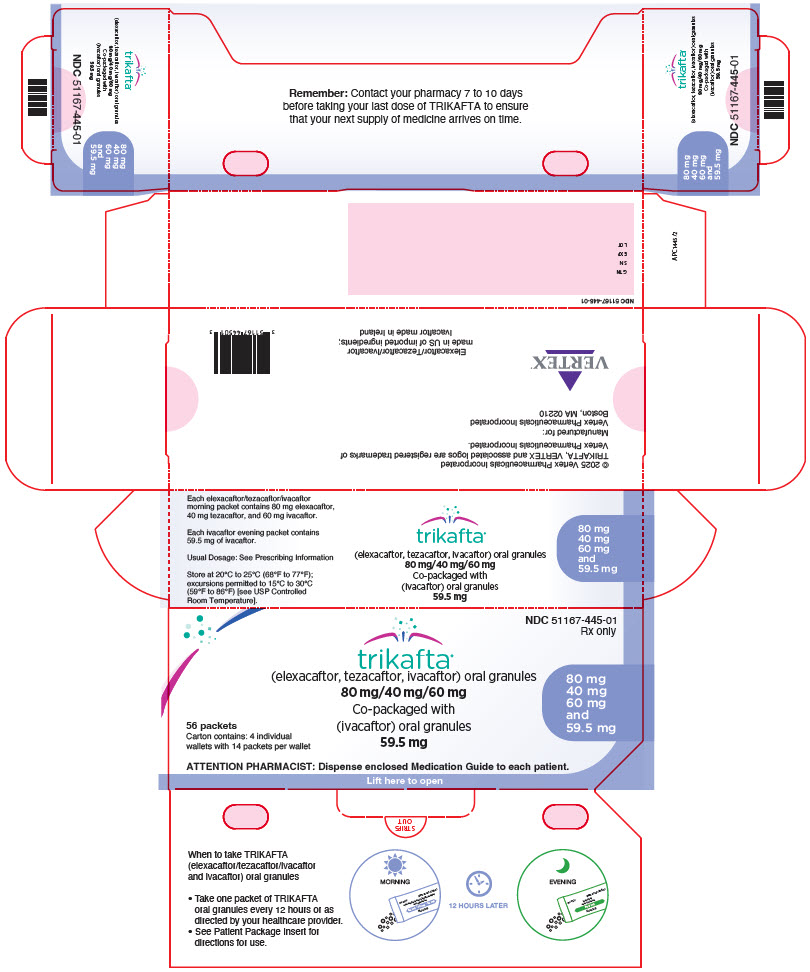
2 to less than 6 yearsLess than 14 kgOne packet (containing elexacaftor 80 mg/tezacaftor 40 mg/ivacaftor 60 mg) oral granulesOne packet (containing ivacaftor 59.5 mg) oral granules
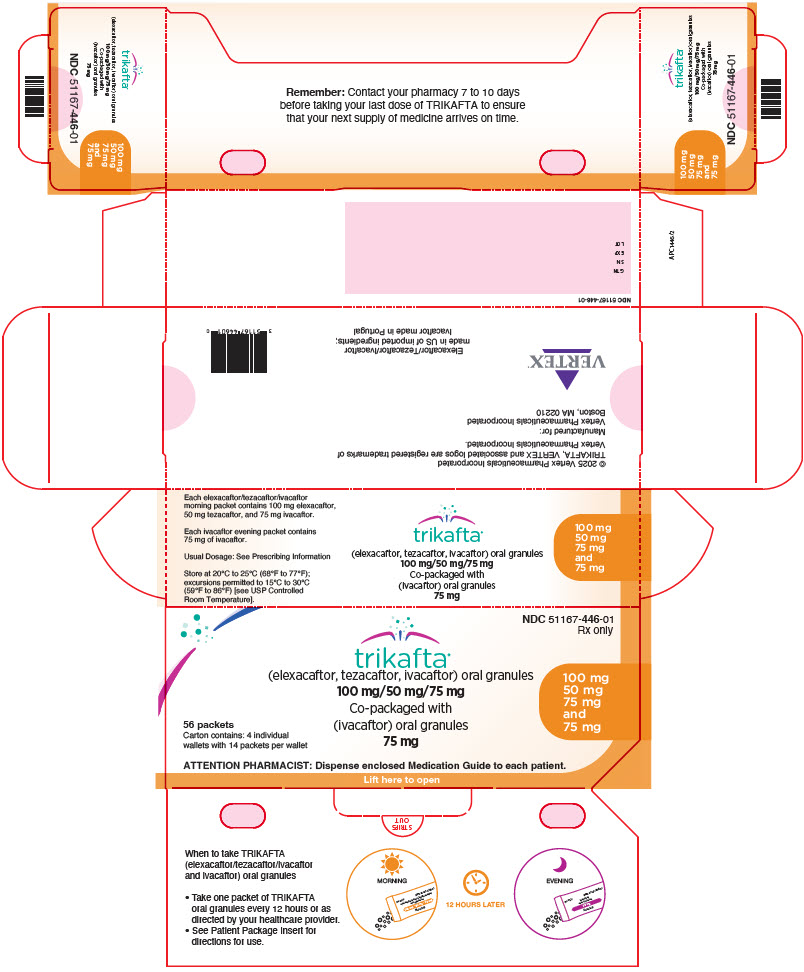
14 kg or moreOne packet (containing elexacaftor 100 mg/tezacaftor 50 mg/ivacaftor 75 mg) oral granulesOne packet (containing ivacaftor 75 mg) oral granules
6 to less than 12 yearsLess than 30 kgTwo tablets of elexacaftor 50 mg/tezacaftor 25 mg/ivacaftor 37.5 mg (total dose of elexacaftor 100 mg/tezacaftor 50 mg/ivacaftor 75 mg)One tablet of ivacaftor 75 mg
30 kg or moreTwo tablets of elexacaftor 100 mg/tezacaftor 50 mg/ivacaftor 75 mg (total dose of elexacaftor 200 mg/tezacaftor 100 mg/ivacaftor 150 mg)One tablet of ivacaftor 150 mg
12 years and older—Two tablets of elexacaftor 100 mg/tezacaftor 50 mg/ivacaftor 75 mg (total dose of elexacaftor 200 mg/tezacaftor 100 mg/ivacaftor 150 mg)One tablet of ivacaftor 150 mg

2.3 Recommended Dosage For Patients With Hepatic Impairment

  • Severe Hepatic Impairment (Child-Pugh Class C): Should not be used. TRIKAFTA has not been studied in patients with severe hepatic impairment (Child-Pugh Class C), but the exposure is expected to be higher than in patients with moderate hepatic impairment [see Warnings and Precautions (5.1), Adverse Reactions (6), Use in Specific Populations (8.7) and Clinical Pharmacology (12.3)].
  • Moderate Hepatic Impairment (Child-Pugh Class B): Treatment is not recommended. Use of TRIKAFTA in patients with moderate hepatic impairment should only be considered when there is a clear medical need, and the benefit outweighs the risk. If used, TRIKAFTA should be used with caution at a reduced dose (see Table 2) [see Use in Specific Populations (8.7) and Clinical Pharmacology (12.3)]. Liver function tests should be closely monitored [see Dosage and Administration (2.1) and Warnings and Precautions (5.1)]. Recommended dosage for patients with moderate hepatic impairment (Child-Pugh Class B) is provided in Table 2.
  • Table 2: Recommended Dosage of TRIKAFTA, if used, in Patients with Moderate Hepatic Impairment (Child-Pugh Class B)
    AgeWeightOral Morning DoseOral Evening Dose
    2 to less than 6 yearsLess than 14 kgWeekly dosing schedule is as follows:
    • Days 1-3: One packet (containing elexacaftor 80 mg/tezacaftor 40 mg/ivacaftor 60 mg) oral granules each day
    • Day 4: no dose
    • Days 5-6: One packet (containing elexacaftor 80 mg/tezacaftor 40 mg/ivacaftor 60 mg) oral granules each day
    • Day 7: no dose
    No evening dose of ivacaftor oral granules.
    14 kg or moreWeekly dosing schedule is as follows:
    • Days 1-3: One packet (containing elexacaftor 100 mg/tezacaftor 50 mg/ivacaftor 75 mg) oral granules each day
    • Day 4: no dose
    • Days 5-6: One packet (containing elexacaftor 100 mg/tezacaftor 50 mg/ivacaftor 75 mg) oral granules each day
    • Day 7: no dose
    No evening dose of ivacaftor oral granules.
    6 to less than 12 yearsLess than 30 kgAlternating daily dosing schedule is as follows:
    • Day 1: Two tablets of elexacaftor 50 mg/tezacaftor 25 mg/ivacaftor 37.5 mg (total dose of elexacaftor 100 mg/tezacaftor 50 mg/ivacaftor 75 mg)
    • Day 2: One tablet of elexacaftor 50 mg/tezacaftor 25 mg/ivacaftor 37.5 mg
    No evening ivacaftor tablet dose.
    30 kg or moreAlternating daily dosing schedule is as follows:
    • Day 1: Two tablets of elexacaftor 100 mg/tezacaftor 50 mg/ivacaftor 75 mg (total dose of elexacaftor 200 mg/tezacaftor 100 mg/ivacaftor 150 mg)
    • Day 2: One tablet of elexacaftor 100 mg/tezacaftor 50 mg/ivacaftor 75 mg
    No evening ivacaftor tablet dose.
    12 years and older—Alternating daily dosing schedule is as follows:
    • Day 1: Two tablets of elexacaftor 100 mg/tezacaftor 50 mg/ivacaftor 75 mg (total dose of elexacaftor 200 mg/tezacaftor 100 mg/ivacaftor 150 mg)
    • Day 2: One tablet of elexacaftor 100 mg/tezacaftor 50 mg/ivacaftor 75 mg
    No evening ivacaftor tablet dose.

2.4 Dosage Modification For Patients Taking Drugs That Are Cyp3a Inhibitors

Table 3 describes the recommended dosage modification for TRIKAFTA when used concomitantly with strong (e.g., ketoconazole, itraconazole, posaconazole, voriconazole, telithromycin, and clarithromycin) or moderate (e.g., fluconazole, erythromycin) CYP3A inhibitors. Administer TRIKAFTA orally with fat-containing food [see Dosage and Administration (2.2)]. Avoid food or drink containing grapefruit during TRIKAFTA treatment [see Warnings and Precautions (5.6), Drug Interactions (7.1) and Clinical Pharmacology (12.3)].

Table 3: Dosage Modification for Concomitant Use of TRIKAFTA with Moderate and Strong CYP3A Inhibitors
AgeWeightModerate CYP3A InhibitorsStrong CYP3A Inhibitors
2 to less than 6 yearsLess than 14 kgAlternating daily dosing schedule is as follows:
  • Day 1: One packet (containing elexacaftor 80 mg/tezacaftor 40 mg/ivacaftor 60 mg) in the morning
  • Day 2: One packet (containing ivacaftor 59.5 mg) oral granules in the morning
  • No evening packet of ivacaftor oral granules.
One packet (containing elexacaftor 80 mg/tezacaftor 40 mg/ivacaftor 60 mg) in the morning twice a week, approximately 3 to 4 days apart.
No evening packet of ivacaftor oral granules.
14 kg or moreAlternating daily dosing schedule is as follows:
  • Day 1: One packet (containing elexacaftor 100 mg/tezacaftor 50 mg/ivacaftor 75 mg) in the morning
  • Day 2: One packet (containing ivacaftor 75 mg) oral granules in the morning
  • No evening packet of ivacaftor oral granules.
One packet (containing elexacaftor 100 mg/tezacaftor 50 mg/ivacaftor 75 mg) in the morning twice a week, approximately 3 to 4 days apart.
No evening packet of ivacaftor oral granules.
6 to less than 12 yearsLess than 30 kgAlternating daily dosing schedule is as follows:
  • Day 1: Two tablets of elexacaftor 50 mg/tezacaftor 25 mg/ivacaftor 37.5 mg (total dose of elexacaftor 100 mg/tezacaftor 50 mg/ivacaftor 75 mg) in the morning
  • Day 2: One tablet of ivacaftor 75 mg in the morning
  • No evening ivacaftor tablet dose.
Two tablets of elexacaftor 50 mg/tezacaftor 25 mg/ivacaftor 37.5 mg (total dose of elexacaftor 100 mg/tezacaftor 50 mg/ivacaftor 75 mg) in the morning twice a week, approximately 3 to 4 days apart.
No evening ivacaftor tablet dose.
30 kg or moreAlternating daily dosing schedule is as follows:
  • Day 1: Two tablets of elexacaftor 100 mg/tezacaftor 50 mg/ivacaftor 75 mg (total dose of elexacaftor 200 mg/tezacaftor100 mg/ivacaftor 150 mg) in the morning
  • Day 2: One tablet of ivacaftor 150 mg in the morning
  • No evening ivacaftor tablet dose.
Two tablets of elexacaftor 100 mg/tezacaftor 50 mg/ivacaftor 75 mg (total dose of elexacaftor 200 mg/tezacaftor 100 mg/ivacaftor 150 mg) in the morning twice a week, approximately 3 to 4 days apart.
No evening ivacaftor tablet dose.
12 years and older—Alternating daily dosing schedule is as follows:
  • Day 1: Two tablets of elexacaftor 100 mg/tezacaftor 50 mg/ivacaftor 75 mg (total dose of elexacaftor 200 mg/tezacaftor 100 mg/ivacaftor 150 mg) in the morning
  • Day 2: One tablet of ivacaftor 150 mg in the morning
  • No evening ivacaftor tablet dose.
Two tablets of elexacaftor 100 mg/tezacaftor 50 mg/ivacaftor 75 mg (total dose of elexacaftor 200 mg/tezacaftor 100 mg/ivacaftor 150 mg) in the morning twice a week, approximately 3 to 4 days apart.
No evening ivacaftor tablet dose.

2.5 Recommendations Regarding Missed Dose(S)

If 6 hours or less have passed since the missed morning or evening dose, the patient should take the missed dose as soon as possible and continue on the original schedule.

If more than 6 hours have passed since:

  • the missed morning dose, the patient should take the missed dose as soon as possible and should not take the evening dose. The next scheduled morning dose should be taken at the usual time.
  • the missed evening dose, the patient should not take the missed dose. The next scheduled morning dose should be taken at the usual time.
  • Morning and evening doses should not be taken at the same time.

Other

Tablets:

Fixed-dose combination containing elexacaftor 50 mg, tezacaftor 25 mg, and ivacaftor 37.5 mg co-packaged with ivacaftor 75 mg:

  • Elexacaftor, tezacaftor and ivacaftor tablets are light orange, oblong-shaped and debossed with "T50" on one side and plain on the other
  • Ivacaftor tablets are light blue, oblong-shaped, and printed with "V 75" in black ink on one side and plain on the other
  • Fixed-dose combination containing elexacaftor 100 mg, tezacaftor 50 mg, and ivacaftor 75 mg co-packaged with ivacaftor 150 mg:

    • Elexacaftor, tezacaftor and ivacaftor tablets are orange, oblong-shaped and debossed with "T100" on one side and plain on the other
    • Ivacaftor tablets are light blue, oblong-shaped, and printed with "V 150" in black ink on one side and plain on the other
    • Oral Granules:

      Fixed-dose combination oral granules containing elexacaftor 100 mg, tezacaftor 50 mg, and ivacaftor 75 mg co-packaged with ivacaftor 75 mg oral granules:

      • Elexacaftor, tezacaftor, and ivacaftor oral granules are white to off-white, sweetened, unflavored granules approximately 2 mm in diameter contained in a white and orange unit-dose packet
      • Ivacaftor oral granules are white to off-white, sweetened, unflavored granules approximately 2 mm in diameter contained in a white and pink unit-dose packet
      • Fixed-dose combination oral granules containing elexacaftor 80 mg, tezacaftor 40 mg, and ivacaftor 60 mg co-packaged with ivacaftor 59.5 mg oral granules:

        • Elexacaftor, tezacaftor, and ivacaftor oral granules are white to off-white, sweetened, unflavored granules approximately 2 mm in diameter contained in a white and blue unit-dose packet
        • Ivacaftor oral granules are white to off-white, sweetened, unflavored granules approximately 2 mm in diameter contained in a white and green unit-dose packet
        • Patients with Cystic Fibrosis with at Least One F508del Variant

          The safety profile of TRIKAFTA in patients with CF with at least one F508del variant is based on data from 510 patients aged 12 years and older in two double-blind, controlled trials of 24 weeks and 4 weeks treatment duration (Trials 1 and 2, respectively). Eligible patients were also able to participate in an open-label extension safety study (up to 96 weeks of TRIKAFTA). In the two controlled trials, a total of 257 patients aged 12 years and older received at least one dose of TRIKAFTA.

          In Trial 1, the proportion of patients who discontinued study drug prematurely due to adverse events was 1% for TRIKAFTA-treated patients and 0% for placebo-treated patients.

          In Trial 1, serious adverse reactions that occurred more frequently in TRIKAFTA-treated patients compared to placebo were rash (1% vs <1%) and influenza (1% vs 0%). There were no deaths.

          Table 4 shows adverse reactions occurring in ≥5% of TRIKAFTA-treated patients and higher than placebo by ≥1% in the 24-week, placebo-controlled, parallel-group trial (Trial 1).

          Table 4: Adverse Reactions Occurring in ≥5% of TRIKAFTA-Treated Patients and Higher than Placebo by ≥1% in Trial 1
          Adverse ReactionsTRIKAFTA
          N=202
          n (%)
          Placebo
          N=201
          n (%)
          Headache35 (17)30 (15)
          Upper respiratory tract infection

          Includes upper respiratory tract infection and viral upper respiratory tract infection.

          32 (16)25 (12)
          Abdominal pain

          Includes abdominal pain, abdominal pain upper, abdominal pain lower.

          29 (14)18 (9)
          Diarrhea26 (13)14 (7)
          Rash

          Includes rash, rash generalized, rash erythematous, rash macular, rash pruritic.

          21 (10)10 (5)
          Alanine aminotransferase increased20 (10)7 (3)
          Nasal congestion19 (9)15 (7)
          Blood creatine phosphokinase increased19 (9)9 (4)
          Aspartate aminotransferase increased19 (9)4 (2)
          Rhinorrhea17 (8)6 (3)
          Rhinitis15 (7)11 (5)
          Influenza14 (7)3 (1)
          Sinusitis11 (5)8 (4)
          Blood bilirubin increased10 (5)2 (1)

          Additional adverse reactions that occurred in TRIKAFTA-treated patients at a frequency of 2% to <5% and higher than placebo by ≥1% include the following: flatulence, abdominal distension, conjunctivitis, pharyngitis, respiratory tract infection, tonsillitis, urinary tract infection, C-reactive protein increased, hypoglycemia, dizziness, dysmenorrhea, acne, eczema and pruritus.

          In addition, the following clinical trials have also been conducted [see Use in Specific Populations (8.4), Clinical Pharmacology (12.3) and Clinical Studies (14)]:

          • a 24-week, open-label trial in 66 patients with CF aged 6 to less than 12 years who were either homozygous for the F508del variant or heterozygous for the F508del variant, and a variant on the second allele that results in either no CFTR protein or a CFTR protein that is not responsive to ivacaftor and tezacaftor/ivacaftor (Trial 3).
          • a 24-week, open-label trial in 75 patients with CF aged 2 to less than 6 years. Patients who had at least one F508del variant or a variant known to be responsive to TRIKAFTA were eligible for the study (Trial 4).
          • The safety profile for the CF patients enrolled in Trials 2, 3, and 4 was consistent to that observed in Trial 1.

            Patients with Cystic Fibrosis with at Least One Qualifying Non-F508del Variant

            The safety of TRIKAFTA in patients with CF with at least one non-F508del variant is based on data from 307 patients aged 6 years and older with at least one qualifying non-F508del CFTR variant that was TRIKAFTA-responsive. Trial 5 was a randomized, double blind, placebo-controlled trial for a 24-week treatment duration in which 205 patients received at least one dose of TRIKAFTA. Eligible patients were also able to participate in an open-label extension safety study.

            In Trial 5, the proportion of patients who discontinued study drug prematurely due to adverse reactions was 2% for TRIKAFTA-treated patients and 0% for placebo-treated patients.

            Table 5 shows adverse reactions occurring in ≥5% of TRIKAFTA-treated patients and higher than placebo by ≥1% in the 24-week, placebo-controlled, parallel-group trial (Trial 5).

            Table 5: Adverse Reactions Occurring in ≥5% of TRIKAFTA-Treated Patients and Higher than Placebo by ≥1% in Trial 5
            Adverse ReactionsTRIKAFTA
            N=205
            n (%)
            Placebo
            N=102
            n (%)
            Rash

            Includes rash, rash maculo-papular, rash erythematous, rash papular

            48 (23)2 (2)
            Headache37 (18)13 (13)
            Diarrhea26 (13)10 (10)
            Rhinitis20 (10)6 (6)
            Influenza18 (9)2 (2)
            Constipation15 (7)4 (4)

            Specific Adverse Reactions

            Liver Function Test Elevations

            In Trial 1, the incidence of maximum transaminase (ALT or AST) >8, >5, or >3 × ULN was 1%, 2%, and 8% in TRIKAFTA-treated patients and 1%, 1%, and 5% in placebo-treated patients. The incidence of adverse reactions of transaminase elevations (AST and/or ALT) was 11% in TRIKAFTA-treated patients and 4% in placebo-treated patients.

            In Trial 1, the incidence of maximum total bilirubin elevation >2 × ULN was 4% in TRIKAFTA-treated patients and <1% in placebo-treated patients. Maximum indirect and direct bilirubin elevations >1.5 × ULN occurred in 11% and 3% of TRIKAFTA-treated patients, respectively. No TRIKAFTA-treated patients developed maximum direct bilirubin elevation >2 × ULN.

            During Trial 3, in patients aged 6 to less than 12 years, the incidence of maximum transaminase (ALT or AST) >8, >5, and >3 × ULN were 0%, 1.5%, and 10.6%, respectively. No TRIKAFTA-treated patients had transaminase elevation >3 × ULN associated with elevated total bilirubin >2 × ULN or discontinued treatment due to transaminase elevations.

            During Trial 4 in patients aged 2 to less than 6 years, the incidence of maximum transaminase (ALT or AST) >8, >5, and >3 × ULN were 1.3%, 2.7%, and 8.0%, respectively. No TRIKAFTA-treated patients had transaminase elevation >3 × ULN associated with elevated total bilirubin >2 × ULN. One patient required treatment interruption during Trial 4 and later discontinued TRIKAFTA during the open label extension due to transaminase elevations.

            In Trial 5, the incidence of maximum transaminase (ALT or AST) >8, >5, and >3 × ULN were 2.0%, 2.0%, and 6.3%, respectively, and led to treatment discontinuation in 0.5% and treatment interruptions in 1.5% of TRIKAFTA-treated patients. There were no transaminase elevations >3 × ULN in placebo-treated patients.

            Rash

            In Trial 1, the overall incidence of rash was 10% in TRIKAFTA-treated and 5% in placebo-treated patients (see Table 4). The incidence of rash was higher in female TRIKAFTA-treated patients (16%) than in male TRIKAFTA-treated patients (5%).

            In Trial 5, the overall incidence of rash was 23% in TRIKAFTA-treated and 2% in placebo-treated patients (see Table 5). The incidence of rash was higher in female TRIKAFTA-treated patients (27%) than in male TRIKAFTA-treated patients (20%).

            A role of hormonal contraceptives in the occurrence of rash cannot be excluded [see Drug Interactions (7.3)].

            Increased Creatine Phosphokinase

            In Trial 1, the incidence of maximum creatine phosphokinase elevation >5 × ULN was 10% in TRIKAFTA-treated and 5% in placebo-treated patients. Among the TRIKAFTA-treated patients with creatine phosphokinase elevation >5 × ULN, 14% (3/21) required treatment interruption and none discontinued treatment.

            In Trial 5, the incidence of maximum creatine phosphokinase elevation >5 × ULN was 5.4% (11/205) in TRIKAFTA-treated patients and 1% (1/102) in placebo-treated patients. The incidence of maximum creatine phosphokinase elevation >10 × ULN was 2.4% (5/205) in TRIKAFTA-treated patients and 1% (1/102) in placebo-treated patients. There were no interruptions or discontinuations among the TRIKAFTA-treated patients with creatine phosphokinase elevation >5 × ULN. Among the TRIKAFTA-treated patients with creatine phosphokinase elevation > 10 × ULN, two patients, who had exercised within the preceding 72 hours, developed rhabdomyolysis without evidence of renal involvement resulting in treatment interruption in 1 patient.

            Increased Blood Pressure

            In Trial 1, the maximum increase from baseline in mean systolic and diastolic blood pressure was 3.5 mmHg and 1.9 mmHg, respectively for TRIKAFTA-treated patients (baseline: 113 mmHg systolic and 69 mmHg diastolic) and 0.9 mmHg and 0.5 mmHg, respectively for placebo-treated patients (baseline: 114 mmHg systolic and 70 mmHg diastolic).

            The proportion of patients who had systolic blood pressure >140 mmHg and 10 mmHg increase from baseline on at least two occasions was 4% in TRIKAFTA-treated patients and 1% in placebo-treated patients. The proportion of patients who had diastolic blood pressure >90 mmHg and 5 mmHg increase from baseline on at least two occasions was 1% in TRIKAFTA-treated patients and 2% in placebo-treated patients.

            With the exception of sex differences in rash, the safety profile of TRIKAFTA was generally similar across all subgroups of patients, including analysis by age, sex, baseline percent predicted FEV1 (ppFEV1) and geographic regions.

            Hepatobiliary: liver injury, fatal liver failure, liver transplantation

            Immune System Disorders: anaphylaxis, angioedema

            Nervous System Disorders: intracranial hypertension

            Psychiatric Disorders: anxiety, depression, suicidal ideation and behavior, insomnia

            Strong CYP3A Inducers

            Concomitant use of TRIKAFTA with strong CYP3A inducers is not recommended. Elexacaftor, tezacaftor and ivacaftor are substrates of CYP3A (ivacaftor is a sensitive substrate of CYP3A). Concomitant use of CYP3A inducers may result in reduced exposures and thus reduced TRIKAFTA efficacy [see Warnings and Precautions (5.5)]. Concomitant use of ivacaftor with rifampin, a strong CYP3A inducer, significantly decreased ivacaftor area under the curve (AUC) by 89%. Elexacaftor and tezacaftor exposures are expected to decrease during concomitant use with strong CYP3A inducers [see Clinical Pharmacology (12.3)].

            Examples of strong CYP3A inducers include:

            • rifampin, rifabutin, phenobarbital, carbamazepine, phenytoin and St. John's wort (Hypericum perforatum)
            • Strong or Moderate CYP3A Inhibitors

              The dosage of TRIKAFTA should be reduced when used concomitantly with strong CYP3A inhibitors [see Dosage and Administration (2.4) and Warnings and Precautions (5.6)]. Concomitant use with itraconazole, a strong CYP3A inhibitor, increased elexacaftor AUC by 2.8-fold and tezacaftor AUC by 4.0- to 4.5-fold. When used concomitantly with itraconazole and ketoconazole, ivacaftor AUC increased by 15.6-fold and 8.5-fold, respectively [see Clinical Pharmacology (12.3)].

              Examples of strong CYP3A inhibitors include:

              • ketoconazole, itraconazole, posaconazole and voriconazole
              • telithromycin and clarithromycin
              • The dosage of TRIKAFTA should be reduced when used concomitantly with moderate CYP3A inhibitors [see Dosage and Administration (2.4) and Warnings and Precautions (5.6)]. Simulations indicated that concomitant use with moderate CYP3A inhibitors may increase elexacaftor and tezacaftor AUC by approximately 1.9- to 2.3-fold and 2.1-fold, respectively. Concomitant use of fluconazole increased ivacaftor AUC by 2.9-fold [see Clinical Pharmacology (12.3)].

                Examples of moderate CYP3A inhibitors include:

                • fluconazole
                • erythromycin
                • Grapefruit

                  Concomitant use of TRIKAFTA with grapefruit juice, which contains one or more components that moderately inhibit CYP3A, may increase exposure of elexacaftor, tezacaftor and ivacaftor; therefore, food or drink containing grapefruit should be avoided during treatment with TRIKAFTA [see Dosage and Administration (2.4)].

                  CYP2C9 Substrates

                  Ivacaftor may inhibit CYP2C9; therefore, monitoring of the international normalized ratio (INR) during concomitant use of TRIKAFTA with warfarin is recommended. Other medicinal products for which exposure may be increased by TRIKAFTA include glimepiride and glipizide; these medicinal products should be used with caution [see Clinical Pharmacology (12.3)].

                  Transporters

                  Concomitant use of ivacaftor or tezacaftor/ivacaftor with digoxin, a sensitive P-gp substrate, increased digoxin AUC by 1.3-fold, consistent with weak inhibition of P-gp by ivacaftor. Administration of TRIKAFTA may increase systemic exposure of medicinal products that are sensitive substrates of P-gp, which may increase or prolong their therapeutic effect and adverse reactions. When used concomitantly with digoxin or other substrates of P-gp with a narrow therapeutic index such as cyclosporine, everolimus, sirolimus and tacrolimus, caution and appropriate monitoring should be used [see Clinical Pharmacology (12.3)].

                  Elexacaftor and M23-ELX inhibit uptake by OATP1B1 and OATP1B3 in vitro. Concomitant use of TRIKAFTA may increase exposures of medicinal products that are substrates of these transporters, such as statins, glyburide, nateglinide and repaglinide. When used concomitantly with substrates of OATP1B1 or OATP1B3, caution and appropriate monitoring should be used [see Clinical Pharmacology (12.3)]. Bilirubin is an OATP1B1 and OATP1B3 substrate.

                  Ciprofloxacin

                  Ciprofloxacin had no clinically relevant effect on the exposure of tezacaftor or ivacaftor and is not expected to affect the exposure of elexacaftor. Therefore, no dose adjustment is necessary during concomitant administration of TRIKAFTA with ciprofloxacin [see Clinical Pharmacology (12.3)].

                  Hormonal Contraceptives

                  TRIKAFTA has been studied with ethinyl estradiol/levonorgestrel and was found to have no clinically relevant effect on the exposures of the oral contraceptive. TRIKAFTA is not expected to have an impact on the efficacy of oral contraceptives.

                  Hormonal contraceptives may play a role in the occurrence of rash and cannot be excluded [see Adverse Reactions (6.1)]. For patients with CF taking hormonal contraceptives who develop rash, consider interrupting TRIKAFTA and hormonal contraceptives. Following the resolution of rash, consider resuming TRIKAFTA without the hormonal contraceptives. If rash does not recur, resumption of hormonal contraceptives can be considered.

                  Risk Summary

                  There are limited and incomplete human data from clinical trials on the use of TRIKAFTA or its individual components, elexacaftor, tezacaftor and ivacaftor, in pregnant women to inform a drug-associated risk. Although there are no animal reproduction studies with the concomitant administration of elexacaftor, tezacaftor and ivacaftor, separate reproductive and developmental studies were conducted with each active component of TRIKAFTA in pregnant rats and rabbits.

                  In animal embryo fetal development (EFD) studies oral administration of elexacaftor to pregnant rats and rabbits during organogenesis demonstrated no adverse developmental effects at doses that produced maternal exposures up to approximately 2 times the exposure at the maximum recommended human dose (MRHD) in rats and 4 times the MRHD in rabbits [based on summed AUCs of elexacaftor and its metabolite (for rat) and AUC of elexacaftor (for rabbit)]. Oral administration of tezacaftor to pregnant rats and rabbits during organogenesis demonstrated no adverse developmental effects at doses that produced maternal exposures up to approximately 3 times the exposure at the MRHD in rats and 0.2 times the MRHD in rabbits (based on summed AUCs of tezacaftor and M1-TEZ). Oral administration of ivacaftor to pregnant rats and rabbits during organogenesis demonstrated no adverse developmental effects at doses that produced maternal exposures up to approximately 5 and 14 times the exposure at the MRHD, respectively [based on summed AUCs of ivacaftor and its metabolites (for rat) and AUC of ivacaftor (for rabbit)]. No adverse developmental effects were observed after oral administration of elexacaftor, tezacaftor or ivacaftor to pregnant rats from the period of organogenesis through lactation at doses that produced maternal exposures approximately 1 time, approximately 1 time and 3 times the exposures at the MRHD, respectively [based on summed AUCs of parent and metabolite(s)] (see Data).

                  The background risk of major birth defects and miscarriage for the indicated population is unknown. In the U.S. general population, the estimated background risk of major birth defects and miscarriage in clinically recognized pregnancies is 2% to 4% and 15% to 20%, respectively.

                  Data

                  Animal Data

                  Elexacaftor

                  In an EFD study, pregnant rats were administered oral doses of elexacaftor at 15, 25, and 40 mg/kg/day during the period of organogenesis from gestation Days 6-17. Elexacaftor did not cause adverse developmental outcomes at exposures up to 9 times the MRHD (based on summed AUCs for elexacaftor and its metabolite at maternal doses up to 40 mg/kg/day). Lower mean fetal body weights were observed at doses ≥25 mg/kg/day that produced maternal exposures ≥4 times the MRHD. Maternal toxicity was observed at 40 mg/kg/day (9 times the MRHD). In an EFD study, pregnant rabbits were administered oral doses of elexacaftor at 50, 100, or 125 mg/kg/day during the period of organogenesis from gestation Days 7-20. Elexacaftor was not teratogenic at exposures up to 4 times the MRHD (based on AUC of elexacaftor at maternal doses up to 125 mg/kg/day). Maternal toxicity was observed at 125 mg/kg/day (4 times the MRHD). In a pre- and postnatal development (PPND), pregnant rats were administered elexacaftor at oral doses of 5, 7.5, and 10 mg/kg/day from gestation Day 6 through lactation Day 18. Elexacaftor did not cause adverse developmental outcomes in pups at maternal doses up to 10 mg/kg/day (approximately 1 time the MRHD based on summed AUCs of elexacaftor and its metabolite). Placental transfer of elexacaftor was observed in pregnant rats.

                  Tezacaftor

                  In an EFD study, pregnant rats were administered tezacaftor at oral doses of 25, 50, or 100 mg/kg/day during the period of organogenesis from gestation Days 6-17. Tezacaftor did not cause adverse developmental effects at exposures up to 3 times the MRHD (based on summed AUCs of tezacaftor and M1-TEZ). Maternal toxicity in rats was observed at greater than or equal to 50 mg/kg/day (approximately greater than or equal to 1 time the MRHD). In an EFD study, pregnant rabbits were administered tezacaftor at oral doses of 10, 25, or 50 mg/kg/day during the period of organogenesis from gestation Days 7-20. Tezacaftor did not affect fetal developmental outcomes at exposures up to 0.2 times the MRHD (based on summed AUCs of tezacaftor and M1-TEZ). Lower fetal body weights were observed in rabbits at a maternally toxic dose that produced exposures approximately 1 time the MRHD (based on summed AUCs of tezacaftor and M1-TEZ at a maternal dose of 50 mg/kg/day). In a PPND study, pregnant rats were administered tezacaftor at oral doses of 25, 50, or 100 mg/kg/day from gestation Day 6 through lactation Day 18. Tezacaftor had no adverse developmental effects on pups at an exposure of approximately 1 time the MRHD (based on summed AUCs for tezacaftor and M1-TEZ at a maternal dose of 25 mg/kg/day). Decreased fetal body weights and early developmental delays in pinna detachment, eye opening, and righting reflex occurred at a maternally toxic dose (based on maternal weight loss) that produced exposures approximately 2 times the exposure at the MRHD (based on summed AUCs for tezacaftor and M1-TEZ). Placental transfer of tezacaftor was observed in pregnant rats.

                  Ivacaftor

                  In an EFD study, pregnant rats were administered ivacaftor at oral doses of 50, 100, or 200 mg/kg/day during the period of organogenesis from gestation Days 7-17. Ivacaftor did not affect fetal survival at exposures up to 5 times the MRHD (based on summed AUCs of ivacaftor and its metabolites at maternal oral doses up to 200 mg/kg/day). Maternal toxicity was observed at 100 and 200 mg/kg/day (3 and 5 times the exposure at the MRHD) and was associated with a decrease in fetal body weights at a maternal dose of 200 mg/kg/day (5 times the MRHD). In an EFD study, pregnant rabbits were administered ivacaftor at oral doses of 25, 50, or 100 mg/kg/day during the period of organogenesis from gestation Days 7-19. Ivacaftor did not affect fetal development or survival at exposures up to 14 times the MRHD (on an ivacaftor AUC basis at maternal oral doses up to 100 mg/kg/day). Maternal toxicity (i.e., death, decreased food consumption, decreased mean body weight and body weight gain, decreased clinical condition, abortions) was observed at doses greater than or equal to 50 mg/kg/day (approximately 5 times the MRHD). In a PPND study, pregnant rats were administered ivacaftor at oral doses of 50, 100, or 200 mg/kg/day from gestation Day 7 through lactation Day 20. Ivacaftor had no effects on delivery or growth and development of offspring at exposures up to 3 times the MRHD (based on summed AUCs for ivacaftor and its metabolites at maternal oral doses up to 100 mg/kg/day). Decreased fetal body weights were observed at a maternally toxic dose that produced exposures 5 times the MRHD (based on summed AUCs of ivacaftor and its metabolites). Placental transfer of ivacaftor was observed in pregnant rats and rabbits.

                  Risk Summary

                  There is no information regarding the presence of elexacaftor, tezacaftor, or ivacaftor in human milk, the effects on the breastfed infant, or the effects on milk production. Elexacaftor, tezacaftor, and ivacaftor are excreted into the milk of lactating rats (see Data). The developmental and health benefits of breastfeeding should be considered along with the mother's clinical need for TRIKAFTA and any potential adverse effects on the breastfed child from TRIKAFTA or from the underlying maternal condition.

                  Data

                  Elexacaftor: Lacteal excretion of elexacaftor in rats was demonstrated following a single oral dose (10 mg/kg) of 14C-elexacaftor administered 6 to 10 days postpartum to lactating dams. Exposure of 14C-elexacaftor in milk was approximately 0.4 times the value observed in plasma (based on AUC0-72h).

                  Tezacaftor: Lacteal excretion of tezacaftor in rats was demonstrated following a single oral dose (30 mg/kg) of 14C-tezacaftor administered 6 to 10 days postpartum to lactating dams. Exposure of 14C-tezacaftor in milk was approximately 3 times higher than in plasma (based on AUC0-72h).

                  Ivacaftor: Lacteal excretion of ivacaftor in rats was demonstrated following a single oral dose (100 mg/kg) of 14C-ivacaftor administered 9 to 10 days postpartum to lactating dams. Exposure of 14C-ivacaftor in milk was approximately 1.5 times higher than in plasma (based on AUC0-24h).

                  Juvenile Animal Toxicity Data

                  Findings of cataracts were observed in juvenile rats dosed from postnatal Day 7 through 35 with ivacaftor dose levels of 10 mg/kg/day and higher (0.21 times the MRHD based on systemic exposure of ivacaftor and its metabolites). This finding has not been observed in older animals [see Warnings and Precautions (5.7)].

                  Studies were conducted with tezacaftor in juvenile rats starting at postnatal day (PND) 21 and ranging up to PNDs 35 to 49. Findings of convulsions and death were observed in juvenile rats that received a tezacaftor dose level of 100 mg/kg/day (approximately equivalent to 1.9 times the MRHD based on summed AUCs of tezacaftor and its metabolite, M1-TEZ). A no-effect dose level was identified at 30 mg/kg/day (approximately equivalent to 0.8 times the MRHD based on summed AUCs of tezacaftor and its metabolite, M1-TEZ). Findings were dose related and generally more severe when dosing with tezacaftor was initiated earlier in the postnatal period (PND 7, which would be approximately equivalent to a human neonate). Tezacaftor and its metabolite, M1-TEZ, are substrates for P-glycoprotein. Lower brain levels of P-glycoprotein activity in younger rats resulted in higher brain levels of tezacaftor and M1-TEZ. These findings are not relevant for the indicated pediatric population, 2 years of age and older, for whom levels of P-glycoprotein activity are equivalent to levels observed in adults.

                  Elexacaftor

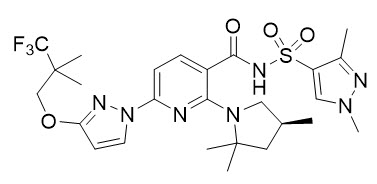
                  Elexacaftor is a white solid that is practically insoluble in water (<1 mg/mL). Its chemical name is N-(1,3-dimethyl-1H-pyrazole-4-sulfonyl)-6-[3-(3,3,3-trifluoro-2,2-dimethylpropoxy)-1H-pyrazol-1-yl]-2-[(4S)-2,2,4-trimethylpyrrolidin-1-yl]pyridine-3-carboxamide. Its molecular formula is C26H34N7O4SF3 and its molecular weight is 597.66. Elexacaftor has the following structural formula:
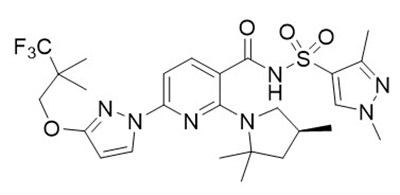
                  Chemical Structure (Trikafta 01)

                  Chemical Structure (Trikafta 01)

                  Tezacaftor

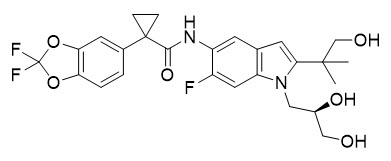
                  Tezacaftor is a white to off-white solid that is practically insoluble in water (<5 microgram/mL). Its chemical name is 1-(2,2-difluoro-2H-1,3-benzodioxol-5-yl)-N-{1-[(2R)-2,3-dihydroxypropyl]-6-fluoro-2-(1-hydroxy-2-methylpropan-2-yl)-1H-indol-5-yl}cyclopropane-1-carboxamide. Its molecular formula is C26H27N2F3O6 and its molecular weight is 520.50. Tezacaftor has the following structural formula:
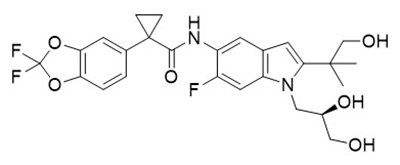
                  Chemical Structure (Trikafta 02)

                  Chemical Structure (Trikafta 02)

                  Ivacaftor

                  Ivacaftor is a white to off-white crystalline solid that is practically insoluble in water (<0.05 microgram/mL). Pharmacologically it is a CFTR potentiator. Its chemical name is N-(2,4-di-tert-butyl-5-hydroxyphenyl)-1,4-dihydro-4-oxoquinoline-3-carboxamide. Its molecular formula is C24H28N2O3 and its molecular weight is 392.49. Ivacaftor has the following structural formula:
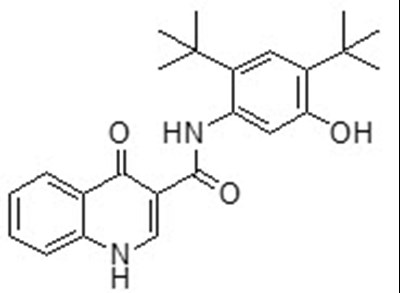
                  Chemical Structure (Trikafta 03)

                  Chemical Structure (Trikafta 03)

                  CFTR Chloride Transport Assay in Fischer Rat Thyroid Cells Expressing Mutant CFTR Protein

                  Effects of elexacaftor/tezacaftor/ivacaftor on chloride transport for mutant CFTR proteins was determined in Ussing chamber electrophysiology studies using a panel of Fischer Rat Thyroid (FRT) cell lines stably expressing individual mutant CFTR protein. Elexacaftor/tezacaftor/ivacaftor increased chloride transport in FRT cells expressing CFTR variants, as identified in Table 6.

                  The threshold that the treatment-induced increase in chloride transport must exceed for the mutant CFTR protein to be considered responsive is ≥10% of normal over baseline. This threshold was used because it is expected to predict clinical benefit. For individual variants, the magnitude of the net change over baseline in CFTR-mediated chloride transport in vitro is not correlated with the magnitude of clinical response.

                  CFTR Chloride Transport Assay in Human Bronchial Epithelial Cells Expressing Mutant CFTR Protein

                  Homozygous and heterozygous N1303K-Human Bronchial Epithelial (HBE) cells showed greater chloride transport in the presence of elexacaftor/tezacaftor/ivacaftor than F508del/F508del-HBE cells treated with tezacaftor/ivacaftor (which has shown clinical benefit in people homozygous for F508del).

                  Patient Selection

                  Select adult and pediatric patients 2 years of age and older for the treatment of CF with TRIKAFTA based on a clinical diagnosis of CF and the presence of at least one variant in the CFTR gene that is either responsive based on clinical and/or in vitro data or results in production of CFTR protein [see Indications and Usage (1)].

                  TRIKAFTA should only be used in patients with a clinical diagnosis of CF. The presence of eligible CFTR variant(s) should not be the sole determinant for using TRIKAFTA.

                  Table 6 lists CFTR variants responsive to TRIKAFTA based on clinical and/or in vitro data in FRT or HBE cells [see Clinical Studies (14)].

                  Table 6: List of CFTR Gene Variants Responsive to TRIKAFTA
                  The list of responsive CFTR variants is non-exhaustive. There may be protein-producing CFTR variants not listed that respond to treatment with TRIKAFTA.
                  Variants responsive to TRIKAFTA based on clinical data

                  Clinical data obtained from Trials 1, 2, and 5.

                  2789+5G→AD1152H

                  This variant is also predicted to be responsive by FRT assay.

                  L206WR1066HS945L
                  3272-26A→GF508delL997FR117CT338I
                  3849+10kbC→TG85EM1101KR347HV232D
                  A455EL1077PP5LR347P
                  Variants responsive to TRIKAFTA based on in vitro data

                  The N1303K variant is predicted to be responsive by HBE assay. All other variants predicted to be responsive with in vitro data are supported by FRT assay.

                  1140-1151dupE264VH620PN396YS1251N
                  1461insGATE282DH620QN418SS1255P
                  1507_1515del9E292KH939RN900KS13F
                  2055del9E384K H939R;H949LP1013HS13P
                  2183A→GE403DH954PP1013LS158N
                  2851A/GE474KI1023R P1021LS182R
                  293A→GE527GI1027TP1021TS18I
                  3007del6E56KI105NP111LS18N
                  3132T→GE588VI1139VP1372TS308P
                  3141del9E60KI1203VP140SS341P
                  3143del9E822KI1234L P205SS364P
                  314del9E92KI1234V del6aaP439S S434P
                  3331del6F1016SI125TP499AS492F
                  3410T→CF1052VI1269NP574HS50P
                  3523A→GF1074LI1366NP67LS519G
                  3601A→CF1078SI1366TP750LS531P
                  3761T→GF1099LI148LP798SS549I
                  3791C/TF1107LI148NP988RS549N
                  3850G→AF191VI148TQ1012P S549R
                  3978G→CF200II175VQ1209PS557F
                  546insCTAF311delI331NQ1291HS589I
                  548insTACF311LI336KQ1291RS589N
                  A1006EF312delI336LQ1313KS624R
                  A1025DF433LI444SQ1352HS686Y
                  A1067PF508CI497S Q151KS737F
                  A1067TF508C;S1251NI502TQ179KS821G
                  A1067VF508del;R1438WI506LQ237ES898R
                  A107GF575YI506VQ237HS912L
                  A1081VF587II506V;D1168G Q237PS912L;G1244V
                  A1087PF587LI521SQ30P S912T
                  A120TF693L(TTG)I530NQ359K/T360KS955P
                  A1319EF87LI556VQ359RS977F
                  A1374DF932S I586V Q372HS977F;R1438W
                  A141DG1047DI601FQ493LT1036N
                  A1466SG1047RI618NQ493RT1053I
                  A155PG1061RI618TQ552PT1057R
                  A234DG1069RI807MQ98P T1086A
                  A234VG1123RI86MQ98RT1086I
                  A238VG1173SI980KR1048GT1246I
                  A309DG1237VK1060TR1066GT1299I
                  A349VG1244EK162ER1070PT1299K
                  A357TG1244RK464ER1070QT351I
                  A455VG1247RK464NR1070WT351S
                  A457TG1249EK522ER1162LT351S;R851L
                  A462PG1249RK522QR1162Q T388M
                  A46DG1265VK951ER117C;G576A;R668CT465I
                  A534EG126DL1011SR117GT501A
                  A554EG1298V L102R;F1016SR117HT582S
                  A566DG1349DL1065RR117LT908N
                  A62PG149R;G576A;R668C L1227SR117L;L997FT990I
                  A872EG178EL1324PR117PV1008D
                  c.1367_1369dupTTGG178RL1335PR1239S V1010D
                  C225RG194RL137PR1283GV1153E
                  C491RG194VL1388PR1283MV11I
                  C590YG213EL1480PR1283SV1240G
                  C866YG213E;R668CL159SR1438WV1293G
                  D110EG213VL15PR170HV1293I
                  D110HG226RL15P;L1253FR248KV1415F
                  D110NG239RL165SR258GV201M
                  D1152AG253RL167RR297QV232A
                  D1270NG27EL210PR31CV317A
                  D1270YG27RL293PR31LV322M
                  D1312G G314EL320VR334LV392G
                  D1377HG314RL327PR334QV456A
                  D1445NG424SL32PR347LV456F
                  D192GG437DL333FR352QV520I
                  D192NG461RL333HR352WV562I
                  D373NG461VL346PR516SV562I;A1006E
                  D426NG463VL441PR553QV562L
                  D443YG480CL453SR555GV591A
                  D443Y;G576A;R668CG480DL467FR600SV603F
                  D529GG480SL558FR668CV754M
                  D565GG500DL619SR709QV920L
                  D567NG545RL633PR74QV920M
                  D579GG551AL636PR74Q;R297QV93D
                  D58HG551DL88SR74Q;V201M;D1270NW1098C
                  D58VG551RL927PR74WW1282G
                  D614GG551SL967F;L1096RR74W;D1270NW1282R
                  D651HG576AL967SR74W;R1070W;D1270NW202C
                  D651NG576A;R668CL973FR74W;S945LW361R
                  D806GG576A;S1359YM1137RR74W;V201MW496R
                  D836YG622DM1137VR74W;V201M;D1270NY1014C
                  D924NG622VM1210KR74W;V201M;L997FY1032C
                  D979AG628AM150KR751LY1032N
                  D979VG628RM150RR75LY1073C
                  D985HG930EM152LR75QY1092H
                  D985YG970DM152VR75Q;L1065PY109H
                  D993AG970SM265RR75Q;N1088DY109N
                  D993GG970VM348K R75Q;S549NY122C
                  D993YH1054DM394LR792GY1381H
                  E1104KH1079PM469VR792QY161C
                  E1104VH1085PM498IR810GY161D
                  E1126KH1085RM952IR851LY161S
                  E116KH1375NM952TR933GY301C
                  E116QH1375PM961L S1045YY563N
                  E1221VH139LN1088DS108FY89C
                  E1228KH139RN1195TS1118FY913S
                  E1409KH146RN1303IS1159FY919C
                  E1433KH199QN1303KS1159P
                  E193KH199YN186KS1188L
                  E217GH609LN187KS1235R

                  Sweat Chloride Evaluation

                  In Trial 1 (patients with an F508del variant on one allele and a variant on the second allele that results in either no CFTR protein or a CFTR protein that is not responsive ivacaftor and tezacaftor/ivacaftor), a reduction in sweat chloride was observed from baseline at Week 4 and sustained through the 24-week treatment period [see Clinical Studies (14.1)]. In Trial 2 (patients homozygous for the F508del variant), a reduction in sweat chloride was observed from baseline at Week 4 [see Clinical Studies (14.2)]. In Trial 3 (patients aged 6 to less than 12 years who are homozygous for the F508del variant or heterozygous for the F508del variant and a variant on the second allele that results in either no CFTR protein or a CFTR protein that is not responsive to ivacaftor and tezacaftor/ivacaftor), the mean absolute change in sweat chloride from baseline through Week 24 was -60.9 mmol/L (95% CI: -63.7, -58.2). In Trial 4 (patients aged 2 to less than 6 years who had at least one F508del variant or a variant known to be responsive to TRIKAFTA), the mean absolute change in sweat chloride from baseline through Week 24 was -57.9 mmol/L (95% CI: -61.3, -54.6). In Trial 5 (patients aged 6 years and older with at least one qualifying non-F508del elexacaftor/tezacaftor/ivacaftor-responsive CFTR variant), the mean absolute change in sweat chloride from baseline through Week 24 compared to placebo was -28.3 mmol/L (95% CI: -32.1, -24.5).

                  Cardiac Electrophysiology

                  At doses up to 2 times the maximum recommended dose of elexacaftor and 3 times the maximum recommended dose of tezacaftor and ivacaftor, the QT/QTc interval in healthy subjects was not prolonged to any clinically relevant extent.

                  Specific Populations

                  Pediatric Patients 2 to Less Than 12 Years of Age

                  Elexacaftor, tezacaftor and ivacaftor exposures observed in patients aged 2 to less than 12 years as determined using population PK analysis are presented by age group and dose administered in Table 8. Elexacaftor, tezacaftor and ivacaftor exposures in this patient population are within the range observed in patients aged 12 years and older.

                  Table 8: Mean (SD) Elexacaftor, Tezacaftor and Ivacaftor Exposures Observed at Steady State by Age Group and Dose Administered
                  Age GroupDoseElexacaftor AUC0-24h,ss
                  (µg∙h/mL)
                  Tezacaftor AUC0-24h,ss
                  (µg∙h/mL)
                  Ivacaftor AUC0-12h,ss
                  (µg∙h/mL)
                  SD: Standard Deviation; AUCss: area under the concentration versus time curve at steady state.
                  Patients aged 2 to less than 6 years weighing less than 14 kg
                  (N = 16)
                  elexacaftor 80 mg qd/tezacaftor 40 mg qd/ivacaftor 60 mg qAM and ivacaftor 59.5 mg qPM128 (24.8)87.3 (17.3)11.9 (3.86)
                  Patients aged 2 to less than 6 years weighing 14 kg or more
                  (N = 59)
                  elexacaftor 100 mg qd/tezacaftor 50 mg qd/ivacaftor 75 mg q12h138 (47.0)90.2 (27.9)13.0 (6.11)
                  Patients aged 6 to less than 12 years weighing less than 30 kg
                  (N = 36)
                  elexacaftor 100 mg qd/tezacaftor 50 mg qd/ivacaftor 75 mg q12h116 (39.4)67.0 (22.3)9.78 (4.50)
                  Patients aged 6 to less than 12 years weighing 30 kg or more
                  (N = 30)
                  elexacaftor 200 mg qd/ tezacaftor 100 mg qd/ ivacaftor 150 mg q12h195 (59.4)103 (23.7)17.5 (4.97)

                  Pediatric Patients 12 to Less Than 18 Years of Age

                  The following conclusions about exposures between adults and the pediatric population are based on population pharmacokinetic (PK) analyses.

                  Following oral administration of TRIKAFTA to patients 12 to less than 18 years of age (elexacaftor 200 mg qd/tezacaftor 100 mg qd/ivacaftor 150 mg q12h), the mean (±SD) AUCss was 147 (36.8) mcg∙h/mL, 88.8 (21.8) mcg∙h/mL and 10.6 (3.35) mcg∙h/mL, respectively for elexacaftor, tezacaftor and ivacaftor, similar to the AUCss in adult patients.

                  Patients with Renal Impairment

                  Renal excretion of elexacaftor, tezacaftor and ivacaftor is minimal. Elexacaftor alone or in combination with tezacaftor and ivacaftor has not been studied in subjects with severe (eGFR <30 mL/min/1.73 m2) renal impairment or end-stage renal disease. Based on population PK analyses, the clearance of elexacaftor and tezacaftor was similar in subjects with mild (eGFR 60 to <90 mL/min/1.73 m2) or moderate (eGFR 30 to <60 mL/min/1.73 m2) renal impairment relative to patients with normal renal function [see Use in Specific Populations (8.6)].

                  Patients with Hepatic Impairment

                  Elexacaftor alone or in combination with tezacaftor and ivacaftor has not been studied in subjects with severe hepatic impairment (Child-Pugh Class C, score 10-15). In a clinical study, following multiple doses of elexacaftor, tezacaftor and ivacaftor for 10 days, subjects with moderately impaired hepatic function (Child-Pugh Class B, score 7-9) had 25% higher AUC and 12% higher Cmax for elexacaftor, 73% higher AUC and 70% higher Cmax for M23-ELX, 36% higher AUC and 24% higher Cmax for combined elexacaftor and M23-ELX, 20% higher AUC but similar Cmax for tezacaftor and 1.5-fold higher AUC and 10% higher Cmax for ivacaftor compared with healthy subjects matched for demographics [see Dosage and Administration (2.3), Warnings and Precautions (5.1), Adverse Reactions (6) and Use in Specific Populations (8.7)].

                  Tezacaftor and Ivacaftor

                  Following multiple doses of tezacaftor and ivacaftor for 10 days, subjects with moderately impaired hepatic function had an approximately 36% higher AUC and a 10% higher in Cmax for tezacaftor and a 1.5-fold higher AUC but similar Cmax for ivacaftor compared with healthy subjects matched for demographics.

                  Ivacaftor

                  In a study with ivacaftor alone, subjects with moderately impaired hepatic function had similar ivacaftor Cmax, but an approximately 2.0-fold higher ivacaftor AUC0-∞ compared with healthy subjects matched for demographics.

                  Male and Female Patients

                  Based on population PK analysis, the exposures of elexacaftor, tezacaftor and ivacaftor are similar in males and females.

                  Drug Interaction Studies

                  Drug interaction studies were performed with elexacaftor, tezacaftor and/or ivacaftor and other drugs likely to be co-administered or drugs commonly used as probes for pharmacokinetic interaction studies [see Drug Interactions (7)].

                  Potential for Elexacaftor, Tezacaftor and/or Ivacaftor to Affect Other Drugs

                  Based on in vitro results, elexacaftor and tezacaftor have a low potential to inhibit CYP1A2, CYP2B6, CYP2C8, CYP2C9, CYP2C19, CYP2D6 and CYP3A4, whereas ivacaftor has the potential to inhibit CYP2C8, CYP2C9 and CYP3A. However, clinical studies showed that the combination regimen of tezacaftor/ivacaftor is not an inhibitor of CYP3A and ivacaftor is not an inhibitor of CYP2C8 or CYP2D6.

                  Based on in vitro results, elexacaftor, tezacaftor and ivacaftor are not likely to induce CYP3A, CYP1A2 and CYP2B6.

                  Based on in vitro results, elexacaftor and tezacaftor have a low potential to inhibit the transporter P-gp, while ivacaftor has the potential to inhibit P-gp. Co-administration of tezacaftor/ivacaftor with digoxin, a sensitive P-gp substrate, increased digoxin exposure by 1.3-fold in a clinical study. Based on in vitro results, elexacaftor and M23-ELX may inhibit OATP1B1 and OATP1B3 uptake. Tezacaftor has a low potential to inhibit BCRP, OCT2, OAT1, or OAT3. Ivacaftor is not an inhibitor of the transporters OCT1, OCT2, OAT1, or OAT3.

                  The effects of elexacaftor, tezacaftor and/or ivacaftor on the exposure of co-administered drugs are shown in Table 9 [see Drug Interactions (7)].

                  Table 9: Impact of Elexacaftor, Tezacaftor and/or Ivacaftor on Other Drugs
                  Dose and ScheduleEffect on Other Drug PKGeometric Mean Ratio (90% CI) of Other Drug
                  No Effect=1.0
                  AUCCmax
                  ↑ = increase, ↓ = decrease, ↔ = no change.
                  AUC: area under the concentration versus time curve; CI: Confidence Interval; ELX: elexacaftor; Cmax: maximum observed concentration; TEZ: tezacaftor; IVA: ivacaftor; PK: Pharmacokinetics.
                  Midazolam
                  2 mg single oral dose
                  TEZ 100 mg qd/IVA 150 mg q12h↔ Midazolam1.12
                  (1.01, 1.25)
                  1.13
                  (1.01, 1.25)
                  Digoxin
                  0.5 mg single dose
                  TEZ 100 mg qd/IVA 150 mg q12h↑ Digoxin1.30
                  (1.17, 1.45)
                  1.32
                  (1.07, 1.64)
                  Oral Contraceptive
                  Ethinyl estradiol 30 µg/Levonorgestrel 150 µg qd
                  ELX 200 mg qd/TEZ 100 mg qd/IVA 150 mg q12h↑ Ethinyl estradiol

                  Effect is not clinically significant [see Drug Interactions (7.3)].

                  1.33
                  (1.20, 1.49)
                  1.26
                  (1.14, 1.39)
                  ↑ Levonorgestrel1.23
                  (1.10, 1.37)
                  1.10
                  (0.985, 1.23)
                  Rosiglitazone
                  4 mg single oral dose
                  IVA 150 mg q12h↔ Rosiglitazone0.975
                  (0.897, 1.06)
                  0.928
                  (0.858, 1.00)
                  Desipramine
                  50 mg single dose
                  IVA 150 mg q12h↔ Desipramine1.04
                  (0.985, 1.10)
                  1.00
                  (0.939, 1.07)

                  Potential for Other Drugs to Affect Elexacaftor, Tezacaftor and/or Ivacaftor

                  In vitro studies showed that elexacaftor, tezacaftor and ivacaftor are all metabolized by CYP3A. Exposure to elexacaftor, tezacaftor and ivacaftor may be reduced by concomitant CYP3A inducers and increased by concomitant CYP3A inhibitors.

                  In vitro studies showed that elexacaftor and tezacaftor are substrates for the efflux transporter P-gp, but ivacaftor is not. Elexacaftor and ivacaftor are not substrates for OATP1B1 or OATP1B3; tezacaftor is a substrate for OATP1B1, but not OATP1B3. Tezacaftor is a substrate for BCRP.

                  The effects of co-administered drugs on the exposure of elexacaftor, tezacaftor and/or ivacaftor are shown in Table 10 [see Dosage and Administration (2.4) and Drug Interactions (7)].

                  Table 10: Impact of Other Drugs on Elexacaftor, Tezacaftor and/or Ivacaftor
                  Dose and ScheduleEffect on ELX, TEZ and/or IVA PKGeometric Mean Ratio (90% CI) of Elexacaftor, Tezacaftor and Ivacaftor
                  No Effect = 1.0
                  AUCCmax
                  ↑ = increase, ↓ = decrease, ↔ = no change.
                  AUC: area under the concentration versus time curve; CI: Confidence Interval; Cmax: maximum observed concentration; ELX: elexacaftor; TEZ: tezacaftor; IVA: ivacaftor; PK: Pharmacokinetics.
                  Itraconazole
                  200 mg q12h on Day 1, followed by 200 mg qd
                  TEZ 25 mg qd + IVA 50 mg qd↑ Tezacaftor4.02
                  (3.71, 4.63)
                  2.83
                  (2.62, 3.07)
                  ↑ Ivacaftor15.6
                  (13.4, 18.1)
                  8.60
                  (7.41, 9.98)
                  Itraconazole
                  200 mg qd
                  ELX 20 mg + TEZ 50 mg single dose↑ Elexacaftor2.83
                  (2.59, 3.10)
                  1.05
                  (0.977, 1.13)
                  ↑ Tezacaftor4.51
                  (3.85, 5.29)
                  1.48
                  (1.33, 1.65)
                  Ketoconazole
                  400 mg qd
                  IVA 150 mg single dose↑ Ivacaftor8.45
                  (7.14, 10.0)
                  2.65
                  (2.21, 3.18)
                  Ciprofloxacin
                  750 mg q12h
                  TEZ 50 mg q12h + IVA 150 mg q12h↔ Tezacaftor1.08
                  (1.03, 1.13)
                  1.05
                  (0.99, 1.11)
                  ↑ Ivacaftor

                  Effect is not clinically significant [see Drug Interactions (7.3)].

                  1.17
                  (1.06, 1.30)
                  1.18
                  (1.06, 1.31)
                  Rifampin
                  600 mg qd
                  IVA 150 mg single dose↓ Ivacaftor0.114
                  (0.097, 0.136)
                  0.200
                  (0.168, 0.239)
                  Fluconazole
                  400 mg single dose on Day 1, followed by 200 mg qd
                  IVA 150 mg q12h↑ Ivacaftor2.95
                  (2.27, 3.82)
                  2.47
                  (1.93, 3.17)

                  Elexacaftor

                  A 6-month study in Tg.rasH2 transgenic mice showed no evidence of tumorigenicity at 50 mg/kg/day dose, the highest dose tested.

                  A two-year study was conducted in rats to assess the carcinogenic potential of elexacaftor. No evidence of tumorigenicity was observed in rats at elexacaftor oral doses up to 10 mg/kg/day (approximately 2 and 5 times the MRHD based on summed AUCs of elexacaftor and its metabolite in male and female rats, respectively).

                  Elexacaftor was negative for genotoxicity in the following assays: Ames test for bacterial gene variant, in vitro mammalian cell micronucleus assay in TK6 cells, and in vivo mouse micronucleus test.

                  Elexacaftor did not cause reproductive system toxicity in male rats at 55 mg/kg/day and female rats at 25 mg/kg/day, equivalent to approximately 6 times and 4 times the MRHD, respectively (based on summed AUCs of elexacaftor and its metabolite). Elexacaftor did not cause embryonic toxicity at 35 mg/kg/day which was the highest dose tested, equivalent to approximately 7 times the MRHD (based on summed AUCs of elexacaftor and its metabolite). Lower male and female fertility, male copulation and female conception indices were observed in males at 75 mg/kg/day and females at 35 mg/kg/day, equivalent to approximately 6 times and 7 times, respectively, the MRHD (based on summed AUCs of elexacaftor and its metabolite).

                  Tezacaftor

                  A two-year study in Sprague-Dawley rats and a 6-month study in Tg.rasH2 transgenic mice were conducted to assess the carcinogenic potential of tezacaftor. No evidence of tumorigenicity from tezacaftor was observed in male and female rats at oral doses up to 50 and 75 mg/kg/day (approximately 1 and 2 times the MRHD based on summed AUCs of tezacaftor and its metabolites in males and females, respectively). No evidence of tumorigenicity was observed in male and female Tg.rasH2 transgenic mice at tezacaftor doses up to 500 mg/kg/day.

                  Tezacaftor was negative for genotoxicity in the following assays: Ames test for bacterial gene variant, in vitro chromosomal aberration assay in Chinese hamster ovary cells and in vivo mouse micronucleus test.

                  There were no effects on male or female fertility and early embryonic development in rats at oral tezacaftor doses up to 100 mg/kg/day (approximately 3 times the MRHD based on summed AUC of tezacaftor and M1-TEZ).

                  Ivacaftor

                  Two-year studies were conducted in CD-1 mice and Sprague-Dawley rats to assess the carcinogenic potential of ivacaftor. No evidence of tumorigenicity from ivacaftor was observed in mice or rats at oral doses up to 200 mg/kg/day and 50 mg/kg/day, respectively (approximately equivalent to 2 and 7 times the MRHD, respectively, based on summed AUCs of ivacaftor and its metabolites).

                  Ivacaftor was negative for genotoxicity in the following assays: Ames test for bacterial gene variant, in vitro chromosomal aberration assay in Chinese hamster ovary cells and in vivo mouse micronucleus test.

                  Ivacaftor impaired fertility and reproductive performance indices in male and female rats at 200 mg/kg/day (approximately 7 and 5 times, respectively, the MRHD based on summed AUCs of ivacaftor and its metabolites). Increases in prolonged diestrus were observed in females at 200 mg/kg/day. Ivacaftor also increased the number of females with all nonviable embryos and decreased corpora lutea, implantations and viable embryos in rats at 200 mg/kg/day (approximately 5 times the MRHD based on summed AUCs of ivacaftor and its metabolites) when dams were dosed prior to and during early pregnancy. These impairments of fertility and reproductive performance in male and female rats at 200 mg/kg/day were attributed to severe toxicity.

                  Trial 1

                  Trial 1 evaluated 403 patients (200 TRIKAFTA, 203 placebo) with CF aged 12 years and older (mean age 26.2 years). The mean ppFEV1 at baseline was 61.4% (range: 32.3%, 97.1%). The primary endpoint assessed at the time of interim analysis was mean absolute change in ppFEV1 from baseline at Week 4. The final analysis tested all key secondary endpoints in the 403 patients who completed the 24-week study participation, including absolute change in ppFEV1 from baseline through Week 24; absolute change in sweat chloride from baseline at Week 4 and through Week 24; number of pulmonary exacerbations through Week 24; absolute change in BMI from baseline at Week 24, and absolute change in CFQ-R respiratory domain score (a measure of respiratory symptoms relevant to patients with CF, such as cough, sputum production and difficulty breathing) from baseline at Week 4 and through Week 24.

                  Of the 403 patients included in the interim analysis, the treatment difference between TRIKAFTA and placebo for the mean absolute change from baseline in ppFEV1 at Week 4 was 13.8 percentage points (95% CI: 12.1, 15.4; P<0.0001).

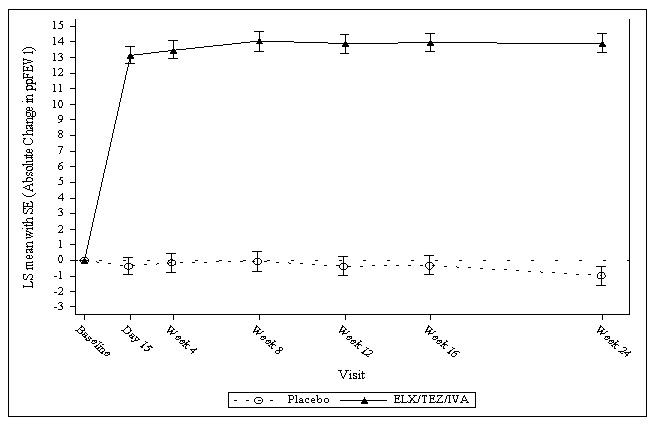
                  The treatment difference between TRIKAFTA and placebo for mean absolute change in ppFEV1 from baseline through Week 24 was 14.3 percentage points (95% CI: 12.7, 15.8; P<0.0001). Mean improvement in ppFEV1 was observed at the first assessment on Day 15 and sustained through the 24-week treatment period (see Figure 1). Improvements in ppFEV1 were observed regardless of age, baseline ppFEV1, sex and geographic region. See Table 11 for a summary of primary and key secondary outcomes in Trial 1.

                  Table 11: Primary and Key Secondary Efficacy Analyses (Trial 1)
                  AnalysisStatisticTreatment Difference

                  Treatment difference provided as the outcome measure for changes in ppFEV1, sweat chloride, CFQ-R and BMI; Rate ratio provided as the outcome measure for the number of pulmonary exacerbations.

                  for TRIKAFTA (N=200) vs Placebo (N=203)
                  ppFEV1: percent predicted Forced Expiratory Volume in 1 second; CI: Confidence Interval; CFQ-R: Cystic Fibrosis Questionnaire-Revised; BMI: Body Mass Index.
                  Primary (Interim Full Analysis Set)

                  Primary endpoint was based on interim analysis in 403 patients.

                  Absolute change in ppFEV1 from baseline at Week 4 (percentage points)Treatment difference (95% CI)
                  P value
                  13.8 (12.1, 15.4)
                  P<0.0001
                  Key Secondary (Full Analysis Set)

                  Key secondary endpoints were tested at the final analysis in 403 patients.

                  Absolute change in ppFEV1 from baseline through Week 24 (percentage points)Treatment difference (95% CI)
                  P value
                  14.3 (12.7, 15.8)
                  P<0.0001
                  Number of pulmonary exacerbations from baseline through Week 24

                  A pulmonary exacerbation was defined as a change in antibiotic therapy (IV, inhaled, or oral) as a result of 4 or more of 12 pre-specified sino-pulmonary signs/symptoms.

                  Number of pulmonary exacerbation events (event rate per year calculated based on 48 weeks per year) in the TRIKAFTA group were 41 (0.37) and 113 (0.98) in the placebo group.

                  Rate ratio (95% CI)
                  P value
                  0.37 (0.25, 0.55)
                  P<0.0001
                  Absolute change in sweat chloride from baseline through Week 24 (mmol/L)Treatment difference (95% CI)
                  P value
                  -41.8 (-44.4, -39.3)
                  P<0.0001
                  Absolute change in CFQ-R respiratory domain score from baseline through Week 24 (points)Treatment difference (95% CI)
                  P value
                  20.2 (17.5, 23.0)
                  P<0.0001
                  Absolute change in BMI from baseline at Week 24 (kg/m2)Treatment difference (95% CI)
                  P value
                  1.04 (0.85, 1.23)
                  P<0.0001
                  Absolute change in sweat chloride from baseline at Week 4 (mmol/L)Treatment difference (95% CI)
                  P value
                  -41.2 (-44.0, -38.5)
                  P<0.0001
                  Absolute change in CFQ-R respiratory domain score from baseline at Week 4 (points)Treatment difference (95% CI)
                  P value
                  20.1 (16.9, 23.2)
                  P<0.0001

                  Figure 1: Absolute Change from Baseline in Percent Predicted FEV1 at Each Visit in Trial 1

                  Figure 1 (Trikafta 04)

                  Figure 1 (Trikafta 04)

                  Trial 2

                  Trial 2 evaluated 107 patients with CF aged 12 years and older (mean age 28.4 years). The mean ppFEV1 at baseline, following the 4-week, open-label run-in period with tezacaftor/ivacaftor was 60.9% (range: 35.0%, 89.0%). The primary endpoint was mean absolute change in ppFEV1 from baseline at Week 4 of the double-blind treatment period. The key secondary efficacy endpoints were absolute change in sweat chloride and CFQ-R respiratory domain score from baseline at Week 4. Treatment with TRIKAFTA compared to tezacaftor/ivacaftor resulted in a statistically significant improvement in ppFEV1 of 10.0 percentage points (95% CI: 7.4, 12.6; P<0.0001). Mean improvement in ppFEV1 was observed at the first assessment on Day 15. Improvements in ppFEV1 were observed regardless of age, sex, baseline ppFEV1 and geographic region. See Table 12 for a summary of primary and key secondary outcomes.

                  Table 12: Primary and Key Secondary Efficacy Analyses, Full Analysis Set (Trial 2)
                  Analysis

                  Baseline for primary and key secondary endpoints is defined as the end of the 4-week tezacaftor/ivacaftor run-in period.

                  StatisticTreatment Difference for TRIKAFTA (N=55) vs Tezacaftor/Ivacaftor

                  Regimen of tezacaftor 100 mg qd/ivacaftor 150 mg q12h.

                  (N=52)
                  ppFEV1: percent predicted Forced Expiratory Volume in 1 second; CI: Confidence Interval; CFQ-R: Cystic Fibrosis Questionnaire-Revised.
                  Primary
                  Absolute change in ppFEV1 from baseline at Week 4 (percentage points)Treatment difference (95% CI)
                  P value
                  10.0 (7.4, 12.6)
                  P<0.0001
                  Key Secondary
                  Absolute change in sweat chloride from baseline at Week 4 (mmol/L)Treatment difference (95% CI)
                  P value
                  -45.1 (-50.1, -40.1)
                  P<0.0001
                  Absolute change in CFQ-R respiratory domain score from baseline at Week 4 (points)Treatment difference (95% CI)
                  P value
                  17.4 (11.8, 23.0)
                  P<0.0001

                  Drug-Induced Liver Injury and Liver Failure

                  Inform patients that TRIKAFTA is associated with a serious risk for drug-induced liver injury and that liver injury resulting in liver failure leading to liver transplantation or death have occurred, including in patients without a history of liver disease.

                  Advise all patients that liver function tests (ALT, AST, alkaline phosphatase, and bilirubin) should be assessed prior to initiating TRIKAFTA and then assessed every month during the first 6 months of treatment, then every 3 months for the next 12 months, then at least annually thereafter. Inform patients with a history of liver disease or liver function test elevations at baseline that more frequent monitoring may be necessary. Instruct patients to interrupt treatment with TRIKAFTA if symptoms of liver injury occur (e.g., jaundice, right upper quadrant pain, nausea, vomiting, altered mental status, ascites) and to notify their healthcare provider immediately. [see Dosage and Administration (2.1) and Warnings and Precautions (5.1)].

                  Drug Interactions with CYP3A Inducers and Inhibitors

                  Ask patients to tell you all the medications they are taking including any herbal supplements or vitamins. Inform patients that concomitant use of TRIKAFTA with strong CYP3A inducers (e.g., rifampin, St. John's wort) is not recommended, as they may reduce the efficacy of TRIKAFTA. Dose reduction to two elexacaftor/tezacaftor/ivacaftor tablets or one elexacaftor/tezacaftor/ivacaftor oral granules packet twice a week, taken approximately 3 to 4 days apart is recommended when used concomitantly with strong CYP3A inhibitors, such as ketoconazole. Advise the patient not to take the evening dose of ivacaftor. Dose reduction to two elexacaftor/tezacaftor/ivacaftor tablets or one elexacaftor/tezacaftor/ivacaftor oral granules packet and one ivacaftor tablet or ivacaftor oral granules packet, taken on alternate days, is recommended when used concomitantly with moderate CYP3A inhibitors, such as fluconazole. Advise the patient not to take the evening dose of ivacaftor. Food or drink containing grapefruit should be avoided [see Dosage and Administration (2.4), Warnings and Precautions (5.5, 5.6), Drug Interactions (7.1) and Clinical Pharmacology (12.3)].

                  Hypersensitivity Reactions, Including Anaphylaxis

                  Hypersensitivity reactions including angioedema and anaphylaxis are possible with use of TRIKAFTA. Inform patients of the early signs of hypersensitivity reactions including rash, hives, itching, facial swelling, tightness of the chest and wheezing. Advise patients to discontinue use of TRIKAFTA immediately and contact their physician or go to the emergency department if these symptoms occur [see Warnings and Precautions (5.2)].

                  Intracranial Hypertension

                  Inform patients that intracranial hypertension has occurred with the use of TRIKAFTA. Instruct patients to notify their healthcare provider right away if they experience signs and symptoms of intracranial hypertension, including headache, blurred vision, diplopia, and vision loss [see Warnings and Precautions (5.3)].

                  Neuropsychiatric Events, Including Suicidal Thoughts and Behaviors

                  Inform patients that neuropsychiatric symptoms, including anxiety, depression, suicidal thoughts and behaviors, and sleep disturbances (e.g., insomnia), have been reported with the use of TRIKAFTA or drugs containing the same or similar active ingredients as TRIKAFTA. The symptoms have been observed in patients with and without a history of similar symptoms and may occur within three months of TRIKAFTA initiation. Instruct patients to contact their healthcare provider immediately if changes in behavior or thinking that are not typical for the patient occur, or if the patient develops suicidal ideation or behavior [see Warnings and Precautions (5.4)].

                  Cataracts

                  Inform patients that abnormality of the eye lens (cataract) has been noted in some children and adolescents receiving ivacaftor-containing regimens. Baseline and follow-up ophthalmological examinations should be performed in pediatric patients initiating treatment with TRIKAFTA [see Warnings and Precautions (5.7) and Use in Specific Populations (8.4)].

                  Administration

                  Inform patients that TRIKAFTA is best absorbed by the body when taken with food that contains fat. A typical CF diet will satisfy this requirement. Examples include eggs, butter, peanut butter, whole-milk dairy products (such as whole milk, cheese and yogurt), etc. [see Dosage and Administration (2.2) and Clinical Pharmacology (12.3)].

                  Patients should be informed about what to do in the event they miss a dose [see Dosage and Administration (2.5)] of TRIKAFTA:

                  • If 6 hours or less have passed since the missed morning or evening dose is usually taken, patients should be instructed to take the prescribed dose with fat-containing food as soon as possible.
                  • If more than 6 hours have passed since:
                    • the time the morning dose is usually taken, patients should be instructed to take the morning dose as soon as possible, and not take the evening dose. Patients should take the next scheduled morning dose at the usual time.
                    • the time the evening dose is usually taken, patients should be instructed to not take the missed evening dose. Patients should take the next scheduled morning dose at the usual time.
                    • Patients should be instructed to not take the morning and evening doses at the same time.
                    • Patients should be advised to contact their health care provider if they have questions.
                    • Manufactured for
                      Vertex Pharmaceuticals Incorporated
                      50 Northern Avenue
                      Boston, MA 02210

                      TRIKAFTA, VERTEX and Vertex triangle logo are registered trademarks of Vertex Pharmaceuticals Incorporated.
                      All other trademarks referenced herein are the property of their respective owners.
                      ©2026 Vertex Pharmaceuticals Incorporated
                      All Rights Reserved
4 Contraindications

None.

5.1 Drug-Induced Liver Injury And Liver Failure

TRIKAFTA can cause serious and potentially fatal drug-induced liver injury. Cases of liver failure leading to transplantation and death have been reported in patients with and without a history of liver disease taking TRIKAFTA, in both clinical trials and the postmarketing setting [see Adverse Reactions (6)]. Liver injury has been reported within the first month of therapy and up to 15 months following initiation of TRIKAFTA.

Assess liver function tests (ALT, AST, alkaline phosphatase, and bilirubin) in all patients prior to initiating TRIKAFTA. Assess liver function tests every month during the first 6 months of treatment, then every 3 months for the next 12 months, then at least annually thereafter. Consider more frequent monitoring for patients with a history of liver disease or liver function test elevations at baseline [see Dosage and Administration (2.1), Adverse Reactions (6), and Use in Specific Populations (8.7)].

Interrupt TRIKAFTA in the event of signs or symptoms of liver injury. These may include:

  • Significant elevations in liver function tests (e.g., ALT or AST >5 × the upper limit of normal (ULN) or ALT or AST >3 × ULN with bilirubin >2 × ULN)
  • Clinical symptoms suggestive of liver injury (e.g., jaundice, right upper quadrant pain, nausea, vomiting, altered mental status, ascites).
  • Consider referral to a hepatologist and follow patients closely with clinical and laboratory monitoring until abnormalities resolve. If abnormalities resolve and if the benefit is expected to outweigh the risk, resume TRIKAFTA treatment with close monitoring.

    TRIKAFTA should not be used in patients with severe hepatic impairment (Child-Pugh Class C). TRIKAFTA is not recommended in patients with moderate hepatic impairment (Child-Pugh Class B) and should only be considered when there is a clear medical need, and the benefit outweighs the risk. If used, use with caution at a reduced dosage and monitor patients closely [see Dosage and Administration (2.3), Use in Specific Populations (8.7) and Clinical Pharmacology (12.3)].

5.2 Hypersensitivity Reactions, Including Anaphylaxis

Hypersensitivity reactions, including cases of angioedema and anaphylaxis, have been reported in the postmarketing setting [see Adverse Reactions (6.2)]. If signs or symptoms of serious hypersensitivity reactions develop during treatment, discontinue TRIKAFTA and institute appropriate therapy. Consider the benefits and risks for the individual patient to determine whether to resume treatment with TRIKAFTA.

5.3 Intracranial Hypertension

Cases of intracranial hypertension (IH) have been reported in the postmarketing setting with the use of TRIKAFTA [see Adverse Reactions (6.2)]. Clinical manifestations of IH include headache, blurred vision, diplopia, and potential vision loss; papilledema can be found on fundoscopy. If an unusual headache or visual disturbances occur during treatment, and IH is suspected, interrupt TRIKAFTA and refer for prompt medical evaluation. Consider the benefits and risks for the individual patient to determine whether to resume treatment with TRIKAFTA. Patients should be monitored until IH resolution and for recurrence. Patients with elevated vitamin A levels may be at increased risk.

5.4 Neuropsychiatric Events, Including Suicidal Thoughts And Behaviors

Serious neuropsychiatric events, including symptoms of anxiety, depression, suicidal ideation and behavior, and sleep disturbances, have been reported in the postmarketing setting in patients taking TRIKAFTA or drugs containing the same or similar active ingredients [see Adverse Reactions (6.2)]. The events were reported in adult and pediatric patients with and without a previous history of neuropsychiatric symptoms. Symptoms may occur within the first three months of treatment initiation.

Assess patients for baseline neuropsychiatric symptoms and monitor for new or worsening symptoms of anxiety, depression, suicidal ideation or behavior, or sleep disturbances. Consider the benefits and risks for the individual patient to determine if therapy with TRIKAFTA should be interrupted at the occurrence of neuropsychiatric symptoms and whether to resume therapy with symptom improvement.

5.5 Concomitant Use With Cyp3a Inducers

Exposure to ivacaftor is significantly decreased and exposure to elexacaftor and tezacaftor are expected to decrease by the concomitant use of strong CYP3A inducers, which may reduce the therapeutic effectiveness of TRIKAFTA. Therefore, concomitant use with strong CYP3A inducers is not recommended [see Drug Interactions (7.1) and Clinical Pharmacology (12.3)].

5.7 Cataracts

Cases of non-congenital lens opacities have been reported in pediatric patients treated with ivacaftor-containing regimens. Although other risk factors were present in some cases (such as corticosteroid use, exposure to radiation), a possible risk attributable to treatment with ivacaftor cannot be excluded. Baseline and follow-up ophthalmological examinations are recommended in pediatric patients initiating treatment with TRIKAFTA [see Use in Specific Populations (8.4)].

6 Adverse Reactions

The following clinically significant adverse reactions are discussed in greater detail in other sections of the labeling:

6.1 Clinical Trials Experience

Because clinical trials are conducted under widely varying conditions, adverse reaction rates observed in the clinical trials of a drug cannot be directly compared to rates in the clinical trials of another drug and may not reflect the rates observed in clinical practice.

6.2 Postmarketing Experience

The following adverse reactions have been identified during postapproval use of TRIKAFTA or drugs containing the same or similar active ingredients as TRIKAFTA. Because these reactions are reported voluntarily from a population of uncertain size, it is not always possible to reliably estimate their frequency or establish a causal relationship to drug exposure.

8.4 Pediatric Use

The safety and effectiveness of TRIKAFTA for the treatment of CF have been established in pediatric patients aged 2 years and older who have a clinical diagnosis of CF and who have at least one variant in the CFTR gene that is either responsive based on clinical and/or in vitro data or results in production of CFTR protein.

Use of TRIKAFTA for this indication for pediatric patients 12 years of age and older was supported by evidence from two adequate and well-controlled studies (Trials 1 and 2) in CF patients aged 12 years and older [see Adverse Reactions (6.1) and Clinical Studies (14)].

Use of TRIKAFTA for this indication in pediatric patients 2 to less than 12 years of age is based on the following:

  • Trial 1, 56 pediatric patients aged 12 to less than 18 years who had an F508del variant on one allele and a variant on the second allele that results in either no CFTR protein or a CFTR protein that is not responsive to ivacaftor and tezacaftor/ivacaftor [see Adverse Reactions (6) and Clinical Studies (14)].
  • Trial 2, 16 pediatric patients aged 12 to less than 18 years who were homozygous for the F508del variant [see Adverse Reactions (6) and Clinical Studies (14)].
  • Trial 3, 66 pediatric patients aged 6 to less than 12 years who were homozygous for the F508del variant or heterozygous for the F508del variant with a variant on the second allele that results in either no CFTR protein or a CFTR protein that is not responsive to ivacaftor and tezacaftor/ivacaftor [see Adverse Reactions (6) and Clinical Pharmacology (12.3)].
  • Trial 4, 75 pediatric patients aged 2 to less than 6 years who had at least one F508del variant or a variant known to be responsive to TRIKAFTA [see Adverse Reactions (6) and Clinical Pharmacology (12.3)].
  • Trial 5, 64 pediatric patients aged 6 years to less than 18 years who had at least one qualifying non-F508del TRIKAFTA-responsive variant and did not have an exclusionary variant [see Adverse Reactions (6) and Clinical Studies (14.2)].
  • The effectiveness of TRIKAFTA in patients aged 2 to less than 12 years was extrapolated from patients aged 12 years and older with support from population pharmacokinetic analyses showing elexacaftor, tezacaftor, and ivacaftor exposure levels in patients aged 2 to less than 12 years within the range of exposures observed in patients aged 12 years and older [see Clinical Pharmacology (12.3)]. Safety of TRIKAFTA in patients aged 6 to less than 12 years was derived from a 24-week, open-label, clinical trial in 66 patients aged 6 to less than 12 years (mean age at baseline 9.3 years) administered either a total dose of elexacaftor 100 mg/tezacaftor 50 mg/ivacaftor 75 mg in the morning and ivacaftor 75 mg in the evening (for patients weighing less than 30 kg) or a total dose of elexacaftor 200 mg/tezacaftor 100 mg/ivacaftor 150 mg in the morning and ivacaftor 150 mg in the evening (for patients weighing 30 kg or more) (Trial 3). Safety of TRIKAFTA in patients aged 2 to less than 6 years was derived from a 24-week, open-label, clinical trial in 75 patients aged 2 to less than 6 years (mean age at baseline 4.1 years) administered either a total dose of elexacaftor 80 mg/tezacaftor 40 mg/ivacaftor 60 mg in the morning and ivacaftor 59.5 mg in the evening (for patients weighing 10 kg to less than 14 kg) or a total dose of elexacaftor 100 mg/tezacaftor 50 mg/ivacaftor 75 mg in the morning and ivacaftor 75 mg in the evening (for patients weighing 14 kg or more) (Trial 4). The safety profile of patients in these trials was similar to that observed in Trial 1 [see Adverse Reactions (6)].

    The safety and effectiveness of TRIKAFTA in patients with CF younger than 2 years of age have not been established.

8.5 Geriatric Use

Clinical studies of TRIKAFTA did not include any patients aged 65 years and older.

8.6 Renal Impairment

TRIKAFTA has not been studied in patients with severe renal impairment or end-stage renal disease. No dosage adjustment is recommended in patients with mild (eGFR 60 to <90 mL/min/1.73 m2) or moderate (eGFR 30 to <60 mL/min/1.73 m2) renal impairment. Use with caution in patients with severe (eGFR <30 mL/min/1.73 m2) renal impairment or end-stage renal disease [see Clinical Pharmacology (12.3)].

8.7 Hepatic Impairment

8.8 Patients With Severe Lung Dysfunction

Trial 1 included a total of 18 patients receiving TRIKAFTA with ppFEV1 <40 at baseline. The safety and efficacy in this subgroup were comparable to those observed in the overall population.

10 Overdosage

Treatment of overdosage consists of general supportive measures including monitoring of vital signs and observation of the clinical status of the patient.

11 Description

TRIKAFTA is a co-package of elexacaftor, tezacaftor and ivacaftor fixed-dose combination tablets or granules and ivacaftor tablets or granules. Both tablets and granules are for oral administration.

The elexacaftor, tezacaftor and ivacaftor fixed-dose combination tablets are available as: orange, oblong-shaped, film-coated tablet containing 100 mg of elexacaftor, 50 mg of tezacaftor, 75 mg of ivacaftor, or light orange, oblong-shaped, film-coated tablet containing 50 mg of elexacaftor, 25 mg of tezacaftor, 37.5 mg of ivacaftor. The fixed-dose combination tablet contains the following inactive ingredients: croscarmellose sodium, hypromellose, hypromellose acetate succinate, magnesium stearate, microcrystalline cellulose, and sodium lauryl sulfate. The tablet film coat contains hydroxypropyl cellulose, hypromellose, iron oxide red, iron oxide yellow, talc, and titanium dioxide.

The ivacaftor tablet is available as a light blue, oblong-shaped, film-coated tablet containing 150 mg or 75 mg of ivacaftor and the following inactive ingredients: colloidal silicon dioxide, croscarmellose sodium, hypromellose acetate succinate, lactose monohydrate, magnesium stearate, microcrystalline cellulose and sodium lauryl sulfate. The tablet film coat contains carnauba wax, FD&C Blue #2, PEG 3350, polyvinyl alcohol, talc, and titanium dioxide. The printing ink contains ammonium hydroxide, iron oxide black, propylene glycol, and shellac.

The elexacaftor, tezacaftor and ivacaftor fixed-dose combination oral granules are white to off-white, sweetened, unflavored granules approximately 2 mm in diameter enclosed in unit-dose packets. Each unit-dose packet contains 100 mg of elexacaftor, 50 mg of tezacaftor, 75 mg of ivacaftor or 80 mg of elexacaftor, 40 mg of tezacaftor, 60 mg of ivacaftor and the following inactive ingredients: colloidal silicon dioxide, croscarmellose sodium, hypromellose, hypromellose acetate succinate, lactose monohydrate, magnesium stearate, mannitol, sodium lauryl sulfate, and sucralose.

The ivacaftor oral granules are white to off-white, sweetened, unflavored granules approximately 2 mm in diameter enclosed in unit-dose packets. Each unit-dose packet contains 75 mg or 59.5 mg of ivacaftor and the following inactive ingredients: colloidal silicon dioxide, croscarmellose sodium, hypromellose acetate succinate, lactose monohydrate, magnesium stearate, mannitol, sodium lauryl sulfate, and sucralose.

The active ingredients of TRIKAFTA are described below.

12.1 Mechanism Of Action

Elexacaftor and tezacaftor bind to different sites on the CFTR protein and have an additive effect in facilitating the cellular processing and trafficking of select mutant forms of CFTR (including F508del-CFTR) to increase the amount of CFTR protein delivered to the cell surface compared to either molecule alone. Ivacaftor potentiates the channel open probability (or gating) of the CFTR protein at the cell surface.

The combined effect of elexacaftor, tezacaftor and ivacaftor is increased quantity and function of CFTR at the cell surface, resulting in increased CFTR activity as measured both by CFTR-mediated chloride transport in vitro and by sweat chloride in patients with CF.

12.3 Pharmacokinetics

The pharmacokinetics of elexacaftor, tezacaftor and ivacaftor are similar between healthy adult subjects and patients with CF. The pharmacokinetic parameters for elexacaftor, tezacaftor and ivacaftor in patients with CF aged 12 years and older are shown in Table 7.

Table 7: Pharmacokinetic Parameters of TRIKAFTA Components
ElexacaftorTezacaftorIvacaftor
AUCss: area under the concentration versus time curve at steady state; SD: Standard Deviation; Cmax: maximum observed concentration; Tmax: time of maximum concentration; AUC: area under the concentration versus time curve.
General Information
  AUCss (SD), mcg∙h/mL

Based on elexacaftor 200 mg and tezacaftor 100 mg once daily/ivacaftor 150 mg every 12 hours at steady state in patients with CF aged 12 years and older.

162 (47.5)

AUC0-24h.

89.3 (23.2)11.7 (4.01)

AUC0-12h.

  Cmax (SD), mcg/mL9.2 (2.1)7.7 (1.7)1.2 (0.3)
  Time to Steady State, daysWithin 7 daysWithin 8 daysWithin 3-5 days
  Accumulation Ratio2.22.072.4
Absorption
  Absolute Bioavailability80%Not determinedNot determined
  Median Tmax (range), hours6 (4 to 12)3 (2 to 4)4 (3 to 6)
  Effect of FoodAUC increases 1.9- to 2.5-fold
(moderate-fat meal)
No clinically significant effectExposure increases 2.5- to 4-fold
Distribution
  Mean (SD) Apparent Volume of Distribution, L

Elexacaftor, tezacaftor and ivacaftor do not partition preferentially into human red blood cells.

53.7 (17.7)82.0 (22.3)293 (89.8)
  Protein Binding

Elexacaftor and tezacaftor bind primarily to albumin. Ivacaftor primarily bind to albumin, alpha 1-acid glycoprotein and human gamma-globulin.

>99%approximately 99%approximately 99%
Elimination
  Mean (SD) Effective Half-Life, hours

Mean (SD) terminal half-lives of elexacaftor, tezacaftor and ivacaftor are approximately 24.7 (4.87) hours, 60.3 (15.7) hours and 13.1 (2.98) hours, respectively.

27.4 (9.31)25.1 (4.93)15.0 (3.92)
  Mean (SD) Apparent Clearance, L/hours1.18 (0.29)0.79 (0.10)10.2 (3.13)
Metabolism
  Primary PathwayCYP3A4/5CYP3A4/5CYP3A4/5
  Active MetabolitesM23-ELXM1-TEZ M1-IVA
  Metabolite Potency Relative to ParentSimilarSimilarapproximately 1/6th of parent
Excretion

Following radiolabeled doses.

  Primary Pathway
  • Feces: 87.3% (primarily as metabolites)
  • Urine: 0.23%
  • Feces: 72% (unchanged or as M2-TEZ)
  • Urine: 14% (0.79% unchanged)
  • Feces: 87.8%
  • Urine: 6.6%

13.1 Carcinogenesis, Mutagenesis, Impairment Of Fertility

No studies of carcinogenicity, mutagenicity, or impairment of fertility were conducted with the combination of elexacaftor, tezacaftor and ivacaftor; however, separate studies of elexacaftor, tezacaftor and ivacaftor are described below.

14.1 Clinical Studies In Patients With Cystic Fibrosis With At Least One F508del Variant

The efficacy of TRIKAFTA in patients aged 12 years and older with cystic fibrosis (CF) with at least one F508del variant was evaluated in two randomized, double-blind, controlled trials (Trials 1 and 2).

Trial 1 (NCT03525444) was a 24-week, randomized, double-blind, placebo-controlled study in patients who had an F508del variant on one allele and a variant on the second allele that results in either no CFTR protein or a CFTR protein that is not responsive to ivacaftor and tezacaftor/ivacaftor. An interim analysis was planned when at least 140 patients completed Week 4 and at least 100 patients completed Week 12.

Trial 2 (NCT03525548) was a 4-week, randomized, double-blind, active-controlled study in patients who are homozygous for the F508del variant. Patients received tezacaftor 100 mg qd/ivacaftor 150 mg q12h during a 4-week, open-label run-in period and were then randomized and dosed to receive TRIKAFTA or tezacaftor 100 mg qd/ivacaftor 150 mg q12h during a 4-week, double-blind treatment period.

Patients in Trials 1 and 2 had a confirmed diagnosis of CF and at least one F508del variant. Patients discontinued any previous CFTR modulator therapies, but continued on their other standard-of-care CF therapies (e.g., bronchodilators, inhaled antibiotics, dornase alfa and hypertonic saline). Patients had a ppFEV1 at screening between 40-90%. Patients with a history of colonization with organisms associated with a more rapid decline in pulmonary status, including but not limited to Burkholderia cenocepacia, Burkholderia dolosa, or Mycobacterium abscessus, or who had an abnormal liver function test at screening (ALT, AST, ALP, or GGT ≥3 × ULN, or total bilirubin ≥2 × ULN), were excluded from the trials. Patients in Trials 1 and 2 were eligible to roll over into an open-label extension study.

14.2 Clinical Studies In Patients With Cystic Fibrosis With At Least One Qualifying Non-F508del Variant

The efficacy of TRIKAFTA in patients with cystic fibrosis (CF) without an F508del variant was evaluated in Trial 5.

Trial 5 (NCT05274269) was a 24-week, randomized, placebo-controlled, double-blind, parallel-group trial in 307 patients aged 6 years and older with CF (mean age 33.5 years). The mean baseline ppFEV1 was 67.7% (range: 34.0%, 108.7%). The trial included patients who had at least one qualifying non-F508del TRIKAFTA-responsive variant and did not have an exclusionary variant. Patients were randomized to TRIKAFTA or placebo. The dosage of TRIKAFTA was administered according to age and weight as follows:

  • Patients aged 6 to less than 12 years, weighing less than 30 kg: total morning dose of elexacaftor 100 mg/ tezacaftor 50 mg/ ivacaftor 75 mg and evening dose of ivacaftor 75 mg
  • Patients aged 6 to less than 12 years, weighing greater than or equal to 30 kg: total morning dose of elexacaftor 200 mg/ tezacaftor 100 mg/ ivacaftor 150 mg and evening dose of ivacaftor 150 mg
  • Patients aged 12 years and older: total morning dose of elexacaftor 200 mg/ tezacaftor 100 mg/ ivacaftor 150 mg and evening dose of ivacaftor 150 mg
  • Patients discontinued any previous CFTR modulator therapies but continued on their other standard-of-care CF therapies (e.g., bronchodilators, inhaled antibiotics, dornase alfa and hypertonic saline). Patients had a ppFEV1 between 40-100% at screening. The mean ppFEV1 at baseline was 68% (range: 34%, 109%). Patients with a history of colonization with organisms associated with a more rapid decline in pulmonary status, including but not limited to Burkholderia cenocepacia, Burkholderia dolosa, or Mycobacterium abscessus, or who had an abnormal liver function test at screening (ALT, AST, ALP, or GGT ≥3 × ULN, or total bilirubin ≥2 × ULN), were excluded from the trials. Patients in Trial 5 were eligible to roll over into an open-label extension study.

    In Trial 5, the primary efficacy endpoint was absolute change in ppFEV1 from baseline through Week 24. Secondary efficacy endpoints were absolute change in sweat chloride through Week 24, absolute change in CFQ-R respiratory domain score through Week 24, absolute change in growth parameters (BMI, weight) at Week 24, and number of pulmonary exacerbation events through Week 24. Table 13 provides a summary of the primary and secondary efficacy results.

    Table 13: Primary and Secondary Efficacy Analyses, Full Analysis Set (Trial 5)
    AnalysisStatisticTreatment Difference

    Treatment difference was provided as the outcome measure for changes in ppFEV1, sweat chloride, CFQ-R RD and BMI; Rate ratio provided as the outcome measure for the number of pulmonary exacerbations.

    for TRIKAFTA (N=205) vs Placebo (N=102)
    BMI: body mass index; CFQ-R: Cystic Fibrosis Questionnaire-Revised; CI: confidence interval; N: total sample size; P: probability; ppFEV1: percent predicted forced expiratory volume in 1 second.
    Primary
    Absolute change in ppFEV1 from baseline through Week 24 (percentage points)Treatment difference (95% CI)
    P value
    9.2 (7.2, 11.3)
    P<0.0001
    Secondary
    Absolute change in sweat chloride from baseline through Week 24 (mmol/L)Treatment difference (95% CI)
    P value
    -28.3 (-32.1, -24.5)
    P<0.0001
    Absolute change in CFQ-R respiratory domain score from baseline through Week 24 (points)Treatment difference (95% CI)
    P value
    19.5 (15.5, 23.5)
    P<0.0001
    Absolute change from baseline in BMI at Week 24 (kg/m2)Treatment difference (95% CI)
    P value
    0.47 (0.24, 0.69)
    P<0.0001
    Absolute change from baseline in weight at Week 24 (kg)Treatment difference (95% CI)
    P value
    1.3 (0.6, 1.9)
    P<0.0001
    Number of pulmonary exacerbations through Week 24

    Number of pulmonary exacerbation events (event rate per year calculated based on 48 weeks per year) in the TRIKAFTA group were 21 (0.17) and in the placebo group were 40 (0.63).

    Rate ratio (95% CI)
    P value
    0.28 (0.15, 0.51)
    P<0.0001

16 How Supplied/Storage And Handling

TRIKAFTA tablets are co-packaged blister pack sealed into a printed wallet, containing elexacaftor, tezacaftor and ivacaftor fixed-dose combination tablets and ivacaftor tablets. Four such wallets are placed in a printed outer carton. TRIKAFTA tablets are supplied as follows:

Table 14: TRIKAFTA Tablets and Package Configuration
StrengthsTablet DescriptionPackage ConfigurationNDC
Elexacaftor 50 mg, tezacaftor 25 mg, and ivacaftor 37.5 mg tabletslight orange, oblong-shaped, debossed with "T50" on one side and plain on the other 84-count carton containing 4 wallets, each wallet containing 14 tablets of elexacaftor, tezacaftor and ivacaftor, and 7 tablets of ivacaftorNDC 51167-106-02
Ivacaftor 75 mglight blue, film-coated, oblong-shaped, printed with the characters "V 75" in black ink on one side and plain on the other
Elexacaftor 100 mg, tezacaftor 50 mg, and ivacaftor 75 mgorange, oblong-shaped, debossed with "T100" on one side and plain on the other84-count carton containing 4 wallets, each wallet containing 14 tablets of elexacaftor, tezacaftor and ivacaftor, and 7 tablets of ivacaftorNDC 51167-331-01
Ivacaftor 150 mglight blue, film-coated, oblong-shaped, printed with the characters "V 150" in black ink on one side and plain on the other

TRIKAFTA oral granules are supplied in morning and evening unit-dose packets. The morning dose packets contain a fixed-dose combination of elexacaftor, tezacaftor, and ivacaftor oral granules. The evening dose packets contain ivacaftor oral granules. The packets are placed into a printed wallet. Four such wallets are placed in a printed outer carton. TRIKAFTA granules are supplied as follows:

Table 15: TRIKAFTA Oral Granules and Package Configuration
StrengthsGranule DescriptionPackage ConfigurationNDC
Elexacaftor 80 mg, tezacaftor 40 mg, and ivacaftor 60 mgwhite to off-white, sweetened, unflavored granules approximately 2 mm in diameter enclosed in white and blue unit-dose packets 56-count carton containing 4 wallets, each wallet containing 7 white and blue packets of elexacaftor, tezacaftor and ivacaftor, and 7 white and green packets of ivacaftorNDC 51167-445-01
Ivacaftor 59.5 mgwhite to off-white, sweetened, unflavored granules approximately 2 mm in diameter enclosed in white and green unit-dose packets
Elexacaftor 100 mg, tezacaftor 50 mg, and ivacaftor 75 mgwhite to off-white, sweetened, unflavored granules approximately 2 mm in diameter enclosed in white and orange unit-dose packets56-count carton containing 4 wallets, each wallet containing 7 white and orange packets of elexacaftor, tezacaftor and ivacaftor, and 7 white and pink packets of ivacaftorNDC 51167-446-01
Ivacaftor 75 mgwhite to off-white, sweetened, unflavored granules approximately 2 mm in diameter enclosed in white and pink unit-dose packets

Storage And Handling

Store at 20 °C – 25 °C (68 °F – 77 °F); excursions permitted to 15 °C – 30 °C (59 °F – 86 °F) [see USP Controlled Room Temperature].

17 Patient Counseling Information

Advise the patient to read the FDA-approved patient labeling (Medication Guide).

Spl Medguide

This Medication Guide has been approved by the U.S. Food and Drug Administration.Revised: 03/2026    
MEDICATION GUIDE
TRIKAFTA® (tri-KAF-tuh)

(elexacaftor, tezacaftor, and ivacaftor tablets; ivacaftor tablets), co-packaged for oral use
(elexacaftor, tezacaftor, and ivacaftor oral granules; ivacaftor oral granules), co-packaged

What is the most important information I should know about TRIKAFTA?
TRIKAFTA can cause serious liver damage and liver failure.
Liver failure leading to transplantation and death have been seen in some people with or without a history of liver problems taking TRIKAFTA.


Your healthcare provider will do blood tests to check your liver:
  • before you start TRIKAFTA
  • then every month during your first 6 months of taking TRIKAFTA
  • then every 3 months during the next 12 months of taking TRIKAFTA
  • then at least every year while you are taking TRIKAFTA
Your healthcare provider may do blood tests to check the liver more often if you have had high liver enzymes in your blood in the past or are experiencing signs or symptoms of liver injury.
Stop taking TRIKAFTA and call your healthcare provider right away if you have any of the following symptoms of liver problems:
  • pain, swelling, or discomfort in the upper right stomach (abdominal) area
  • yellowing of your skin or the white part of your eyes
  • mental changes
  • nausea or vomiting
  • dark, amber-colored urine
  • loss of appetite
  • have fluid in your stomach area (ascites)
What is TRIKAFTA?
  • TRIKAFTA is a prescription medicine for people aged 2 years and older who have a diagnosis of cystic fibrosis (CF) and who have at least one genetic change (variant) in the cystic fibrosis transmembrane conductance regulator (CFTR) gene that is either responsive to TRIKAFTA or results in the production of protein.
  • Talk to your healthcare provider to learn if you have an indicated CF gene variant.
  • It is not known if TRIKAFTA is safe and effective in children under 2 years of age.
What should I tell my healthcare provider before taking TRIKAFTA?
Before taking TRIKAFTA, tell your healthcare provider about all of your medical conditions, including if you:
  • have or have had liver problems.
  • are allergic to TRIKAFTA or any ingredients in TRIKAFTA. See the end of this Medication Guide for a complete list of ingredients in TRIKAFTA.
  • have kidney problems.
  • have or have had mental health problems.
  • are pregnant or plan to become pregnant. It is not known if TRIKAFTA will harm your unborn baby. You and your healthcare provider should decide if you will take TRIKAFTA while you are pregnant.
  • are breastfeeding or planning to breastfeed. It is not known if TRIKAFTA passes into your breast milk. You and your healthcare provider should decide if you will take TRIKAFTA while you are breastfeeding.
  • Tell your healthcare provider about all the medicines you take, including prescription and over-the-counter medicines, vitamins, and herbal supplements.
    TRIKAFTA may affect the way other medicines work and other medicines may affect how TRIKAFTA works.
    The dose of TRIKAFTA may need to be adjusted when taken with certain medicines. Ask your healthcare provider or pharmacist for a list of these medicines if you are not sure.
    Especially tell your healthcare provider if you take:
    • antibiotics such as rifampin (RIFAMATE, RIFATER) or rifabutin (MYCOBUTIN).
    • seizure medicines such as phenobarbital, carbamazepine (TEGRETOL, CARBATROL, EQUETRO), or phenytoin (DILANTIN, PHENYTEK).
    • St. John's wort
    • antifungal medicines including ketoconazole, itraconazole (such as SPORANOX), posaconazole (such as NOXAFIL), voriconazole (such as VFEND), or fluconazole (such as DIFLUCAN).
    • antibiotics including telithromycin, clarithromycin (such as BIAXIN), or erythromycin (such as ERY-TAB).
    • Know the medicines you take. Keep a list of them to show your healthcare provider and pharmacist when you get a new medicine.
How should I take TRIKAFTA?
  • Take TRIKAFTA exactly as your healthcare provider tells you to take it.
  • Take TRIKAFTA by mouth only.
  • TRIKAFTA consists of 2 different doses (a morning dose and an evening dose taken about 12 hours apart). Each dose has different ingredients.
  • Always take TRIKAFTA oral granules or tablets with food that contains fat. Examples of fat-containing foods include butter, oil, eggs, peanut butter, nuts, meat, and whole-milk dairy products such as whole milk, cheese, and yogurt.
  • TRIKAFTA oral granules (age 2 to less than 6 years weighing less than 31 pounds (14 kg)):
    • The white and blue packets each contain the medicines elexacaftor, tezacaftor, and ivacaftor. Take one morning dose packet in the morning.
    • The white and green color packets each contain the medicine ivacaftor. Take one evening dose packet in the evening.
    • TRIKAFTA oral granules (age 2 to less than 6 years weighing 31 pounds (14 kg) or more):
      • The white and orange packets each contain the medicines elexacaftor, tezacaftor, and ivacaftor. Take one morning dose packet in the morning.
      • The white and pink color packets each contain the medicine ivacaftor. Take one evening dose packet in the evening.
      • To prepare TRIKAFTA oral granules:
        • Hold the packet with the cut line on top.
        • Shake the packet gently to settle the TRIKAFTA oral granules.
        • Tear or cut the packet open along the cut line.
        • Carefully pour all the TRIKAFTA oral granules in the packet into 1 teaspoon (5 mL) of soft food or liquid in a small container (like an empty bowl). Look inside the sachet to make sure there are no granules left inside. The food or liquid should be at or below room temperature. Some examples of soft foods or liquids include pureed fruits or vegetables, yogurt, applesauce, water, milk, or juice.
        • Mix the TRIKAFTA granules with food or liquid.
        • After mixing, give TRIKAFTA within 1 hour. Make sure all the medicine is taken.
        • TRIKAFTA tablets (age 6 to less than 12 years weighing less than 66 pounds (30 kg)):
          • The light orange tablet is marked with 'T50' and each tablet contains the medicines elexacaftor, tezacaftor and ivacaftor. Take 2 light orange tablets in the morning.
          • The light blue tablet is marked with 'V 75' and contains the medicine ivacaftor. Take 1 light blue tablet in the evening.
          • TRIKAFTA tablets (age 6 to less than 12 years weighing 66 pounds (30 kg) or more, and age 12 years and older):
            • The orange tablet is marked with 'T100' and each tablet contains the medicines elexacaftor, tezacaftor and ivacaftor. Take 2 orange tablets in the morning.
            • The light blue tablet is marked with 'V 150' and contains the medicine ivacaftor. Take 1 light blue tablet in the evening.
            • Take TRIKAFTA tablets whole.
            • If you miss a dose of TRIKAFTA and:
              • it is 6 hours or less from the time you usually take the morning dose or the evening dose, take the missed dose with food that contains fat as soon as you can. Then take your next dose at your usual time.
              • it is more than 6 hours from the time you usually take the morning dose, take the missed dose with food that contains fat as soon as you can. Do not take the evening dose.
              • it is more than 6 hours from the time you usually take the evening dose, do not take the missed dose. Take your next morning dose at the usual time with food that contains fat.
              • Do not take more than your usual dose of TRIKAFTA to make up for a missed dose.
              • Do not take the morning and evening doses at the same time.
              • If you have liver problems, your healthcare provider may tell you to take TRIKAFTA differently.
              • If you are not sure about your dosing, call your healthcare provider.
What should I avoid while taking TRIKAFTA?
Avoid food or drink that contains grapefruit while you are taking TRIKAFTA.
What are the possible or reasonably likely side effects of TRIKAFTA?
TRIKAFTA can cause serious side effects, including:
  • See "What is the most important information I should know about TRIKAFTA?"
  • Serious Allergic Reactions can happen to people who are treated with TRIKAFTA. Call your healthcare provider or go to the emergency room right away if you have any symptoms of an allergic reaction. Symptoms of an allergic reaction may include:
    • rash or hives
    • tightness of the chest or throat or difficulty breathing
    • swelling of the face, lips and/or tongue, difficulty swallowing
    • light-headedness or dizziness
    • Increased pressure around the brain (intracranial hypertension) has happened in people treated with TRIKAFTA. If you experience an unusual headache, blurred vision, double vision, or vision loss, call your healthcare provider right away.
    • Serious mental health problems such as anxiety, depression, suicidal thoughts and behaviors, and trouble sleeping have happened in people treated with TRIKAFTA or medicines containing the same or similar ingredients as TRIKAFTA. If you experience new or worsening mental health problems, call your healthcare provider right away.
    • Abnormality of the eye lens (cataract) has happened in some children and adolescents treated with TRIKAFTA. If you are a child or adolescent, your healthcare provider should perform eye examinations before and during treatment with TRIKAFTA to look for cataracts.
    • The most common side effects of TRIKAFTA include:
  • headache
  • upper respiratory tract infection (common cold) including stuffy and runny nose
  • stomach (abdominal) pain
  • diarrhea
  • rash
  • increase in liver enzymes
  • increase in a certain blood enzyme called creatine phosphokinase
  • flu (influenza)
  • inflamed sinuses
  • increase in blood bilirubin
  • constipation
Tell your healthcare provider if you have any side effect that bothers you or that does not go away.
These are not all the possible side effects of TRIKAFTA. For more information, ask your healthcare provider or pharmacist.
Call your doctor for medical advice about side effects. You may report side effects to FDA at 1-800-FDA-1088.
How should I store TRIKAFTA?
  • Store TRIKAFTA at room temperature between 68°F to 77°F (20°C to 25°C).
  • Keep TRIKAFTA and all medicines out of the reach of children.
General information about the safe and effective use of TRIKAFTA.
Medicines are sometimes prescribed for purposes other than those listed in a Medication Guide. Do not use TRIKAFTA for a condition for which it was not prescribed. Do not give TRIKAFTA to other people, even if they have the same symptoms that you have. It may harm them.
You can ask your pharmacist or healthcare provider for information about TRIKAFTA that is written for health professionals.
What are the ingredients in TRIKAFTA?
Elexacaftor/tezacaftor/ivacaftor tablets:
Active ingredients:
elexacaftor, tezacaftor and ivacaftor.
Inactive ingredients: croscarmellose sodium, hypromellose, hypromellose acetate succinate, magnesium stearate, microcrystalline cellulose, sodium lauryl sulfate. The tablet film coat contains hydroxypropyl cellulose, hypromellose, iron oxide red, iron oxide yellow, talc, and titanium dioxide.
Ivacaftor tablets:
Active ingredients: ivacaftor.
Inactive ingredients: colloidal silicon dioxide, croscarmellose sodium, hypromellose acetate succinate, lactose monohydrate, magnesium stearate, microcrystalline cellulose, and sodium lauryl sulfate.
The tablet film coat contains carnauba wax, FD&C Blue #2, PEG 3350, polyvinyl alcohol, talc, and titanium oxide.
The printing ink contains ammonium hydroxide, iron oxide black, propylene glycol, and shellac.
Elexacaftor/tezacaftor/ivacaftor oral granules:
Active ingredients: elexacaftor, tezacaftor, and ivacaftor.
Inactive ingredients: colloidal silicon dioxide, croscarmellose sodium, hypromellose, hypromellose acetate succinate, lactose monohydrate, magnesium stearate, mannitol, sodium lauryl sulfate, and sucralose.
Ivacaftor oral granules:
Active ingredients: ivacaftor.
Inactive ingredients: colloidal silicon dioxide, croscarmellose sodium, hypromellose acetate succinate, lactose monohydrate, magnesium stearate, mannitol, sodium lauryl sulfate, and sucralose.
Manufactured for: Vertex Pharmaceuticals Incorporated; 50 Northern Avenue, Boston, MA 02210
TRIKAFTA, VERTEX and associated logos are registered trademarks of Vertex Pharmaceuticals Incorporated.
All other trademarks referenced herein are the property of their respective owners.
©2026 Vertex Pharmaceuticals Incorporated
For more information, go to www.trikafta.com or call 1-877-752-5933.

Principal Display Panel - Kit Carton

NDC 51167-331-01
Rx Only

trikafta®
(elexacaftor, tezacaftor and ivacaftor)
100 mg, 50 mg and 75 mg;
(ivacaftor) 150 mg tablets

ATTENTION PHARMACIST: Dispense enclosed
Medication Guide to each patient.

84 Tablets
4-wallets (each containing 14 tablets of elexacaftor, tezacaftor,
and ivacaftor and 7 tablets of ivacaftor)

LIFT HERE TO OPEN ►

Principal Display Panel (Kit Carton)

Principal Display Panel (Kit Carton)

Principal Display Panel - Kit Carton - 51167-106-02

NDC 51167-106-02
Rx Only

trikafta®
(elexacaftor, tezacaftor and ivacaftor)
50 mg, 25 mg and 37.5 mg;
(ivacaftor) 75 mg tablets

ATTENTION PHARMACIST: Dispense enclosed
Medication Guide to each patient.

84 Tablets
4-wallets (each containing 14 tablets of elexacaftor, tezacaftor,
and ivacaftor and 7 tablets of ivacaftor)

LIFT HERE TO OPEN →

Principal Display Panel (Kit Carton)

Principal Display Panel (Kit Carton)

Principal Display Panel - Kit Carton - 51167-445-01

NDC 51167-445-01
Rx only

trikafta®
(elexacaftor, tezacaftor, ivacaftor) oral granules
80 mg/40 mg/60 mg
Co-packaged with
(ivacaftor) oral granules
59.5 mg

80 mg
40 mg
60 mg
and
59.5 mg

56 packets
Carton contains: 4 individual
wallets with 14 packets per wallet

ATTENTION PHARMACIST: Dispense enclosed Medication Guide to each patient.

Lift here to open

Principal Display Panel (Kit Carton)

Principal Display Panel (Kit Carton)

Principal Display Panel - Kit Carton - 51167-446-01

NDC 51167-446-01
Rx only

trikafta®
(elexacaftor, tezacaftor, ivacaftor) oral granules
100 mg/50 mg/75 mg
Co-packaged with
(ivacaftor) oral granules
75 mg

100 mg
50 mg
75 mg
and
75 mg

56 packets
Carton contains: 4 individual
wallets with 14 packets per wallet

ATTENTION PHARMACIST: Dispense enclosed Medication Guide to each patient.

Lift here to open

Principal Display Panel (Kit Carton)

Principal Display Panel (Kit Carton)

* Please review the disclaimer below.