Laboratory Abnormalities
Transaminase Elevations: In Trials 1, 2, and 3 the incidence of maximum transaminase (ALT or AST) >8, >5, or >3 × ULN was 2%, 2%, and 6% in KALYDECO-treated patients and 2%, 2%, and 8% in placebo-treated patients, respectively. Two patients (2%) on placebo and 1 patient (0.5%) on KALYDECO permanently discontinued treatment for elevated transaminases, all >8 × ULN. Two patients treated with KALYDECO were reported to have serious adverse reactions of elevated liver transaminases compared to none on placebo. Transaminase elevations were more common in patients with a history of transaminase elevations [see Warnings and Precautions (5.1)].
During the 24-week, open-label, clinical trial in 34 patients ages 2 to less than 6 years (Trial 6), where patients received either 50 mg (less than 14 kg) or 75 mg (14 kg or greater) ivacaftor granules twice daily, the incidence of patients experiencing transaminase elevations (ALT or AST) >3 × ULN was 14.7% (5/34). All 5 patients had maximum ALT or AST levels >8 × ULN, which returned to baseline levels following interruption of KALYDECO dosing. Transaminase elevations were more common in patients who had abnormal transaminases at baseline. KALYDECO was permanently discontinued in one patient [see Warnings and Precautions (5.1)].
Risk Summary
There are limited and incomplete human data from clinical trials and post marketing reports on use of KALYDECO in pregnant women. In animal reproduction studies, oral administration of ivacaftor to pregnant rats and rabbits during organogenesis demonstrated no teratogenicity or adverse effects on fetal development at doses that produced maternal exposures up to approximately 5 (rats) and 11 (rabbits) times the exposure at the maximum recommended human dose (MRHD). No adverse developmental effects were observed after oral administration of ivacaftor to pregnant rats from organogenesis through lactation at doses that produced maternal exposures approximately 3 times the exposures at the MRHD, respectively (see Data).
The background risk of major birth defects and miscarriage for the indicated population is unknown. In the U.S. general population, the estimated background risk of major birth defects is 2% to 4% and miscarriage is 15% to 20% in clinically recognized pregnancies.
Data
Animal Data
In an embryo-fetal development study in pregnant rats dosed during the period of organogenesis from gestation days 7-17, ivacaftor was not teratogenic and did not affect fetal survival at exposures up to 5 times the MRHD (based on summed AUCs for ivacaftor and its metabolites at maternal oral doses up to 200 mg/kg/day). In an embryo-fetal development study in pregnant rabbits dosed during the period of organogenesis from gestation days 7-19, ivacaftor was not teratogenic and did not affect fetal development or survival at exposures up to 11 times the MRHD (on an ivacaftor AUC basis at maternal oral doses up to 100 mg/kg/day). In a pre- and postnatal development study in pregnant female rats dosed from gestation day 7 through lactation day 20, ivacaftor had no effects on delivery or growth and development of offspring at exposures up to 3 times the MRHD (based on summed AUCs for ivacaftor and its metabolites at maternal oral doses up to 100 mg/kg/day). Decreased fetal body weights were observed at a maternally toxic dose that produced exposures 5 times the MRHD (based on summed AUCs for ivacaftor and its metabolites at a maternal oral dose of 200 mg/kg/day). Placental transfer of ivacaftor was observed in pregnant rats and rabbits.
Risk Summary
There is no information regarding the presence of ivacaftor in human milk, the effects on the breastfed infant, or the effects on milk production. Ivacaftor is excreted into the milk of lactating rats; however, due to species-specific differences in lactation physiology, animal lactation data may not reliably predict levels in human milk (see Data). The developmental and health benefits of breastfeeding should be considered along with the mother's clinical need for KALYDECO, and any potential adverse effects on the breastfed child from KALYDECO or from the underlying maternal condition.
Data
Lacteal excretion of ivacaftor in rats was demonstrated following a single oral dose (100 mg/kg) of 14C-ivacaftor administered 9 to 10 days postpartum to lactating mothers (dams). Exposure (AUC0-24h) values for ivacaftor in milk were approximately 1.5 times higher than plasma levels.
Juvenile Animal Toxicity Data
In a juvenile toxicology study in which ivacaftor was administered to rats from postnatal days 7 to 35, cataracts were observed at all dose levels, ranging from 0.1 to 0.8 times the MRHD (based on summed AUCs for ivacaftor and its metabolites at oral doses of 10-50 mg/kg/day). This finding has not been observed in older animals.
CFTR Chloride Transport Assay in Fisher Rat Thyroid (FRT) cells expressing mutant CFTR
In order to evaluate the response of mutant CFTR protein to ivacaftor, total chloride transport was determined in Ussing chamber electrophysiology studies using a panel of FRT cell lines transfected with individual CFTR mutations. Ivacaftor increased chloride transport in FRT cells expressing CFTR mutations that result in CFTR protein being delivered to the cell surface.
Data shown in Figure 1 are the mean (n=3-7) net change over baseline in CFTR mediated chloride transport following the addition of ivacaftor in FRT cells expressing mutant CFTR proteins. The in vitro CFTR chloride response threshold was designated as a net increase of at least 10% of normal over baseline (dotted line) because it is predictive or reasonably expected to predict clinical benefit. Mutations with an increase in chloride transport of 10% or greater are considered responsive. A patient must have at least one CFTR mutation responsive to ivacaftor to be indicated.
Mutations including F508del that are not responsive to ivacaftor potentiation, based on the in vitro CFTR chloride response threshold, are listed in Figure 1 below the dotted line.
Figure 1: Net Change Over Baseline (% of Normal) in CFTR-Mediated Chloride Transport Following Addition of Ivacaftor in FRT Cells Expressing Mutant CFTR (Ussing Chamber Electrophysiology Data)
*Clinical data exist for these mutations [see Clinical Studies (14)].
#A46D, G85E, E92K, P205S, R334W,R347P, T338I, S492F, I507del, V520F, A559T, R560S, R560T, A561E, L927P, H1054D, G1061R, L1065P, R1066C, R1066H, R1066M, L1077P, H1085R, M1101K, W1282X, N1303K mutations in the CFTR gene do not meet the threshold of change in CFTR mediated chloride transport of at least 10% of normal over baseline.
Note that splice mutations cannot be studied in this FRT assay and are not included in Figure 1. Evidence of clinical efficacy exists for non-canonical splice mutations 2789+5G→A, 3272-26A→G, 3849+10kbC→T, 711+3A→G and E831X and these are listed in Table 3 below [see also Clinical Studies (14.4)]. The G970R mutation causes a splicing defect resulting in little-to-no CFTR protein at the cell surface that can be potentiated by ivacaftor [see Clinical Studies (14.2)].
Ivacaftor also increased chloride transport in cultured human bronchial epithelial (HBE) cells derived from CF patients who carried F508del on one CFTR allele and either G551D or R117H-5T on the second CFTR allele.
Table 3 lists mutations that are responsive to ivacaftor based on 1) a positive clinical response and/or 2) in vitro data in FRT cells indicating that ivacaftor increases chloride transport to at least 10% over baseline (% of normal).
Table 3: List of CFTR Gene Mutations that Produce CFTR Protein and are Responsive to KALYDECO| E56K | G178R | S549R | S977F | F1074L | 2789+5G→A |
| P67L | E193K | G551D | F1052V | D1152H | 3272-26A→G |
| R74W | L206W | G551S | K1060T | G1244E | 3849+10kbC→T |
| D110E | R347H | D579G | A1067T | S1251N | |
| D110H | R352Q | 711+3A→G | G1069R | S1255P | |
| R117C | A455E | E831X | R1070Q | D1270N | |
| R117H | S549N | S945L | R1070W | G1349D | |
Sweat Chloride Evaluation
Changes in sweat chloride (a biomarker) response to KALYDECO were evaluated in seven clinical trials [see Clinical Studies (14)]. In a two-part, randomized, double-blind, placebo-controlled, crossover clinical trial in patients with CF who had a G1244E, G1349D, G178R, G551S, G970R, S1251N, S1255P, S549N, or S549R mutation in the CFTR gene (Trial 4), the treatment difference in mean change in sweat chloride from baseline through 8 weeks of treatment was -49 mmol/L (95% CI -57, -41). The mean changes in sweat chloride for the mutations for which KALYDECO is indicated ranged from -51 to -8, whereas the range for individual subjects with the G970R mutation was -1 to -11 mmol/L. In an open-label clinical trial in 34 patients ages 2 to less than 6 years administered either 50 mg or 75 mg of ivacaftor twice daily (Trial 6), the mean absolute change from baseline in sweat chloride through 24 weeks of treatment was -45 mmol/L (95% CI -53, -38) [see Use in Specific Populations (8.4)]. In a randomized, double-blind, placebo controlled, 2-period, 3-treatment, 8-week crossover study in patients with CF age 12 years and older who were heterozygous for the F508del mutation and with a second CFTR mutation predicted to be responsive to ivacaftor (Trial 7), the treatment difference in mean change in sweat chloride from study baseline to the average of week 4 and week 8 of treatment for KALYDECO treated patients was -4.5 mmol/L (95% CI -6.7, -2.3).
There was no direct correlation between decrease in sweat chloride levels and improvement in lung function (FEV1).
Cardiac Electrophysiology
The effect of multiple doses of ivacaftor 150 mg and 450 mg twice daily on QTc interval was evaluated in a randomized, placebo- and active-controlled (moxifloxacin 400 mg) four-period crossover thorough QT study in 72 healthy subjects. In a study with demonstrated ability to detect small effects, the upper bound of the one-sided 95% confidence interval for the largest placebo adjusted, baseline-corrected QTc based on Fridericia's correction method (QTcF) was below 10 ms, the threshold for regulatory concern.
Absorption
The exposure of ivacaftor increased approximately 2.5- to 4-fold when given with food that contains fat. Therefore, KALYDECO should be administered with fat-containing food. Examples of fat-containing foods include eggs, butter, peanut butter, cheese pizza, whole-milk dairy products (such as whole milk, cheese, and yogurt), etc. The median (range) Tmax is approximately 4.0 (3.0; 6.0) hours in the fed state.
KALYDECO granules (2 × 75 mg) had similar bioavailability as the 150 mg tablet when given with fat-containing food in adult subjects. The effect of food on ivacaftor absorption is similar for KALYDECO granules and the 150 mg tablet formulation.
Distribution
Ivacaftor is approximately 99% bound to plasma proteins, primarily to alpha 1-acid glycoprotein and albumin. Ivacaftor does not bind to human red blood cells.
After oral administration of 150 mg every 12 hours for 7 days to healthy volunteers in a fed state, the mean (±SD) for apparent volume of distribution was 353 (122) L.
Metabolism
Ivacaftor is extensively metabolized in humans. In vitro and clinical studies indicate that ivacaftor is primarily metabolized by CYP3A. M1 and M6 are the two major metabolites of ivacaftor in humans. M1 has approximately one-sixth the potency of ivacaftor and is considered pharmacologically active. M6 has less than one-fiftieth the potency of ivacaftor and is not considered pharmacologically active.
Elimination
Following oral administration, the majority of ivacaftor (87.8%) is eliminated in the feces after metabolic conversion. The major metabolites M1 and M6 accounted for approximately 65% of the total dose eliminated with 22% as M1 and 43% as M6. There was negligible urinary excretion of ivacaftor as unchanged parent. The apparent terminal half-life was approximately 12 hours following a single dose. The mean apparent clearance (CL/F) of ivacaftor was similar for healthy subjects and patients with CF. The CL/F (SD) for the 150 mg dose was 17.3 (8.4) L/hr in healthy subjects.
Specific populations
Pediatric patients
The following conclusions about exposures between adults and the pediatric population are based on population PK analyses:
Pediatric patients 2 to less than 6 years of age who weigh less than 14 kg
Following oral administration of KALYDECO granules, 50 mg every 12 hours, the mean (±SD) steady state AUC (AUCss) was 10500 (4260) ng/mL*h and is similar to the mean AUCss of 10700 (4100) ng/mL*h in adult patients administered KALYDECO tablets, 150 mg every 12 hours.
Pediatric patients 2 to less than 6 years of age who weigh 14 kg or greater
Following oral administration of KALYDECO granules, 75 mg every 12 hours, the mean (±SD) AUC (AUCss) was 11300 (3820) ng/mL*h and is similar to the mean AUC in adult patients administered KALYDECO tablets, 150 mg every 12 hours.
Pediatric patients 6 to less than 12 years of age
Following oral administration of KALYDECO tablets, 150 mg every 12 hours, the mean (±SD) AUCss was 20000 (8330) ng/mL*h and is 87% higher than the mean AUC in adult patients administered KALYDECO tablets, 150 mg every 12 hours.
Pediatric patients 12 to less than 18 years of age
Following oral administration of KALYDECO tablets, 150 mg every 12 hours, the mean (±SD) AUCss was 9240 (3420) ng/mL*h and is similar to the mean AUCss in adult patients administered KALYDECO tablets, 150 mg every 12 hours.
Patients with Hepatic impairment
Adult subjects with moderately impaired hepatic function (Child-Pugh Class B, score 7 -9) had similar ivacaftor Cmax, but an approximately two-fold increase in ivacaftor AUC0-∞ compared with healthy subjects matched for demographics. Based on simulations of these results, a reduced KALYDECO dose to one tablet or packet of granules once daily is recommended for patients with moderate hepatic impairment. The impact of mild hepatic impairment (Child-Pugh Class A) on the pharmacokinetics of ivacaftor has not been studied, but the increase in ivacaftor AUC0-∞ is expected to be less than two-fold. Therefore, no dose adjustment is necessary for patients with mild hepatic impairment. The impact of severe hepatic impairment (Child-Pugh Class C, score 10-15) on the pharmacokinetics of ivacaftor has not been studied. The magnitude of increase in exposure in these patients is unknown, but is expected to be substantially higher than that observed in patients with moderate hepatic impairment. When benefits are expected to outweigh the risks, KALYDECO should be used with caution in patients with severe hepatic impairment at a dose of one tablet or one packet of granules given once daily or less frequently [see Dosage and Administration (2.5) and Use in Specific Populations (8.6)].
Patients with Renal impairment
KALYDECO has not been studied in patients with mild, moderate, or severe renal impairment (creatinine clearance less than or equal to 30 mL/min) or in patients with end-stage renal disease. No dose adjustments are recommended for mild and moderate renal impairment patients because of minimal elimination of ivacaftor and its metabolites in urine (only 6.6% of total radioactivity was recovered in the urine in a human PK study); however, caution is recommended when administering KALYDECO to patients with severe renal impairment or end-stage renal disease.
Male and Female Patients
The effect of gender on KALYDECO pharmacokinetics was evaluated using population pharmacokinetics of data from clinical studies of KALYDECO. No dose adjustments are necessary based on gender.
Drug Interaction Studies
Drug interaction studies were performed with KALYDECO and other drugs likely to be co-administered or drugs commonly used as probes for pharmacokinetic interaction studies [see Drug Interactions (7)].
Dosing recommendations based on clinical studies or potential drug interactions with KALYDECO are presented below.
Potential for Ivacaftor to Affect Other Drugs
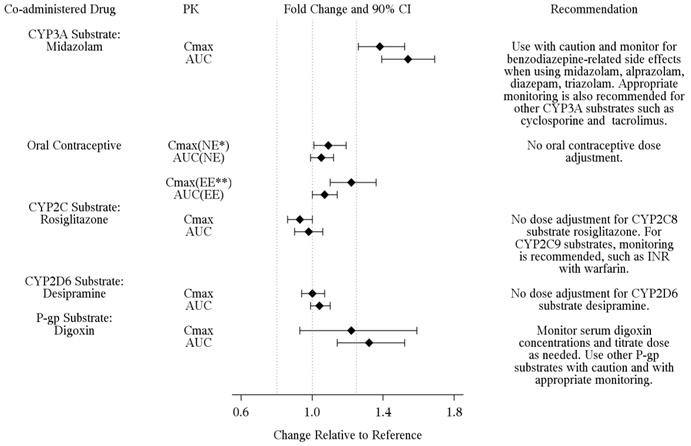
Based on in vitro results, ivacaftor and metabolite M1 have the potential to inhibit CYP3A and P-gp. Clinical studies showed that KALYDECO is a weak inhibitor of CYP3A and P-gp, but not an inhibitor of CYP2C8. In vitro studies suggest that ivacaftor and M1 may inhibit CYP2C9. In vitro, ivacaftor, M1, and M6 were not inducers of CYP isozymes. Dosing recommendations for co-administered drugs with KALYDECO are shown in Figure 2.
| Figure 2: Impact of KALYDECO on Other Drugs |
|---|
Note: The data obtained with substrates but without co-administration of KALYDECO are used as reference.
*NE: Norethindrone; **EE: Ethinyl Estradiol
The vertical lines are at 0.8, 1.0, and 1.25, respectively. |
|
Potential for Other Drugs to Affect Ivacaftor
In vitro studies showed that ivacaftor and metabolite M1 were substrates of CYP3A enzymes (i.e., CYP3A4 and CYP3A5). Exposure to ivacaftor is reduced by concomitant CYP3A inducers and increased by concomitant CYP3A inhibitors [see Dosage and Administration (2.6) and Drug Interactions (7)]. KALYDECO dosing recommendations for co-administration with other drugs are shown in Figure 3.
| Figure 3: Impact of Other Drugs on KALYDECO |
|---|
Note: The data obtained for KALYDECO without co-administration of inducers or inhibitors are used as reference.
The vertical lines are at 0.8, 1.0, and 1.25, respectively. |
|
Dose Ranging:
Dose ranging for the clinical program consisted primarily of one double-blind, placebo-controlled, crossover trial in 39 adult (mean age 31 years) Caucasian patients with CF who had FEV1 ≥40% predicted. Twenty patients with median predicted FEV1 at baseline of 56% (range: 42% to 109%) received KALYDECO 25, 75, 150 mg or placebo every 12 hours for 14 days and 19 patients with median predicted FEV1 at baseline of 69% (range: 40% to 122%) received KALYDECO 150, 250 mg, or placebo every 12 hours for 28 days. The selection of the 150 mg every 12 hours dose was primarily based on nominal improvements in lung function (pre-dose FEV1) and changes in pharmacodynamic parameters (sweat chloride and nasal potential difference). The twice-daily dosing regimen was primarily based on an apparent terminal plasma half-life of approximately 12 hours.
Efficacy:
The efficacy of KALYDECO in patients with CF who have a G551D mutation in the CFTR gene was evaluated in two randomized, double-blind, placebo-controlled clinical trials in 213 clinically stable patients with CF (109 receiving KALYDECO 150 mg twice daily). All eligible patients from these trials were rolled over into an open-label extension study.
Trial 1 evaluated 161 patients with CF who were 12 years of age or older (mean age 26 years) with FEV1 at screening between 40-90% predicted [mean FEV1 64% predicted at baseline (range: 32% to 98%)]. Trial 2 evaluated 52 patients who were 6 to 11 years of age (mean age 9 years) with FEV1 at screening between 40-105% predicted [mean FEV1 84% predicted at baseline (range: 44% to 134%)]. Patients who had persistent Burkholderia cenocepacia, Burkholderia dolosa, or Mycobacterium abscessus isolated from sputum at screening and those with abnormal liver function defined as 3 or more liver function tests (ALT, AST, AP, GGT, total bilirubin) ≥3 times the upper limit of normal were excluded.
Patients in both trials were randomized 1:1 to receive either 150 mg of KALYDECO or placebo every 12 hours with food containing fat for 48 weeks in addition to their prescribed CF therapies (e.g., tobramycin, dornase alfa). The use of inhaled hypertonic saline was not permitted.
The primary efficacy endpoint in both studies was improvement in lung function as determined by the mean absolute change from baseline in percent predicted pre-dose FEV1 through 24 weeks of treatment.
In both studies, treatment with KALYDECO resulted in a significant improvement in FEV1. The treatment difference between KALYDECO and placebo for the mean absolute change in percent predicted FEV1 from baseline through Week 24 was 10.6 percentage points (P<0.0001) in Trial 1 and 12.5 percentage points (P<0.0001) in Trial 2 (Figure 4). These changes persisted through 48 weeks. Improvements in percent predicted FEV1 were observed regardless of age, disease severity, sex, and geographic region.
| Figure 4: Mean Absolute Change from Baseline in Percent Predicted FEV1 Primary endpoint was assessed at the 24-week time point. |
|---|
|
Other efficacy variables included absolute change from baseline in sweat chloride [see Clinical Pharmacology (12.2)], time to first pulmonary exacerbation (Trial 1 only), absolute change from baseline in weight, and improvement from baseline in Cystic Fibrosis Questionnaire Revised (CFQ-R) respiratory domain score, a measure of respiratory symptoms relevant to patients with CF such as cough, sputum production, and difficulty breathing. For the purpose of the study, a pulmonary exacerbation was defined as a change in antibiotic therapy (IV, inhaled, or oral) as a result of 4 or more of 12 pre-specified sino-pulmonary signs/symptoms. Patients treated with KALYDECO demonstrated statistically significant improvements in risk of pulmonary exacerbations, CF symptoms (in Trial 1 only), and gain in body weight (Table 4). Weight data, when expressed as body mass index normalized for age and sex in patients <20 years of age, were consistent with absolute change from baseline in weight.
Table 4: Effect of KALYDECO on Other Efficacy Endpoints in Trials 1 and 2 | Trial 1 | Trial 2 |
|---|
| Endpoint | Treatment difference Treatment difference = effect of KALYDECO – effect of Placebo
(95% CI) | P value | Treatment difference
(95% CI) | P value |
|---|
| CI: confidence interval; NA: not analyzed due to low incidence of events |
| Mean absolute change from baseline in CFQ-R respiratory domain score (points) |
| Through Week 24 | 8.1
(4.7, 11.4) | <0.0001 | 6.1
(-1.4, 13.5) | 0.1092 |
| Through Week 48 | 8.6
(5.3, 11.9) | <0.0001 | 5.1
(-1.6, 11.8) | 0.1354 |
| Relative risk of pulmonary exacerbation |
| Through Week 24 | 0.40 Hazard ratio for time to first pulmonary exacerbation | 0.0016 | NA | NA |
| Through Week 48 | 0.46 | 0.0012 | NA | NA |
| Mean absolute change from baseline in body weight (kg) |
| At Week 24 | 2.8
(1.8, 3.7) | <0.0001 | 1.9
(0.9, 2.9) | 0.0004 |
| At Week 48 | 2.7
(1.3, 4.1) | 0.0001 | 2.8
(1.3, 4.2) | 0.0002 |
| Absolute change in sweat chloride (mmol/L) |
| Through Week 24 | -48
(-51, -45) | <0.0001 | -54
(-62, -47) | <0.0001 |
| Through Week 48 | -48
(-51, -45) | <0.0001 | -53
(-61, -46) | <0.0001 |
Transaminase (ALT or AST) Elevations and Monitoring
Inform patients that elevation in liver tests have occurred in patients treated with KALYDECO. Liver function tests will be performed prior to initiating KALYDECO, every 3 months during the first year of treatment and annually thereafter. More frequent monitoring of liver function tests should be considered in patients with a history of transaminase elevations [see Warnings and Precautions (5.1)].
Drug Interactions with CYP3A Inducers and Inhibitors
Ask patients to tell you all the medications they are taking including any herbal supplements or vitamins. Co-administration of KALYDECO with strong CYP3A inducers (e.g., rifampin, St. John's wort) is not recommended, as they may reduce the therapeutic effectiveness of KALYDECO. Reduction of the dose of KALYDECO to one tablet or one packet of granules twice a week is recommended when co-administered with strong CYP3A inhibitors, such as ketoconazole. Dose reduction to one tablet or one packet of granules once daily is recommended when co-administered with moderate CYP3A inhibitors, such as fluconazole. Food containing grapefruit or Seville oranges should be avoided [see Drug Interactions (7.1, 7.2) and Clinical Pharmacology (12.3)].
Use in Patients with Hepatic Impairment
Inquire and/or assess whether patients have liver impairment. Reduce the dose of KALYDECO in patients with moderately impaired hepatic function (Child-Pugh Class B, score 7-9) to one tablet or one packet of granules once daily. KALYDECO has not been studied in patients with severe hepatic impairment (Child-Pugh Class C, score 10-15); however, exposure is expected to be substantially higher than that observed in patients with moderate hepatic impairment. When benefits are expected to outweigh the risks, KALYDECO should be used with caution in patients with severe hepatic impairment at a dose of one tablet or one packet of granules given once daily or less frequently. No dose adjustment is recommended for patients with mild hepatic impairment (Child-Pugh Class A, score 5-6) [see Use in Specific Populations (8.6)].
Administration
KALYDECO® (ivacaftor) tablets 150 mg
Inform patients that KALYDECO tablet is best absorbed by the body when taken with food that contains fat. A typical CF diet will satisfy this requirement. Examples include eggs, butter, peanut butter, cheese pizza, whole-milk dairy products (such as whole milk, cheese, and yogurt), etc.
KALYDECO® (ivacaftor) oral granules 50 mg or 75 mg
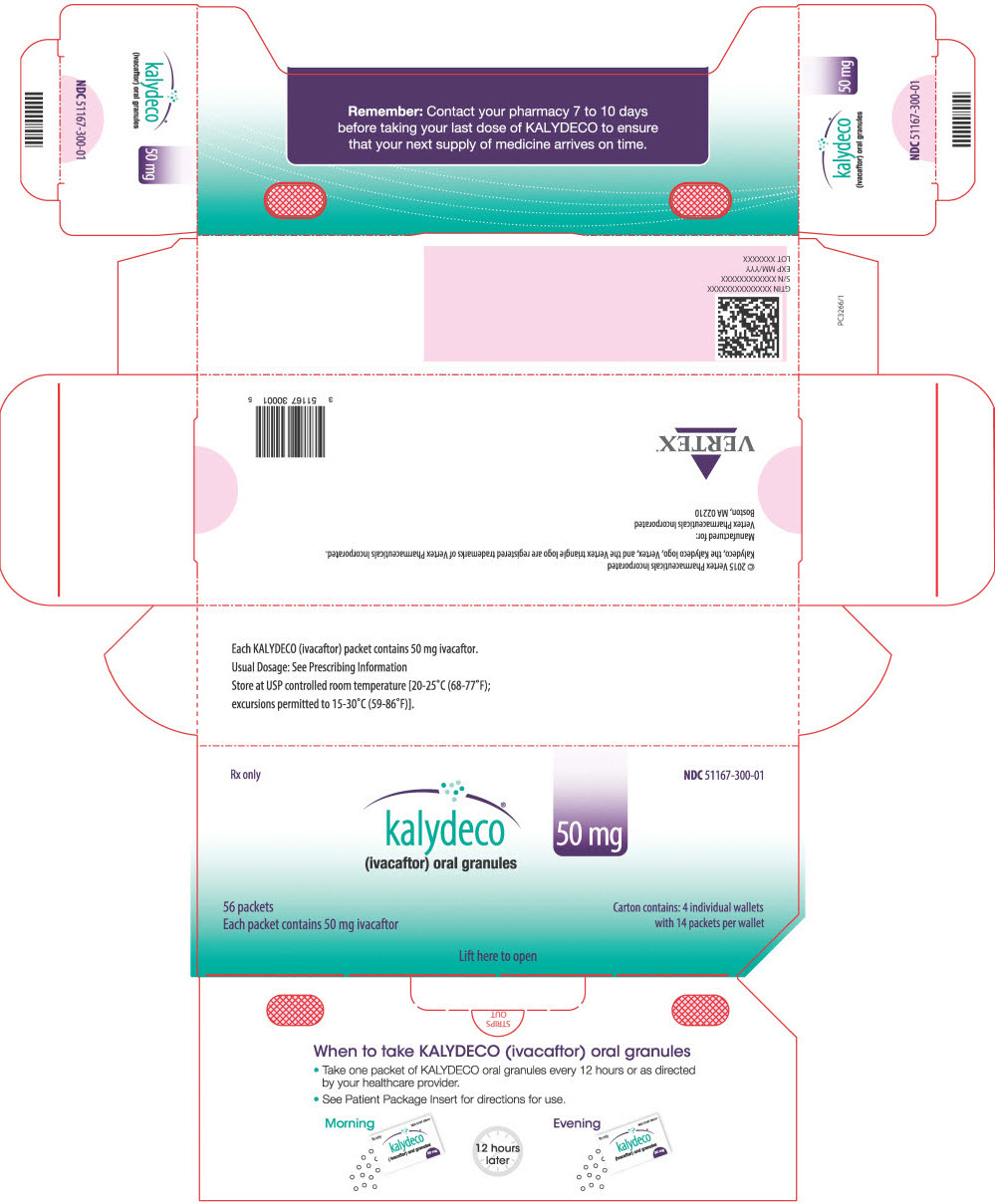
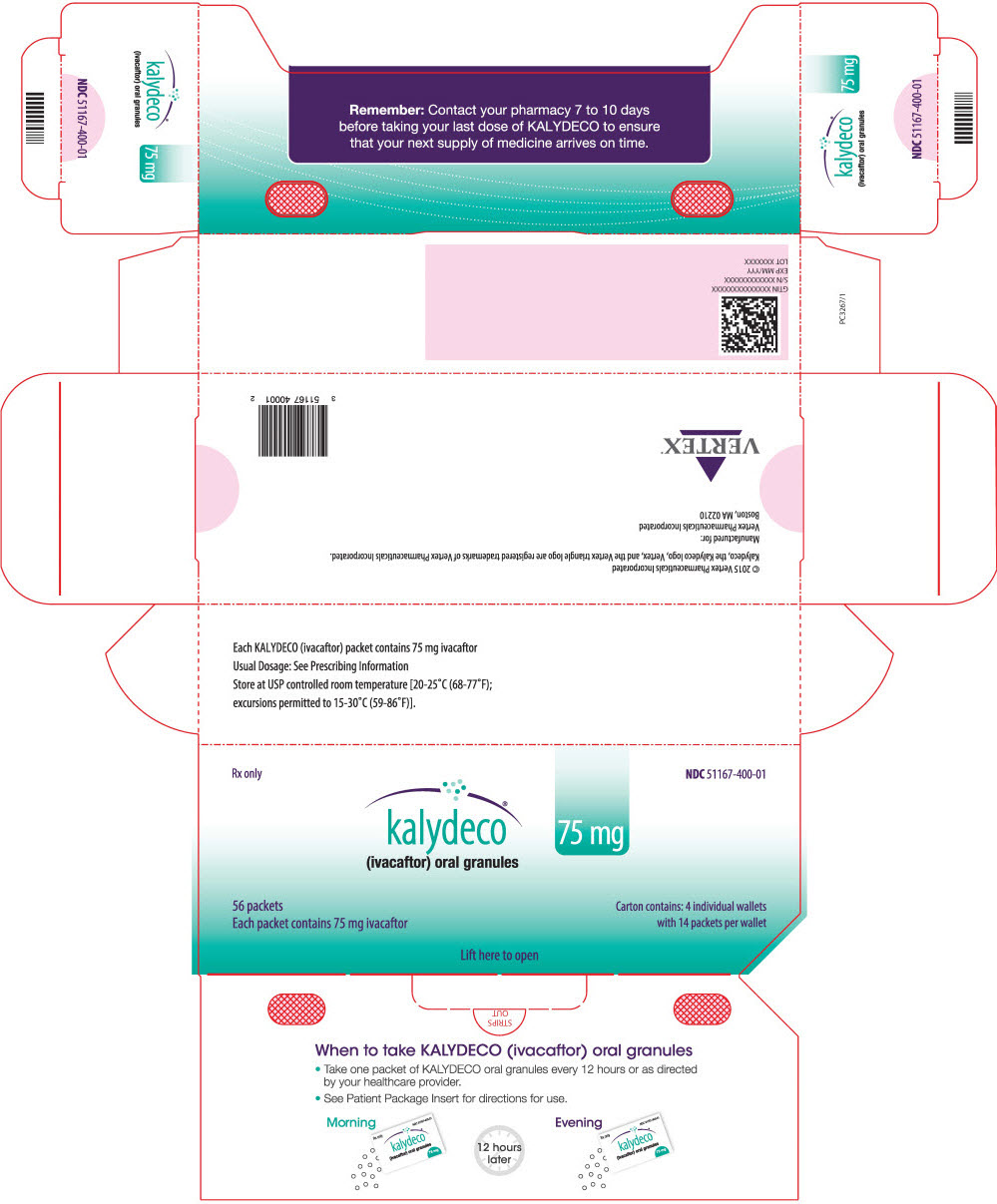
Inform patients and caregivers that KALYDECO oral granules should be mixed with one teaspoon (5 mL) of age-appropriate soft food or liquid and completely consumed to ensure delivery of the entire dose. Food or liquid should be at or below room temperature. Once mixed, the product has been shown to be stable for one hour, and therefore should be consumed during this period. Some examples of appropriate soft foods or liquids may include puréed fruits or vegetables, yogurt, applesauce, water, milk, or juice.
Inform patients and caregivers that KALYDECO is best absorbed by the body when taken with food that contains fat; therefore, KALYDECO oral granules should be taken just before or just after consuming food that contains fat. A typical CF diet will satisfy this requirement. Examples include eggs, butter, peanut butter, cheese pizza, whole-milk dairy products (such as whole milk, cheese, and yogurt), etc.
Patients should be informed about what to do in the event they miss a dose of KALYDECO:
- In case a dose of KALYDECO is missed within 6 hours of the time it is usually taken, patients should be instructed to take the prescribed dose of KALYDECO with fat-containing food as soon as possible.
- If more than 6 hours have passed since KALYDECO is usually taken, the missed dose should NOT be taken and the patient should resume the usual dosing schedule.
- Patients should be advised to contact their health care provider if they have questions.
Cataracts
Inform patients that abnormality of the eye lens (cataract) has been noted in some children and adolescents receiving KALYDECO. Baseline and follow-up ophthalmological examinations should be performed in pediatric patients initiating KALYDECO treatment [see Warnings and Precautions (5.3)].
Manufactured for
Vertex Pharmaceuticals Incorporated
Boston, MA 02210
KALYDECO, VERTEX, and the VERTEX triangle logo are registered trademarks of Vertex Pharmaceuticals Incorporated.
All other trademarks referenced herein are the property of their respective owners.
©2017 Vertex Pharmaceuticals Incorporated
ALL RIGHTS RESERVED
69264-10
Revised July 2017
Patient Information is
perforated for
dispensing to the patient.