Nintedanib Capsule
Product Images NDC 51407-985

View Photos of Packaging, Regulatory Labels, and Product Appearance

Product Visual Gallery

This gallery contains 12 technical images submitted to the FDA as part of the official labeling for Nintedanib (NDC 51407-985). Unlike standard consumer photos, these assets often include clinical data figures, molecular chemical structures, and official manufacturer packaging layouts.

As provided by Golden State Medical Supply, Inc., these visuals offer a comprehensive scientific overview of the product's physical and chemical identity, aiding pharmacists and researchers in product verification and study.

FDA Label Image

51407-984-60lb (Nintedanib Capsules 100mg)
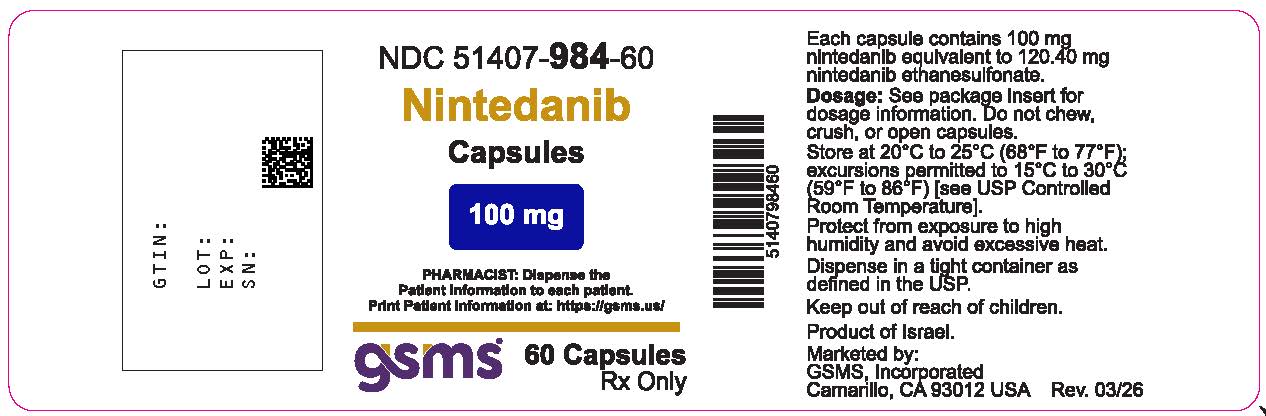
51407-984-60lb (Nintedanib Capsules 100mg)
This is a description of a medication labeled with the National Drug Code (NDC) 51407-984-60. It is a capsule formulation containing 100 mg of nintedanib equivalent to 120.40 mg of nintedanib ethanesulfonate. The recommended dosage and storage instructions are provided on the packaging. Each capsule should not be chewed, crushed, or opened. The medication should be stored at 20°C to 25°C (68°F to 77°F), with excursions permitted to 15°C to 30°C (59°F to 86°F). It should be protected from light, humidity, and excessive heat. The medication should be dispensed in a tight container and kept out of reach of children. This product is made in Israel and marketed by GSMS, Incorporated.*
FDA Label Image

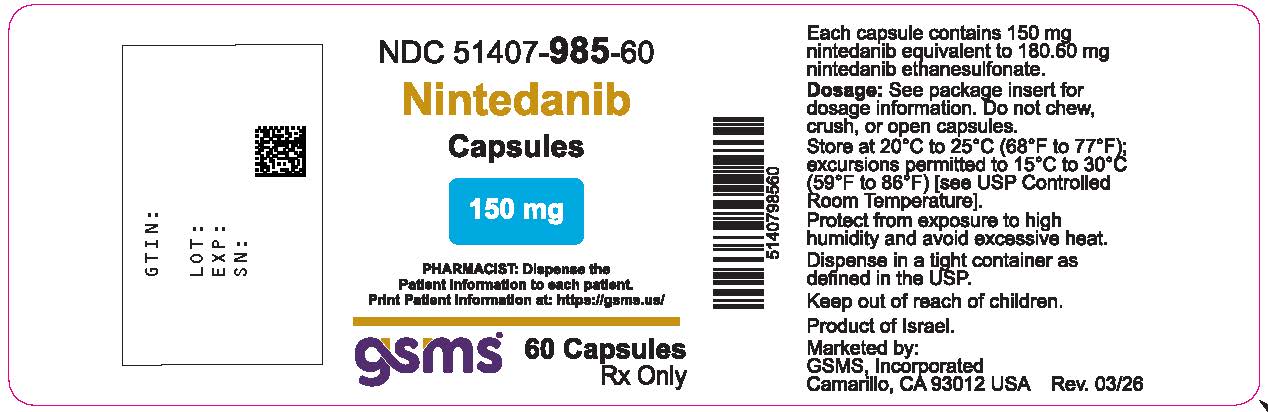
51407-985-60lb (Nintedanib Capsules 150mg)

51407-985-60lb (Nintedanib Capsules 150mg)
This is a description of a medication capsule containing 150 mg of nintedanib ethanesulfonate, an active pharmaceutical ingredient. The dosage information is available in the package insert. The capsules should not be chewed, crushed, or opened. It should be stored at 20°C to 25°C (68°F to 77°F) with excursions permitted to 15°C to 30°C (59°F to 86°F). It is advised to protect from exposure to high humidity and excessive heat and dispense in a tight container. The product is from Israel and should be kept out of reach of children. Pharmacist should dispense the patient information to each patient.*
FDA Label Image

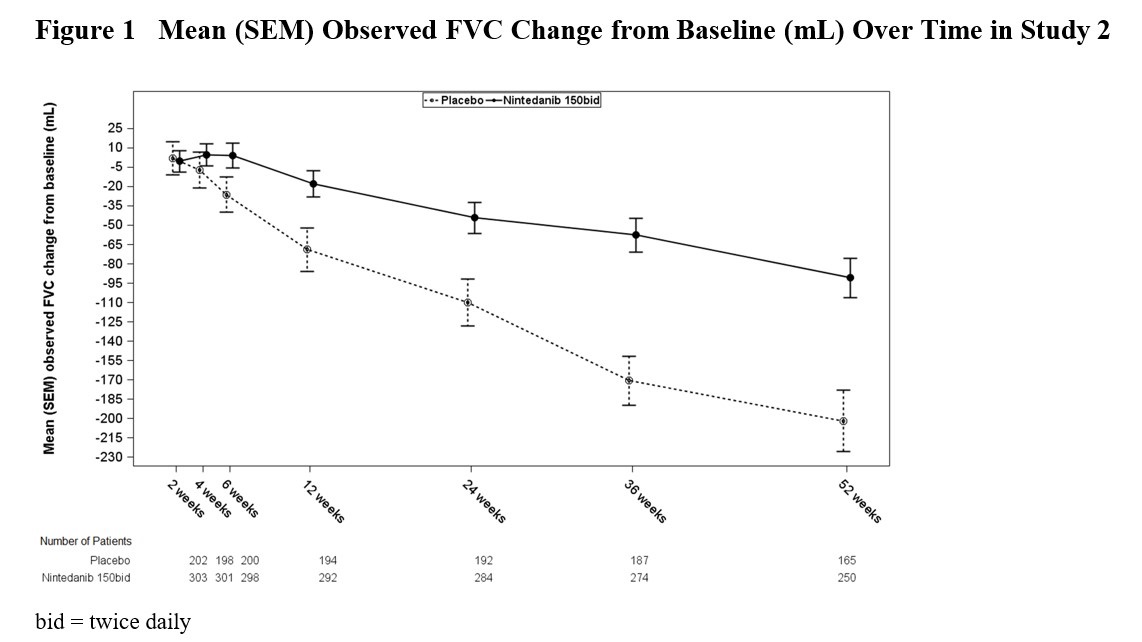
1 (Figure 1)

1 (Figure 1)
The text describes Figure 1 showing the mean observed Forced Vital Capacity (FVC) change from baseline over time in Study 2. It includes data points for both the Placebo and Nintedanib groups, indicating the FVC change in milliliters. The number of patients for each group is also provided, with the information that "bid" stands for twice daily dosing.*
FDA Label Image

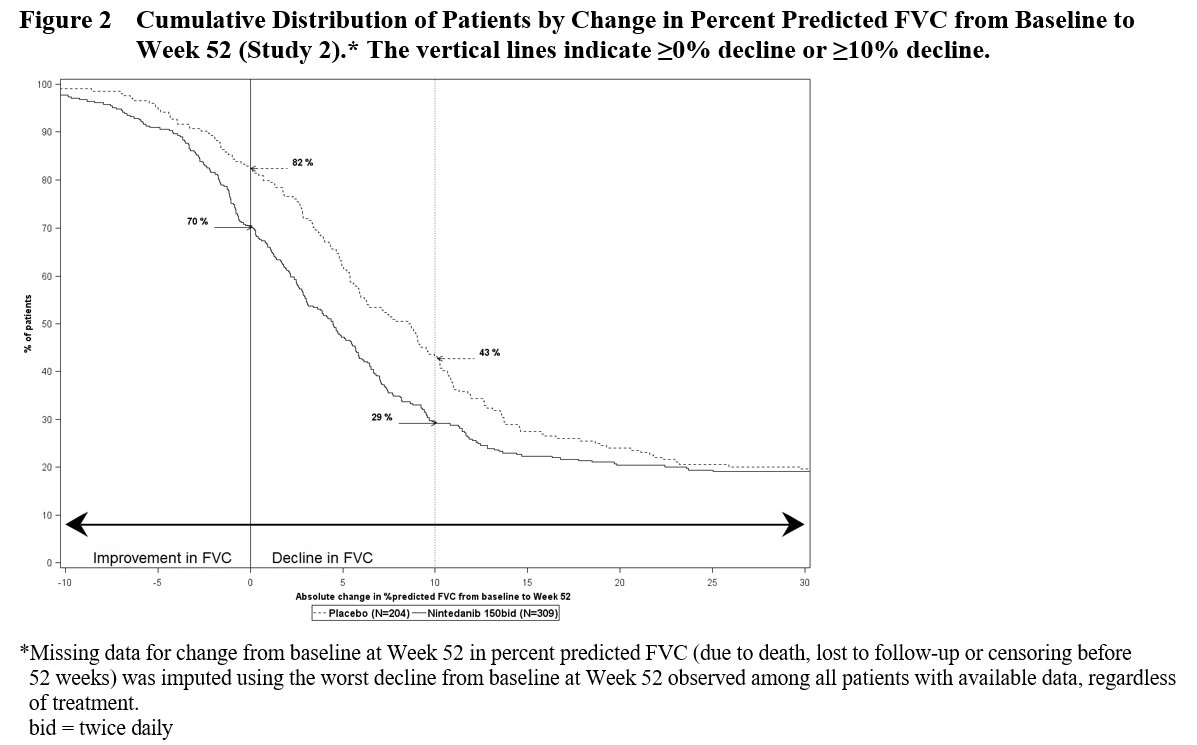
1 (Figure 2)

1 (Figure 2)
This is a graph showing the Cumulative Distribution of Patients based on the change in Percent Predicted FVC from Baseline to Week 52 in Study 2. The graph indicates the percentage of patients experiencing improvements or declines in FVC. It also includes information on the number of patients under the Placebo group and the Nintedanib 150bid group. Additionally, it mentions how missing data for some patients was imputed based on the worst decline observed. The text also explains that "bid" means twice daily.*
FDA Label Image

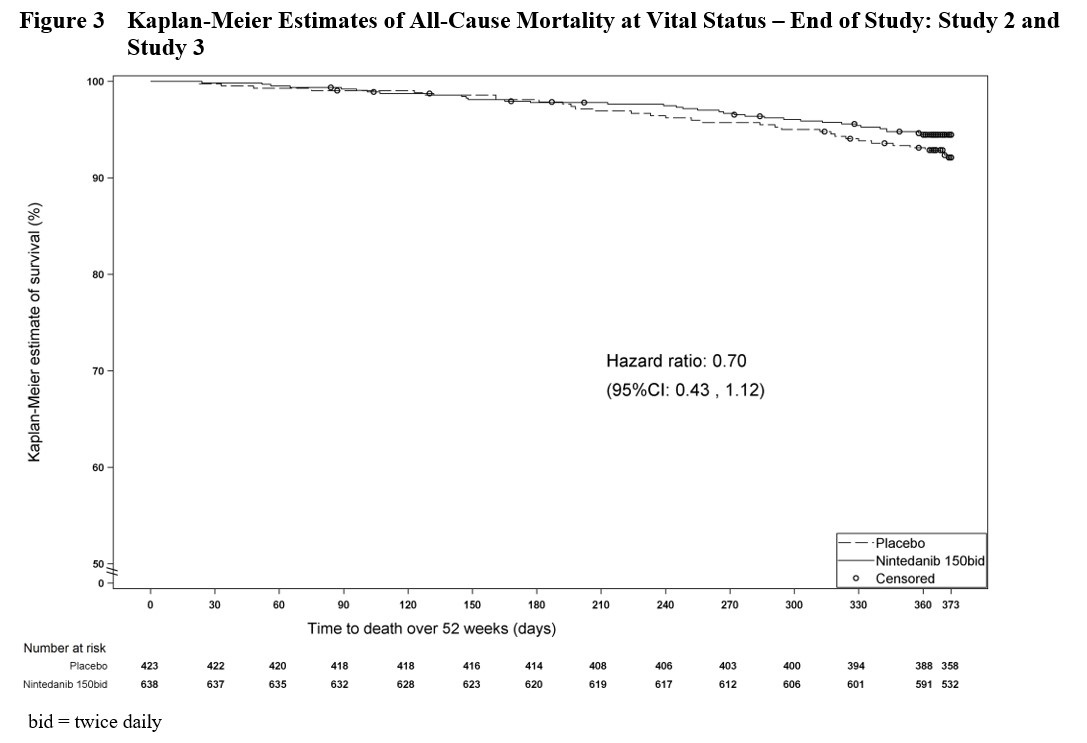
1 (Figure 3)

1 (Figure 3)
The text is not readable.*
FDA Label Image

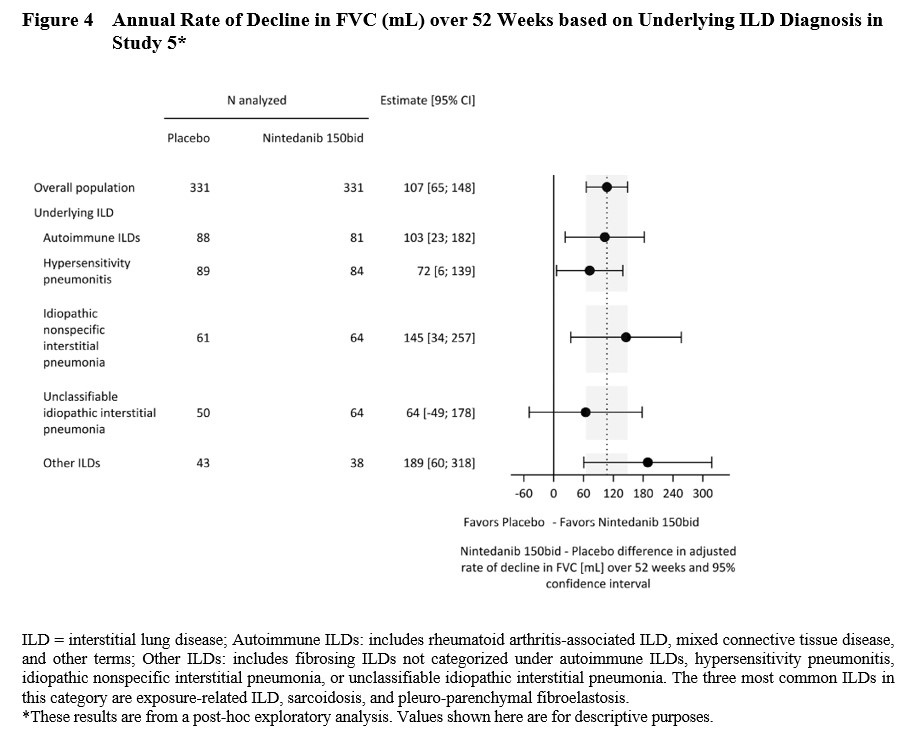
1 (Figure 4)

1 (Figure 4)
This text provides a breakdown of the annual rate of decline in the Forced Vital Capacity (FVC) over 52 weeks based on underlying Interstitial Lung Disease (ILD) diagnoses. It includes data on different ILD types such as Autoimmune ILDs, Hypersensitivity Pneumonitis, Idiopathic Nonspecific Interstitial Pneumonia, and Other ILDs. The results also mention the differences in FVC decline between the placebo and Nintedanib 150mg twice daily groups. Additionally, the text defines ILD, specifies the types of ILDs considered in the analysis, and highlights that the information is based on post-hoc exploratory analysis.*
FDA Label Image

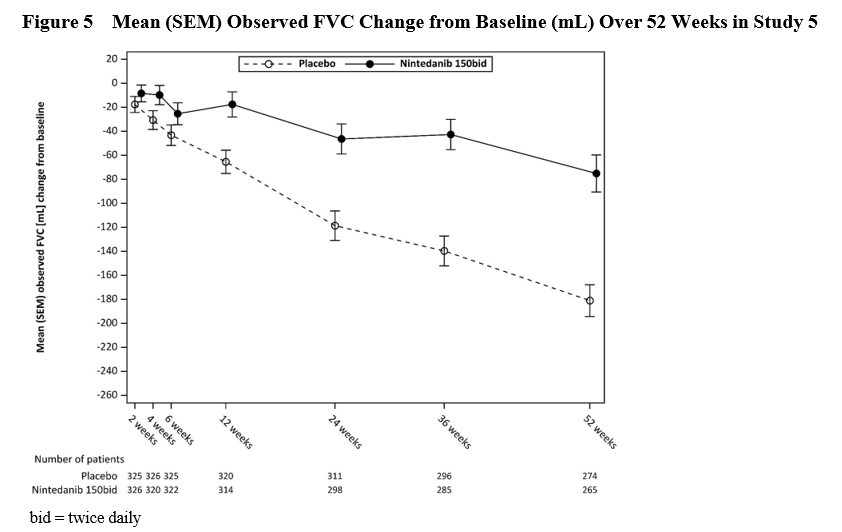
1 (Figure 5)

1 (Figure 5)
This text provides the mean observed forced vital capacity (FVC) change from baseline in milliliters over a 52-week period in Study 5, comparing the placebo and Nintedanib groups. The data includes the number of patients in each group, highlighting the efficacy of Nintedanib in maintaining FVC levels. The medication was administered twice daily.*
FDA Label Image

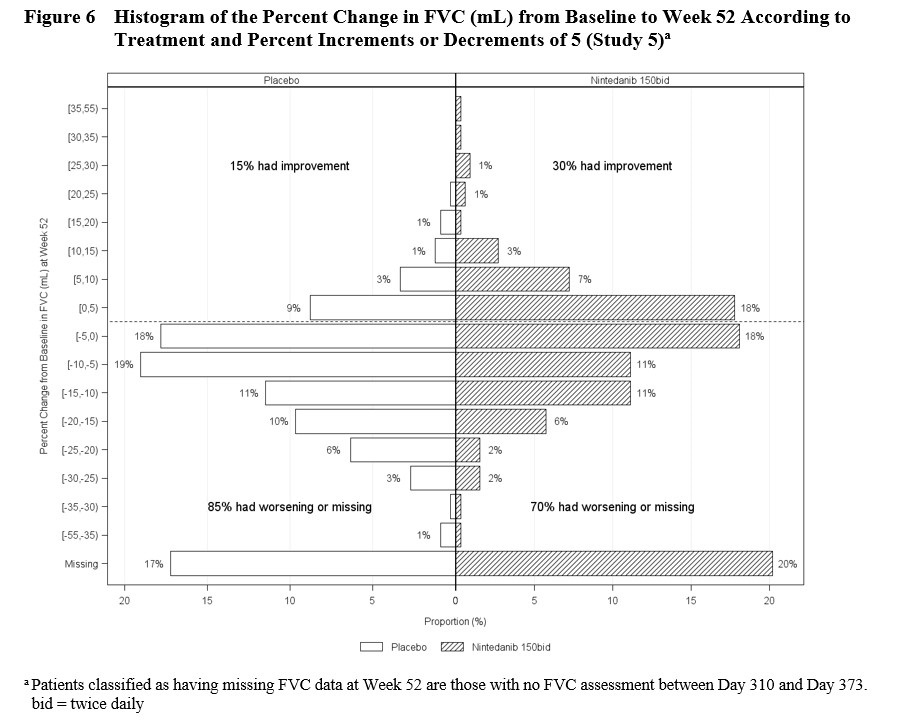
1 (Figure 6)

FDA Label Image

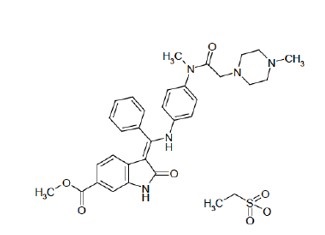
1 (Nintedanib Esylate)

FDA Label Image

1 (Table 1)

1 (Table 1)
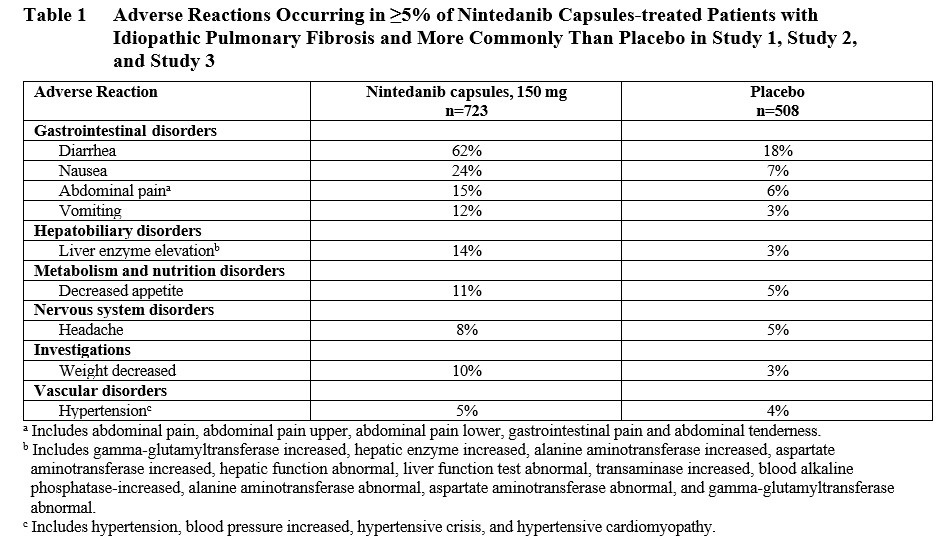
Description: The text reveals a table listing adverse reactions occurring in more than 5% of patients treated with Nintedanib Capsules for Idiopathic Pulmonary Fibrosis, as compared to placebo in three separate studies. The adverse reactions include gastrointestinal disorders such as diarrhea, nausea, and abdominal pain, as well as liver enzyme elevation. Metabolism and nutrition disorders like decreased appetite are also noted, along with nervous system disorders like headache. Additionally, vascular disorders including hypertension are mentioned. The table provides percentages of occurrences for each adverse reaction in patients treated with Nintedanib Capsules and those who received a placebo.*
FDA Label Image

1 (Table 3)

1 (Table 3)
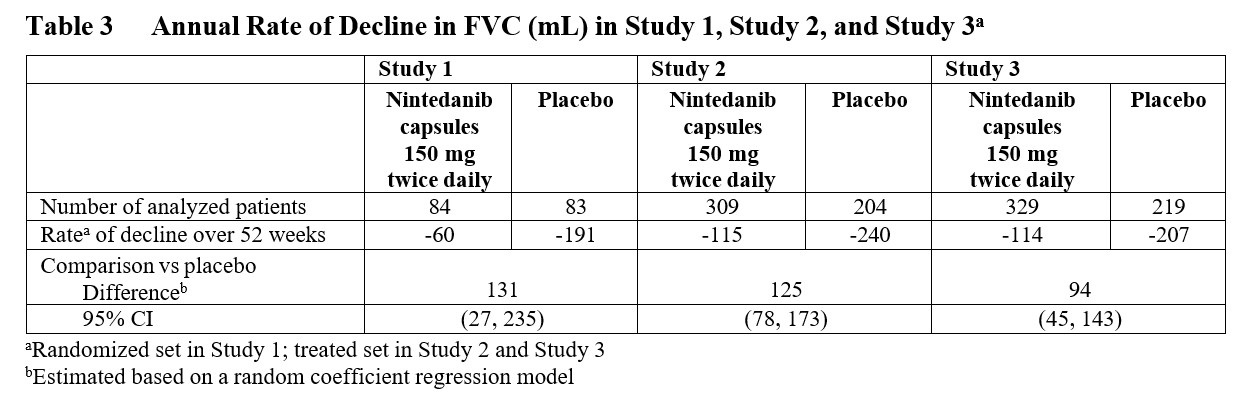
This text provides information about the annual rates of decline in forced vital capacity (FVC) in three different studies (Study 1, Study 2, and Study 3) involving treatment with Nintedanib and Placebo capsules. It includes data on the number of analyzed patients, the rate of decline over 52 weeks, and the comparison against placebo in terms of differences and 95% confidence intervals. The text also mentions the treatment regimen and statistical methods used for estimation. These details are essential for evaluating the effectiveness of Nintedanib in slowing down FVC decline in patients.*
FDA Label Image

1 (Table 4)

1 (Table 4)
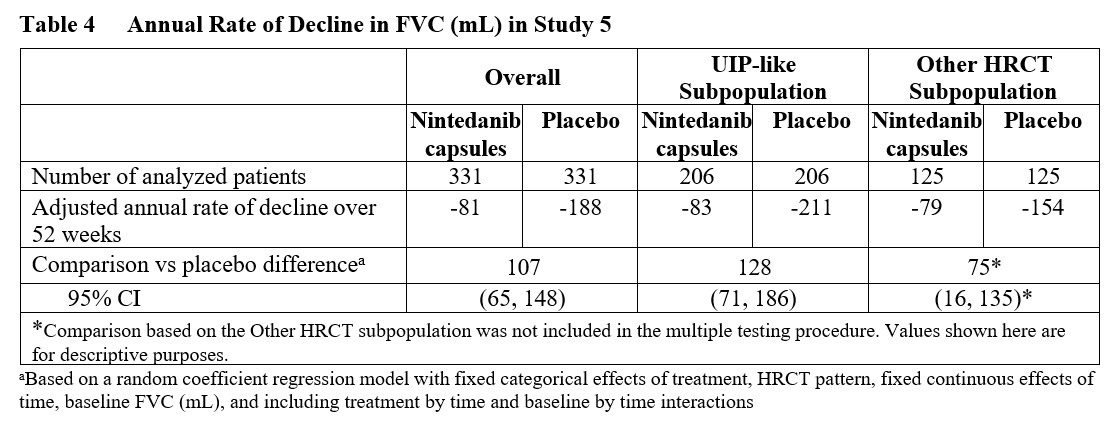
This information presents the annual rate of decline in FVC (Forced Vital Capacity) recorded during Study 5 for different subpopulations. Nintedanib capsules and placebo were compared within an overall UIP-like and Other HRCT subpopulation. The number of analyzed patients in each group and the adjusted annual decline rates are provided. The comparison against placebo revealed differences and confidence intervals based on specific criteria and included statistical modeling details.*

* These product label images have been analyzed using experimental machine learning. Please verify findings with the primary label text.