Epinephrine Injection
Product Images NDC 51662-1225
View Photos of Packaging, Regulatory Labels, and Product Appearance
Product Visual Gallery
This gallery contains 13 technical images submitted to the FDA as part of the official labeling for Epinephrine (NDC 51662-1225). Unlike standard consumer photos, these assets often include clinical data figures, molecular chemical structures, and official manufacturer packaging layouts.
As provided by Hf Acquisition Co Llc, Dba Healthfirst, these visuals offer a comprehensive scientific overview of the product's physical and chemical identity, aiding pharmacists and researchers in product verification and study.
Product Images & Figures Index
Inst 1 (Inst 1)
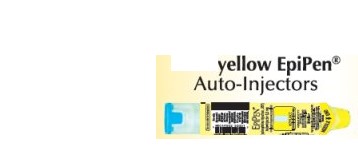
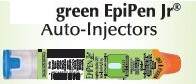
This is a description of the EpiPen auto-injector and EpiPen Jr auto-injector. It mentions the yellow label and green label, as well as a carrier tube for the auto-injectors. There are various colored components, such as orange, blue, and green. It also refers to a safety release feature. However, there is not enough information to provide a full description of how to use these devices or what they are used for.*
Inst 2 (Inst 2)
Inst 3 (Inst 3)
This text provides instructions for administering an EpiPen or EpiPen Jr to a young child. It advises to hold the leg firmly while administering the injection, placing the orange tip against the outer thigh at a right angle, swinging and pushing the auto-injector until it clicks, and holding in place for 3 seconds. The text also suggests massaging the injection area for 10 seconds and not reusing the needle if it is still visible after use.*
Inst 4 (Inst 4)
Inst 5 (Inst 5)
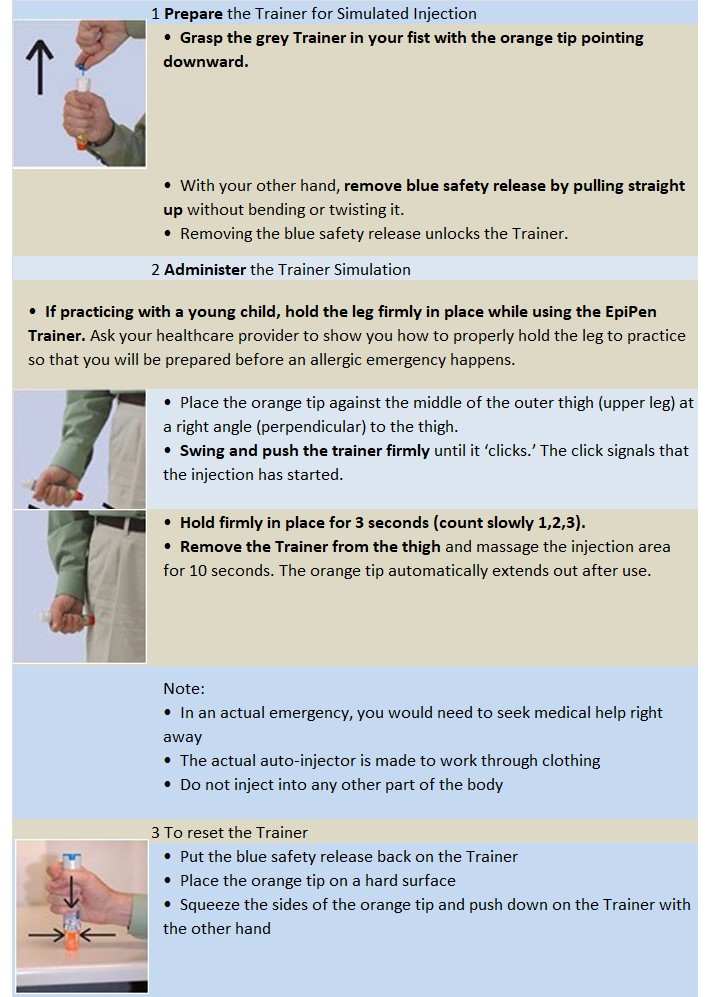
This text provides instructions on how to prepare and administer a simulated injection using an EpiPen trainer. The first set of instructions explains how to prepare the trainer by removing the blue safety release. The second set of instructions explains how to hold the leg and place the orange tip of the trainer against the middle of the outer thigh, push the trainer firmly until it clicks, hold in place for 3 seconds, remove from the thigh, and massage the injection area. The note emphasizes seeking medical help in an actual emergency, using the auto-injector through clothing, and not injecting into any other part of the body. The text also provides instructions on how to reset the trainer by putting the blue safety release back on and squeezing the sides of the orange tip while pushing down on the trainer.*
Inst 6 (Inst 6)
This is a description of the EpiPen Auto-Injector Trainer kit that includes a Grey trainer and a Carrier Tube for both EpiPen and EpiPen Jr Auto-Injectors. The text also outlines the features and properties of the EpiPen including whether or not it contains medication, has a needle, the color of the label, expiration date, and whether it can be reused. It also indicates whether the safety can be removed, pressure required to hold against the thigh and how many times it can be used.*
Leaflet 2 (Leaflet 2)
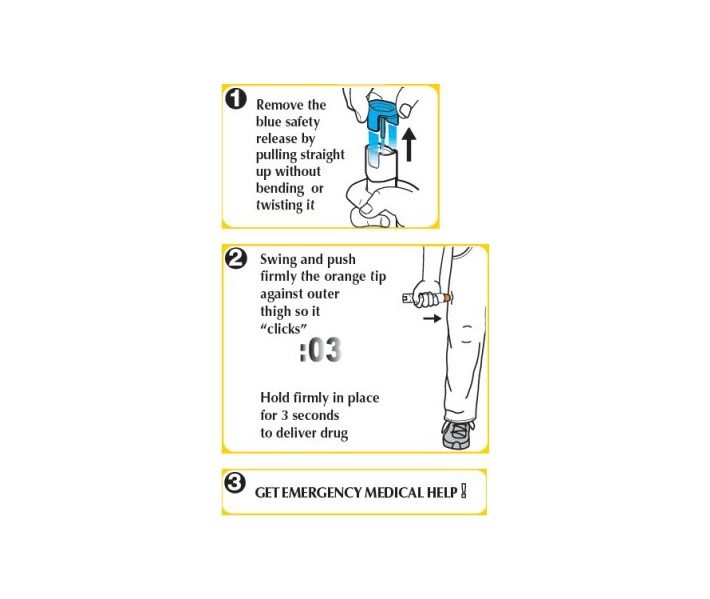
This text appears to be the instructions on how to administer a medical drug. It provides guidance on how to remove the blue safety release by pulling it straight up without bending or twisting it. The next step involves swinging and pushing the orange flip against the outer thigh until it clicks. The administrator is then instructed to hold the device firmly in place for 3 seconds and deliver the drug. Finally, the text highlights the importance of seeking emergency medical help.*
Leaflet (Leaflet)
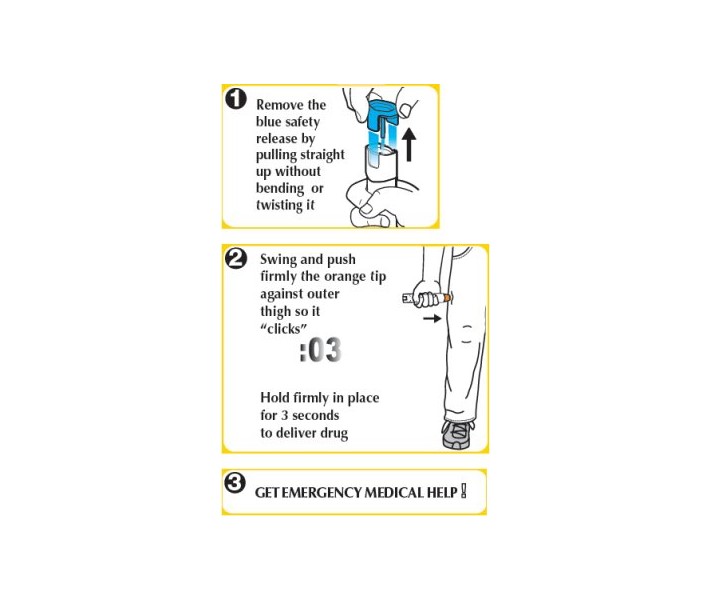
This is a set of instructions on how to administer a drug. It involves removing the blue safety release by pulling straight up, swinging and pushing the orange flip against the outer thigh until it clicks, holding it firmly in place for 3 seconds, and delivering the drug. The text also advises to get emergency medical help.*
Structure (Structure)
Serialized Label (Serialized 51662 1224 1 Epipen)
Serialized .015 (Serialized 51662 1225 1 Epipen Jr)
Yellow (Yello 0.3)
* These product label images have been analyzed using experimental machine learning. Please verify findings with the primary label text.