Propofol Injection, Emulsion
Product Images NDC 51662-1293

View Photos of Packaging, Regulatory Labels, and Product Appearance

Product Visual Gallery

This gallery contains 14 technical images submitted to the FDA as part of the official labeling for Propofol (NDC 51662-1293). Unlike standard consumer photos, these assets often include clinical data figures, molecular chemical structures, and official manufacturer packaging layouts.

As provided by Hf Acquisition Co Llc, Dba Healthfirst, these visuals offer a comprehensive scientific overview of the product's physical and chemical identity, aiding pharmacists and researchers in product verification and study.

FDA Label Image

Adverse Reactions 1 (Adverse Reaction 1)
Adverse Reactions 1 (Adverse Reaction 1)
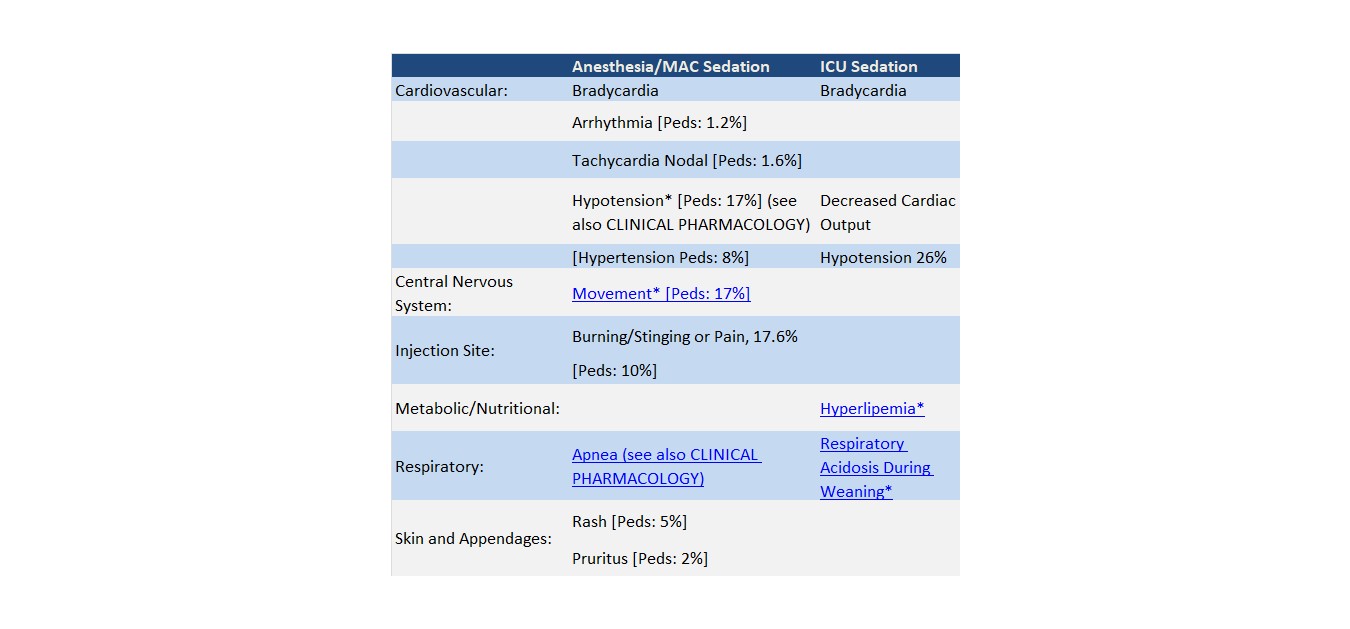
This appears to be a list of potential side effects associated with a medication. The medication seems to affect various areas of the body, including the cardiovascular system, central nervous system, injection site, metabolic/nutritional system, respiratory system, and skin. Some of the more common side effects include hypotension, burning/stinging or pain at the injection site, and rash. Specific percentages are given for pediatric patients experiencing certain side effects.*
FDA Label Image

Adverse Reations 2 (Adverse Reaction 2)

Adverse Reations 2 (Adverse Reaction 2)
This is a medical description of different symptoms a human body can experience. They range from issues in different body parts to disorders such as perinatal disorder and cardiovascular issues such as bigeminy and premature atrial contractions. The respiratory system is also described. Symptoms include wheezing, decreased lung function, cough, laryngospasm, and hypoxia. The nervous system can cause dizziness, agitation, chills, somnolence, and delirium, while the musculoskeletal system can cause myalgia. Metabolism can cause hypomagnesemia while the digestive system can cause nausea and hypersalivation. The skin and appendages can experience flushing and pruritus while special senses can cause amblyopia and vision abnormalities. These symptoms may indicate potential health issues and require medical attention. Green urine is also listed as a possible symptom.*
FDA Label Image

Adverse Reactions 3 (Adverse Reaction 3)

Adverse Reactions 3 (Adverse Reaction 3)
This text describes a list of symptoms and medical conditions that may affect different parts and systems of the body. The first section lists symptoms related to the body as a whole, such as asthenia, fever, and pain on different areas. The second section describes cardiovascular symptoms and conditions, such as arrhythmia, bleeding, and heart block. The third section refers to symptoms that affect the central nervous system, such as confusion, seizures, and tremors. The fourth section mentions digestive symptoms, such as cramping, diarrhea, and vomiting. The fifth section details different medical conditions and disorders such as coagulation disorder, leukocytosis, and metabolic acidosis. The text also mentions symptoms from other systems such as respiratory, urinary, and skin, as well as special senses such as diplopia and tinnitus.*
FDA Label Image

Clinical Pharma 1 (Clinical Pharma 1)

FDA Label Image

Clinical Pharma 2 (Clinical Pharma 2)

Clinical Pharma 2 (Clinical Pharma 2)
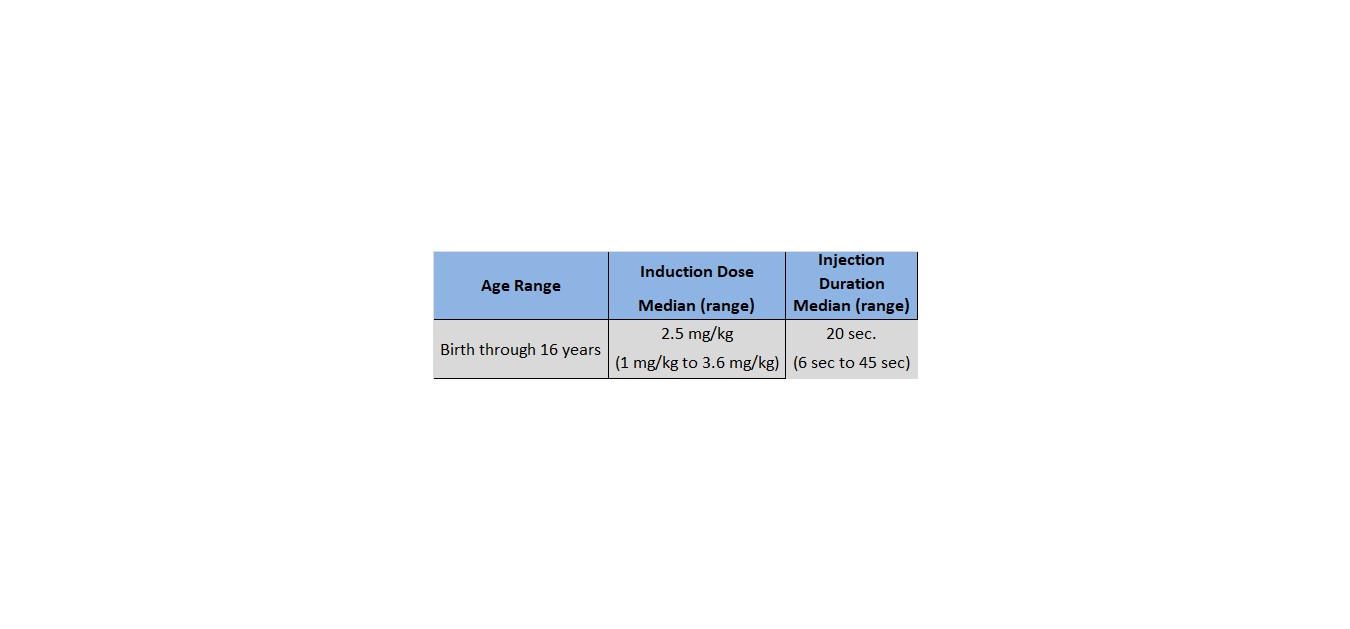
This text is not enough to generate a useful description. It seems like a measurement or dosage range for a particular age group, but more context is needed to provide an accurate description.*
FDA Label Image

Clinical Pharma 3 (Clinical Pharma 3)

Clinical Pharma 3 (Clinical Pharma 3)
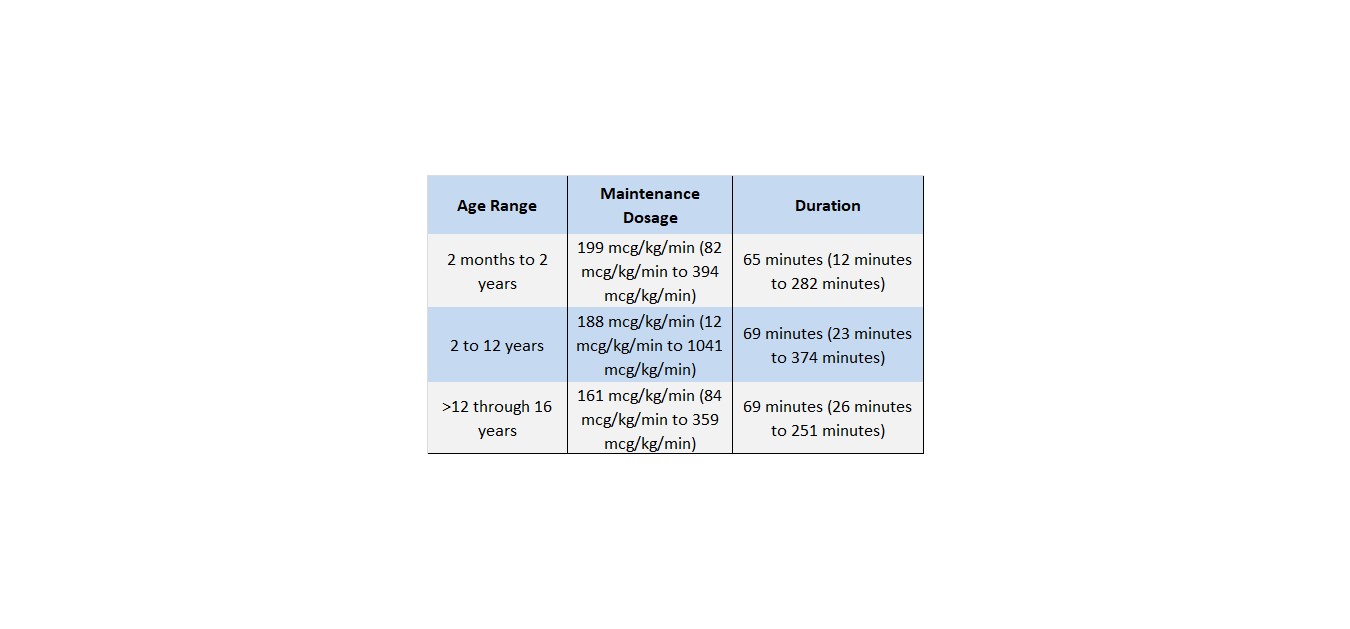
Age Range: - 2 months to 2 years - 2 to 12 years - >12 through 16 years Maintenance Dosage (meg/kg/min): - 199 (82 to 394) for age range 2 months to 2 years - 188 (12 to 1041) for age range 2 to 12 years - 161 (84 to 359) for age range >12 through 16 years Duration (minutes): - 65 (12 to 282) for age range 2 months to 2 years - 69 (23 to 374) for age range 2 to 12 years - 69 (26 to 251) for age range >12 through 16 years This text provides information on maintenance dosage and duration of a medication for different age ranges. It includes recommended dosages in meg/kg/min for patients ranging from 2 months to 16 years of age, as well as the duration of treatment in minutes.*
FDA Label Image

D And A 1 (D And A 1)

D And A 1 (D And A 1)
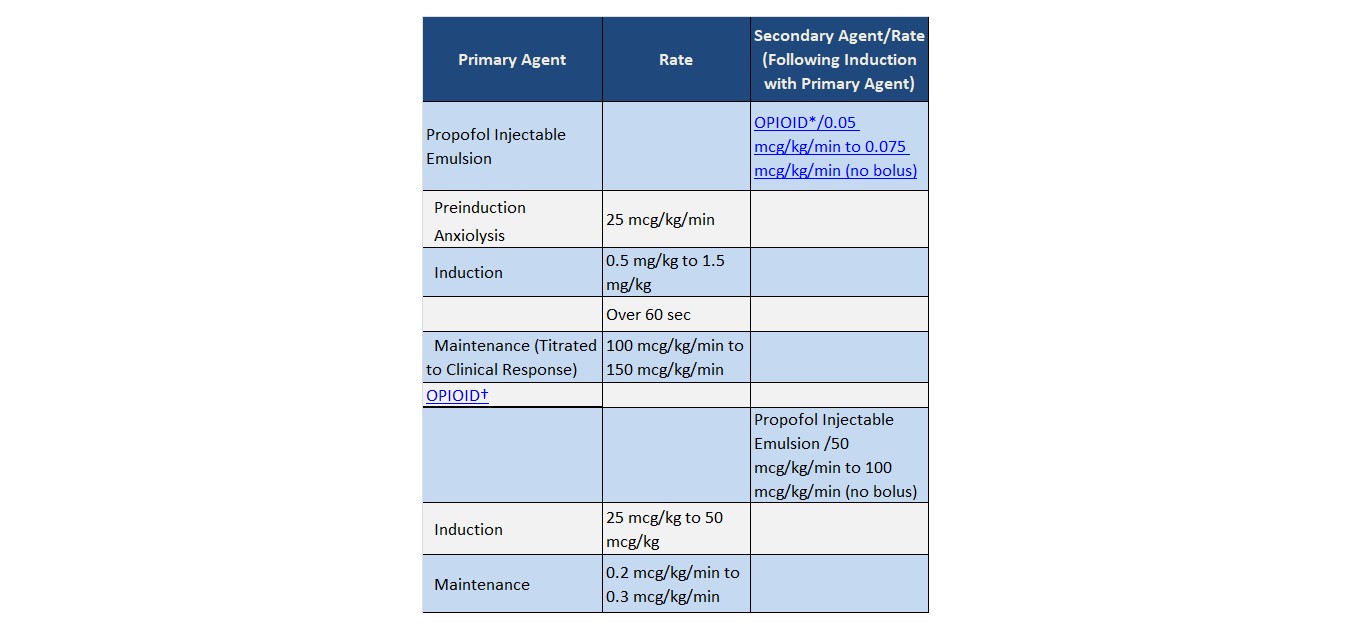
The text appears to be describing anesthesia medications and dosages used during induction and maintenance of anesthesia. The primary and secondary agents mentioned include OPIOID and Propofol Injectable Emulsion. Dosages are provided for each agent during pre-induction, induction, and maintenance phases. The dosages vary based on the patient's clinical response.*
FDA Label Image

D And A 2 (D And A 2)

D And A 2 (D And A 2)
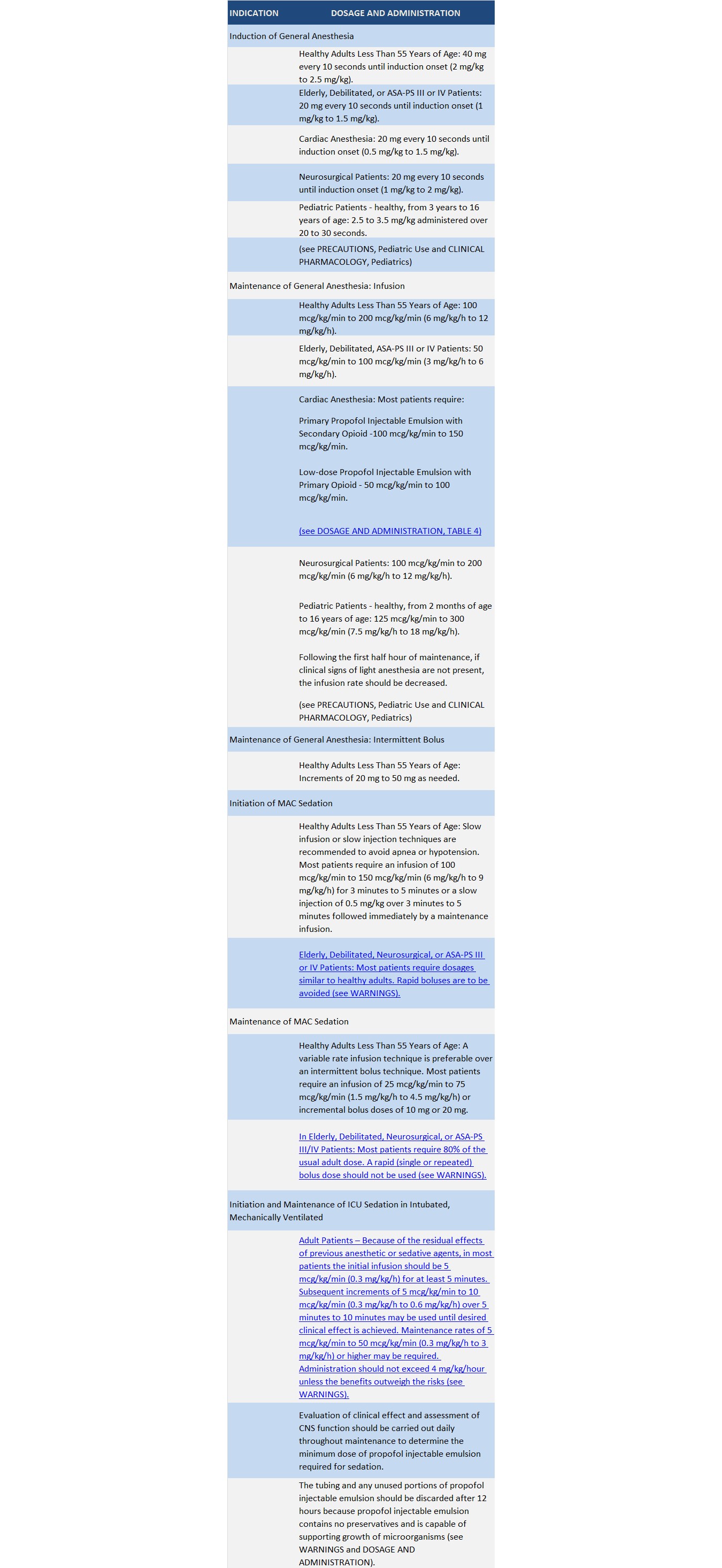
This text provides dosage guidelines and administration instructions for the induction and maintenance of general anesthesia and sedation using Propofol Injectable Emulsion. The guidelines include different dosages for adult patients of varying ages and conditions, as well as pediatric patients. The text emphasizes caution with elderly, debilitated, and ASA-PS Ill or IV patients and provides specific guidelines for cardiac anesthesia and neurosurgical patients. The text also warns against using rapid boluses and advises regular evaluation of clinical effect and NS function during maintenance to determine the minimum dosage required for sedation.*
FDA Label Image

How Supplied (How Supplied)

How Supplied (How Supplied)
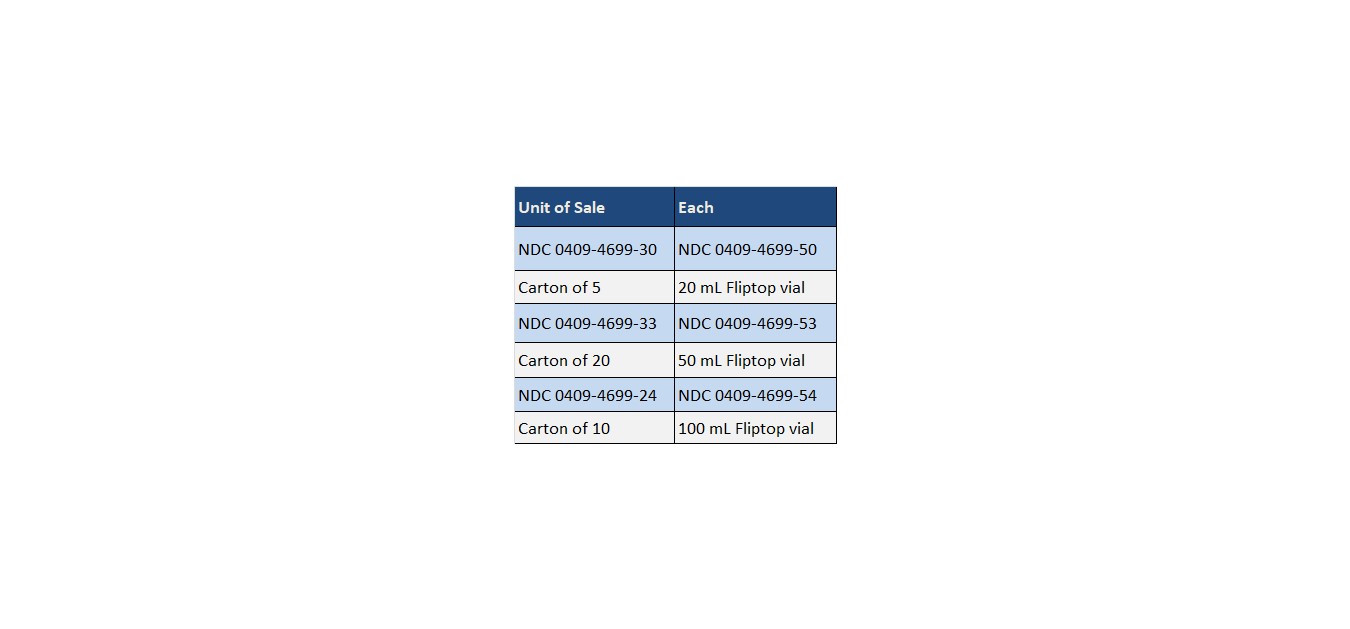
This text provides information on the unit of sale, NDC codes, and carton sizes for different sizes of Fliptop vials, including 20 mL, 50 mL, and 100 mL. There are different carton sizes available for each vial size, ranging from 5 vials to 20 vials per carton.*
FDA Label Image

Indications And Usage (Indications And Usage 1)

Indications And Usage (Indications And Usage 1)
This text appears to outline different services related to anesthesia care for patients of different age groups and medical conditions. It includes initiation and maintenance of monitored anesthesia care, combined sedation and regional anesthesia, induction and maintenance of general anesthesia, as well as intensive care unit sedation for mechanically ventilated patients who are adults.*
FDA Label Image
FDA Label Image

Serialized Label 1293-1 (Serialized Label 1293 1)

FDA Label Image

Structure (Structure)

FDA Label Image

Vial Label (Vial Label)

Vial Label (Vial Label)
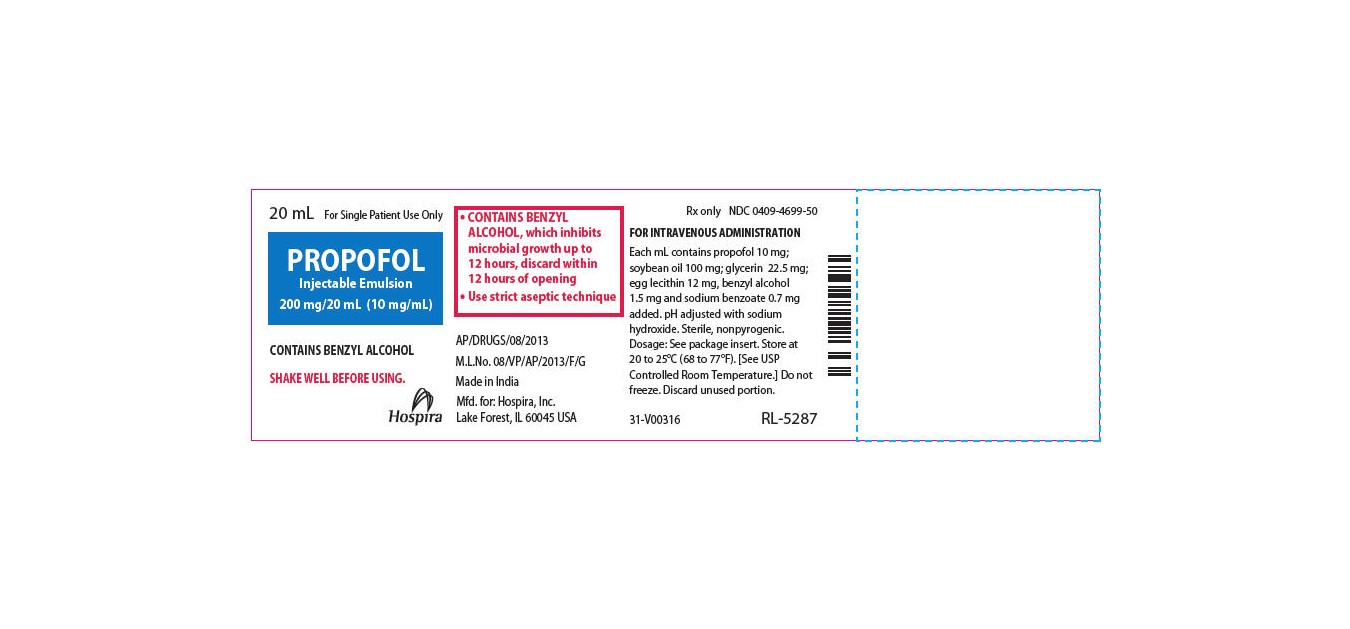
This is a description of an injectable emulsion medication containing propofol, soybean oil, glycerin, egg lecithin, benzyl alcohol, and sodium benzoate. It is a sterile, pyrogen-free solution for intravenous administration. Each container has 200mg of propofol in 20 mL and is for single-patient use only. Aseptic technique must be practiced while using the medication. The package insert includes dosage instructions, and the medication should be stored at controlled room temperature, not frozen. Discard any unused portions.*

* These product label images have been analyzed using experimental machine learning. Please verify findings with the primary label text.