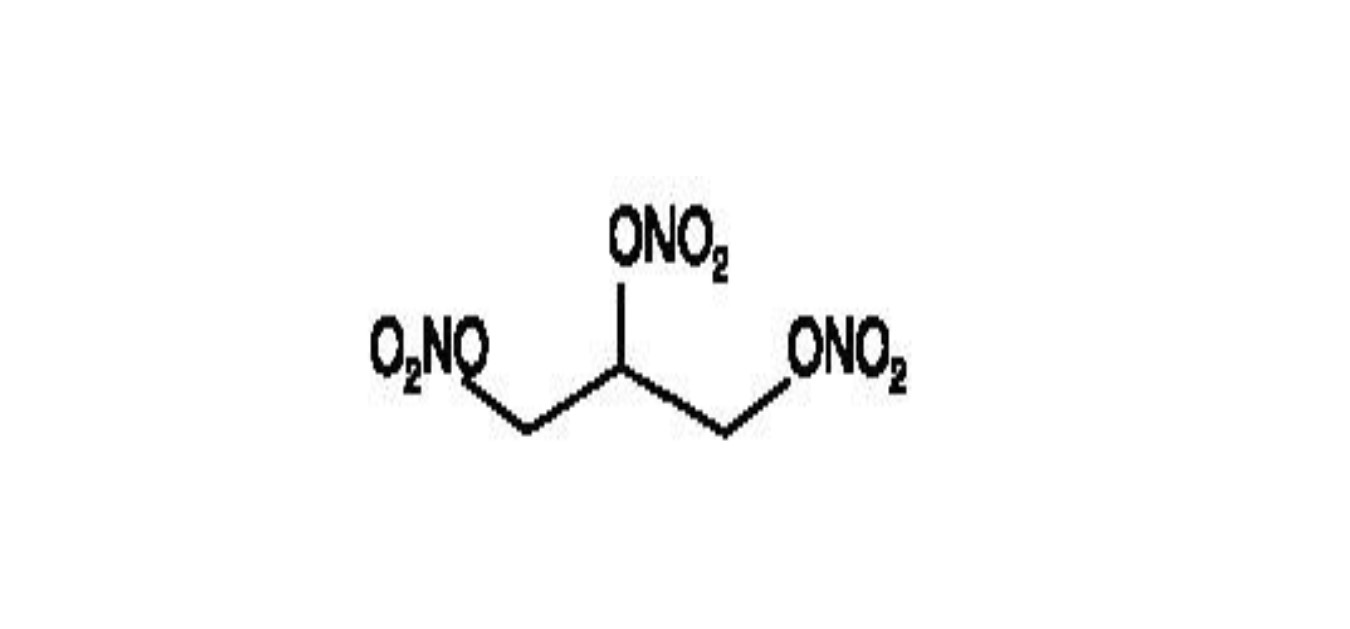
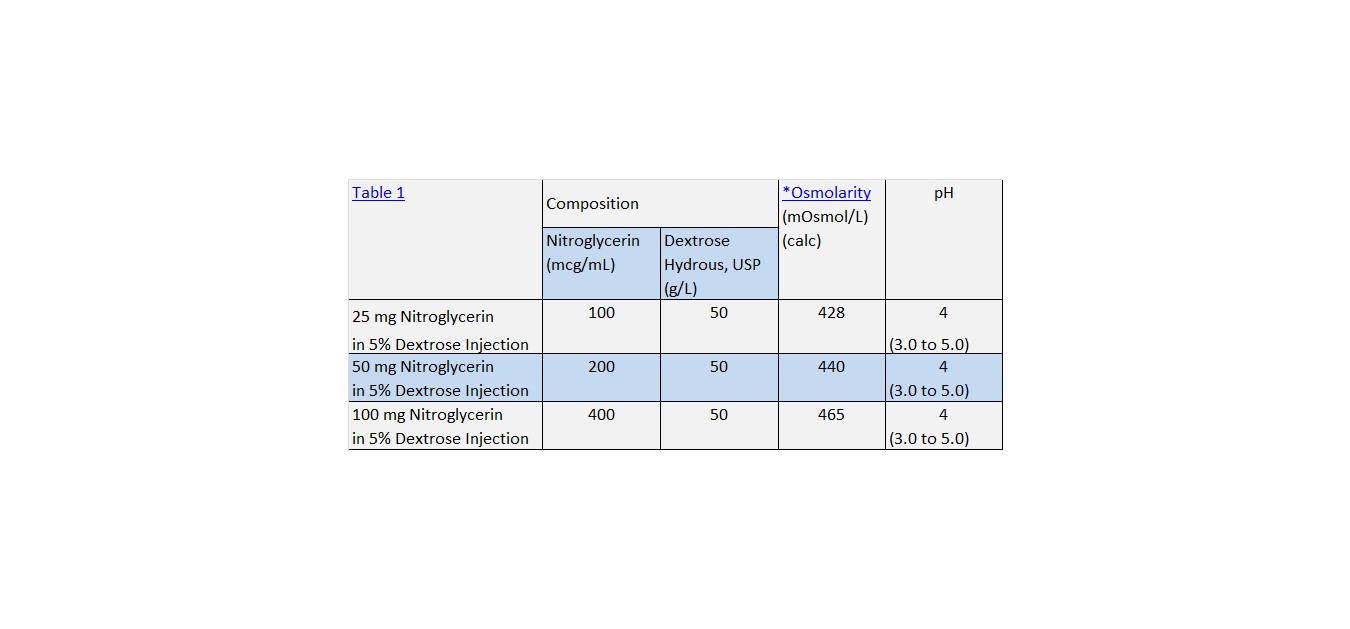
Severe hypotension and shock may occur with even small doses of nitroglycerin. Monitor patients who may be volume depleted or who, for whatever reason, are already hypotensive. Hypotension induced by nitroglycerin may be accompanied by paradoxical bradycardia and increased angina pectoris.
Nitrate therapy may aggravate the angina caused by hypertrophic cardiomyopathy.
Tolerance development and occurrence of cross tolerance to other nitro compounds have been reported.
In industrial workers who have long-term exposure to unknown (presumably high) doses of organic nitrates, tolerance clearly occurs. Chest pain, acute myocardial infarction, and even sudden death have occurred during temporary withdrawal of nitrates from these workers, demonstrating the existence of true physical dependence.
Some clinical trials in angina patients have provided nitroglycerin for about 12 continuous hours of every 24-hour day. During the nitrate-free intervals in some of these trials, anginal attacks have been more easily provoked than before treatment, and patients have demonstrated hemodynamic rebound and decreased exercise tolerance. The importance of these observations to the routine, clinical use of intravenous nitroglycerin is not known.
Lower concentrations of Nitroglycerin in 5% Dextrose Injection increase the potential precision of dosing, but these concentrations increase the total fluid volume that must be delivered to the patient. Total fluid load may be a dominant consideration in patients with compromised function of the heart, liver, and/or kidneys.
Administer nitroglycerin in 5% Dextrose Injection via an infusion pump that can maintain a constant infusion rate.
Intracoronary injection of Nitroglycerin in 5% Dextrose Injection has not been studied.
Monitor patients with known sub-clinical or overt diabetes mellitus when using solutions containing dextrose.
Laboratory Tests:
Because of the propylene glycol content of intravenous nitroglycerin, serum triglyceride assays that rely on glycerol oxidase may give falsely elevated results in patients receiving this medication.
Drug Interactions:
The vasodilating effects of nitroglycerin may be additive with those of antihypertensives (e.g., beta-blockers, calcium channel blockers and tricyclic antidepressants) and may cause increased hypotensive effects..
Concomitant use of Nitroglycerin in 5% Dextrose Injection with phosphodiesterase inhibitors (e.g. sildenafil, tadalafil, or vardenafil) can cause hypotension and is contraindicated (see
CONTRAINDICATIONS).
Concomitant use of Nitroglycerin in 5% Dextrose Injection with riociguat, a soluble guanylate cyclase stimulator, can cause hypotension and is contraindicated (see
CONTRAINDICATIONS).
Marked symptomatic orthostatic hypotension has been reported when calcium channel blockers and organic nitrates were used in combination.
Nitroglycerin at higher dosages may interfere with the anticoagulant effect of heparin. Intravenous nitroglycerin can induce heparin resistance.
Administration of Nitroglycerin in 5% Dextrose Injection through the same infusion set as blood can result in pseudoagglutination and hemolysis. Do not mix Nitroglycerin in 5% Dextrose Injection with any other medication of any kind.
Carcinogenesis, Mutagenesis, and Impairment of Fertility:
Animal carcinogenesis studies with injectable nitroglycerin have not been performed.
Rats receiving up to 434 mg/kg/day of dietary nitroglycerin for 2 years developed dose-related fibrotic and neoplastic changes in liver, including carcinomas, and interstitial cell tumors in testes. At high dose, the incidences of hepatocellular carcinomas in both sexes were 52% vs. 0% in controls and incidences of testicular tumors were 52% vs. 8% in controls. Lifetime dietary administration of up to 1058 mg/kg/day of nitroglycerin was not tumorigenic in mice.
Nitroglycerin was weakly mutagenic in Ames tests performed in two different laboratories. Nevertheless, there was no evidence of mutagenicity in an in vivo dominant lethal assay with male rats treated with doses up to about 363 mg/kg/day, p.o., or in in vitro cytogenetic tests in rat and dog tissues.
In a three-generation reproduction study, rats received dietary nitroglycerin at doses up to about 434 mg/kg/day for six months prior to mating of the F0 generation with treatment continuing through successive F1 and F2 generations. The high-dose was associated with decreased feed intake and body weight gain in both sexes at all matings. No specific effect on the fertility of the F0 generation was seen. Infertility noted in subsequent generations, however, was attributed to increased interstitial cell tissue and aspermatogenesis in the high-dose males. In this three-generation study there was no clear evidence of teratogenicity.
Pregnancy:
Animal teratology studies have not been conducted with nitroglycerin injection. Teratology studies in rats and rabbits were conducted with topically applied nitroglycerin ointment at doses up to 80 mg/kg/day and 240 mg/kg/day, respectively, and no toxic effects on dams or fetuses were seen. There are no adequate and well-controlled studies in pregnant women. Nitroglycerin should be given to a pregnant woman only if clearly needed.
Nursing Mothers:
It is not known if nitroglycerin is present in human milk or if nitroglycerin has effects on milk production. The developmental and health benefits of breastfeeding should be considered along with the mother’s clinical need for nitroglycerin and any potential adverse effects on the breastfed child from nitroglycerin or from the underlying maternal condition.
Pediatric Use:
Safety and effectiveness in the pediatric population have not been established. However, the relationship between hemodynamic effects of nitroglycerin and dose in the pediatric population have been documented in the literature. Studies in the literature used doses of nitroglycerin injection in pediatric patients ranging from 0.5 to 5 mcg/kg/min. The following equation can be used to calculate the flow rate in mL/hour of nitroglycerin using the 100 mcg/mL (25 mg/250 mL) concentration of nitroglycerin.
Infusion Rate (mL/h) = [Dose (mcg/kg/min) x Weight (kg) x 60 min/h]
Final Concentration (mcg/mL)
Example calculations for infusion rates are as follows:
Example 1: for a 2 kg child at a dose of 0.5 µg/kg/min using a 100 mcg/mL concentration, the infusion rate would be as follows:
Infusion Rate (mL/h) = [0.5 (mcg/kg/min) x 2 (kg) x 60 (min/h)] = 0.6 (mL/h)
100 (mcg/mL)
Example 2: for a 10 kg child at a dose of 5 mcg/kg/min using a 100 mcg/mL concentration, the infusion rate would be as follows:
Infusion Rate (mL/h) = [5 (mcg/kg/min) x 10 (kg) x 60 (min/h)] = 30 (mL/h)
100 (mcg/mL)
Note: Very low infusion rates may require that a more dilute concentration of nitroglycerin infusion solution be prepared.
Geriatric Use:
Clinical studies of Nitroglycerin did not include sufficient numbers of subjects aged 65 and over to determine whether they respond differently from younger subjects. Other reported clinical experience has not identified differences in responses between the elderly and younger patients. In general, dose selection for an elderly patient should be cautious, usually starting at the low end of the dosing range reflecting the greater frequency of decreased hepatic, renal, or cardiac function, and of concomitant disease or other drug therapy.
Do not use unless vacuum is present and solution is clear.