Famotidine Injection, Solution
Product Images NDC 51662-1375

View Photos of Packaging, Regulatory Labels, and Product Appearance

Product Visual Gallery

This gallery contains 13 technical images submitted to the FDA as part of the official labeling for Famotidine (NDC 51662-1375). Unlike standard consumer photos, these assets often include clinical data figures, molecular chemical structures, and official manufacturer packaging layouts.

As provided by Hf Acquisition Co Llc, Dba Healthfirst, these visuals offer a comprehensive scientific overview of the product's physical and chemical identity, aiding pharmacists and researchers in product verification and study.

FDA Label Image

Ped 3 (Clinc P In P 3)
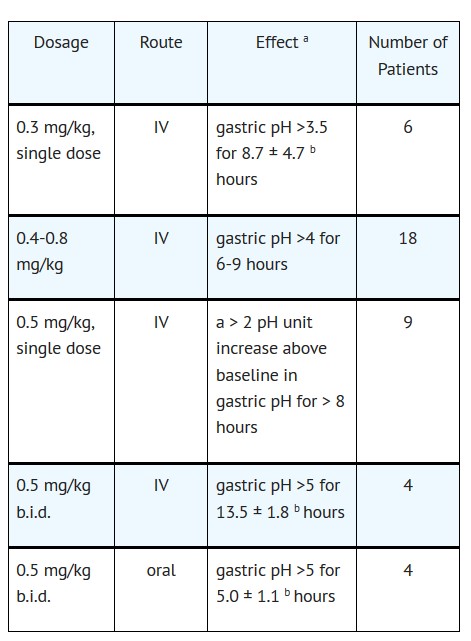
Ped 3 (Clinc P In P 3)
This appears to be a medical record of different dosages and routes for a medication that affects the gastric pH level in patients. The record includes dosage amounts in mg/kg, administration routes such as IV and oral, and the pH level requirement for administration. It also mentions the duration of effect on gastric pH and the number of patients who received the medication at each dosage and route.*
FDA Label Image

Adults 1 (Clinic P In A 1)

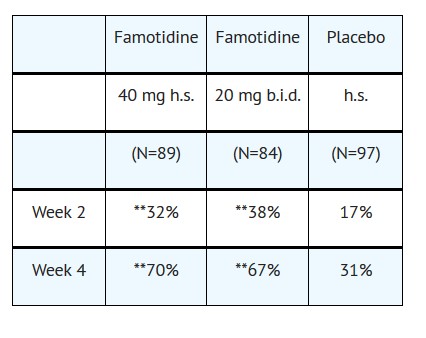
Adults 1 (Clinic P In A 1)
This is a clinical trial results table comparing the effectiveness of Famotidine and Placebo in treating a medical condition. It seems to indicate the percentage of patients that responded positively to the treatment (or placebo) after weeks 2 and 4 of the trial, broken down by dosage. However, without additional information about the medical condition being studied, it is impossible to say for certain what these percentage values represent.*
FDA Label Image

Adults 2 (Clinic P In A 2)

Adults 2 (Clinic P In A 2)
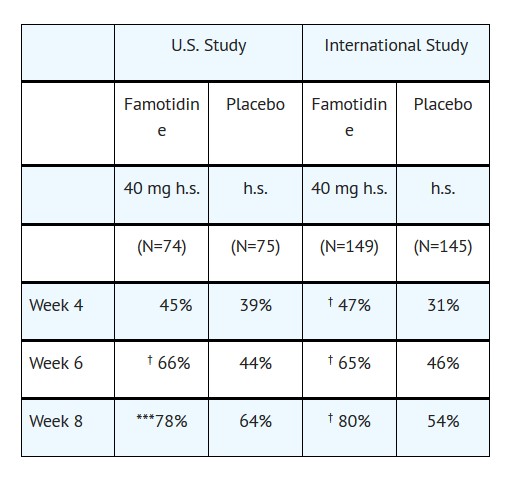
This appears to be a table representing the results of a study comparing the effectiveness of a drug called "Famotidin" against a placebo. The study was conducted internationally and involves two groups of patients who either received Famotidin or a placebo. The data shows the percentage of patients who experienced relief at week 4, 6, and 8 of the study. The results suggest that Famotidin had a greater effectiveness than the placebo at all three time points, with the percentage of patients experiencing relief higher in the Famotidin group. However, there is an error in the Week 8 Famotidin group where the percentage has an asterisk next to it, indicating that there may be missing or incomplete data.*
FDA Label Image

Adult 4 (Clinic P In A 4)

Adult 4 (Clinic P In A 4)
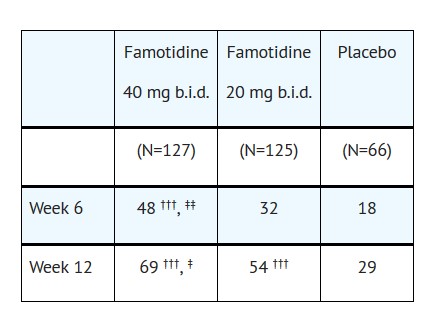
This appears to be a table showing the results of a study involving participants taking Famotidine, a drug commonly used to treat ulcers and heartburn. It compares the effects of a 40mg dose twice daily versus a 20mg dose twice daily, as well as a placebo group. The numbers in parentheses indicate the number of participants in each group. However, some of the other characters and data appear to be missing or unclear, making it difficult to fully interpret the results.*
FDA Label Image

Adult 5 (Clinic P In A 5)

Adult 5 (Clinic P In A 5)
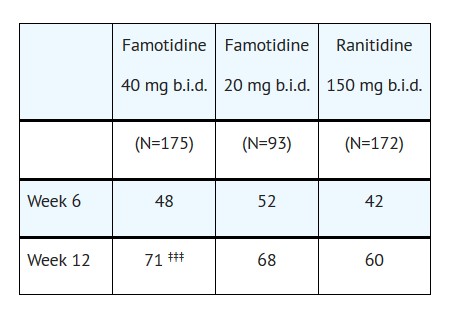
This table shows the effectiveness of three different medications (Famotidine, Famotidine, and Ranitidine) in treating a certain condition. The medication dosages are listed for each medication and the number of patients who received each dosage is denoted by "N". The table shows the number of patients who showed improvement after 6 weeks and 12 weeks of treatment for each medication and dosage.*
FDA Label Image

Ped 1 (Clinic P In P 1)

Ped 1 (Clinic P In P 1)
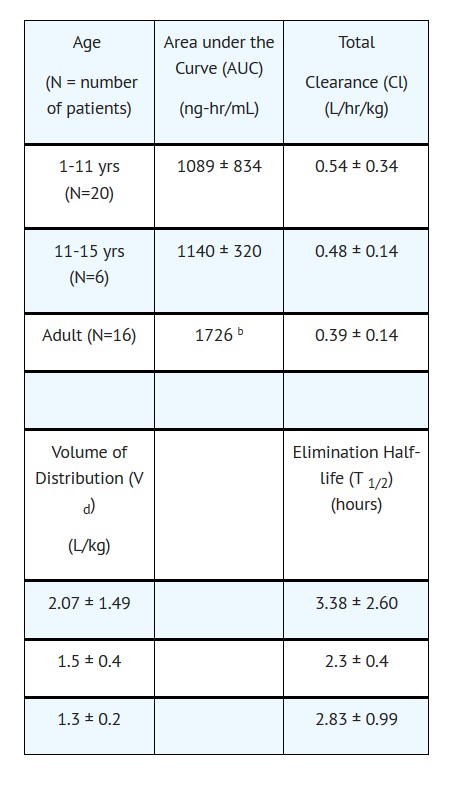
This text provides measurements for the pharmacokinetics of a medication in different age groups. It includes the Area under the Total Curve (AUQ), clearance (CL), volume of distribution, elimination half-life, and other parameters. Age groups were divided into 1-11 years, 11-15 years, and adults. The number of patients in each age group is also provided.*
FDA Label Image

Ped 2 (Clinic P In P 2)

FDA Label Image

How Supplied (How Supplied)

How Supplied (How Supplied)
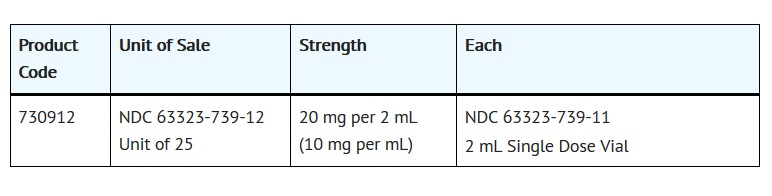
This is a product with code 730912 that is available for sale in a unit of 25. The strength of each single dose vial is 20 mg per 2 mL (10 mg per mL), and it is identified by the NDC codes 63323-739-12 and 63323-739-11.*
FDA Label Image
FDA Label Image

Serialized Labeling (Serialized Labeling)

Serialized Labeling (Serialized Labeling)
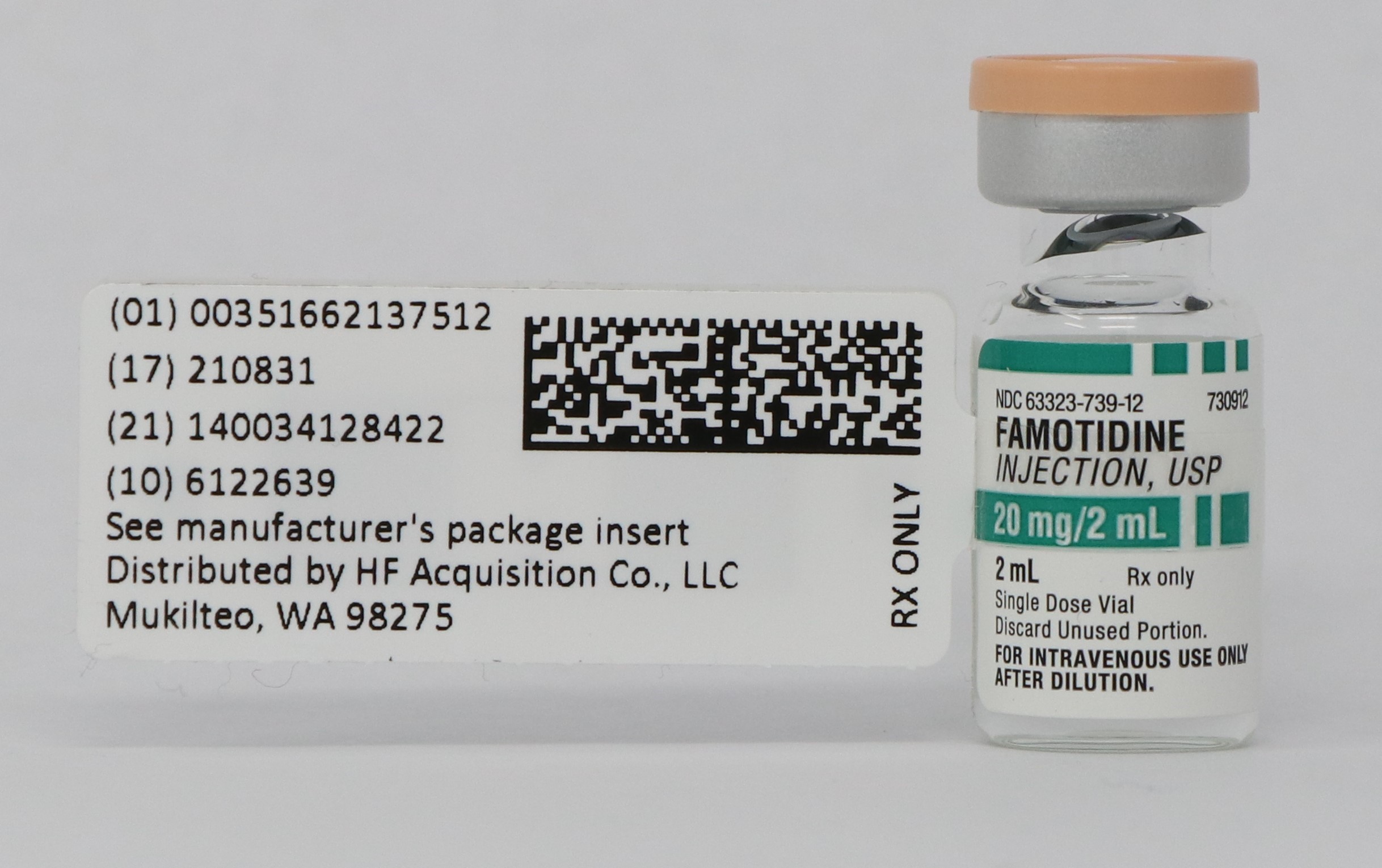
Famotidine is a medication available in single-dose vials of 2 mL administered by injection, for intravenous use only after dilution. The product is distributed by HF Acquisition Co., LLC from Mukilteo, WA 98275, and has an NDC number of 63323-739-12 73092. The package insert should be consulted for further information.*
FDA Label Image

Structure (Structure)

Structure (Structure)
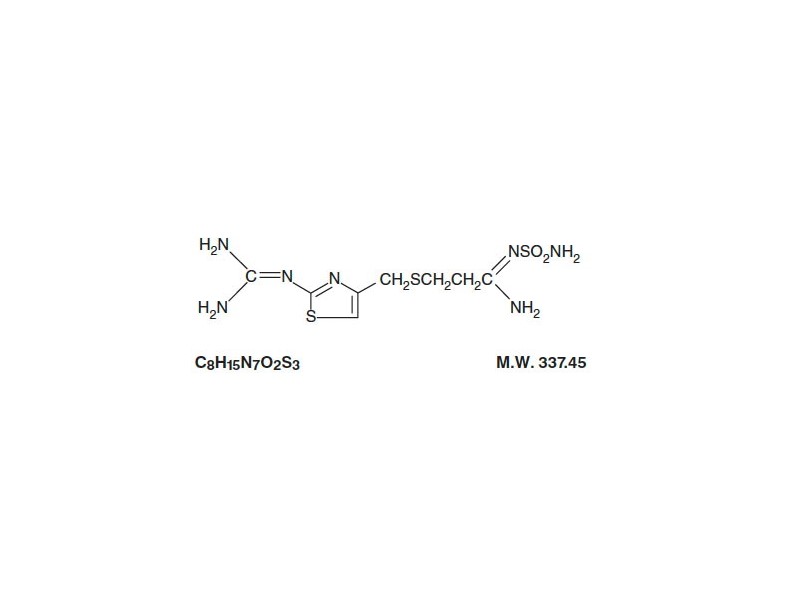
The given text is describing the molecular formula and weight of a chemical compound which is CgH15N702S3 having a molecular weight of 33745 grams per mole. The formula consists of various types of atoms such as Carbon (C), Nitrogen (N), Hydrogen (H), Sulfur (S) and special compounds like SCH and CH. The rest of the text is not-readable or understandable.*
FDA Label Image

Vial Label (Vial Label)

Vial Label (Vial Label)
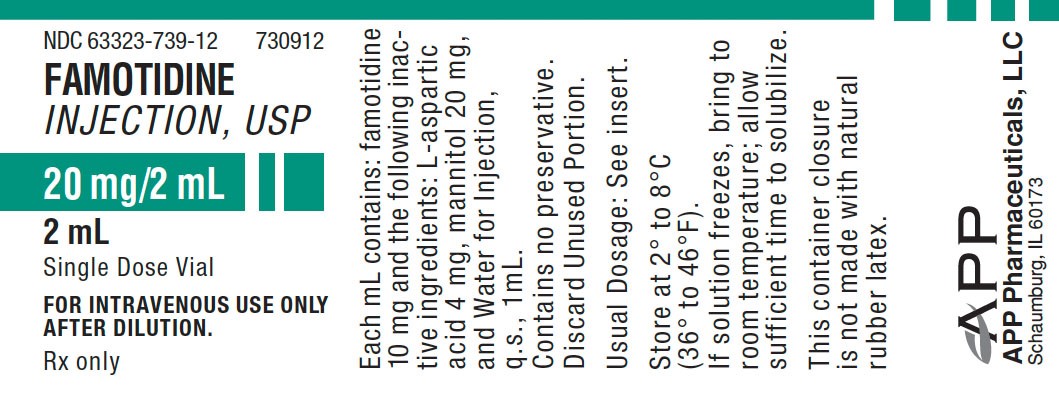
This is a pharmaceutical product, Famotidine. It is an injection that comes in a single dose vial of 20mg/2mL. It is for intravenous use only and requires dilution. The text includes dosage instructions, warnings, and chemical composition details.*
FDA Label Image

Adults 3 (Clinic P In A 3)

Adults 3 (Clinic P In A 3)
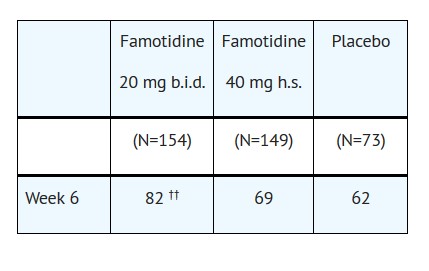
This appears to be a clinical trial study comparing Famotidine and placebo for the treatment of an unknown condition over a six week period. The study involved a total of 376 participants and was divided into three groups: Famotidine 20mg taken twice a day with 154 participants, Famotidine 40mg taken once a day with 149 participants, and a placebo group with 73 participants. The study tracked the effectiveness of treatment at week 6 with reported results for each group being 82.1%, 69%, and 62%, respectively.*

* These product label images have been analyzed using experimental machine learning. Please verify findings with the primary label text.