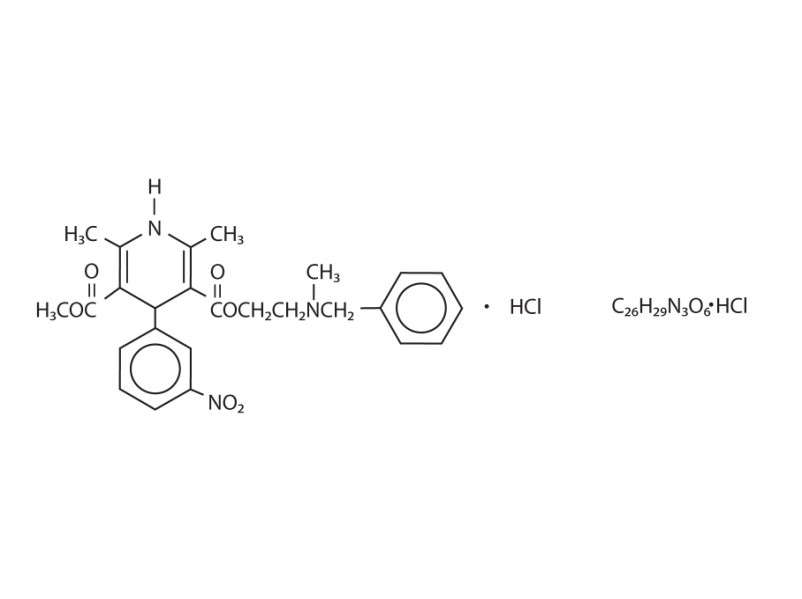
Nicardipine Hydrochloride
Product Images NDC 51662-1428

View Photos of Packaging, Regulatory Labels, and Product Appearance

Product Visual Gallery

This gallery contains 10 technical images submitted to the FDA as part of the official labeling for Nicardipine Hydrochloride (NDC 51662-1428). Unlike standard consumer photos, these assets often include clinical data figures, molecular chemical structures, and official manufacturer packaging layouts.

As provided by Hf Acquisition Co Llc, Dba Healthfirst, these visuals offer a comprehensive scientific overview of the product's physical and chemical identity, aiding pharmacists and researchers in product verification and study.

FDA Label Image

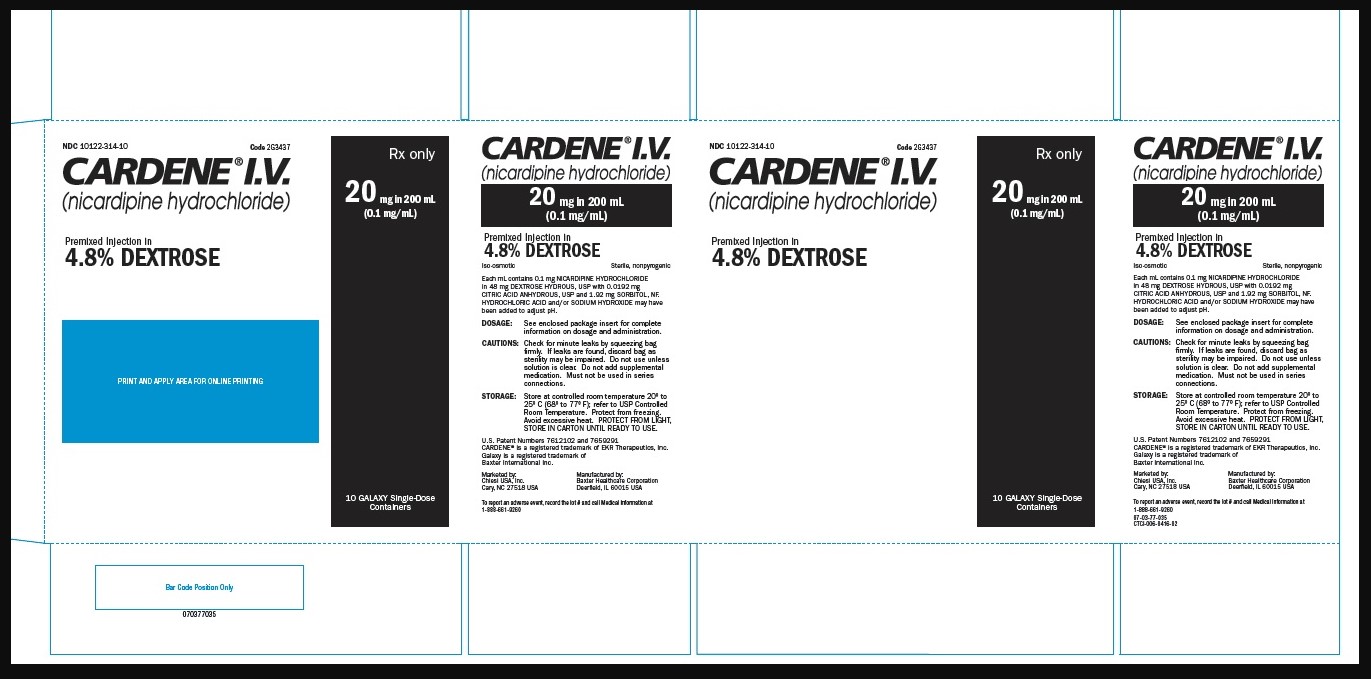
Bag Labeling (51662 1428 1 Bag Labeling)

FDA Label Image

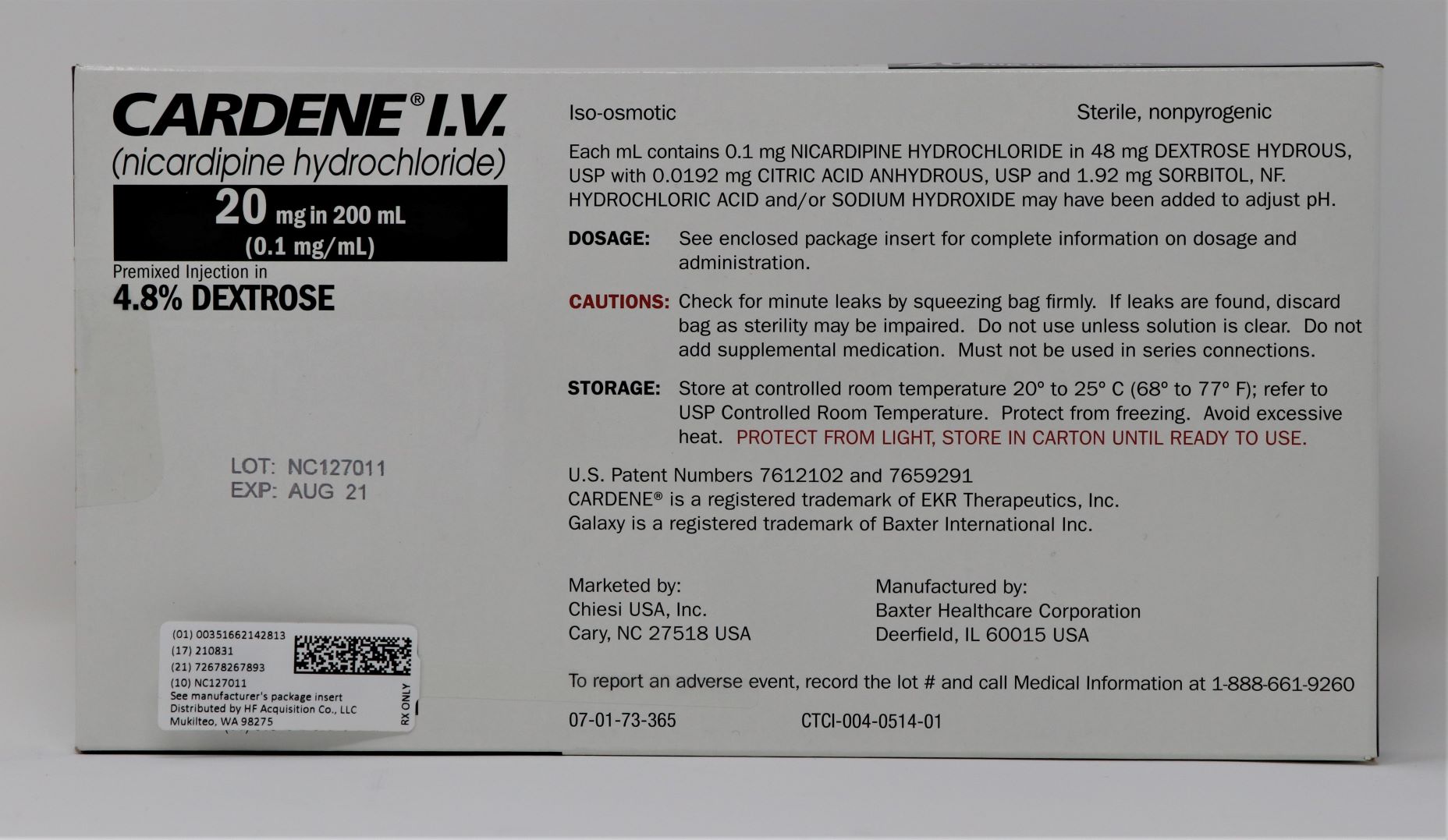
Carton Labeling (51662 1428 1 Box Labeling)

Carton Labeling (51662 1428 1 Box Labeling)
CARDENE'LV is a medication containing nicardipine hydrochloride and is available as an injectable solution in 4.8% dextrose. It is a prescription-only medication and is administered through a syringe. The concentration of nicardipine hydrochloride is 0.1 mg/ml.*
FDA Label Image

Serialized Labeling (51662 1428 1 Serialized Box Labeling)

FDA Label Image

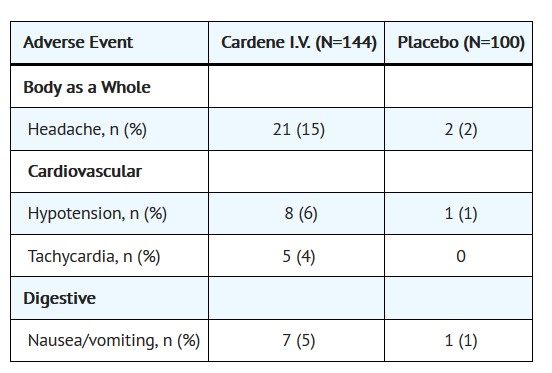
Adverse (Adverse)

Adverse (Adverse)
This is a table indicating adverse events reported in a clinical trial comparing the use of Cardene V (N=144) vs Placebo (N=100). The table shows the percentage and number of patients in each group who reported headache, hypotension, tachycardia, nausea/vomiting, and other adverse events.*
FDA Label Image

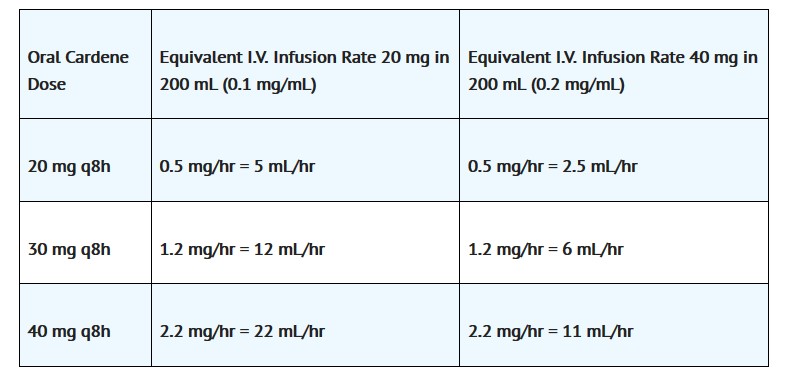
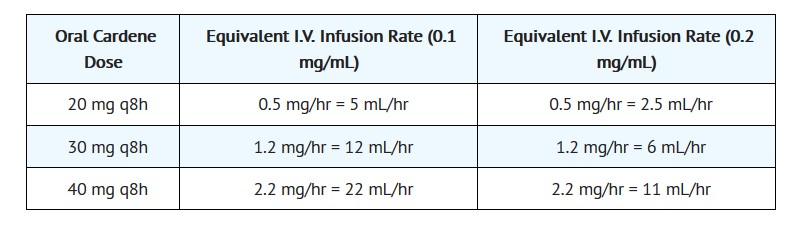
Dosage (Dosage)

Dosage (Dosage)
This text describes dosing instructions for Oral Cardene, including equivalent infusion rates and doses for different strengths. It includes instructions for dosages ranging from 20-40 mg q8h, and provides corresponding infusion rates for each dosage amount. The drug is available in two strengths: 0.1 mg/mL and 0.2 mg/mL.*
FDA Label Image

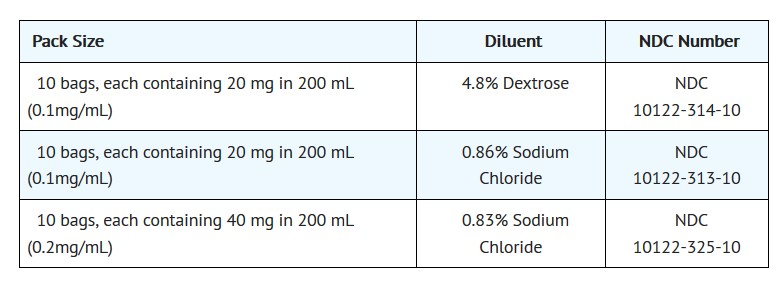
How Supplied 1 (How Supplied 1)

How Supplied 1 (How Supplied 1)
This is a description of three different packs, each containing bags of a medication of varying strengths and diluents. The first pack has 10 bags which each contain 20mg of the medication in 200mL of 4.8% dextrose, with an NDC number of 10122-314-10. The second pack is also 10 bags, but each bag contains 20mg of the medication in 200mL of 0.86% sodium chloride, with an NDC number of 10122-313-10. The third pack is also 10 bags, with each bag containing 40mg of the medication in 200mL of 0.83% sodium chloride, and an NDC number of 10122-325-10.*
FDA Label Image

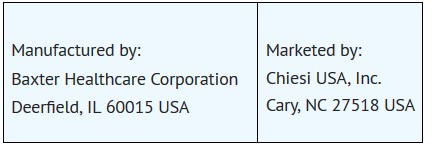
How Supplied 2 (How Supplied 2)

How Supplied 2 (How Supplied 2)
This text provides information about the manufacturer and marketer of a product. The product is manufactured by Baxter Healthcare Corporation and marketed by Chiesi USA, Inc. The locations of the two companies are provided as Deerfield, IL and Cary, NC respectively.*
FDA Label Image

Highlights 1 (Highlights 1)

Highlights 1 (Highlights 1)
This text provides information on the dosing equivalence of Oral Cardene. It includes the recommended doses for different intervals, equivalent infusion rates and corresponding volumes of the solution for specific concentrations.*
FDA Label Image

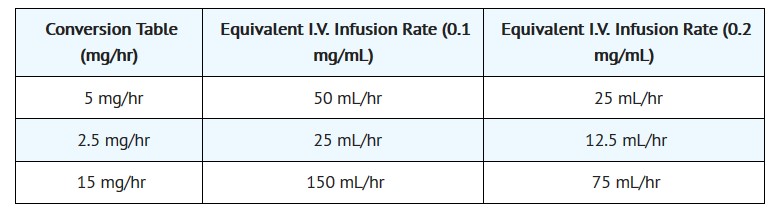
Highlights 2 (Highlights 2)

Highlights 2 (Highlights 2)
This is a conversion table that converts the equivalent LV.Infusion rate in mg/hr to its corresponding rate of mg/mL. It indicates the rate of administration for different dosages of a medication based on the concentration of the medication in the intravenous fluid. The table shows that a 5mg/hr dose would be equivalent to a 50mL/hr infusion rate when the medication concentration is 0.1mg/mL or 25mL/hr when it is 0.2mg/mL. Similarly, a 2.5mg/hr dose would require a 25mL/hr infusion rate if the medication concentration is 0.1mg/mL or 12.5mL/hr if it is 0.2mg/mL. Lastly, a 15mg/hr dose would require a 150mL/hr infusion rate when the concentration is 0.1mg/mL or 75mL/hr if it is 0.2mg/mL.*
FDA Label Image

Structure (Structure)

* These product label images have been analyzed using experimental machine learning. Please verify findings with the primary label text.