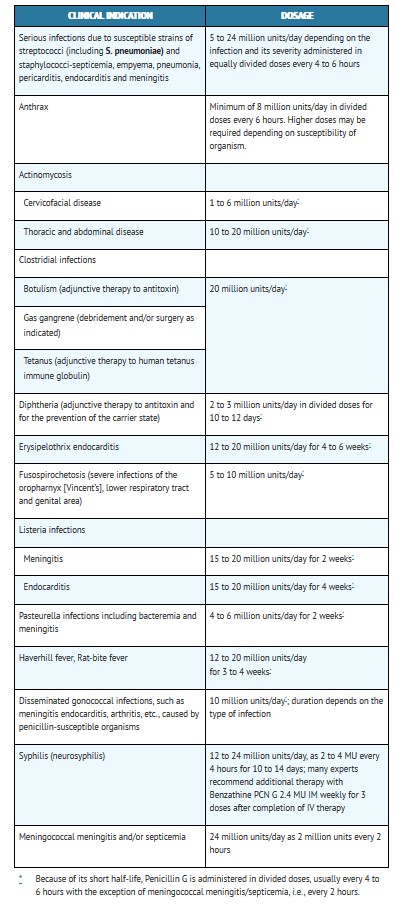
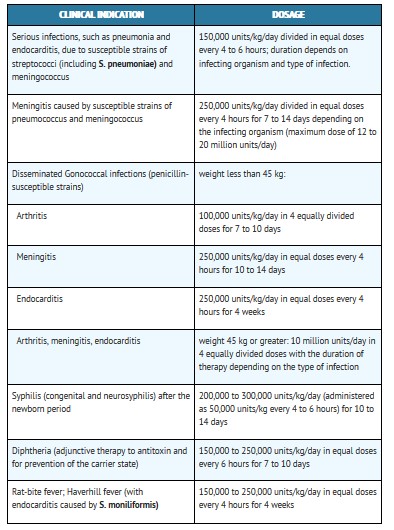
This is a list of bacterial infections and their corresponding causative agents. The infections listed include septicemia, empyema, pneumonia, pericarditi, endocardits, meningitis, anthrax, actinomycosis, botulism, gas gangrene, tetanus, diphtheria, erysipelothrix endocarditis, fusospirochetosis, Listera infections, Pasteurella infections, Havernill fever, ratbite fever, disseminated gonococcal infections, syphilis, and meningococcal meningitis and/or septicemia. The responsible bacterial agents include Streptococcus pyogenes, Streptococcus pneumoniae, Staphylococcus Species, Bacillus anthracis, Actinomyces Israell, Clostridium species, Corynebacterium diphtheriae, Erysipelothrix thusiopthiae, Fusobacterium species and spirochetes, Listeria monocytogenes, Pasteurella multocida, Streptobacillus moniliformis, Spirilium minus or Streptobacillus moniliformis, Neisseria gonorhoeae, Treponema patlidum, Escherichia coli, Enterobacter acrogenes, Alcaligenes faecalis, salmonels, shigella and Proteus mirabils. Penicillin G is not the drug of choice in the treatment of gram-negative bacillary infections.*