Highlights Or Prescribing Information
These highlights do not include all the information needed to use LEXISCAN® safely and effectively. See full prescribing information for LEXISCAN®.
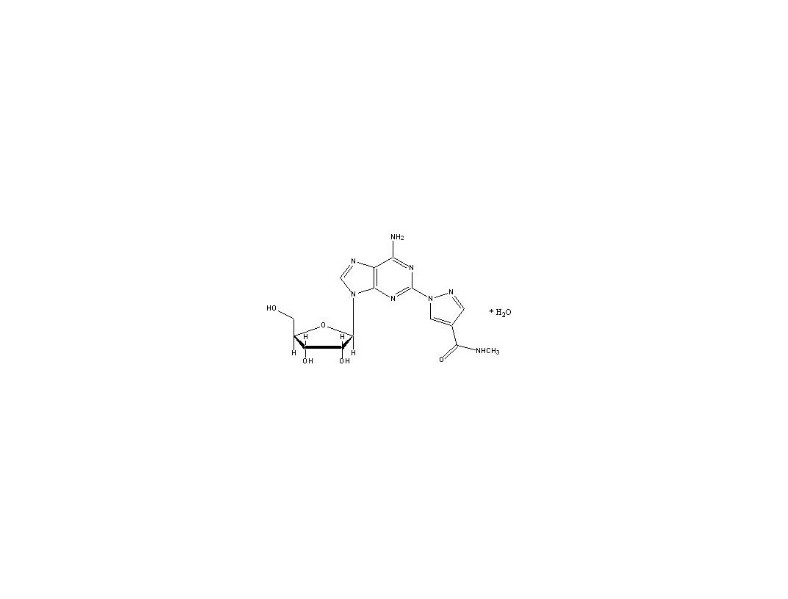
LEXISCAN® (regadenoson) injection for intravenous use
Initial U.S. Approval: 2008
RECENT MAJOR CHANGES
Dosage and Administration ( 2) 5/2018
Warnings and Precautions, Myocardial Ischemia ( 5-5.1) 5/2018
INDICATIONS AND USAGE
LEXISCAN® is a pharmacologic stress agent indicated for radionuclide myocardial perfusion imaging (MPI) in patients unable to undergo adequate exercise stress ( 1).
DOSAGE AND ADMINISTRATION
•
The recommended dose of LEXISCAN is 5 mL (0.4 mg regadenoson) administered as an intravenous injection within 10 seconds; followed immediately by saline flush and radiopharmaceutical (
2).
DOSAGE FORMS AND STRENGTHS
•
Injection: Single-dose pre-filled syringe: 0.4 mg/5 mL (0.08 mg/mL) (
3).
CONTRAINDICATIONS
Do not administer LEXISCAN to patients with:
•
Second- or third-degree AV block, or
•
sinus node dysfunction
unless the patients have a functioning artificial pacemaker ( 4).
WARNINGS AND PRECAUTIONS
•
Myocardial Ischemia. Fatal cardiac events have occurred. Avoid use in patients with symptoms or signs of acute myocardial ischemia, for example unstable angina or cardiovascular instability, who may be at greater risk. Cardiac resuscitation equipment and trained staff should be available before administration (
5-5.1).
•
Sinoatrial (SA) and Atrioventricular (AV) Nodal Block. Adenosine receptor agonists, including LEXISCAN, can depress the SA and AV nodes and may cause first-, second- or third-degree AV block, or sinus bradycardia (
5-5.2).
•
Atrial Fibrillation/Atrial Flutter. New-onset or recurrent atrial fibrillation with rapid ventricular response and atrial flutter have been reported (
5-5.3).
•
Hypersensitivity, including anaphylaxis, angioedema, cardiac or respiratory arrest, respiratory distress, decreased oxygen saturation, hypotension, throat tightness, urticaria, and rashes have occurred. Have personnel and resuscitative equipment immediately available (
5-5.4).
•
Hypotension. Adenosine receptor agonists, including LEXISCAN, induce vasodilation and hypotension. The risk of serious hypotension may be higher in patients with autonomic dysfunction, stenotic valvular heart disease, pericarditis or pericardial effusions, stenotic carotid artery disease with cerebrovascular insufficiency, or hypovolemia (
5-5.5).
•
Hypertension. Adenosine receptor agonists, including LEXISCAN, may induce clinically significant increases in blood pressure particularly in patients with a history of hypertension and when the MPI includes low level exercise (
5-5.6).
•
Bronchoconstriction. Adenosine receptor agonists, including LEXISCAN, may induce dyspnea, bronchoconstriction and respiratory compromise in patients with chronic obstructive pulmonary disease (COPD) or asthma. Resuscitative measures should be available (
5-5.7).
•
Seizure. LEXISCAN may lower the seizure threshold. New onset or recurrence of convulsive seizures has occurred. Some seizures are prolonged and require urgent anticonvulsive management. Methylxanthine use is not recommended in patients who experience a seizure in association with LEXISCAN (
5-5.8).
•
Cerebrovascular Accident (Stroke). Hemorrhagic and ischemic cerebrovascular accidents have occurred (
5-5.9).
ADVERSE REACTIONS
The most common (incidence ≥ 5%) adverse reactions to LEXISCAN are dyspnea, headache, flushing, chest discomfort, dizziness, angina pectoris, chest pain, and nausea ( 6).
To report SUSPECTED ADVERSE REACTIONS, contact Astellas Pharma US, Inc. at 1-800-727-7003 or FDA at 1-800-FDA-1088 or www.fda.gov/medwatch.
DRUG INTERACTIONS
•
Methylxanthines, e.g., caffeine, aminophylline and theophylline, interfere with the activity of LEXISCAN (
7-7.1,
12-12.2).
•
Aminophylline may be used to attenuate severe and/or persistent adverse reactions to LEXISCAN (
7-7.1,
10).
•
Dipyridamole may increase the activity of LEXISCAN. When possible, withhold dipyridamole for at least two days prior to LEXISCAN administration (
7-7.1).
See 17 for PATIENT COUNSELING INFORMATION.
Revised: 5/2018