Highlights Of Prescribing Information
These highlights do not include all the information needed to use TRANEXAMIC ACID INJECTION safely and effectively. See full prescribing information for TRANEXAMIC ACID INJECTION.
TRANEXAMIC ACID injection, for intravenous use
Initial U.S. Approval: 1986
RECENT MAJOR CHANGES
Warnings and Precautions, Risk of Medication Errors Due to Incorrect Route of Administration. ( 5.2) 12/2020
INDICATIONS AND USAGE
Tranexamic acid injection is an antifibrinolytic indicated in patients with hemophilia for short-term use (2 to 8 days) to reduce or prevent hemorrhage and reduce the need for replacement therapy during and following tooth extraction. ( 1 )
DOSAGE AND ADMINISTRATION
Before Extraction: Administer 10 mg/kg actual body weight of tranexamic acid injection intravenously with replacement therapy. (
2.1)
After Extraction: Administer 10 mg/kg actual body weight 3 to 4 times daily for 2 to 8 days. Infuse no more than 1 mL/minute to avoid hypotension. (
2.1).
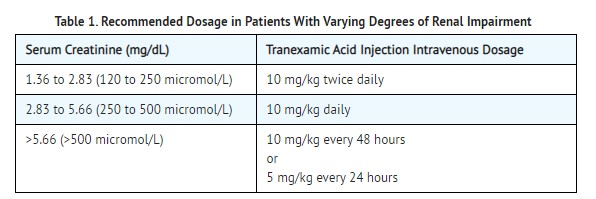
Reduce the dosage for patients with renal impairment. (
2.2,
8.6)
DOSAGE FORMS AND STRENGTHS
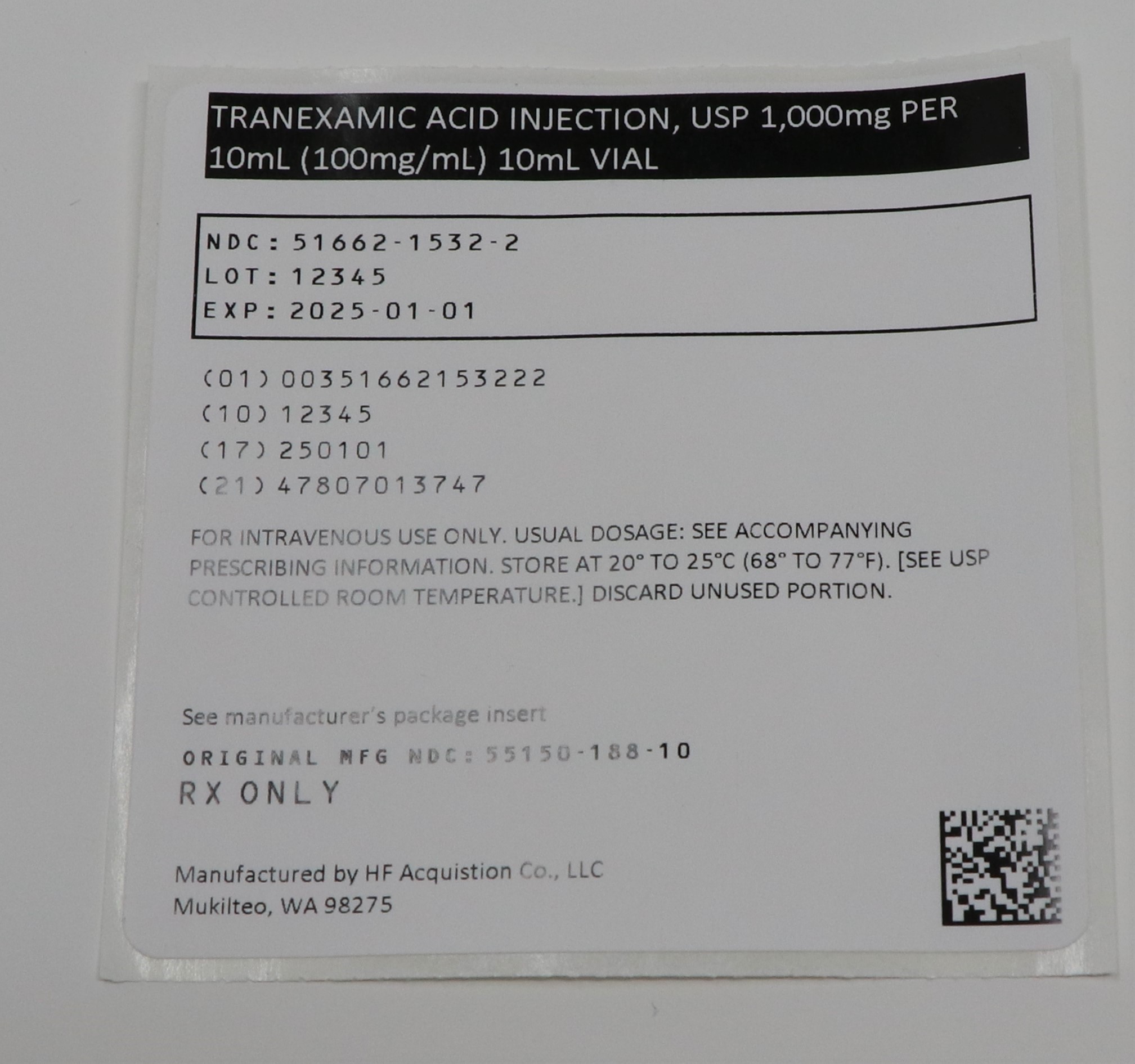
Injection: 1,000 mg tranexamic acid (100 mg/mL) in 10 mL single-dose vials ( 3)
CONTRAINDICATIONS
In patients with subarachnoid hemorrhage, due to risk of cerebral edema and cerebral infarction. (
4)
In patients with active intravascular clotting. (
4)
In patients with severe hypersensitivity reactions to tranexamic acid or any of the ingredients. (
4)
WARNINGS AND PRECAUTIONS
Risk of Thrombosis with Concomitant Use of Factor IX: Avoid concomitant use. (
5.1)
Risk of Medication Errors Due to Incorrect Route of Administration: FOR INTRAVENOUS USE ONLY. (
5.2)
Seizures: Inadvertent injection into neuraxial system may result in seizures. (
5.3)
Hypersensitivity Reactions: In case of severe reaction, discontinue use and seek immediate medical attention. (
5.4)
Visual Disturbances: Visual or ocular adverse effects may occur. Discontinue use if visual or ocular symptoms occur. (
5.5)
Dizziness: Advise patients not to drive if dizziness occurs. (
5.6)
ADVERSE REACTIONS
Most common adverse reactions are nausea, vomiting, diarrhea, allergic dermatitis, giddiness, hypotension, and thromboembolic events. (
6)
To report SUSPECTED ADVERSE REACTIONS, contact AuroMedics Pharma LLC at 1-866-850-2876 or FDA at 1-800-FDA-1088 or www.fda.gov/medwatch.
DRUG INTERACTIONS
Prothrombotic Medical Products: Avoid concomitant use, can further increase the risk of thromboembolic adverse reactions associated with tranexamic acid. ( 5.1, 7.1, 8.3)
See 17 for PATIENT COUNSELING INFORMATION.
Revised: 2/2021