Lidocaine Hcl Injection, Solution
Product Images NDC 51662-1538

View Photos of Packaging, Regulatory Labels, and Product Appearance

Product Visual Gallery

This gallery contains 9 technical images submitted to the FDA as part of the official labeling for Lidocaine Hcl (NDC 51662-1538). Unlike standard consumer photos, these assets often include clinical data figures, molecular chemical structures, and official manufacturer packaging layouts.

As provided by Hf Acquisition Co Llc, Dba Healthfirst, these visuals offer a comprehensive scientific overview of the product's physical and chemical identity, aiding pharmacists and researchers in product verification and study.

FDA Label Image

Serialized Vial Labeling (51662 1538 1 Serialized Vial Labeling)
Serialized Vial Labeling (51662 1538 1 Serialized Vial Labeling)
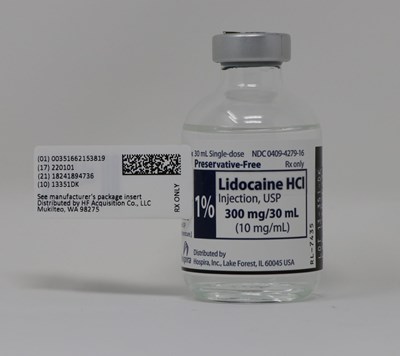
Lidocaine HCl Injection, USP 1% (10 mg/mL) solution in a clear glass vial with a silver cap. The label indicates a 300 mg/30 mL single-dose vial, preservative-free, distributed by Hospira, Inc., Lake Forest, IL. The vial includes a secondary label with manufacturing and distribution information for HF Acquisition Co., LLC, Mukilteo, WA.*
FDA Label Image

Dosage 1 (D And A 1)

Dosage 1 (D And A 1)
A table presenting available packaging options for Lidocaine HCl injection solution, showing three concentration strengths: 1% in 30 mL single-dose teartop vials, 1.5% in 20 mL single-dose ampuls, and 2% in 10 mL single-dose ampuls.*
FDA Label Image

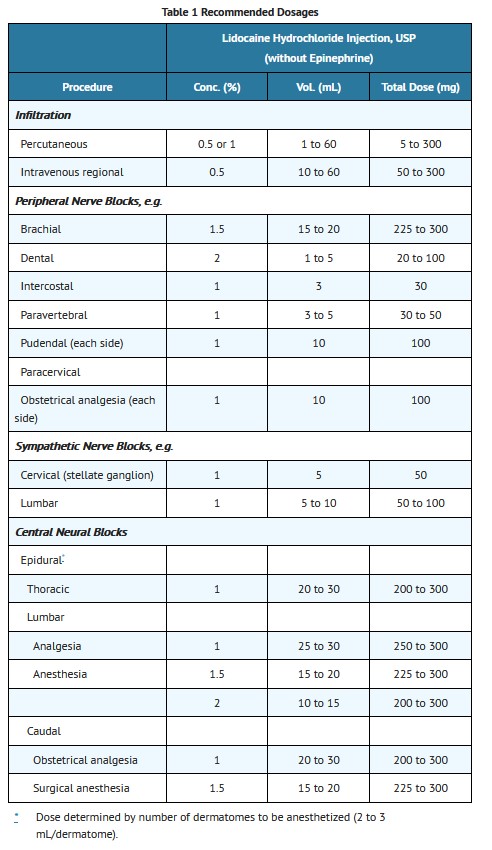
Dosage 2 (D And A 2)

Dosage 2 (D And A 2)
A table titled 'Recommended Dosages' for Lidocaine Hydrochloride Injection, USP (without Epinephrine). It lists procedures such as infiltration, peripheral nerve blocks, sympathetic nerve blocks, and central neural blocks, showing concentration percentages, volume ranges in mL, and total dose ranges in mg for each procedure. It includes dosing details for specific blocks like brachial, dental, thoracic, lumbar, and surgical anesthesia.*
FDA Label Image

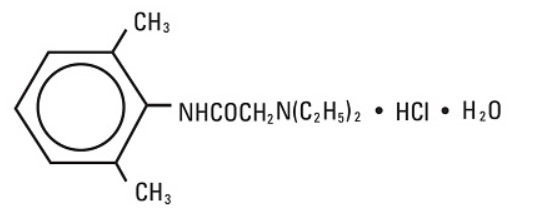
Structure (Description Structure)

Structure (Description Structure)
Chemical structure of lidocaine hydrochloride monohydrate, showing a benzene ring with two methyl groups and an amide side chain bonded to an amino diethyl group, associated with hydrochloride and water molecules.*
FDA Label Image

Description Table (Description Table)

Description Table (Description Table)
A data table showing the concentrations of lidocaine HCl (anhydrous) and sodium chloride in mg/mL for four different lidocaine HCl solution strengths: 0.5%, 1%, 1.5%, and 2%. The table lists lidocaine HCl values as 5, 10, 15, and 20 mg/mL and sodium chloride values as 8, 7, 6.5, and 6 mg/mL respectively.*
FDA Label Image

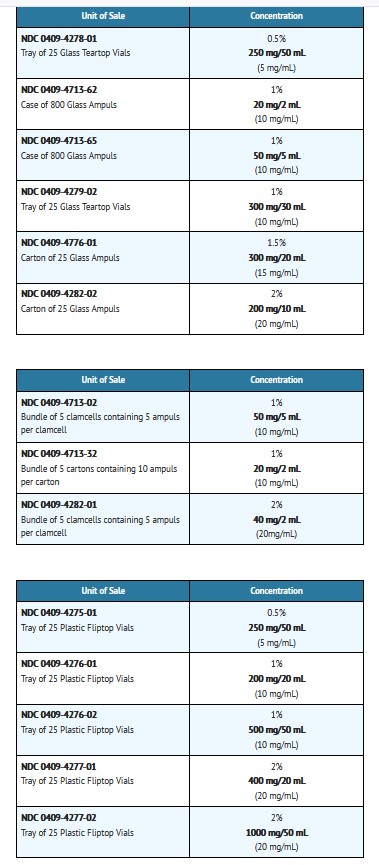
How Supplied (How Supplied)

How Supplied (How Supplied)
Data table listing multiple NDC codes with corresponding units of sale and concentration strengths for Lidocaine HCl solutions. Concentrations range from 0.5% to 2% with quantities provided for various packaging types including teartop vials, glass ampuls, clamshell bundles, and plastic fliptop vials.*
FDA Label Image
FDA Label Image

Precautions (Precautions Table)

Precautions (Precautions Table)
Table listing classes of drugs and examples associated with methemoglobinemia. Classes include Nitrates/Nitrites with examples like nitric oxide and nitroglycerin; Local anesthetics including lidocaine and bupivacaine; Antineoplastic agents such as cyclophosphamide and ifosfamide; Antibiotics including dapsone and sulfonamides; Antimalarials like chloroquine; Anticonvulsants including phenobarbital and phenytoin; and Other drugs like acetaminophen and metoclopramide.*
FDA Label Image

Vial Label (Vial Label)

Vial Label (Vial Label)
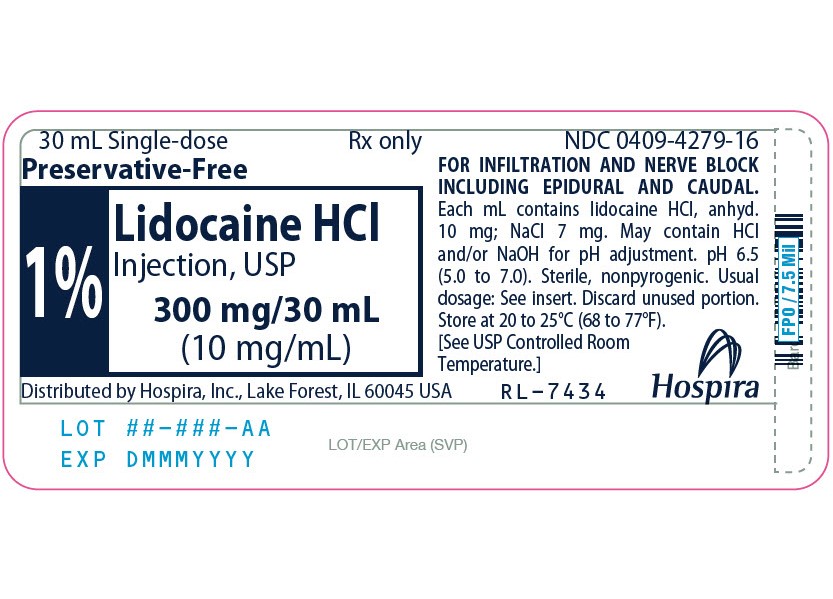
Label for Lidocaine HCl Injection, USP 1% solution, 300 mg/30 mL (10 mg/mL), preservative-free, single-dose vial, 30 mL. The label states it is for infiltration and nerve block, including epidural and caudal. Distributed by Hospira, Inc., Lake Forest, IL. Contains lot and expiration date placeholders and the Hospira logo.*

* About these descriptions: Image descriptions on this page are generated by automated AI analysis of the product label images from the manufacturer's FDA label submission (SPL). They are provided for reference only and may contain errors or omissions. Always rely on the printed label itself and the official FDA labeling, and consult a pharmacist or healthcare professional with any questions about this product.