Highlights Of Prescribing Information
These highlights do not include all the information needed to use DICYCLOMINE HYDROCHLORIDE INJECTION safely and effectively. See full prescribing information for DICYCLOMINE HYDROCHLORIDE INJECTION.
DICYCLOMINE HYDROCHLORIDE injection, for intramuscular use
Initial U.S. Approval: 1950
INDICATIONS AND USAGE
Dicyclomine hydrochloride is an antispasmodic and anticholinergic (antimuscarinic) agent indicated for the treatment of functional bowel/irritable bowel syndrome ( 1 )
DOSAGE AND ADMINISTRATION
Dosage for Dicyclomine hydrochloride must be adjusted to individual patient needs. (
2)
If a dose is missed, patients should continue the normal dosing schedule. (
2)
Intramuscular in adults (
2.2):
Intramuscular administration recommended no longer than 1 or 2 days when patients cannot take oral administration
Recommended dose: 10 mg to 20 mg four times a day
DOSAGE FORMS AND STRENGTHS
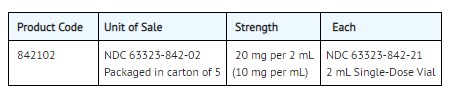
Dicyclomine Hydrochloride Injection, USP 20 mg per 2 mL (10 mg per mL) ( 3)
CONTRAINDICATIONS
Infants less than 6 months of age (
4)
Nursing mothers (
4)
Unstable cardiovascular status in acute hemorrhage (
4)
Myasthenia gravis (
4)
Glaucoma (
4)
Obstructive uropathy (
4)
Obstructive disease of the gastrointestinal tract (
4)
Severe ulcerative colitis (
4)
Reflux esophagitis (
4)
WARNINGS AND PRECAUTIONS
For Intramuscular injection only; should not be administered by any other route. Intravenous injection may result in thrombosis or thrombophlebitis and injection site reactions (
5.1)
Cardiovascular conditions: worsening of conditions (
5.2)
Peripheral and central nervous system: heat prostration can occur with drug use (fever and heat stroke due to decreased sweating); drug should be discontinued and supportive measures instituted (
5.3) .
Psychosis and delirium have been reported in patients sensitive to anticholinergic drugs (such as elderly patients and/or in patients with mental illness): signs and symptoms resolve within 12 to 24 hours after discontinuation of dicyclomine hydrochloride (
5.3)
Myasthenia Gravis: overdose may lead to muscular weakness and paralysis. Dicyclomine hydrochloride should be given to patients with myasthenia gravis only to reduce adverse muscarinic effects of an anticholinesterase (
5.4)
Incomplete intestinal obstruction: diarrhea may be an early symptom especially in patients with ileostomy or colostomy. Treatment with dicyclomine hydrochloride would be inappropriate and possibly fatal (
5.5)
Salmonella dysenteric patients: due to risk of toxic megacolon (
5.6)
Ulcerative colitis: Dicyclomine hydrochloride should be used with caution in these patients; large doses may suppress intestinal motility or aggravate the serious complications of toxic megacolon (
5.7)
Prostatic hypertrophy: Dicyclomine Hydrochloride Injection should be used with caution in these patients; may lead to urinary retention (
5.8)
Hepatic and renal disease: should be used with caution (
5.9)
Geriatric: use with caution in elderly who may be more susceptible to dicyclomine hydrochloride adverse events (
5.10)
ADVERSE REACTIONS
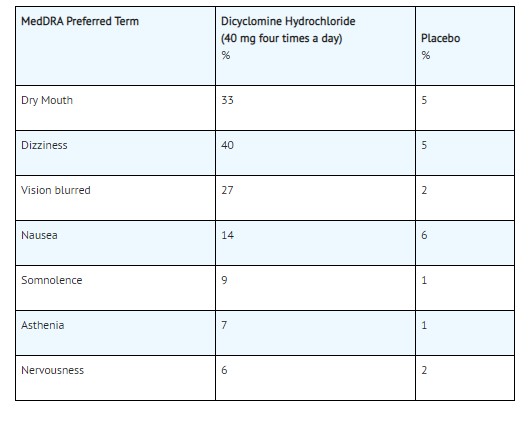
The most serious adverse reactions include cardiovascular and central nervous system symptoms. The most common adverse reactions (> 5% of patients) are dizziness, dry mouth, vision blurred, nausea, somnolence, asthenia and nervousness. ( 6)
To report SUSPECTED ADVERSE REACTIONS, contact Fresenius Kabi USA, LLC, at 1-800-551-7176 or FDA at 1-800-FDA-1088 or www.fda.gov/medwatch.
DRUG INTERACTIONS
Antiglaucoma agents: anticholinergics antagonize antiglaucoma agents and may increase intraocular pressure ( 7)
Anticholinergic agents: may affect the gastrointestinal absorption of various drugs; may also increase certain actions or side effects of other anticholinergic drugs ( 7)
Antacids: interfere with the absorption of anticholinergic agents ( 7)
USE IN SPECIFIC POPULATIONS
Pregnancy: use only if clearly needed (
8.1)
Pediatric Use: Safety and effectiveness not established (
8.4)
Hepatic and renal impairment: caution must be taken with patients with significantly impaired hepatic and renal function (
8.6)
See 17 for PATIENT COUNSELING INFORMATION.
Revised: 5/2019