Ketorolac Tromethamine Injection, Solution
Product Images NDC 51662-1594
View Photos of Packaging, Regulatory Labels, and Product Appearance
Product Visual Gallery
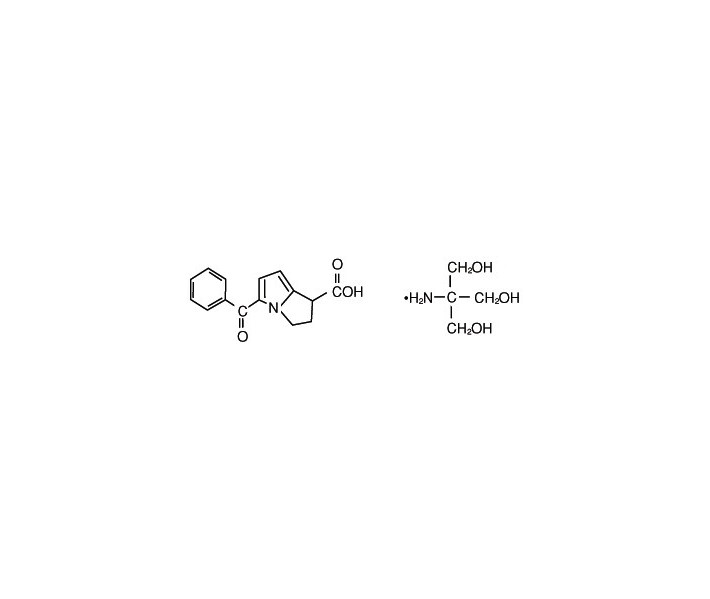
This gallery contains 11 technical images submitted to the FDA as part of the official labeling for Ketorolac Tromethamine (NDC 51662-1594). Unlike standard consumer photos, these assets often include clinical data figures, molecular chemical structures, and official manufacturer packaging layouts.
As provided by Hf Acquisition Co Llc, Dba Healthfirst, these visuals offer a comprehensive scientific overview of the product's physical and chemical identity, aiding pharmacists and researchers in product verification and study.
Product Images & Figures Index
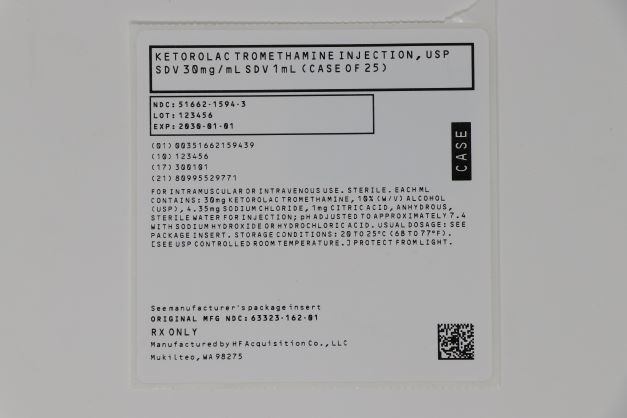
Case Labeling (51662 1594 3 Case Label)
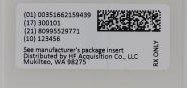
Rfid Labeling (51662 1594 3 Rfid Labeling)
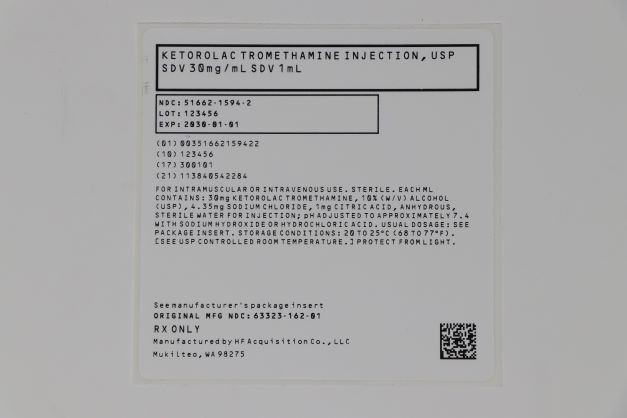
Vial Label (63323 162 00 Ketorolac Vial Label (1))
This is a prescription-only medication with National Drug Code 63323-162-00 and lot number/expiration date 401992F. It is an injection of Ketorolac Tromethamine at a concentration of 30mg/mL and is intended for intramuscular or intravenous use. The usual dosage instructions are located in the package insert. The medication is available in a single dose glass vial containing 1mL.*
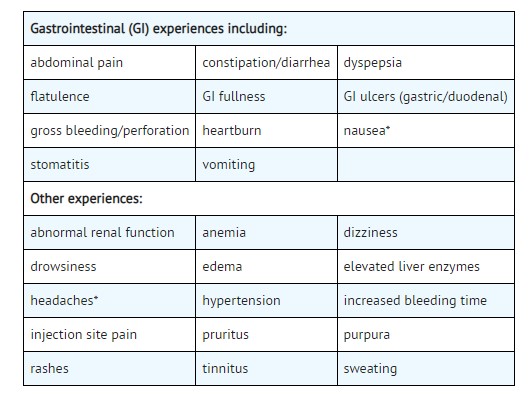
Adverse 1 (Adverse 1)
This appears to be a list of possible gastrointestinal and other related side effects or experiences that someone might have from a medication or medical condition. It includes symptoms such as abdominal pain, constipation/diarrhea, dyspepsia, flatulence, ulcers, bleeding, heartburn, nausea, vomiting, abnormal renal function, anemia, dizziness, drowsiness, edema, elevated liver enzymes, headaches, hypertension, increased bleeding time, injection site pain, pruritus, purpura, rashes, tinnitus, and sweating.*
Adverse 2 (Adverse 2)
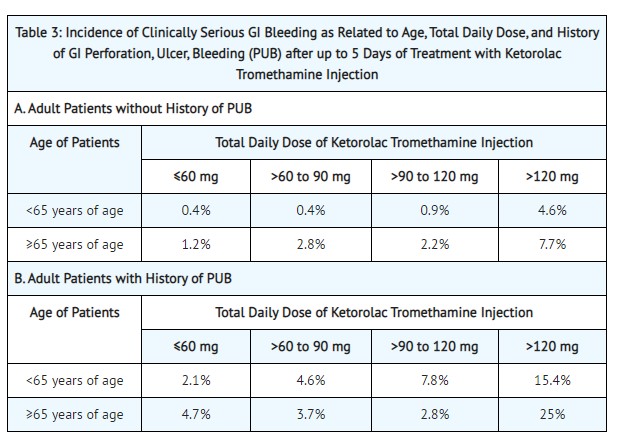
This is a table showing the incidence of serious gastrointestinal bleeding related to age, total daily dose, and history of perforation, ulcer, or bleeding after up to 5 days of treatment with Ketorolac Tromethamine Injection. The table is divided into two sections, one for adult patients without history of PUB and the other for those with a history of PUB. The table shows the incidence of bleeding based on the age of the patient and the daily dose of Ketorolac Tromethamine Injection.*
Boxed Warning (Boxed Warning)
Clinical 1 (Clinical 1)
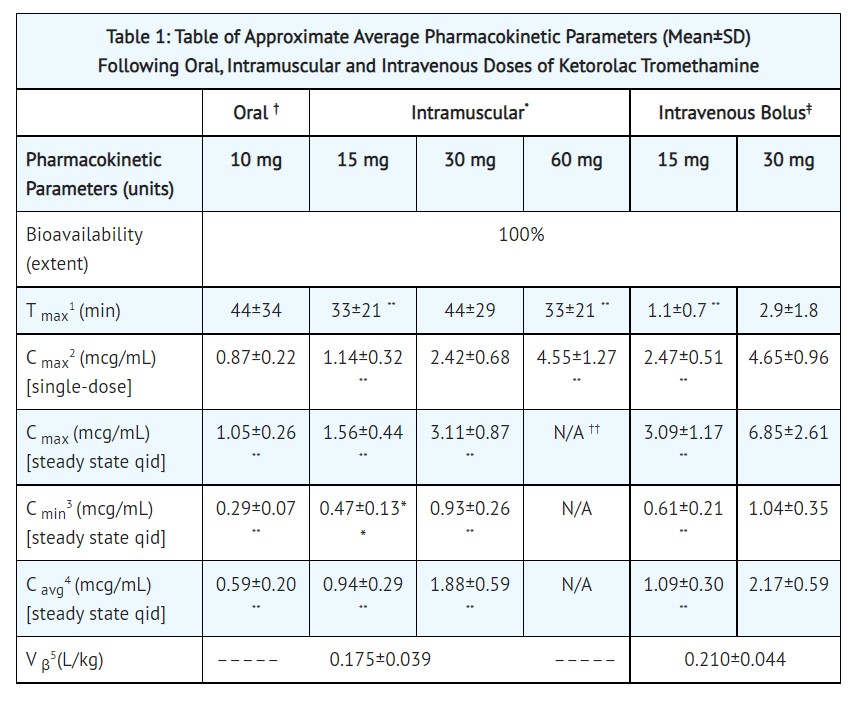
This table shows average pharmacokinetic parameters observed after administering ketorolac tromethamine through oral, intramuscular, and intravenous routes. The bioavailability of the drug was found to be 100%, and the time to reach maximum concentration (Tmax) varied between the routes of administration. The maximum concentration of the drug (Cmax) was higher for intravenous bolus administrations. Other parameters such as Cmin and Vd/kg were also analyzed.*
Clinical 2 (Clinical 2)
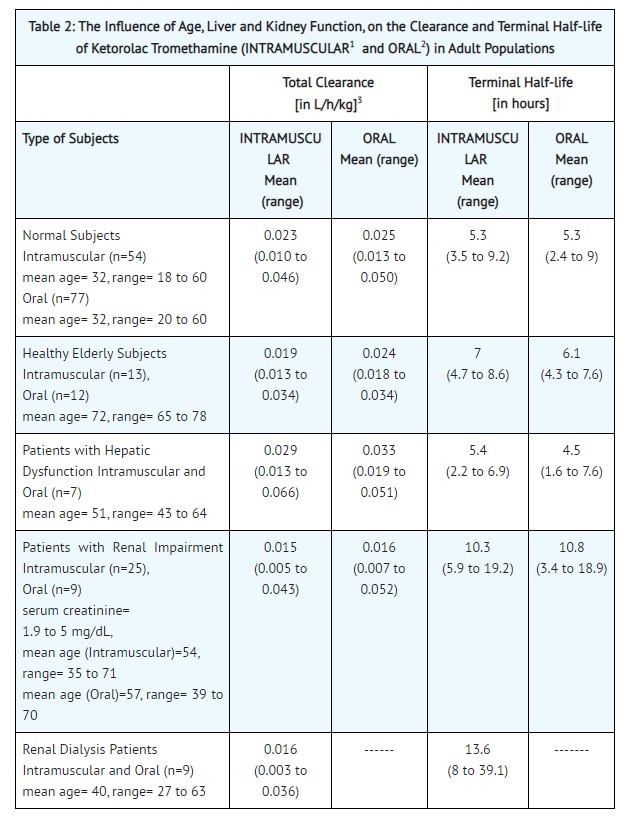
Table 2 provides data on the influence of age, liver and kidney function on the clearance and terminal half-life of Ketorolac Tromethamine (INTRAMUSCULAR® and ORAL?). The table shows the total clearance and terminal half-life in hours in different population groups; normal subjects, healthy elderly subjects, patients with hepatic dysfunction, patients with renal impairment, and renal dialysis patients. The table also includes the mean and range of age for each group.*
Logo (Logo)
Structure (Structure)
* These product label images have been analyzed using experimental machine learning. Please verify findings with the primary label text.