Ondansetron Tablet, Film Coated
Product Images NDC 51662-1678

View Photos of Packaging, Regulatory Labels, and Product Appearance

Product Visual Gallery

This gallery contains 8 technical images submitted to the FDA as part of the official labeling for Ondansetron (NDC 51662-1678). Unlike standard consumer photos, these assets often include clinical data figures, molecular chemical structures, and official manufacturer packaging layouts.

As provided by Hf Acquisition Co Llc, Dba Healthfirst, these visuals offer a comprehensive scientific overview of the product's physical and chemical identity, aiding pharmacists and researchers in product verification and study.

FDA Label Image

Table (51662 1678 1 Table 1 And 2)
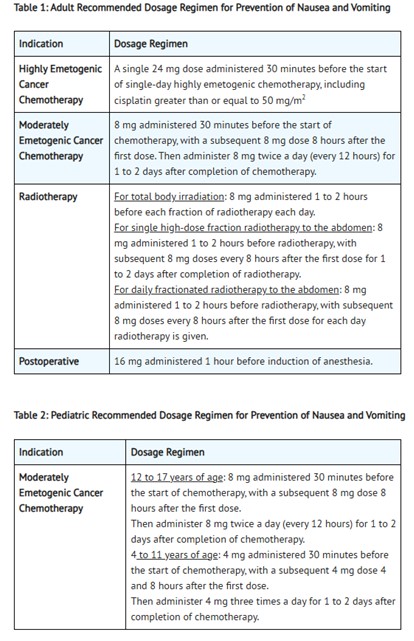
Table (51662 1678 1 Table 1 And 2)
This text provides detailed dosage regimens for the prevention of nausea and vomiting in adults and children undergoing chemotherapy, radiotherapy, and postoperative procedures. It outlines specific dosages and timing recommendations based on the severity of the emetogenic nature of the treatment received. The information is presented in a structured manner in Tables 1 and 2 for easy reference.*
FDA Label Image

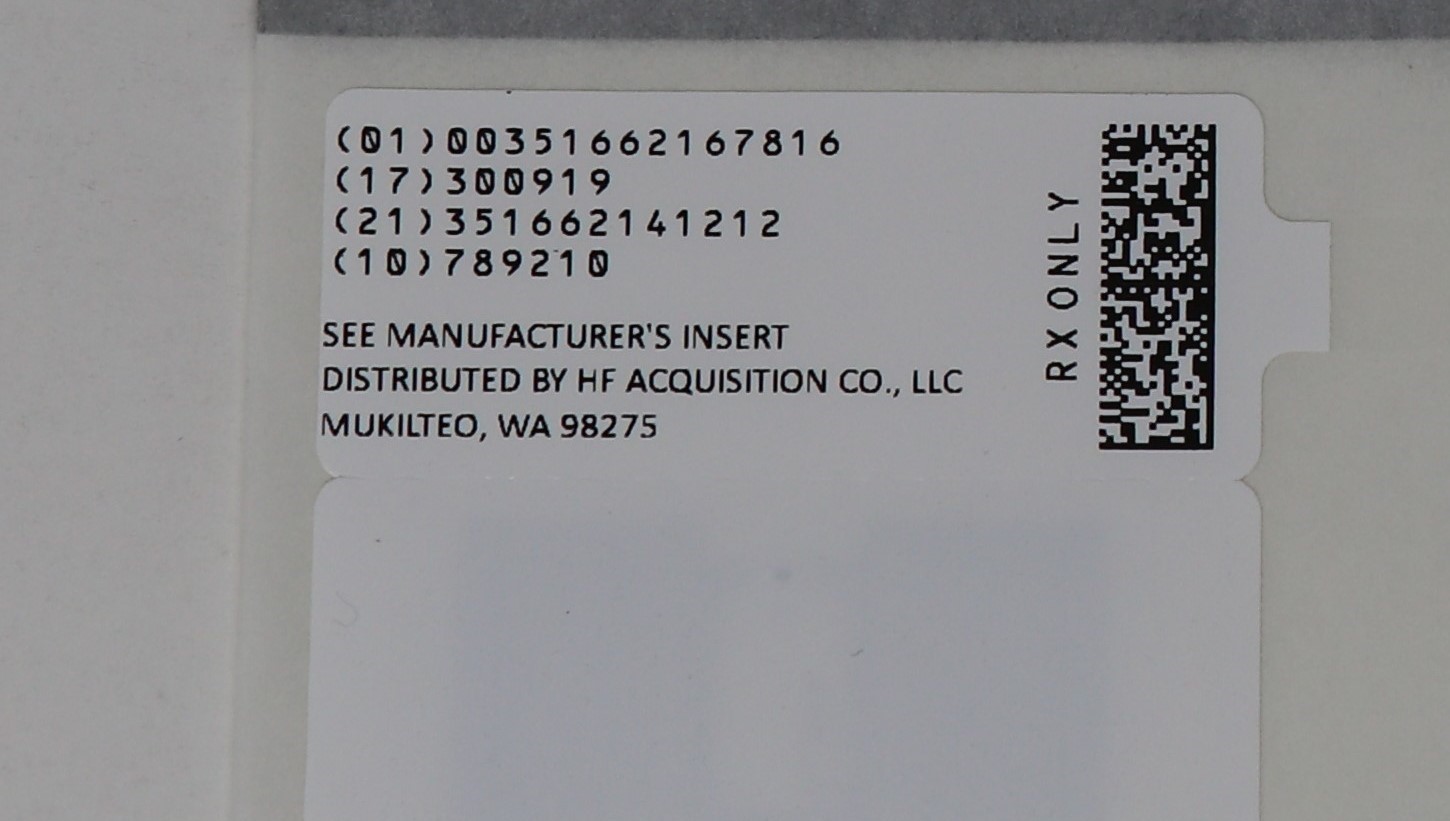
Label (51662 1678 1 Rfilabel)

Label (51662 1678 1 Rfilabel)
This is not available.*
FDA Label Image

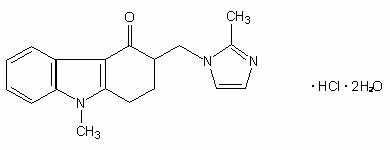
Structure (51662 1678 1 Structure)

FDA Label Image

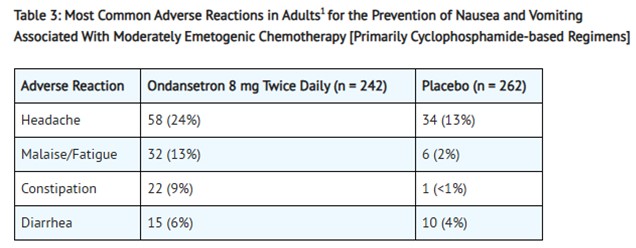
Table (51662 1678 1 Table 3)

Table (51662 1678 1 Table 3)
The provided text details the most common adverse reactions reported in adults undergoing moderately emetogenic chemotherapy, primarily cyclophosphamide-based regimens, for the prevention of nausea and vomiting. The study compared the incidence of adverse reactions between patients who received Ondansetron 8 mg twice daily (n=242) and those who received a placebo (n=262). The data shows that headache, malaise/fatigue, constipation, and diarrhea were among the common adverse reactions reported, with varying percentages between the ondansetron and placebo groups.*
FDA Label Image

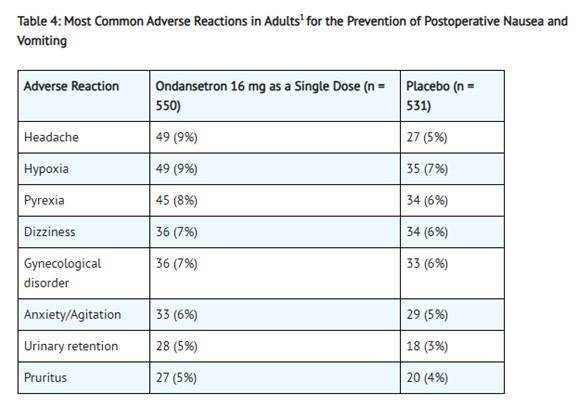
Table (51662 1678 1 Table 4)

Table (51662 1678 1 Table 4)
Table 4 provides a breakdown of the most common adverse reactions in adults for the prevention of postoperative nausea and vomiting when administered with Ondansetron 16 mg as a single dose compared to placebo. The table shows the percentage of patients experiencing various reactions, including headache, hypoxia, pyrexia, dizziness, gynecological disorder, anxiety/agitation, urinary retention, and pruritus. These findings can be beneficial for healthcare professionals to consider when prescribing or administering Ondansetron for postoperative care.*
FDA Label Image

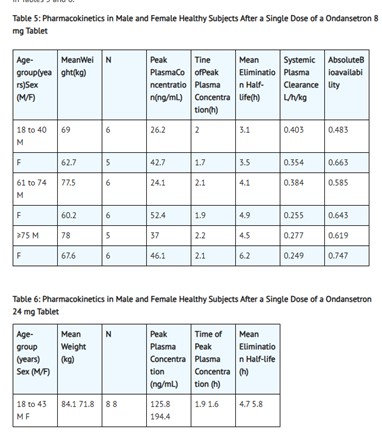
Table (51662 1678 1 Table 5 And 6)

FDA Label Image

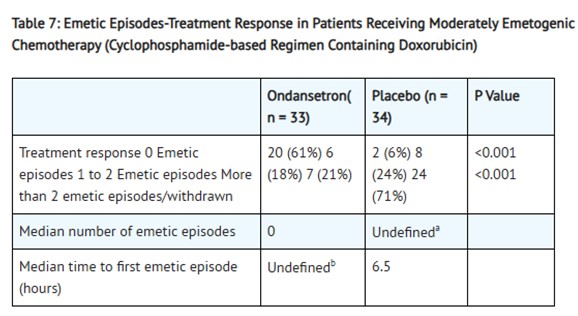
Table (51662 1678 1 Table 7)

Table (51662 1678 1 Table 7)
This text provides data on the treatment responses of patients receiving moderately emetogenic chemotherapy. The table includes information on the number of emetic episodes experienced by patients and the treatment responses to Ondansetron compared to a Placebo. It also includes the median number of emetic episodes and the median time to the first emetic episode. The study results suggest a significant difference in treatment response between Ondansetron and Placebo in this context.*
FDA Label Image

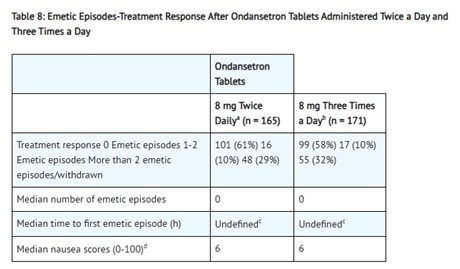
Label (51662 1678 1 Table 8)

* These product label images have been analyzed using experimental machine learning. Please verify findings with the primary label text.