Penicillin G Potassium Injection, Powder, For Solution
Product Images NDC 51662-1689

View Photos of Packaging, Regulatory Labels, and Product Appearance

Product Visual Gallery

This gallery contains 6 technical images submitted to the FDA as part of the official labeling for Penicillin G Potassium (NDC 51662-1689). Unlike standard consumer photos, these assets often include clinical data figures, molecular chemical structures, and official manufacturer packaging layouts.

As provided by Hf Acquisition Co Llc, Dba Healthfirst, these visuals offer a comprehensive scientific overview of the product's physical and chemical identity, aiding pharmacists and researchers in product verification and study.

FDA Label Image

Label (51662 1689 1 Rfid)
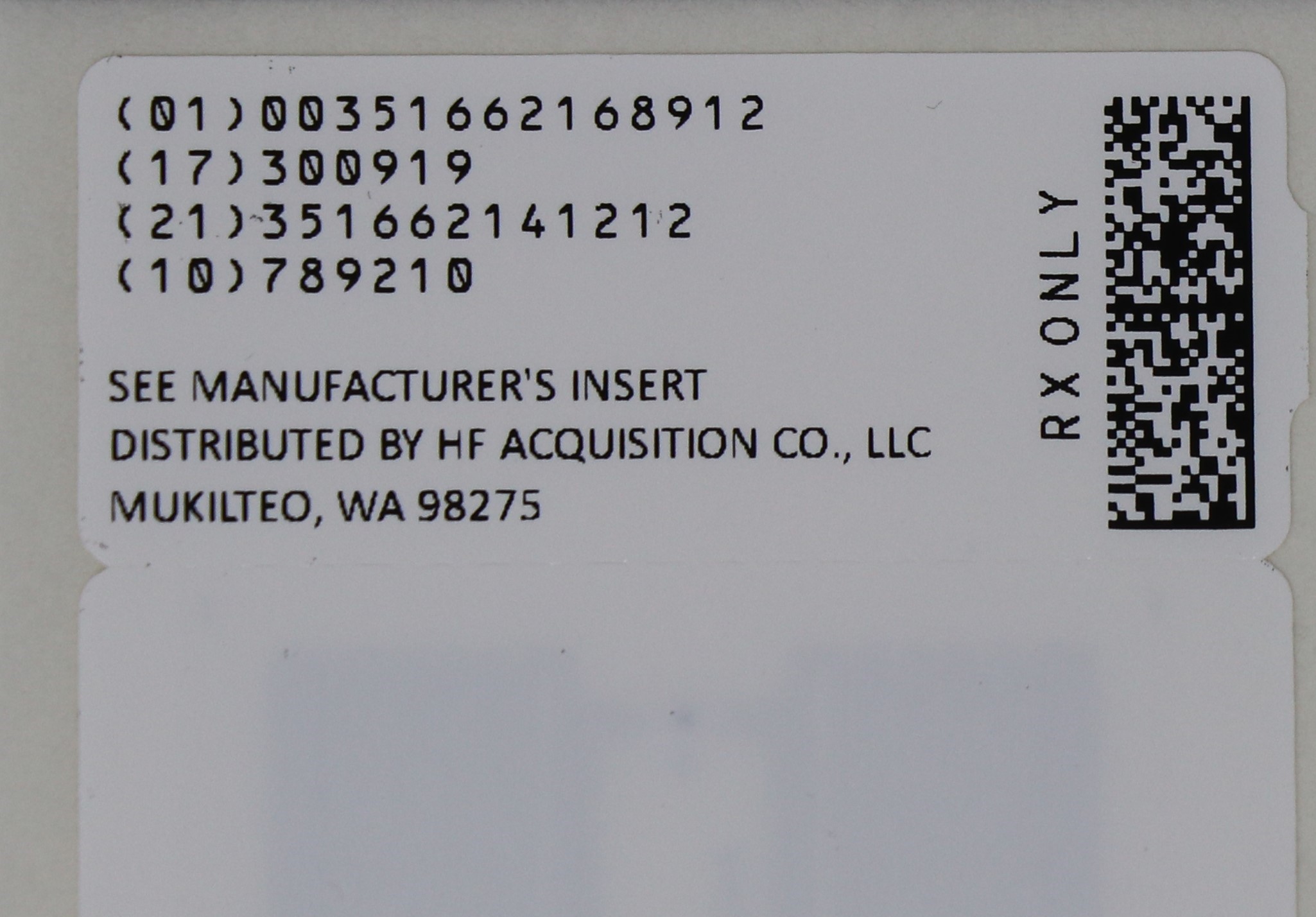
Label (51662 1689 1 Rfid)
Data matrix label on packaging for PENICILLIN G POTASSIUM injection powder for solution. The label includes GS1 barcodes and numeric codes, with text indicating the product is distributed by HF Acquisition Co LLC in Mukilteo, WA. No proprietary or active ingredient names, strengths, or dosage forms are shown on this partial label image.*
FDA Label Image

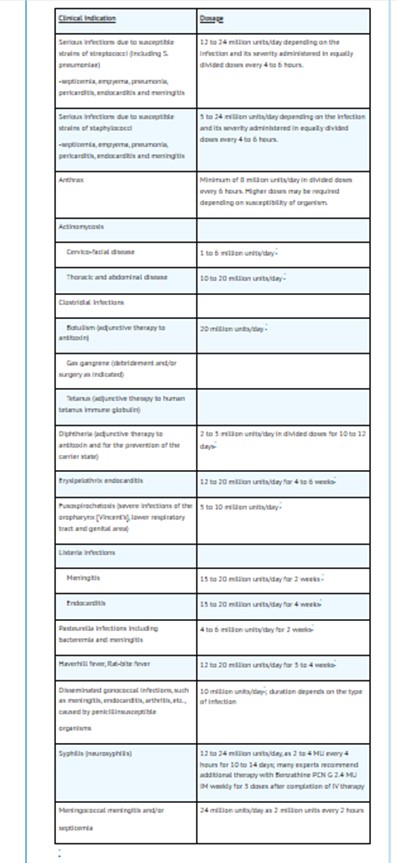
Table (51662 1689 1 Table 2)

Table (51662 1689 1 Table 2)
A dosage table listing clinical indications and recommended dosages for Penicillin G Potassium injection, powder for solution. It includes dosing information for infections like streptococcal and staphylococcal infections, anthrax, actinomycosis, clostridial infections, diphtheria, meningitis, and others, with dosages expressed in million units per day and duration guidelines.*
FDA Label Image

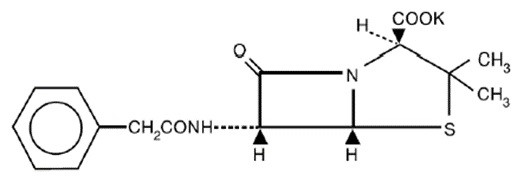
Structure (51662 1689 1 Structure)

Structure (51662 1689 1 Structure)
Chemical structure of penicillin G potassium depicting its key molecular components including a beta-lactam ring, a thiazolidine ring, and a phenylacetyl side chain.*
FDA Label Image

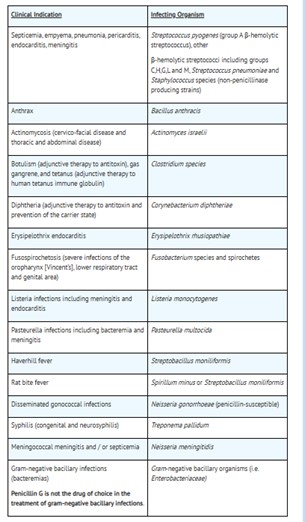
Table (51662 1689 1 Table 1)

Table (51662 1689 1 Table 1)
A data table listing clinical indications alongside their corresponding infecting organisms for PENICILLIN G POTASSIUM. It includes infectious diseases such as septicemia, anthrax, diphtheria, and syphilis, paired with specific bacteria like Streptococcus pyogenes, Bacillus anthracis, Corynebacterium diphtheriae, and Treponema pallidum. The table notes that penicillin G is not the drug of choice for gram-negative bacillary infections.*
FDA Label Image

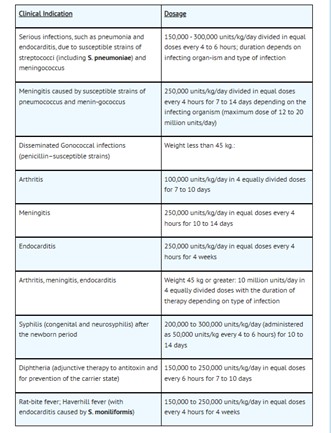
Table (51662 1689 1 Table 3)

Table (51662 1689 1 Table 3)
A data table presenting dosage information for penicillin G potassium injection. It lists clinical indications such as pneumonia, meningitis, gonococcal infections, arthritis, endocarditis, syphilis, diphtheria, and Haverhill fever with respective dosage ranges and administration intervals, tailored to patient weight and infection type.*
FDA Label Image

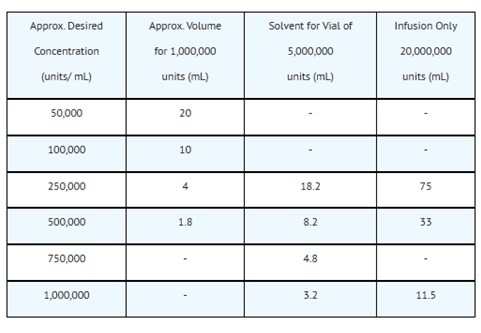
Table (51662 1689 1 Table 4)

Table (51662 1689 1 Table 4)
A data table showing approximate desired concentration in units per mL, corresponding volume for 1,000,000 units in mL, solvent volume for a vial of 5,000,000 units in mL, and infusion volume in mL for 20,000,000 units. It provides dosage preparation reference values related to Penicillin G Potassium injection powder for solution.*

* About these descriptions: Image descriptions on this page are generated by automated AI analysis of the product label images from the manufacturer's FDA label submission (SPL). They are provided for reference only and may contain errors or omissions. Always rely on the printed label itself and the official FDA labeling, and consult a pharmacist or healthcare professional with any questions about this product.