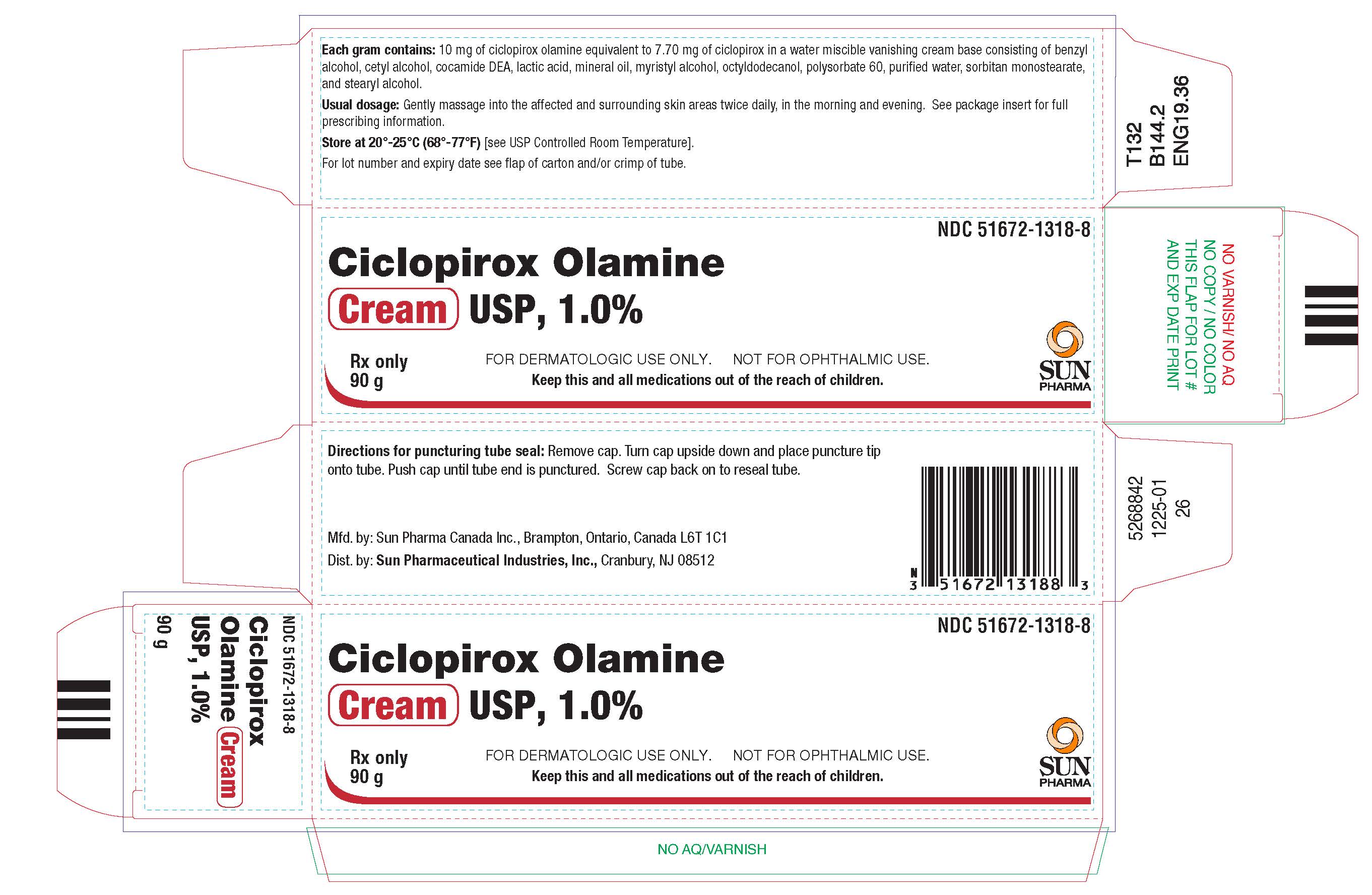
Ciclopirox Olamine Cream
FDA Label NDC 51672-1318

18 label sections · Submitted to the FDA by Sun Pharmaceutical Industries, Inc. · Indications, Dosage, Usage, and Precautions

Structured Product Label

The following Structured Product Label (SPL) was submitted to the FDA by Sun Pharmaceutical Industries, Inc. for the product Ciclopirox Olamine (NDC 51672-1318). This document serves as the official prescribing information, containing essential scientific data and clinical materials required for healthcare providers and patients.

This specific version of the label includes detailed information regarding description, mechanism of action, pharmacokinetics, indications and usage, contraindications, warnings, precautions, information for patients, and other regulatory disclosures. Use the navigation below to review specific sections of the FDA submission.

Mechanism Of Action

Ciclopirox is a hydroxypyridone antifungal agent that acts by chelation of polyvalent cations (Fe 3+or Al 3+), resulting in the inhibition of the metal-dependent enzymes that are responsible for the degradation of peroxides within the fungal cell.

Indications And Usage

Ciclopirox olamine cream is indicated for the topical treatment of the following dermal infections: tinea pedis, tinea cruris, and tinea corporis due to Trichophyton rubrum, Trichophyton mentagrophytes, Epidermophyton floccosum, and Microsporum canis; candidiasis (moniliasis) due to Candida albicans; and tinea (pityriasis) versicolor due to Malassezia furfur.

Contraindications

Ciclopirox olamine cream is contraindicated in individuals who have shown hypersensitivity to any of its components.

Warnings

Ciclopirox olamine cream is not for ophthalmic use.

Keep out of reach of children.

Precautions

If a reaction suggesting sensitivity or chemical irritation should occur with the use of ciclopirox olamine cream, treatment should be discontinued and appropriate therapy instituted.

Information For Patients

The patient should be told to:

  • Use the medication for the full treatment time even though symptoms may have improved and notify the physician if there is no improvement after four weeks.
  • Inform the physician if the area of application shows signs of increased irritation (redness, itching, burning, blistering, swelling, or oozing) indicative of possible sensitization.
  • Avoid the use of occlusive wrappings or dressings.

Pregnancy Category B

There are no adequate or well-controlled studies in pregnant women. Therefore, ciclopirox olamine cream should be used during pregnancy only if the potential benefit justifies the potential risk to the fetus. Oral embryofetal developmental studies were conducted in mice, rats, rabbits and monkeys. Ciclopirox or ciclopirox olamine was orally administered during the period of organogenesis. No maternal toxicity, embryotoxicity or teratogenicity were noted at the highest doses of 77, 125, 80 and 38.5 mg/kg/day ciclopirox in mice, rats, rabbits and monkeys, respectively (approximately 11, 37, 51 and 24 times the maximum recommended human dose based on body surface area comparisons, respectively).

Dermal embryofetal developmental studies were conducted in rats and rabbits with ciclopirox olamine dissolved in PEG 400. Ciclopirox olamine was topically administered during the period of organogenesis. No maternal toxicity, embryotoxicity or teratogenicity were noted at the highest doses of 92 mg/kg/day and 77 mg/kg/day ciclopirox in rats and rabbits, respectively (approximately 27 and 49 times the maximum recommended human dose based on body surface area comparisons, respectively).

Nursing Mothers

It is not known whether this drug is excreted in human milk. Because many drugs are excreted in human milk, caution should be exercised when ciclopirox olamine cream is administered to a nursing woman.

Pediatric Use

Safety and effectiveness in pediatric patients below the age of 10 years have not been established.

Dosage And Administration

Gently massage ciclopirox olamine cream into the affected and surrounding skin areas twice daily, in the morning and evening. Clinical improvement with relief of pruritus and other symptoms usually occurs within the first week of treatment. If a patient shows no clinical improvement after four weeks of treatment with ciclopirox olamine cream, the diagnosis should be redetermined. Patients with tinea versicolor usually exhibit clinical and mycological clearing after two weeks of treatment.

Storage And Handling

Store at 20°-25°C (68°-77°F)[see USP Controlled Room Temperature].

* Please review the disclaimer below.