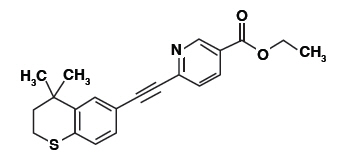
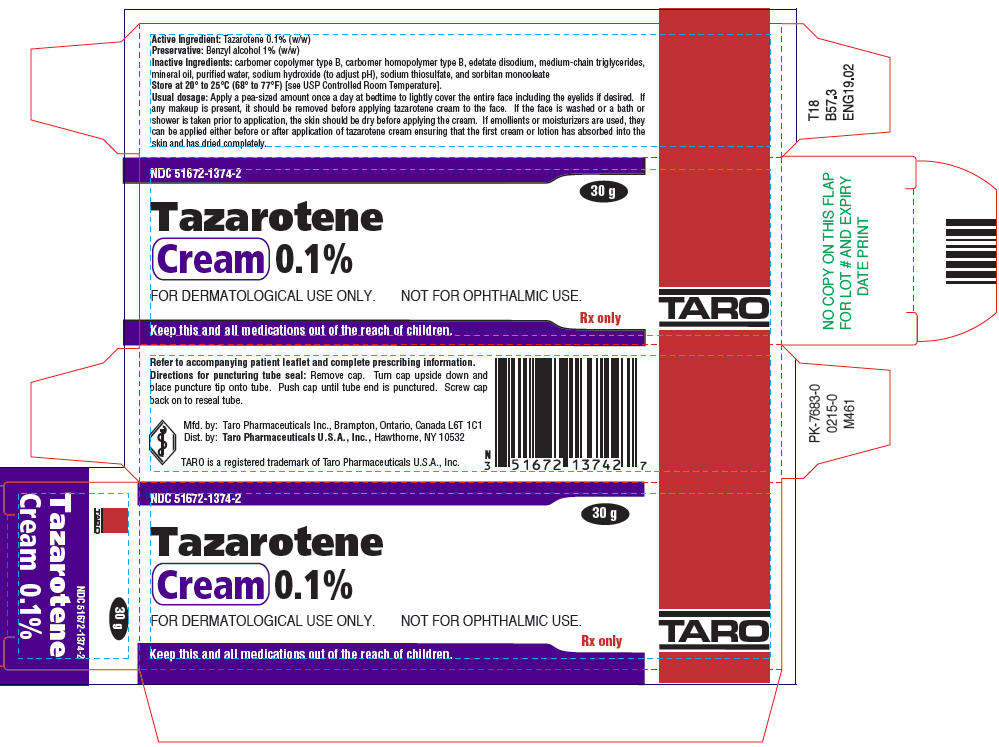
- Tazarotene cream does not eliminate or prevent wrinkles or restore more youthful skin.
- Tazarotene cream does not reverse photoaging or repair sun damaged skin; tazarotene cream does not mitigate coarse or deep wrinkling, tactile roughness, telangiectasia, skin laxity, keratinocytic atypia, melanocytic atypia, or dermal elastosis.
- The safety and the effectiveness of tazarotene cream for the prevention or treatment of actinic keratoses, skin neoplasms, or lentigo maligna have not been established.
Risk Summary
Based on data from animal reproduction studies, retinoid pharmacology, and the potential for systemic absorption, tazarotene cream may cause fetal harm when administered to a pregnant female and is contraindicated during pregnancy. Safety in pregnant females has not been established. The potential risk to the fetus outweighs the potential benefit to the mother from tazarotene cream during pregnancy; therefore, tazarotene cream should be discontinued as soon as pregnancy is recognized [see Contraindications (4), Warnings and Precautions (5.1), Clinical Pharmacology (12.3)]. Limited case reports of pregnancy in females enrolled in clinical trials for tazarotene cream have not established a clear association with tazarotene and major birth defects or miscarriage risk. Because the exact timing and extent of exposure in relation to the gestational age are not certain, the significance of these findings is unknown.
In animal reproduction studies with pregnant rats, tazarotene dosed topically during organogenesis at 2 times the maximum systemic exposure in subjects treated with the maximum recommended human dose (MRHD) of tazarotene cream, 0.1% resulted in reduced fetal body weights and reduced skeletal ossification. In animal reproduction studies with pregnant rabbits dosed topically with tazarotene gel at 26 times the maximum systemic exposure in subjects treated with the MRHD of tazarotene cream, 0.1%, there was a single incident of known retinoid malformations, including spina bifida, hydrocephaly, and heart anomalies.
In animal reproduction studies with pregnant rats and rabbits, tazarotene dosed orally during organogenesis at 2 and 52 times, respectively, the maximum systemic exposure in subjects treated with the MRHD of tazarotene cream, 0.1% resulted in malformations, fetal toxicity, developmental delays, and/or behavioral delays. In pregnant rats, tazarotene dosed orally prior to mating through early gestation resulted in decreased litter size, decreased numbers of live fetuses, decreased fetal body weights, and increased malformations at doses approximately 7 times higher than the maximum systemic exposure in subjects treated with the MRHD of tazarotene cream, 0.1% [see Data].
The background risk of major birth defects and miscarriage for the indicated population is unknown. Adverse outcomes in pregnancy occur regardless of the health of the mother or the use of medications. In the U.S. general population, the estimated background risk of major birth defects and miscarriage in clinically recognized pregnancies is 2 to 4% and 15 to 20%, respectively.
Data
Animal Data
In rats, a tazarotene 0.05% gel formulation dosed topically during gestation days 6 through 17 at 0.25 mg/kg/day, which represented 2 times the maximum systemic exposure in subjects treated with the MRHD of tazarotene cream, 0.1% (i.e., 2 mg/cm2 over a 15% body surface area), resulted in reduced fetal body weights and reduced skeletal ossification. Rabbits dosed topically with 0.25 mg/kg/day tazarotene gel, which represented 26 times the maximum systemic exposure in subjects treated with the MRHD of tazarotene cream, 0.1%, during gestation days 6 through 18, had a single incident of known retinoid malformations, including spina bifida, hydrocephaly, and heart anomalies.
When tazarotene was given orally to animals, developmental delays were seen in rats, and malformations and post-implantation loss were observed in rats and rabbits at doses representing 2 and 52 times, respectively, the maximum systemic exposure seen in subjects treated with the MRHD of tazarotene cream, 0.1%.
In female rats orally administered 2 mg/kg/day of tazarotene from 15 days before mating through gestation day 7, which represented 7 times the maximum systemic exposure in subjects treated with the MRHD of tazarotene cream, 0.1%, classic developmental effects of retinoids were observed including decreased number of implantation sites, decreased litter size, decreased numbers of live fetuses, and decreased fetal body weights. A low incidence of retinoid-related malformations was observed at that dose.
In a pre- and postnatal development toxicity study, topical administration of tazarotene gel (0.125 mg/kg/day) to pregnant female rats from gestation day 16 through lactation day 20 reduced pup survival, but did not affect the reproductive capacity of the offspring. Based on data from another study, the maximum systemic exposure in the rat would be equivalent to the maximum systemic exposure in subjects treated with the MRHD of tazarotene cream, 0.1%.
Risk Summary
There is no information regarding the presence of tazarotene in human milk, the effects on the breastfed infant, or the effects on milk production. After single topical doses of 14C-tazarotene gel to the skin of lactating rats, radioactivity was detected in rat milk. The lack of clinical data during lactation precludes a clear determination of the risk of tazarotene cream to an infant during lactation; therefore, the developmental and health benefits of breastfeeding should be considered along with the mother's clinical need for tazarotene cream and any potential adverse effects on the breastfed child from tazarotene cream or from the underlying maternal condition.
Pregnancy Testing
Pregnancy testing is recommended for females of reproductive potential within 2 weeks prior to initiating tazarotene cream therapy which should begin during a menstrual period.
Contraception
Females
Based on animal studies, tazarotene cream may cause fetal harm when administered to a pregnant woman [see Use in Specific Populations (8.1)]. Advise females of reproductive potential to use effective contraception during treatment with tazarotene cream.
Embryofetal Toxicity
Inform females of reproductive potential of the potential risk to a fetus. Advise these patients to use effective contraception during treatment with tazarotene cream. Advise patients to inform their healthcare provider of a known or suspected pregnancy [see Warnings and Precautions (5.1) and Use in Specific Populations (8.1, 8.3)].
Photosensitivity and Risk of Sunburn
Advise patients to avoid excessive sun exposure and to use of sunscreens and protective measures (hat, visor). Advise patients to avoid using tazarotene if also taking other medicines may increase sensitivity to sunlight.
Important Administration Instructions
Advise patients of the following:
- Use tazarotene cream on the face once per day, at bedtime.
- Tazarotene cream is for topical use only. Do not apply to eyes, mouth, or other mucous membranes. The cream may cause severe redness, itching, burning, stinging, and peeling. Avoid accidental transfer of tazarotene cream into eyes, mouth, or other mucous membranes. If contact with mucous membranes occurs, rinse thoroughly with water. Seek medical attention if eye irritation continues. Wash hands thoroughly after applying tazarotene cream.
- Gently wash face with a mild soap before applying the cream.
- Dry skin before applying the cream.
- Apply only a small pea sized amount (about ¼ inch or 5 millimeter diameter) to lightly cover the entire face.
- Apply emollients or moisturizers before or after tazarotene cream and ensure that the first cream or lotion has absorbed into the skin and dried completely.
- In the morning, apply a moisturizing sunscreen.
Manufactured by: Taro Pharmaceuticals Inc., Brampton, Ontario, Canada L6T 1C1
Distributed by: Taro Pharmaceuticals U.S.A., Inc., Hawthorne, NY 10532
Revised: August 2017
PK-7689-3
0817-3
10