Carbamazepine Suspension
FDA Label NDC 51672-4047

55 label sections · Submitted to the FDA by Sun Pharmaceutical Industries, Inc. · Indications, Dosage, Usage, and Precautions

Structured Product Label

The following Structured Product Label (SPL) was submitted to the FDA by Sun Pharmaceutical Industries, Inc. for the product Carbamazepine (NDC 51672-4047). This document serves as the official prescribing information, containing essential scientific data and clinical materials required for healthcare providers and patients.

This specific version of the label includes detailed information regarding other, aplastic anemia and agranulocytosis, description, clinical pharmacology, mechanism of action, pharmacokinetics, epilepsy, trigeminal neuralgia, and other regulatory disclosures. Use the navigation below to review specific sections of the FDA submission.

Label Section Quick Index

Aplastic Anemia And Agranulocytosis

APLASTIC ANEMIA AND AGRANULOCYTOSIS HAVE BEEN REPORTED IN ASSOCIATION WITH THE USE OF CARBAMAZEPINE. DATA FROM A POPULATION-BASED CASE CONTROL STUDY DEMONSTRATE THAT THE RISK OF DEVELOPING THESE REACTIONS IS 5 TO 8 TIMES GREATER THAN IN THE GENERAL POPULATION. HOWEVER, THE OVERALL RISK OF THESE REACTIONS IN THE UNTREATED GENERAL POPULATION IS LOW, APPROXIMATELY SIX PATIENTS PER ONE MILLION POPULATION PER YEAR FOR AGRANULOCYTOSIS AND TWO PATIENTS PER ONE MILLION POPULATION PER YEAR FOR APLASTIC ANEMIA.

ALTHOUGH REPORTS OF TRANSIENT OR PERSISTENT DECREASED PLATELET OR WHITE BLOOD CELL COUNTS ARE NOT UNCOMMON IN ASSOCIATION WITH THE USE OF CARBAMAZEPINE, DATA ARE NOT AVAILABLE TO ESTIMATE ACCURATELY THEIR INCIDENCE OR OUTCOME. HOWEVER, THE VAST MAJORITY OF THE CASES OF LEUKOPENIA HAVE NOT PROGRESSED TO THE MORE SERIOUS CONDITIONS OF APLASTIC ANEMIA OR AGRANULOCYTOSIS.

BECAUSE OF THE VERY LOW INCIDENCE OF AGRANULOCYTOSIS AND APLASTIC ANEMIA, THE VAST MAJORITY OF MINOR HEMATOLOGIC CHANGES OBSERVED IN MONITORING OF PATIENTS ON CARBAMAZEPINE ARE UNLIKELY TO SIGNAL THE OCCURRENCE OF EITHER ABNORMALITY. NONETHELESS, COMPLETE PRETREATMENT HEMATOLOGICAL TESTING SHOULD BE OBTAINED AS A BASELINE. IF A PATIENT IN THE COURSE OF TREATMENT EXHIBITS LOW OR DECREASED WHITE BLOOD CELL OR PLATELET COUNTS, THE PATIENT SHOULD BE MONITORED CLOSELY. DISCONTINUATION OF THE DRUG SHOULD BE CONSIDERED IF ANY EVIDENCE OF SIGNIFICANT BONE MARROW DEPRESSION DEVELOPS.

Aplastic anemia and agranulocytosis have been reported in association with the use of carbamazepine (see BOXED WARNING). Patients with a history of adverse hematologic reaction to any drug may be particularly at risk of bone marrow depression.

Description

Carbamazepine USP, is an anticonvulsant and specific analgesic for trigeminal neuralgia, available for oral administration as chewable tablets of 100 and 200 mg, tablets of 200 mg, extended-release tablets of 100 mg, 200 mg, and 400 mg, and as a suspension of 100 mg/5 mL (teaspoon). Its chemical name is 5 H-dibenz[ b,f]azepine-5-carboxamide, and its structural formula is:

Chemical Structure (Carbamazepine 01)

Chemical Structure (Carbamazepine 01)

C 15H 12N 2O

Carbamazepine USP is a white to off-white powder, practically insoluble in water and soluble in alcohol and in acetone. Its molecular weight is 236.27 g/mol.

Inactive Ingredients:Carbamazepine Tablets USP, (Chewable), 100 mg and 200 mg – ammonio methacrylate copolymer, croscarmellose sodium, diethyl phthalate, FD&C red no. 40 lake, magnesium stearate, microcrystalline cellulose, natural cherry flavor, pregelatinized maize starch and sorbitol.

Carbamazepine Tablets USP, 200 mg – ammonio methacrylate copolymer, corn starch, croscarmellose sodium, diethyl phthalate, magnesium stearate and microcrystalline cellulose.

Carbamazepine Extended-Release Tablets USP, 100 mg, 200 mg, and 400 mg – ammonio methacrylate copolymer, corn starch, diethyl phthalate, lactose monohydrate, magnesium stearate, microcrystalline cellulose and sodium starch glycolate.

Carbamazepine Oral Suspension USP, 100 mg/5 mL – citric acid monohydrate, FD&C yellow no. 6, orange flavor, poloxamer 188, potassium sorbate, propylene glycol, purified water, sorbitol solution, sucrose and xanthan gum. The amount of propylene glycol in
carbamazepine oral suspension is 50 mg per mL (see WARNINGS Propylene Glycol Toxicity).

Clinical Pharmacology

In controlled clinical trials, carbamazepine has been shown to be effective in the treatment of psychomotor and grand mal seizures, as well as trigeminal neuralgia.

Epilepsy

Carbamazepine is indicated for use as an anticonvulsant drug. Evidence supporting efficacy of carbamazepine as an anticonvulsant was derived from active drug-controlled studies that enrolled patients with the following seizure types:

  • Partial seizures with complex symptomatology (psychomotor, temporal lobe). Patients with these seizures appear to show greater improvement than those with other types.
  • Generalized tonic-clonic seizures (grand mal).
  • Mixed seizure patterns which include the above, or other partial or generalized seizures. Absence seizures (petit mal) do not appear to be controlled by carbamazepine (see PRECAUTIONS, General).
  • (see INDICATIONS AND USAGE)

Trigeminal Neuralgia

Carbamazepine is indicated in the treatment of the pain associated with true trigeminal neuralgia.

Beneficial results have also been reported in glossopharyngeal neuralgia.

This drug is not a simple analgesic and should not be used for the relief of trivial aches or pains.

Contraindications

Carbamazepine should not be used in patients with a history of previous bone marrow depression, hypersensitivity to the drug, or known sensitivity to any of the tricyclic compounds, such as amitriptyline, desipramine, imipramine, protriptyline, nortriptyline, etc. Likewise, on theoretical grounds its use with monoamine oxidase (MAO) inhibitors is not recommended. Before administration of carbamazepine, MAO inhibitors should be discontinued for a minimum of 14 days, or longer if the clinical situation permits.

Coadministration of carbamazepine and nefazodone may result in insufficient plasma concentrations of nefazodone and its active metabolite to achieve a therapeutic effect. Coadministration of carbamazepine with nefazodone is contraindicated.

Drug Reaction With Eosinophilia And Systemic Symptoms (Dress)/Multiorgan Hypersensitivity

Drug Reaction with Eosinophilia and Systemic Symptoms (DRESS), also known as multiorgan hypersensitivity, has occurred with carbamazepine. Some of these events have been fatal or life-threatening. DRESS typically, although not exclusively, presents with fever, rash, lymphadenopathy, and/or facial swelling, in association with other organ system involvement, such as hepatitis, nephritis, hematologic abnormalities, myocarditis, or myositis sometimes resembling an acute viral infection. Eosinophilia is often present. This disorder is variable in its expression, and other organ systems not noted here may be involved. It is important to note that early manifestations of hypersensitivity (e.g., fever, lymphadenopathy) may be present even though rash is not evident. If such signs or symptoms are present, the patient should be evaluated immediately. Carbamazepine should be discontinued if an alternative etiology for the signs or symptoms cannot be established.

Anaphylaxis And Angioedema

Rare cases of anaphylaxis and angioedema involving the larynx, glottis, lips, and eyelids have been reported in patients after taking the first or subsequent doses of carbamazepine. Angioedema associated with laryngeal edema can be fatal. If a patient develops any of these reactions after treatment with carbamazepine, the drug should be discontinued and an alternative treatment started. These patients should not be rechallenged with the drug.

General

Carbamazepine has shown mild anticholinergic activity that may be associated with increased intraocular pressure; therefore, patients with increased intraocular pressure should be closely observed during therapy. Because of the relationship of the drug to other tricyclic compounds, the possibility of activation of a latent psychosis and, in elderly patients, of confusion or agitation should be borne in mind.

The use of carbamazepine should be avoided in patients with a history of hepatic porphyria (e.g., acute intermittent porphyria, variegate porphyria, porphyria cutanea tarda). Acute attacks have been reported in such patients receiving carbamazepine therapy. Carbamazepine administration has also been demonstrated to increase porphyrin precursors in rodents, a presumed mechanism for the induction of acute attacks of porphyria.

As with all antiepileptic drugs, carbamazepine should be withdrawn gradually to minimize the potential of increased seizure frequency.

Hyponatremia can occur as a result of treatment with carbamazepine. In many cases, the hyponatremia appears to be caused by the syndrome of inappropriate antidiuretic hormone secretion (SIADH). The risk of developing SIADH with carbamazepine treatment appears to be dose-related. Elderly patients and patients treated with diuretics are at greater risk of developing hyponatremia. Signs and symptoms of hyponatremia include headache, new or increased seizure frequency, difficulty concentrating, memory impairment, confusion, weakness, and unsteadiness, which can lead to falls. Consider discontinuing carbamazepine in patients with symptomatic hyponatremia.

Before initiating therapy, a detailed history and physical examination should be made.

Carbamazepine should be used with caution in patients with a mixed seizure disorder that includes atypical absence seizures, since in these patients carbamazepine has been associated with increased frequency of generalized convulsions (see INDICATIONS AND USAGE).

Hepatic effects, ranging from slight elevations in liver enzymes to rare cases of hepatic failure have been reported (see ADVERSE REACTIONS and PRECAUTIONS, Laboratory Tests). In some cases, hepatic effects may progress despite discontinuation of the drug. In addition, rare instances of vanishing bile duct syndrome have been reported. This syndrome consists of a cholestatic process with a variable clinical course ranging from fulminant to indolent, involving the destruction and disappearance of the intrahepatic bile ducts. Some, but not all, cases are associated with features that overlap with other immunoallergenic syndromes, such as multiorgan hypersensitivity (DRESS syndrome) and serious dermatologic reactions. As an example, there has been a report of vanishing bile duct syndrome associated with SJS and in another case an association with fever and eosinophilia.

Since a given dose of carbamazepine suspension will produce higher peak levels than the same dose given as the tablet, it is recommended that patients given the suspension be started on lower doses and increased slowly to avoid unwanted side effects (see DOSAGE AND ADMINISTRATION).

Carbamazepine chewable tablets and oral suspension contain sorbitol and, therefore, should not be administered to patients with rare hereditary problems of fructose intolerance.

Usage In Pregnancy

Carbamazepine can cause fetal harm when administered to a pregnant woman.

Epidemiological data suggest that there may be an association between the use of carbamazepine during pregnancy and congenital malformations, including spina bifida. There have also been reports that associate carbamazepine with developmental disorders and congenital anomalies (e.g., craniofacial defects, cardiovascular malformations, and anomalies involving various body systems). Developmental delays based on neurobehavioral assessments have been reported. When treating or counseling women of childbearing potential, the prescribing physician will wish to weigh the benefits of therapy against the risks. If this drug is used during pregnancy, or if the patient becomes pregnant while taking this drug, the patient should be apprised of the potential hazard to the fetus.

Retrospective case reviews suggest that, compared with monotherapy, there may be a higher prevalence of teratogenic effects associated with the use of anticonvulsants in combination therapy. Therefore, if therapy is to be continued, monotherapy may be preferable for pregnant women.

In humans, transplacental passage of carbamazepine is rapid (30 to 60 minutes), and the drug is accumulated in the fetal tissues, with higher levels found in liver and kidney than in brain and lung.

Carbamazepine has been shown to have adverse effects in reproduction studies in rats when given orally in dosages 10 to 25 times the maximum human daily dosage (MHDD) of 1200 mg on a mg/kg basis or 1.5 to 4 times the MHDD on a mg/m 2 basis. In rat teratology studies, 2 of 135 offspring showed kinked ribs at 250 mg/kg and 4 of 119 offspring at 650 mg/kg showed other anomalies (cleft palate, 1; talipes, 1; anophthalmos, 2). In reproduction studies in rats, nursing offspring demonstrated a lack of weight gain and an unkempt appearance at a maternal dosage level of 200 mg/kg.

There have been a few cases of neonatal seizures and/or respiratory depression associated with maternal carbamazepine and other concomitant anticonvulsant drug use. A few cases of neonatal vomiting, diarrhea, and/or decreased feeding have also been reported in association with maternal carbamazepine use. These symptoms may represent a neonatal withdrawal syndrome.

To provide information regarding the effects of in utero exposure to carbamazepine, physicians are advised to recommend that pregnant patients taking carbamazepine enroll in the North American Antiepileptic Drug (NAAED) Pregnancy Registry. This can be done by calling the toll-free number 1-888-233-2334 and must be done by patients themselves. Information on the registry can also be found at the website http://www.aedpregnancyregistry.org/.

Clinical Considerations
Disease-associated Maternal and/or Embryofetal Risk
Epilepsy, with or without exposure to antiepileptic drugs, has been associated with several adverse outcomes during pregnancy, including preeclampsia, preterm labor, antepartum and postpartum hemorrhage, placental abruption, poor fetal growth, prematurity, fetal death, and maternal mortality. The risk of maternal or fetal injury may be greatest for patients with untreated or poorly controlled convulsive seizures.

Women with epilepsy who become pregnant should not abruptly discontinue antiepileptic drugs, including carbamazepine, due to the risk of status epilepticus or severe seizures, which may be life-threatening.

(see WARNINGS).

Information For Patients

Patients should be informed of the availability of a Medication Guide, and they should be instructed to read the Medication Guide before taking carbamazepine.

Patients should be made aware of the early toxic signs and symptoms of a potential hematologic problem, as well as dermatologic, hypersensitivity or hepatic reactions. These symptoms may include, but are not limited to, fever, sore throat, rash, ulcers in the mouth, easy bruising, lymphadenopathy and petechial or purpuric hemorrhage, and in the case of liver reactions, anorexia, nausea/vomiting, or jaundice. The patient should be advised that, because these signs and symptoms may signal a serious reaction, that they must report any occurrence immediately to a physician. In addition, the patient should be advised that these signs and symptoms should be reported even if mild or when occurring after extended use.

Patients should be advised that serious skin reactions have been reported in association with carbamazepine. In the event a skin reaction should occur while taking carbamazepine, patients should consult with their physician immediately (see WARNINGS).

Patients should be advised that anaphylactic reactions and angioedema may occur during treatment with carbamazepine (see WARNINGS). Advise patients to immediately report signs and symptoms suggesting angioedema (swelling of the face, eyes, lips, or tongue, or difficulty in swallowing or breathing) and to stop taking the drug until they have consulted with their healthcare provider.

Patients, their caregivers, and families should be counseled that AEDs, including carbamazepine, may increase the risk of suicidal thoughts and behavior and should be advised of the need to be alert for the emergence or worsening of symptoms of depression, any unusual changes in mood or behavior, or the emergence of suicidal thoughts, behavior, or thoughts about self-harm. Behaviors of concern should be reported immediately to healthcare providers.

Patients should be informed about the potential for cardiac rhythm and conduction abnormalities, particularly in patients with underlying cardiac disease or arrhythmias. Advise patients to notify their physician if they experience palpitations, syncope, dizziness, chest pain, or shortness of breath.

Carbamazepine may interact with some drugs. Therefore, patients should be advised to report to their doctors the use of any other prescription or non-prescription medications or herbal products.

Caution should be exercised if alcohol is taken in combination with carbamazepine therapy, due to a possible additive sedative effect.

Since dizziness and drowsiness may occur, patients should be cautioned about the hazards of operating machinery or automobiles or engaging in other potentially dangerous tasks.

Patients should be encouraged to enroll in the NAAED Pregnancy Registry if they become pregnant. This registry is collecting information about the safety of antiepileptic drugs during pregnancy. To enroll, patients can call the toll-free number 1-888-233-2334 (see WARNINGS, Usage in Pregnancy subsection).

Laboratory Tests

For genetically at-risk patients (see WARNINGS), high-resolution 'HLA-B*1502 typing' is recommended. The test is positive if either one or two HLA-B*1502 alleles are detected and negative if no HLA-B*1502 alleles are detected.

Complete pretreatment blood counts, including platelets and possibly reticulocytes and serum iron, should be obtained as a baseline. If a patient in the course of treatment exhibits low or decreased white blood cell or platelet counts, the patient should be monitored closely. Discontinuation of the drug should be considered if any evidence of significant bone marrow depression develops.

Baseline and periodic evaluations of liver function, particularly in patients with a history of liver disease, must be performed during treatment with this drug since liver damage may occur (see PRECAUTIONS, General and ADVERSE REACTIONS). Carbamazepine should be discontinued, based on clinical judgment, if indicated by newly occurring or worsening clinical or laboratory evidence of liver dysfunction or hepatic damage, or in the case of active liver disease.

Baseline and periodic eye examinations, including slit-lamp, funduscopy, and tonometry, are recommended since many phenothiazines and related drugs have been shown to cause eye changes.

Baseline and periodic complete urinalysis and BUN determinations are recommended for patients treated with this agent because of observed renal dysfunction.

Monitoring of blood levels (see CLINICAL PHARMACOLOGY) has increased the efficacy and safety of anticonvulsants. This monitoring may be particularly useful in cases of dramatic increase in seizure frequency and for verification of compliance. In addition, measurement of drug serum levels may aid in determining the cause of toxicity when more than one medication is being used.

Thyroid function tests have been reported to show decreased values with carbamazepine administered alone. Interference with some pregnancy tests has been reported.

Drug Interactions

There has been a report of a patient who passed an orange rubbery precipitate in his stool the day after ingesting carbamazepine suspension immediately followed by Thorazine ®* solution. Subsequent testing has shown that mixing carbamazepine suspension and chlorpromazine solution (both generic and brand name) as well as carbamazepine suspension and liquid Mellaril ®, resulted in the occurrence of this precipitate. Because the extent to which this occurs with other liquid medications is not known, carbamazepine suspension should not be administered simultaneously with other liquid medicinal agents or diluents (see DOSAGE AND ADMINISTRATION).

Clinically meaningful drug interactions have occurred with concomitant medications and include (but are not limited to) the following:

Agents That May Affect Carbamazepine Plasma Levels

When carbamazepine is given with drugs that can increase or decrease carbamazepine levels, close monitoring of carbamazepine levels is indicated and dosage adjustment may be required.

Agents That Decrease Carbamazepine Levels

CYP3A4 inducers can increase the rate of carbamazepine metabolism. Drugs that have been shown, or that would be expected, to decrease plasma carbamazepine levels include cisplatin, doxorubicin HCl, felbamate, fosphenytoin, rifampin, phenobarbital, phenytoin, primidone, methsuximide, theophylline, aminophylline.

Carcinogenesis, Mutagenesis, Impairment Of Fertility

Carbamazepine, when administered to Sprague-Dawley rats for two years in the diet at doses of 25, 75, and 250 mg/kg/day, resulted in a dose-related increase in the incidence of hepatocellular tumors in females and of benign interstitial cell adenomas in the testes of males.

Carbamazepine must, therefore, be considered to be carcinogenic in Sprague-Dawley rats. Bacterial and mammalian mutagenicity studies using carbamazepine produced negative results. The significance of these findings relative to the use of carbamazepine in humans is, at present, unknown.

Labor And Delivery

The effect of carbamazepine on human labor and delivery is unknown.

Nursing Mothers

Carbamazepine and its epoxide metabolite are transferred to breast milk. The ratio of the concentration in breast milk to that in maternal plasma is about 0.4 for carbamazepine and about 0.5 for the epoxide. The estimated doses given to the newborn during breastfeeding are in the range of 2 to 5 mg daily for carbamazepine and 1 to 2 mg daily for the epoxide.

Because of the potential for serious adverse reactions in nursing infants from carbamazepine, a decision should be made whether to discontinue nursing or to discontinue the drug, taking into account the importance of the drug to the mother.

Pediatric Use

Substantial evidence of carbamazepine's effectiveness for use in the management of children with epilepsy (see INDICATIONS AND USAGE for specific seizure types) is derived from clinical investigations performed in adults and from studies in several in vitro systems which support the conclusion that (1) the pathogenetic mechanisms underlying seizure propagation are essentially identical in adults and children, and (2) the mechanism of action of carbamazepine in treating seizures is essentially identical in adults and children. Taken as a whole, this information supports a conclusion that the generally accepted therapeutic range of total carbamazepine in plasma (i.e., 4 to 12 mcg/mL) is the same in children and adults.

The evidence assembled was primarily obtained from short-term use of carbamazepine. The safety of carbamazepine in children has been systematically studied up to 6 months. No longer-term data from clinical trials is available.

Carbamazepine oral suspension contains propylene glycol as an inactive ingredient.
Patients less than 5 years of age are at the highest risk for propylene glycol toxicity due to incomplete alcohol dehydrogenase maturity. Particularly, neonates (including full-term babies and pre-term babies less than 44 post-menstrual weeks of age). The total daily intake of propylene glycol from all sources, including concomitant drugs, should be considered in managing the risk of propylene glycol toxicity (see WARNINGS Propylene Glycol Toxicity).

Geriatric Use

No systematic studies in geriatric patients have been conducted.

Adverse Reactions

If adverse reactions are of such severity that the drug must be discontinued, the physician must be aware that abrupt discontinuation of any anticonvulsant drug in a responsive epileptic patient may lead to seizures or even status epilepticus with its life-threatening hazards.

The most severe adverse reactions have been observed in the hemopoietic system and skin (see BOXED WARNING), the liver, and the cardiovascular system.

The most frequently observed adverse reactions, particularly during the initial phases of therapy, are dizziness, drowsiness, unsteadiness, nausea, and vomiting. To minimize the possibility of such reactions, therapy should be initiated at the lowest dosage recommended.

The following additional adverse reactions have been reported:

Hemopoietic System:Aplastic anemia, agranulocytosis, pancytopenia, bone marrow depression, thrombocytopenia, leukopenia, leukocytosis, eosinophilia, acute intermittent porphyria, variegate porphyria, porphyria cutanea tarda.

Skin:TEN and SJS (see BOXED WARNING), Acute Generalized Exanthematous Pustulosis (AGEP), pruritic and erythematous rashes, urticaria, photosensitivity reactions, fixed drug eruption, generalized bullous fixed drug eruption, alterations in skin pigmentation, exfoliative dermatitis, erythema multiforme and nodosum, purpura, aggravation of disseminated lupus erythematosus, alopecia, diaphoresis, onychomadesis and hirsutism. In certain cases, discontinuation of therapy may be necessary.

Cardiovascular System:Congestive heart failure, edema, aggravation of hypertension, hypotension, syncope and collapse, aggravation of coronary artery disease, arrhythmias and AV block, thrombophlebitis, thromboembolism (e.g., pulmonary embolism), and adenopathy or lymphadenopathy.

Some of these cardiovascular complications have resulted in fatalities. Myocardial infarction has been associated with other tricyclic compounds.

Liver:Abnormalities in liver function tests, cholestatic and hepatocellular jaundice, hepatitis, very rare cases of hepatic failure.

Pancreatic:Pancreatitis.

Respiratory System:Pulmonary hypersensitivity characterized by fever, dyspnea, pneumonitis, or pneumonia.

Genitourinary System:Urinary frequency, acute urinary retention, oliguria with elevated blood pressure, azotemia, renal failure, and impotence. Albuminuria, glycosuria, elevated BUN, and microscopic deposits in the urine have also been reported. There have been rare reports of impaired male fertility and/or abnormal spermatogenesis.

Testicular atrophy occurred in rats receiving carbamazepine orally from 4 to 52 weeks at dosage levels of 50 to 400 mg/kg/day. Additionally, rats receiving carbamazepine in the diet for 2 years at dosage levels of 25, 75, and 250 mg/kg/day had a dose-related incidence of testicular atrophy and aspermatogenesis. In dogs, it produced a brownish discoloration, presumably a metabolite, in the urinary bladder at dosage levels of 50 mg/kg and higher. Relevance of these findings to humans is unknown.

Nervous System:Dizziness, drowsiness, disturbances of coordination, confusion, headache, fatigue, blurred vision, visual hallucinations, transient diplopia, oculomotor disturbances, nystagmus, speech disturbances, abnormal involuntary movements, peripheral neuritis and paresthesias, depression with agitation, talkativeness, tinnitus, hyperacusis, neuroleptic malignant syndrome.

There have been reports of associated paralysis and other symptoms of cerebral arterial insufficiency, but the exact relationship of these reactions to the drug has not been established.

Isolated cases of neuroleptic malignant syndrome have been reported both with and without concomitant use of psychotropic drugs.

Digestive System:Nausea, vomiting, gastric distress and abdominal pain, diarrhea, constipation, anorexia, and dryness of the mouth and pharynx, including glossitis and stomatitis.

Eyes:Scattered punctate cortical lens opacities, increased intraocular pressure (see WARNINGS, General) as well as conjunctivitis, have been reported. Although a direct causal relationship has not been established, many phenothiazines and related drugs have been shown to cause eye changes.

Musculoskeletal System:Aching joints and muscles, and leg cramps.

Metabolism:Fever and chills. Hyponatremia (see WARNINGS, General). Decreased levels of plasma calcium have been reported. Osteoporosis has been reported.

Isolated cases of a lupus erythematosus-like syndrome have been reported. There have been occasional reports of elevated levels of cholesterol, HDL cholesterol, and triglycerides in patients taking anticonvulsants. A case of aseptic meningitis, accompanied by myoclonus and peripheral eosinophilia, has been reported in a patient taking carbamazepine in combination with other medications. The patient was successfully dechallenged, and the meningitis reappeared upon rechallenge with carbamazepine.

To report SUSPECTED ADVERSE REACTIONS, contact Sun Pharmaceutical Industries, Inc., at 1-866-923-4914.

Drug Abuse And Dependence

No evidence of abuse potential has been associated with carbamazepine, nor is there evidence of psychological or physical dependence in humans.

Dosage And Administration

(SEE TABLE BELOW)

Carbamazepine suspension in combination with liquid chlorpromazine or thioridazine results in precipitate formation, and, in the case of chlorpromazine, there has been a report of a patient passing an orange rubbery precipitate in the stool following coadministration of the two drugs (see PRECAUTIONS, Drug Interactions). Because the extent to which this occurs with other liquid medications is not known, carbamazepine suspension should not be administered simultaneously with other liquid medications or diluents.

Monitoring of blood levels has increased the efficacy and safety of anticonvulsants (see PRECAUTIONS, Laboratory Tests). Dosage should be adjusted to the needs of the individual patient. A low initial daily dosage with a gradual increase is advised. As soon as adequate control is achieved, the dosage may be reduced very gradually to the minimum effective level. Medication should be taken with meals.

Since a given dose of carbamazepine suspension will produce higher peak levels than the same dose given as the tablet, it is recommended to start with low doses (children 6 to 12 years: ½ teaspoon four times a day) and to increase slowly to avoid unwanted side effects.

Conversion of patients from oral carbamazepine tablets to carbamazepine suspension: Patients should be converted by administering the same number of mg per day in smaller, more frequent doses (i.e., twice-a-day tablets to three times a day suspension).

Carbamazepine extended-release tablets is an extended-release formulation for twice-a-day administration. When converting patients from carbamazepine conventional tablets to carbamazepine extended-release tablets, the same total daily mg dose of carbamazepine extended-release tablets should be administered. Carbamazepine extended-release tablets must be swallowed whole and never crushed or chewed. Carbamazepine extended-release tablets should be inspected for chips or cracks. Damaged tablets should not be consumed.

Maintenance

Adjust dosage to the minimum effective level, usually 400 to 800 mg daily.

How Supplied

Carbamazepine Tablets USP, (Chewable), 100 mg:White, flat, round tablet with pink specks, and cherry fragrance. One side scored and engraved with "TARO" above the score and "16" under the score. Other side plain.

Bottles of 100NDC 51672-4041-1
Bottles of 500NDC 51672-4041-2
Unit Dose of 50NDC 51672-4041-9
Unit Dose of 100NDC 51672-4041-0

Carbamazepine Tablets USP, (Chewable), 200 mg:White, flat, oval beveled tablet, with pink specks, and cherry fragrance. One side scored and engraved with "T" above the score and "27" under the score. Other side scored.

Bottles of 100NDC 51672-4050-1
Bottles of 400NDC 51672-4050-2

Carbamazepine Tablets USP, 200 mg:White, round, flat beveled-edge, one side scored and engraved "TARO" above and "11" below the score, the other side plain.

Bottles of 100NDC 51672-4005-1
Bottles of 500NDC 51672-4005-2
Bottles of 1000NDC 51672-4005-3

Carbamazepine Extended-Release Tablets USP, 100 mg:White to off-white, round bi-convexed tablets engraved with "T91" on one side and plain on the other side.

Bottles of 30NDC 51672-4123-6
Bottles of 100NDC 51672-4123-1
Bottles of 1000NDC 51672-4123-3

Carbamazepine Extended-Release Tablets USP, 200 mg:White to off-white, round bi-convexed tablets engraved with "T26" on one side and plain on the other side.

Bottles of 30NDC 51672-4124-6
Bottles of 100NDC 51672-4124-1
Bottles of 1000NDC 51672-4124-3

Carbamazepine Extended-Release Tablets USP, 400 mg:White to off-white, capsule-shaped bi-convexed tablets engraved with "T29" on one side and plain on the other side.

Bottles of 30NDC 51672-4125-6
Bottles of 100NDC 51672-4125-1
Bottles of 1000NDC 51672-4125-3

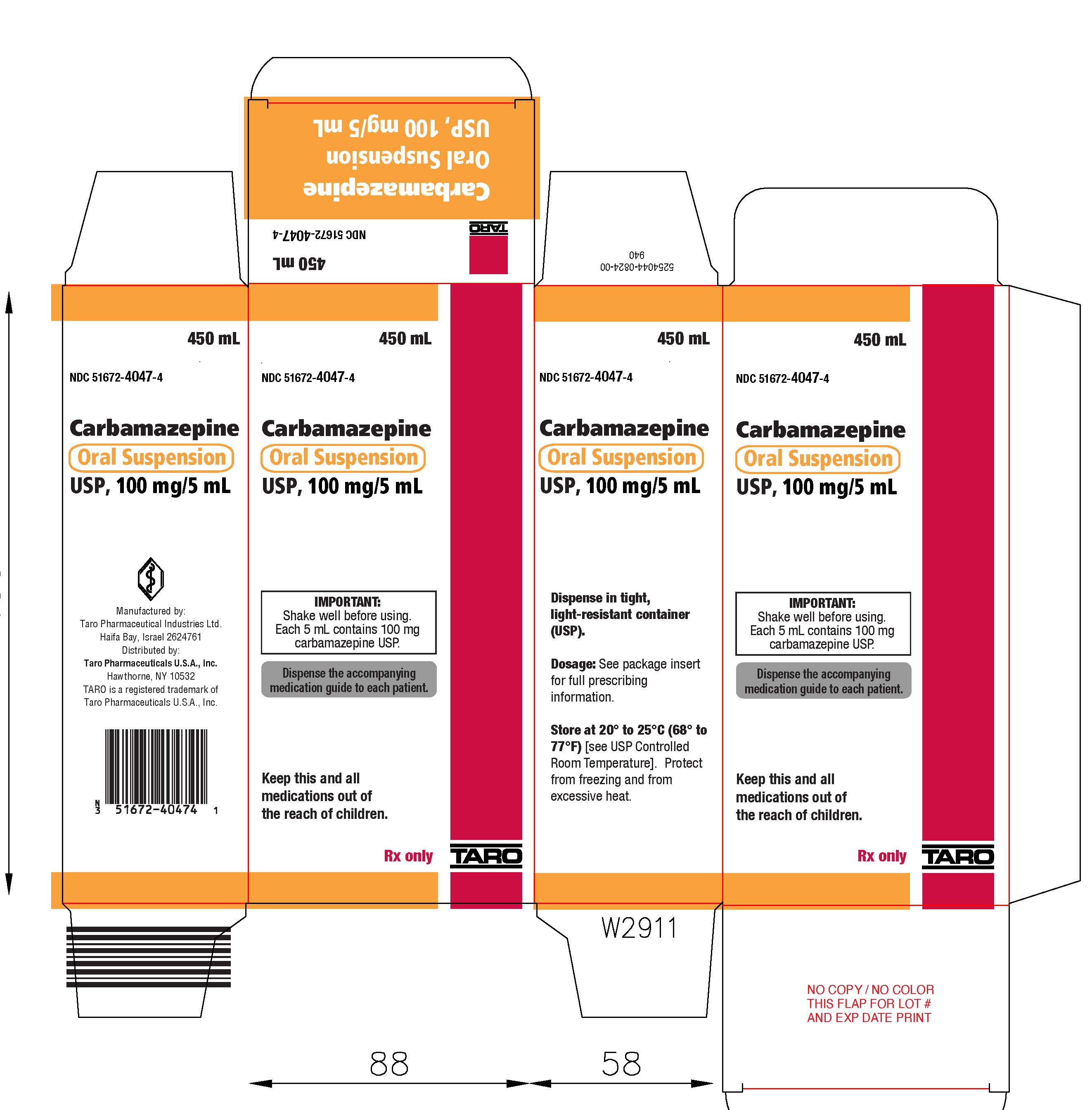
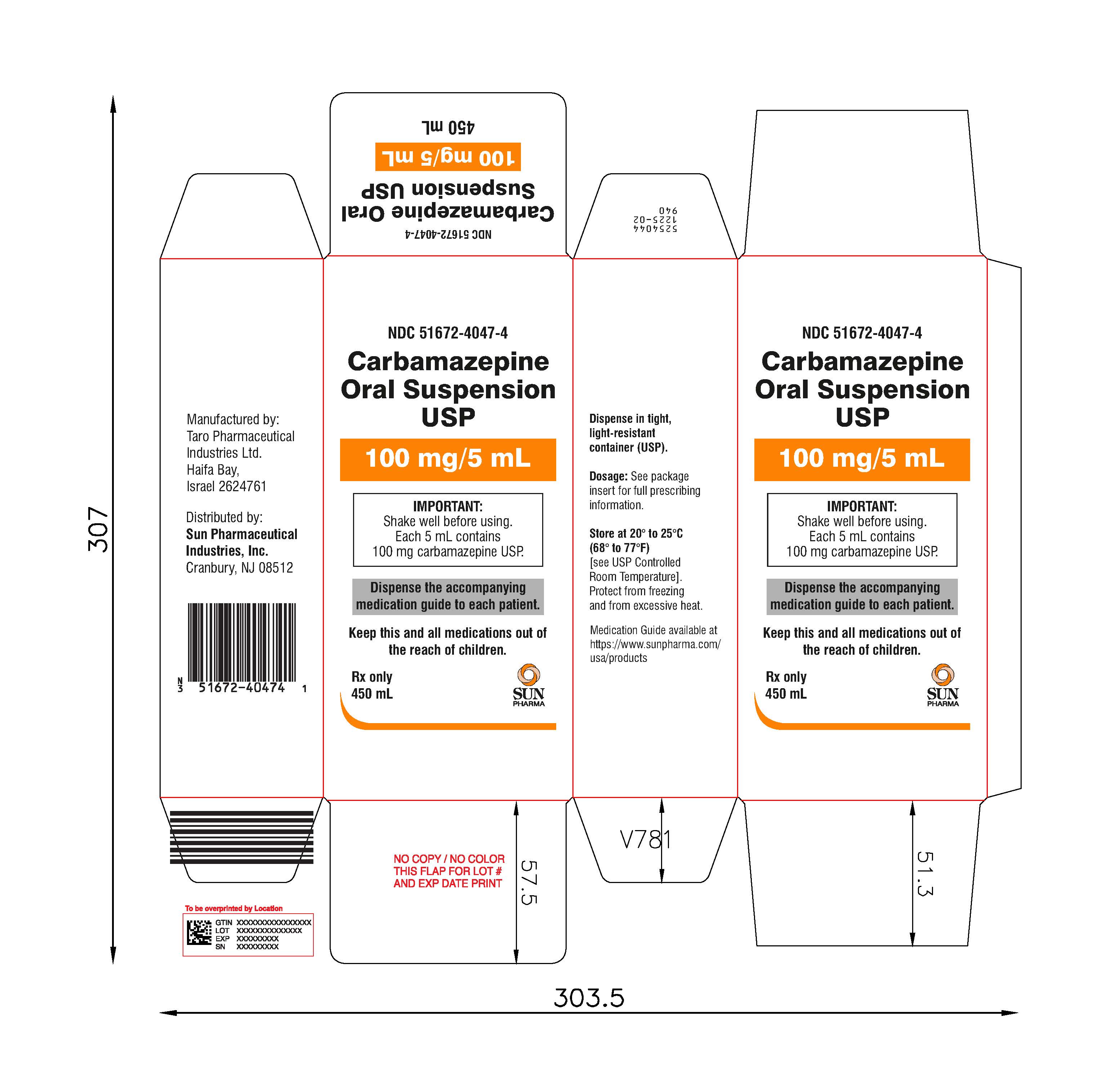
Carbamazepine Oral Suspension USP, 100 mg/5 mL (teaspoonful):Orange colored and orange flavored suspension.

Bottles of 450 mLNDC 51672-4047-4
1 Bottle in CartonNDC 51672-4047-4

Shake well before using.

Storage And Handling

Store Carbamazepine Tablets USP, (Chewable) at 20° to 25°C (68° to 77°F)[see USP Controlled Room Temperature]. Protect from light and moisture. Dispense in tight, light-resistant container (USP). Meets USP Dissolution Test 1.

Store Carbamazepine Tablets USP at 20° to 25°C (68° to 77°F)[see USP Controlled Room Temperature]. Protect from moisture. Dispense in tight container (USP). Meets USP Dissolution Test 2.

Store Carbamazepine Extended-Release Tablets USP at 20° to 25°C (68° to 77°F)[see USP Controlled Room Temperature]. Protect from moisture. Dispense in tight container (USP).

Store Carbamazepine Oral Suspension USP at 20° to 25°C (68° to 77°F)[see USP Controlled Room Temperature]. Protect from freezing and from excessive heat. Dispense in tight, light-resistant container (USP).

* Please review the disclaimer below.