Product Images Oxcarbazepine
View Photos of Packaging, Labels & Appearance
- Chemical Structure - oxcarbazepine 01
- Figure 1 - oxcarbazepine 02
- Figure 2 - oxcarbazepine 03
- Figure 3 - oxcarbazepine 04
- Figure 4 - oxcarbazepine 05
- Principal Display Panel - 150 mg Tablet Bottle Label - oxcarbazepine 06
- Principal Display Panel - 300 mg Tablet Bottle Label - oxcarbazepine 07
- Principal Display Panel - 600 mg Tablet Bottle Label - oxcarbazepine 08
Product Label Images
The following 8 images provide visual information about the product associated with Oxcarbazepine NDC 51672-4106 by Sun Pharmaceutical Industries, Inc., such as packaging, labeling, and the appearance of the drug itself. This resource could be helpful for medical professionals, pharmacists, and patients seeking to verify medication information and ensure they have the correct product.
Chemical Structure - oxcarbazepine 01

Figure 1 - oxcarbazepine 02

This text appears to be a graph displaying the exit rate of a clinical trial with two groups: one treated with oxcarbazepine and the other with placebo. The exit rate seems to decrease over time for both groups. The log-rank test shows a statistically significant difference between the two groups, with a p-value of 0.0001.*
Figure 2 - oxcarbazepine 03

This is a description of a statistical analysis of seizure rates in two treatment groups. The test performed was a Tog-rank test with a p-value of 0.046. The graph shows the number of days from the first dose to the first seizure for each participant in each group. The two groups are identified as the Oxcarbazepine treatment group and the Placebo group.*
Figure 3 - oxcarbazepine 04

This is a survival analysis table showing time to exit (in days) for two groups: HIGH and LOW. The table also includes an exit rate of 0% and a log-rank test with a p-value of 0.0001. The treatment group is not specified except in the table title.*
Figure 4 - oxcarbazepine 05
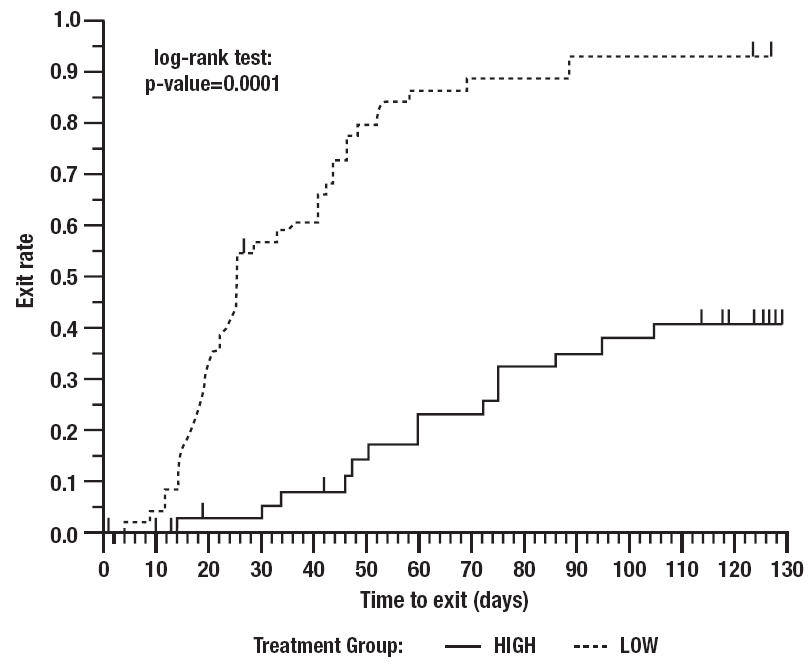
This is a chart showing the time to exit in days for a treatment group. The data is also split into high and low groups. A log-rank test was performed with a p-value of 0.0001. The values on the x-axis represent days and the values on the y-axis represent the treatment group. The numbers listed under each group represent the time it takes to exit, with higher numbers meaning a longer time to exit.*
Principal Display Panel - 150 mg Tablet Bottle Label - oxcarbazepine 06

This is a medication called NOC51672-4705-1, with 100 tablets in each container, and each tablet contains 150 mg of oxcarbazepine, with usual dosage information available in the package insert. It should be stored at a temperature range of 20°C to 25°C and dispensed from a controlled room temperature. Patients should keep this medication out of reach of children. Pharmacist should give an accompanying medication guide to each patient. This medication is made by Taro Pharmaceutical Industries Ltd and distributed by Taro Pharmaceuticals U.S.A., Inc. This medication is prescription-only and distributed from Haverstraw, New York.*
Principal Display Panel - 300 mg Tablet Bottle Label - oxcarbazepine 07

Each tablet of NDC b2 contains 300mg of oxcarbazepine, and the usual dosage can be found in the package insert. It is recommended to store the medication at 20-25°C in a tightly sealed container. The medication comes in a bottle containing 100 tablets and should be dispensed with the accompanying medication guide. This medication is produced by Taro Pharmaceuticals U.S.A., Inc. and is only available with a prescription.*
Principal Display Panel - 600 mg Tablet Bottle Label - oxcarbazepine 08

This is a description of a medication with the National Drug Code (NDC) of 51672-4107-1. It comes in a container with 100 tablets, and each tablet contains 600 mg of oxcarbazepine. The usual dosage is available in the package insert. The tablets should be stored in a tight container. The medication is distributed by Taro Pharmaceuticals U.S.A., Inc. and should only be dispensed with a prescription. The pharmacist should distribute a medication guide to each patient.*
* The product label images have been analyzed using a combination of traditional computing and machine learning techniques. It should be noted that the descriptions provided may not be entirely accurate as they are experimental in nature. Use the information in this page at your own discretion and risk.
