Risk Summary
There are no available data on clobetasol propionate foam use in pregnant women to inform of a drug-associated risk for adverse developmental outcomes.
Published data report a significantly increased risk of low birthweight with the use of greater than 300 grams of potent or very potent topical corticosteroid during a pregnancy. Advise pregnant women of the potential risk to a fetus and to use clobetasol propionate foam on the smallest area of skin and for the shortest duration possible (see Data). In animal reproduction studies, increased malformations, such as cleft palate and skeletal abnormalities, were observed after subcutaneous administration of clobetasol propionate to pregnant mice and rabbits. No comparison of animal exposure with human exposure was computed.
The estimated background risk of major birth defects and miscarriage for the indicated population is unknown. All pregnancies have a background risk of birth defect, loss, or other adverse outcomes. In the U.S. general population, the estimated background risk of major birth defects and miscarriage in clinically recognized pregnancies is 2 to 4% and 15 to 20%, respectively.
Data
Human Data
Multiple observational studies found no significant associations between maternal use of topical corticosteroids of any potency and congenital malformations, preterm delivery, or fetal mortality. However, when the dispensed amount of potent or very potent topical corticosteroid exceeded 300 g during the entire pregnancy, use was associated with an increase in low birth weight infants [adjusted RR, 7.74 (95% CI, 1.49 to 40.11)]. In addition, a small cohort study, in which 28 sub-Saharan women using potent topical corticosteroids (27/28 used clobetasol propionate 0.05%) for skin lightening during pregnancy, noted a higher incidence of low birth weight infants in the exposed group. The majority of exposed subjects treated large areas of the body (a mean quantity of 60 g/month (range, 12 to 170g) over long periods of time.
Animal Data
Embryofetal development studies conducted with clobetasol propionate in mice using the subcutaneous route resulted in fetotoxicity at the highest dose tested (1 mg/kg) and malformations at all dose levels tested down to 0.03 mg/kg. Malformations seen included cleft palate and skeletal abnormalities.
In an embryofetal development study in rabbits, subcutaneous administration of clobetasol propionate resulted in malformations at doses of 0.003 and 0.01 mg/kg. Malformations seen included cleft palate, cranioschisis, and other skeletal abnormalities.
Risk Summary
There is no information regarding the presence of clobetasol propionate in breast milk or its effects on the breastfed infant or on milk production.
Systemically administered corticosteroids appear in human milk and can suppress growth, interfere with endogenous corticosteroid production, or cause other untoward effects. It is not known whether topical administration of clobetasol propionate could result in sufficient systemic absorption to produce detectable quantities in human milk. The developmental and health benefits of breastfeeding should be considered along with the mother's clinical need for clobetasol propionate foam and any potential adverse effects on the breastfed infant from clobetasol propionate foam or from the underlying maternal condition.
Clinical Considerations
To minimize potential exposure to the breastfed infant via breast milk, use clobetasol propionate foam on the smallest area of skin and for the shortest duration possible while breastfeeding. Advise breastfeeding women not to apply clobetasol propionate foam directly to the nipple and areola to avoid direct infant exposure.
Effects on Endocrine System
Clobetasol propionate foam may cause HPA axis suppression. Advise patients that use of topical corticosteroids, including clobetasol propionate foam, may require periodic evaluation for HPA axis suppression. Topical corticosteroids may have other endocrine effects. Concomitant use of multiple corticosteroid-containing products may increase the total systemic exposure to topical corticosteroids. Patients should inform their physician(s) that they are using clobetasol propionate foam if surgery is contemplated [see Warnings and Precautions (5.1)].
Ophthalmic Adverse Reactions
Advise patients to report any visual symptoms to their healthcare providers [see Warnings and Precautions (5.2)].
Local Adverse Reactions
Report any signs of local adverse reactions to the physician. Advise patients that local reactions and skin atrophy are more likely to occur with occlusive use or prolonged use [see Warnings and Precautions (5.3)].
Pregnancy
Advise pregnant women of the potential risk to a fetus and to use clobetasol propionate foam on the smallest area of skin and for the shortest duration possible [see Use in Specific Populations (8.1)].
Lactation
Advise a woman to use clobetasol propionate foam on the smallest area of skin and for the shortest duration possible while breastfeeding. Advise breastfeeding women not to apply clobetasol propionate foam directly to the nipple and areola to avoid direct infant exposure [see Use in Specific Populations (8.2)].
Important Administration Instructions
Inform patients of the following:
- Avoid use of clobetasol propionate foam on the face, underarms, or groin areas unless directed by the physician.
- Do not occlude the treatment area with bandage or other covering, unless directed by the physician.
- Discontinue therapy when control is achieved. If no improvement is seen within 2 weeks, contact the physician.
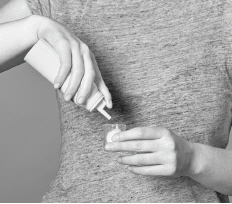
- For proper dispensing of foam, hold the can upside down and depress the actuator. Dispensing directly onto hands is not recommended (unless the hands are the affected area), as the foam will begin to melt immediately upon contact with warm skin.
- Limit treatment to 2 consecutive weeks. Use no more than 50 grams of clobetasol propionate foam per week, or more than 21 capfuls per week.
- Avoid use of clobetasol propionate foam in the diaper area, as diapers or plastic pants may constitute occlusive dressing.
- The product is flammable; avoid heat, flame, and smoking when applying this product.
- Do not use other corticosteroid-containing products without first consulting with the physician.
For additional information call 1-866-923-4914.
Trademarks are the property of their respective owners.
Mfd. by: Taro Pharmaceutical Industries Ltd., Haifa Bay, Israel 2624761
Dist. by: Taro Pharmaceuticals U.S.A., Inc., Hawthorne, NY 10532
20815-0618-2
85