Limitations of Use
NEXTSTELLIS may be less effective in females with a BMI ≥ 30 kg/m2. In females with BMI ≥ 30 kg/m2, decreasing effectiveness may be associated with increasing BMI [see Clinical Studies (14)].
Cardiovascular and Cerebrovascular Events
Use of CHCs increases the risk of cardiovascular events and cerebrovascular events, such as myocardial infarction and stroke. The risk is greater among females over age 40, smokers, and females with hypertension, dyslipidemia, diabetes, or obesity. The risk increases with age, particularly in females 35 years of age and older, and with the number of cigarettes smoked. In addition to cigarettes, use of other nicotine-containing products – including cigars, smokeless tobacco, hookah tobacco, e-cigarettes, and nicotine replacement therapy – may also increase the risk of serious cardiovascular events from CHC use.
Venous Thromboembolism
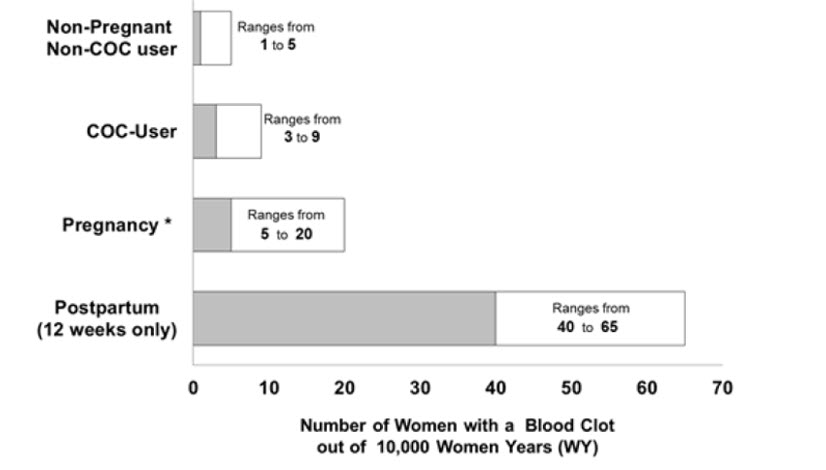
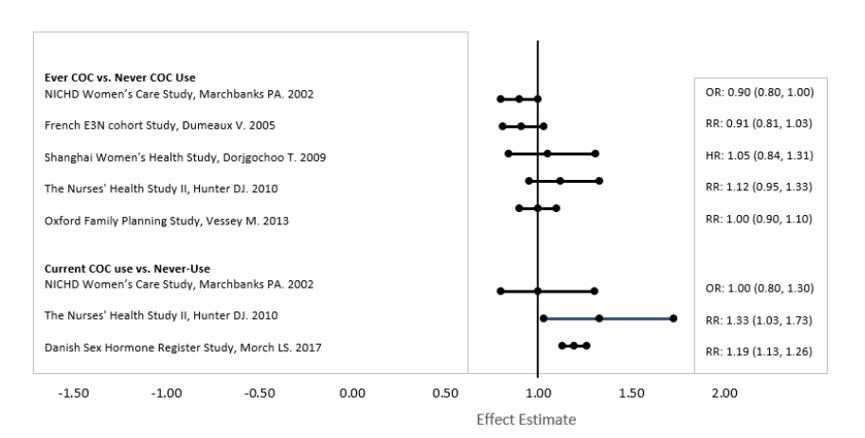
Use of CHCs also increases the risk of venous thromboembolic events (VTEs), such as deep vein thrombosis and pulmonary embolism. The rate of VTE in females using COCs has been estimated to be 3 to 9 cases per 10,000 woman-years and should be considered in the context of other female of reproductive potential subpopulations who are not taking CHCs [see Adverse Reactions (6)].
Risk factors for VTEs include smoking, obesity, family history of VTE, and prolonged immobilization in addition to other factors that contraindicate use of CHCs [see Contraindications (4)]. The presence of multiple risk factors for VTE may increase the risk synergistically. The risk of VTE is highest during the first year of CHC use and when restarting hormonal contraception after a break of four weeks or longer. The risk of VTE returns to baseline approximately 3 months after CHC use is discontinued.
Postpartum Venous Thromboembolism
The risk of VTE is increased during the first six weeks postpartum compared to the risk in non-pregnant, non-postpartum females. The risk is highest in the first three weeks postpartum, but remains higher than baseline until at least six weeks postpartum. The presence of multiple risk factors for VTE may further increase the risk. Obstetric complications may extend the elevated risk up to 12 weeks postpartum.
Figure 1 shows the risk of developing a VTE for females who are not pregnant and do not use COCs, for females who use COCs, for pregnant females, and for females in the postpartum period. To put the risk of developing a VTE into perspective: if 10,000 females who are not pregnant and do not use oral contraceptives are followed for one year, between 1 and 5 of these females will develop a VTE.
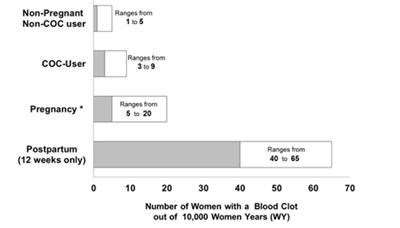
Figure 1 (Nextstellis 01)
Two prospective studies of NEXTSTELLIS have been conducted, one in Europe/Russia (NCT02817828; C301) and one in North America (NCT02817841; C302) (N=3,632), for the prevention of pregnancy in females 16-50 years of age. There was one reported VTE in the Europe/Russia study [see Adverse Reactions (6)].
Elevated Liver Enzymes
NEXTSTELLIS is contraindicated in females with acute hepatitis or severe (decompensated) cirrhosis [see Contraindications (4)]. Withhold or permanently discontinue NEXTSTELLIS for persistent or significant elevation of liver enzymes. NEXTSTELLIS can cause elevated liver enzymes.
Liver Tumors
NEXTSTELLIS is contraindicated in females with hepatic adenomas and malignant liver tumors [see Contraindications (4)]. CHCs increase the risk of hepatic tumors, particularly hepatic adenomas. Rupture of hepatic adenomas may cause death from abdominal hemorrhage.
Glucose Tolerance
Carefully monitor females with prediabetes and diabetes who are using NEXSTELLIS. NEXTSTELLIS may decrease glucose tolerance [see Clinical Pharmacology (12.2)].
Hypertriglyceridemia
Consider alternative contraception for females with hypertriglyceridemia. Females with hypertriglyceridemia, or a family history thereof, may have an increase in serum triglyceride concentrations when using NEXSTELLIS, which may increase the risk of pancreatitis.
Unscheduled Bleeding and Spotting
Females using NEXTSTELLIS may experience unscheduled (breakthrough or intracyclic) bleeding and spotting, especially during the first 4 months of use. Bleeding irregularities may resolve over time or by changing to a different contraceptive product. If bleeding persists or occurs after previously regular cycles, evaluate for causes such as pregnancy or malignancy.
Unscheduled bleeding was defined as bleeding or spotting that occurred on Day 4 through Day 24 of a 28-day cycle. Based on subject diaries from C302 (US/CA), the proportion of subjects reporting unscheduled bleeding or spotting per 28-day cycle decreased over time: 30.3% at Cycle 1 versus 17.4% at Cycle 12. The mean number of unscheduled bleeding/spotting days per cycle also gradually decreased over time, with a mean of 0.4 (± 1.42) bleeding days at Cycle 1, versus a mean of 0.2 (± 0.98) bleeding days at Cycle 12.
Absence of Scheduled Bleeding
Females who use NEXTSTELLIS may experience absence of scheduled (withdrawal) bleeding, even if they are not pregnant [See Adverse Reactions (6)]. The proportion of subjects reporting absence of scheduled bleeding remained constant overall, with on average 15.5% of subjects reporting absence of scheduled bleeding from Cycles 1 through 12.
If scheduled bleeding does not occur, consider the possibility of pregnancy. If the patient has not adhered to the prescribed dosing schedule (missed one or two active tablets or started taking them on a day later than prescribed), consider the possibility of pregnancy at the time of the first missed period and perform appropriate diagnostic measures.
After discontinuation of NEXTSTELLIS, amenorrhea or oligomenorrhea may occur, especially if these conditions were pre-existent.
Adverse Reactions Leading to Study Discontinuation (> 1%)
Of 3,632 females in two clinical studies for prevention of pregnancy in females 16-50 years of age, 9.6% discontinued due to an adverse reaction; the most frequent adverse reaction leading to discontinuation was bleeding irregularity (2.8%). Six subjects (0.17%) discontinued study participation due to new onset of migraine with aura; two subjects (0.05%) discontinued due to severe migraine.
Thromboembolic Disorders and Other Vascular Problems
During studies C301 and C302, one thromboembolic event was reported in a female who had been taking NEXTSTELLIS for 75 days and had normal BMI < 25 kg/m2.
Depression
In Study C302 (US/CA), 36 (1.7%) subjects reported depression while using NEXTSTELLIS. Nine (0.3%) subjects had drug withdrawn as a result of symptoms of depression.
Risk Summary
Discontinue NEXTSTELLIS if pregnancy occurs, because there is no reason to use hormonal contraceptives during pregnancy [see Contraindications (4)]. Epidemiologic studies and meta-analyses have not found an increased risk of genital or nongenital birth defects (including cardiac anomalies and limb-reduction defects) following exposure to COCs before conception or during early pregnancy. Reproductive toxicity studies performed with E4 alone have shown expected pharmacologic effects in animals, which are considered consistent with estrogen exposure.
In the U.S. general population, the estimated background risk of major birth defects and miscarriage in clinically recognized pregnancies is 2 to 4 percent and 15 to 20 percent, respectively.
Risk Summary
Contraceptive hormones and/or metabolites are present in human milk. COCs can reduce milk production in breast-feeding females. This reduction can occur at any time but is less likely to occur once breast-feeding is well established. When possible, advise the nursing woman to use other methods of contraception until she discontinues breast-feeding [see also Dosage and Administration (2.1)]. The developmental and health benefits of breast-feeding should be considered along with the mother's clinical need for NEXTSTELLIS and any potential adverse effects on the breast-fed child from NEXTSTELLIS or from the underlying maternal condition.
After oral administration of DRSP 3 mg/EE 30 µg, about 0.02% of the DRSP dose was excreted into the breast milk of postpartum females within 24 hours. This results in a potential maximal daily dose of less than 1 µg DRSP in an infant.
Overdosage Management Recommendations
Consider short-term prophylactic anticoagulation therapy for patients with high risk of VTE. Monitor serum potassium and sodium levels, and for evidence of metabolic acidosis.
Effect of NEXTSTELLIS on ovarian function
A clinical study evaluated the effect of NEXTSTELLIS on the suppression of ovarian activity as assessed by measurement of follicle size via transvaginal ultrasound and serum hormone (progesterone and estradiol) analyses in two of the three treatment cycles (24-day active tablet period plus 4-day pill-free period). No ovulations were observed during the study.
Cardiac Electrophysiology
At a dose 5 times the maximum recommended dose (i.e., supra-therapeutic dose of 15 mg DRSP /71 mg E4), NEXTSTELLIS does not prolong the QT interval to any clinically relevant extent.
Drugs That Have the Potential to Increase Serum Potassium Concentration
There is a potential for an increase in serum potassium concentration in females taking NEXTSTELLIS with other drugs that may increase serum potassium concentration [see Warnings and Precautions (5.2)].
A drug-drug interaction study of DRSP 3 mg /E2 1 mg versus placebo was performed in 24 mildly hypertensive postmenopausal females taking enalapril maleate 10 mg twice daily. Potassium concentrations were obtained every other day for a total of 2 weeks in all subjects. Mean serum potassium concentrations in DRSP/E2 treatment group relative to baseline were 0.22 mEq/L higher than those in the placebo group. Serum potassium concentrations also were measured at multiple time points over 24 hours at baseline and on Day 14. On Day 14, the ratios for serum potassium Cmax and AUC in the DRSP/E2 group to those in the placebo group were 0.955 (90% CI: 0.914, 0.999) and 1.010 (90% CI: 0.944, 1.08), respectively. No patient in either treatment group developed hyperkalemia (serum potassium concentrations > 5.5 mEq/L).
Other PD effects of NEXTSTELLIS
Table 7 displays pharmacodynamic effects of CHCs on hemostatic, metabolic, and endocrine parameters.
Table 7: Pharmacodynamics Effects of CHCs on Hemostatic, Metabolic, and Endocrine Parameters| Category | Direction of Change |
|---|
| Increase | Decrease | No change |
|---|
| Coagulation Factors | ↑ Platelet count; factors II, VII antigen, VIII coagulant activity, IX, X, XII, VII-X complex, and beta-thromboglobulin;
fibrinogen and fibrinogen activity;
plasminogen antigen and activity | ↓(Accelerated) Prothrombin time, partial thromboplastin time, and platelet aggregation time
↓ Anti-factor Xa and antithrombin III, antithrombin III activity | |
| Corticosteroids | ↑ Corticosteroid-binding globulin (CBG), total circulating corticosteroids | - | - |
| Glucose | - | ↓ Glucose tolerance | - |
| Lipids | ↑ | ↓ Low-density lipoprotein concentration | Plasma high-density lipoprotein (HDL) and HDL2 cholesterol subfraction concentration, triglyceride levels |
| Mineralocorticoids | ↑ Aldosterone | | |
| Plasma proteins | ↑ Concentrations of angiotensinogen/renin substrate, alpha-1 antitrypsin, ceruloplasmin | - | - |
| Sex hormones | ↑ Sex hormone-binding globulin (SHBG) | ↓ Possible decreased free testosterone concentrations
↓ Androstenedione, progesterone, free testosterone, estradiol | DHEA-S, FSH, LH,Dihydrotestosterone |
| Thyroid hormones | ↑ Thyroxin-binding globulin (TBG), total thyroid hormone levels, total T4 and T3 levels | ↓ T3 resin uptake | ↔ TSH, Free T4 and free T3 concentrations in females with normal thyroid function |
Absorption, Distribution, Metabolism, and Excretion
The pharmacokinetic properties of E4 and DRSP following administration of NEXTSTELLIS are provided in TABLE 8.
Table 8. Pharmacokinetics of E4 and DRSP | E4 | DRSP |
|---|
| Cmax= Maximum plasma concentration; AUC0-t= Area under the plasma concentration-time curve integrated from time of administration (0) to time of last quantifiable observation (t); AUC0-INF= Area under the plasma concentration-time curve from time of administration extrapolated to infinity from AUC0-t; CI= Confidence interval; Tmax= Time to maximum concentration |
| Multiple-dose pharmacokinetics parameters |
| Mean (CV%) Cmax, ng/mL | 17.9 (68.1) | 48.7 (24.6) |
| Mean (CV%) AUC0-24h, ng*hr/mL | 59.1 (24.3) | 519.0 (27.7) |
| Dose Proportionality | 15 mg to 75 mg | 1-10 mg |
| Time to Steady State, days | 4 | 10 |
| Accumulation Ratio | 1.6 | 2.3 |
| Absorption | | |
| Median (range) Tmax, hours | 0.5 (0.5 to 2) | 1.0 (1.0 to 3.0) |
| Effect of high-fat meal (relative to fasting) |
| Geometric Mean (90% CI) Cmax, Ratio | 0.51 (0.37, 0.70) | 0.75 (0.66, 0.84) |
| Geometric Mean (90% CI) AUC0-INF, Ratio | 1.01 (0.86, 1.19) | 1.08 (1.02, 1.14) |
| Distribution |
| Plasma Protein Binding | 46% to 50% | 95% to 97% Bound primarily to albumin |
| Elimination |
| Elimination Half-life, hours | 27 Undergoes enterohepatic recycling | 34 |
| Metabolism |
| Primary Pathways | Phase 2 metabolism to form glucuronide and sulphate conjugates which have negligible in-vitro estrogenic activity. In vitro studies show that UGT2B7 is the dominant UGT isoform that catalyzes the formation of E4-16-glucuronide | CYP3A4; two main metabolites: acid form of DRSP generated by opening of lactone ring and the 4,5-dihydrodrospirenone formed by reduction followed by sulfation. Both metabolites are not pharmacologically active. |
| Excretion |
| Primary Pathways | | |
| % Dose in Urine | 69% (0% unchanged) | 38% |
| % Dose in Feces | 22% (100% unchanged) | 44% |
Specific Populations
No clinically significant differences in the pharmacokinetics of E4 or DRSP in females were observed based on race/ethnicity (Japanese and Caucasian).
Patients with Hepatic Impairment
The effect of hepatic impairment on the pharmacokinetics of E4 is unknown.
The mean exposure to DRSP is approximately three times higher in females with moderate liver impairment than the exposure in females with normal liver function. The effect of severe hepatic impairment on the pharmacokinetics of DRSP is unknown.
Patients with Renal Impairment
The effect of renal impairment on the pharmacokinetics of E4 is unknown. The mean serum DRSP concentrations increased by 37% in subjects with CLcr of 30 to 49 mL/min on a low potassium diet using potassium-sparing drugs. No clinically significant differences in the pharmacokinetics of DRSP were observed based on CLcr of 50 to 79 mL/min. DRSP treatment did not show any clinically significant effect on serum potassium concentration. Although hyperkalemia was not observed in the study, in five of the seven subjects who continued use of potassium-sparing drugs during the study, mean serum potassium concentrations increased by up to 0.33 mEq/L.
Drug Interaction Studies
Clinical Studies
Strong CYP3A4 Inhibitor: Concomitant use of a COC containing DRSP 3 mg/EE 20 µg with ketoconazole (strong CYP3A4 inhibitor) increased the AUC0-24h and Cmax of DRSP by 2.68-fold (90% CI: 2.44, 2.95) and 1.97-fold (90% CI: 1.79, 2.17), respectively.
CYP3A4 Inducer: Concomitant use of a COC containing DRSP 3 mg/EE 20 µg with high dose (strong CYP3A induction) and low dose of rifampin (weak CYP3A4 induction) decreased the AUC0-24h of DRSP by 86% (90% CI: 85%, 87%) and 30% (90% CI: 25%, 34%), respectively.
UGT2B7 Inhibitor: No clinically significant differences in the pharmacokinetics of NEXTSTELLIS were observed when used concomitantly with valproic acid (UGT2B7 inhibitor).
CYP3A Substrate: Pharmacokinetics of CYP3A substrates midazolam and simvastatin were not influenced by steady state DRSP concentrations achieved after administration of 3 mg DRSP/day.
CYP2C19 Substrate: Daily oral administration of 3 mg DRSP for 14 days did not affect the oral clearance of the CYP2C19 substrate omeprazole (40 mg, single oral dose) and the CYP2C19 product 5-hydroxy omeprazole.
In Vitro Studies
E4 is not a substrate of CYP1A1, CYP2B6, CYP2C8, CYP2C9, CYP2D6, CYP3A4, OATP1B1, OATP1B3, OAT1, OAT3, OCT2, MATE1, MATE2-K. E4 is unlikely to induce CYP1A2, CYP2B6, CYP3A4 or inhibit CYP3A4, CYP1A2, CYP2B6, CYP2C8, CYP2C9, CYP2C19, CYP2D6, CYP2E1, UGT1A9, UGT2B7, drug transporters P-pg, BCRP, OATP1B1, OATP1B3, OAT1, OAT3, OCT2, MATE1 and MATE2-K or at clinically relevant dose.
Effects of NEXTSTELLIS on Lamotrigine
Estrogens are known to decrease plasma concentrations of lamotrigine, likely due to induction of lamotrigine glucuronidation. No in vitro or in vivo data are available to determine the impact of E4 on lamotrigine exposure.
Pregnancy Prevention
The efficacy of NEXTSTELLIS was evaluated in a prospective, multicenter, open-label, single-arm study in North America (NCT02817841; C302) of one-year duration that enrolled 1,674 females 16 to 35 years of age. The mean age was 25.8 years and mean BMI was 25.8 kg/m2. Females with a BMI between 30 and 35 kg/m2 accounted for 22.3% of the study population. Females with a BMI greater than 35 kg/m2 were not enrolled in the study. The racial distribution was 70.1% Caucasian, 19.5% Black or African American, 4.8% Asian, 0.9% American Indian or Alaska native, 0.4% Native Hawaiian or other Pacific Islander and 4.2% other.
A total of 26 on-treatment pregnancies occurred in 1,524 females contributing 12,763 at-risk cycles. The overall Pearl Index was 2.65 (95% CI: 1.73-3.88) per 100 woman-years of use. Table 9 lists the Pearl Index by BMI subgroup. A trend of decreasing effectiveness with increasing BMI was observed in the study.
Table 9 Pearl Index Based on At-Risk Cycles and Reported Pregnancies in Females ≤ 35 Years of Age in Study C302| Subgroup | N N = all females aged 16-35 with at least 1 at-risk cycle. | On-treatment pregnancies | At-risk cycles | Pearl Index
(95% CI) |
|---|
| Study C302 | 1524 | 26 | 12,763 | 2.65 (1.73, 3.88) |
| BMI (kg/m2) | | | | |
| < 30 | 1,187 | 20 | 10,113 | 2.57 (1.57, 3.97) |
| ≥ 30 to < 35 One female with a BMI of 48 kg/m2 was enrolled and included in the efficacy analysis. | 337 | 6 | 2,650 | 2.94 (1.08, 6.41) |
Sexually Transmitted Infections
Advise females that NEXTSTELLIS does not protect against HIV infection or other sexually transmitted infections.
Important Administration Instructions and Instructions for Missed Doses
Instruct females to take one tablet daily by mouth at the same time every day. Advise patients about what to do in the event that pills are missed [see Dosage and Administration (2.3)].
- Advise females starting NEXTSTELLIS to use additional nonhormonal contraception for 7 days after the first dose unless NEXTSTELLIS is started on the first day (Day 1) of menses [see Dosage and Administration (2.1)]
- Advise females who miss more than two consecutive days of NEXTSTELLIS or experience vomiting or diarrhea for > 48 hours consecutively to use additional nonhormonal contraception for 7 days [see Dosage and Administration (2.3, 2.4)]
Thromboembolic Disorders and Other Vascular Problems [see Warnings and Precautions (5.1)].
- Advise females that there is an increased risk of arterial and/or venous thrombotic/thromboembolic events with NEXTSTELLIS and the risk of arterial and/or venous thrombotic/thromboembolism is greater in smokers and females with preexisting medical conditions including hypertension, dyslipidemia, diabetes, and obesity.
- Advise patients of the pertinent factors that further increase their risk and ways to diminish the risk, e.g., to stop smoking (if applicable).
- Advise patients to contact their healthcare professional for any signs or symptoms of arterial and/or VTE
- Advise patients to contact their healthcare professional if they will be immobilized for a prolonged period of time.
Hyperkalemia
Advise females to contact their healthcare professional if signs or symptoms of hyperkalemia develop [see Warnings and Precautions (5.2)].
Hypertension
Advise females that NEXTSTELLIS can cause an increase in blood pressure over time. Instruct patients to contact their healthcare professional if blood pressure increases [see Warnings and Precautions (5.3)].
Liver Disease
Advise females that use of NEXTSTELLIS can cause elevated liver enzymes and can increase the risk of liver tumors. Instruct females to contact their healthcare professional for any signs or symptoms of liver disease [see Warnings and Precautions (5.5)].
Glucose Tolerance
Advise females that NEXTSTELLIS may decrease glucose tolerance. Instruct females with diabetes and prediabetes to contact their healthcare professional for any signs or symptoms of hyperglycemia [see Warnings and Precautions (5.7) and Clinical Pharmacology (12.2)].
Gallbladder Disease and Cholestasis
Advise females that use of NEXTSTELLIS is associated with an increased risk of developing and/or worsening gallbladder disease. Instruct patients to contact their healthcare professional for any signs or symptoms of gallbladder disease [see Warnings and Precautions (5.8)].
Bleeding Irregularities, Amenorrhea, and Pregnancy
Advise females that NEXTSTELLIS can cause unscheduled bleeding and spotting, as well as amenorrhea and oligomenorrhea. Advise females to contact their health care professional if amenorrhea occurs in two or more consecutive cycles or symptoms of pregnancy occur, e.g., morning sickness or unusual breast tenderness. Instruct females to stop NEXTSTELLIS if pregnancy is confirmed during use [see Warnings and Precautions (5.11) and Use in Specific Populations (8.1)].
Chloasma
Advise females that NEXTSTELLIS can cause chloasma and the risk is highest in females with a history of chloasma, especially chloasma gravidarum. Instruct females to take precautions to limit UVA and UVB exposure while using NEXTSTELLIS [see Warnings and Precautions (5.15)].
Lactation
Advise postpartum females that NEXTSTELLIS may reduce breast milk production. Advise females that this reduction is less likely to occur if breast-feeding is well established [see Use in Specific Populations (8.2)].
Drug Interactions
NEXTSTELLIS may interact with many drugs, foods, and dietary supplements. Therefore, advise females to report to their healthcare professional the use of any other prescription or nonprescription drugs or dietary supplements [see Drug Interactions (7.1, 7.2)].
Distributed by:
Mayne Pharma
Greenville, NC 27834