Adjuvant Therapy
The data described below reflect exposure to exemestane tablets in 2325 postmenopausal women with early breast cancer. Exemestane tablets tolerability in postmenopausal women with early breast cancer was evaluated in two well- controlled trials: the IES study [See Clinical Studies (14.1)] and the 027 study (a randomized, placebo-controlled, double-blind, parallel group study specifically designed to assess the effects of exemestane on bone metabolism, hormones, lipids, and coagulation factors over 2 years of treatment).
The median duration of adjuvant treatment was 27.4 months and 27.3 months for patients receiving exemestane tablets or tamoxifen, respectively, within the IES study and 23.9 months for patients receiving exemestane tablets or placebo within the 027 study. Median duration of observation after randomization for exemestane tablets was 34.5 months and for tamoxifen was 34.6 months. Median duration of observation was 30 months for both groups in the 027 study.
Certain adverse reactions, which were expected based on the known pharmacological properties and side effect profiles of test drugs, were actively sought through a positive checklist. Signs and symptoms were graded for severity using CTC in both studies. Within the IES study, the presence of some illnesses/conditions was monitored through a positive checklist without assessment of severity. These included myocardial infarction, other cardiovascular disorders, gynecological disorders, osteoporosis, osteoporotic fractures, other primary cancer, and hospitalizations.
Within the IES study, discontinuations due to adverse reactions occurred in 6.3% and 5.1% of patients receiving exemestane tablets and tamoxifen, respectively, and in 12.3% and 4.1% of patients receiving exemestane or placebo respectively within study 027.
Deaths due to any cause were reported for 1.3% of the exemestane treated patients and 1.4% of the tamoxifen treated patients within the IES study. There were 6 deaths due to stroke on the exemestane arm compared to 2 on tamoxifen. There were 5 deaths due to cardiac failure on the exemestane arm compared to 2 on tamoxifen.
The incidence of cardiac ischemic events (myocardial infarction, angina, and myocardial ischemia) was 1.6% in exemestane treated patients and 0.6% in tamoxifen treated patients in the IES study. Cardiac failure was observed in 0.4% of exemestane treated patients and 0.3% of tamoxifen treated patients.
Treatment-emergent adverse reactions and illnesses including all causalities and occurring with an incidence of ≥ 5% in either treatment group of the IES study during or within one month of the end of treatment are shown in Table 2.
Table 2. Incidence (%) of Adverse Reactions of all GradesGraded according to Common Toxicity Criteria;
and Illnesses Occurring in (≥ 5%) of Patients in Any Treatment Group in Study IES in Postmenopausal Women with Early Breast Cancer | % of patients |
|---|
| Body system and Adverse Reaction by MedDRA dictionary | Exemestane Tablets
25 mg daily
(N=2252) | Tamoxifen
20 mg daily75 patients received tamoxifen 30 mg daily;
(N=2280) |
|---|
| Eye | | |
| Visual disturbances Event actively sought. | 5.0 | 3.8 |
| Gastrointestinal | | |
| Nausea | 8.5 | 8.7 |
| General Disorders | | |
| Fatigue | 16.1 | 14.7 |
| Musculoskeletal | | |
| Arthralgia | 14.6 | 8.6 |
| Pain in limb | 9.0 | 6.4 |
| Back pain | 8.6 | 7.2 |
| Osteoarthritis | 5.9 | 4.5 |
| Nervous System | | |
| Headache | 13.1 | 10.8 |
| Dizziness | 9.7 | 8.4 |
| Psychiatric | | |
| Insomnia | 12.4 | 8.9 |
| Depression | 6.2 | 5.6 |
| Skin & Subcutaneous Tissue | | |
| Increased sweating | 11.8 | 10.4 |
| Vascular | | |
| Hot flushes | 21.2 | 19.9 |
| Hypertension | 9.8 | 8.4 |
In the IES study, as compared to tamoxifen, exemestane tablets was associated with a higher incidence of events in musculoskeletal disorders and in nervous system disorders, including the following events occurring with frequency lower than 5% (osteoporosis [4.6% vs. 2.8%], osteochondrosis and trigger finger [0.3% vs. 0 for both events], paresthesia [2.6% vs. 0.9%], carpal tunnel syndrome [2.4% vs. 0.2%], and neuropathy [0.6% vs. 0.1%]). Diarrhea was also more frequent in the exemestane group (4.2% vs. 2.2%). Clinical fractures were reported in 94 patients receiving exemestane (4.2%) and 71 patients receiving tamoxifen (3.1%). After a median duration of therapy of about 30 months and a median follow-up of about 52 months, gastric ulcer was observed at a slightly higher frequency in the exemestane tablets group compared to tamoxifen (0.7% vs. <0.1%). The majority of patients on exemestane tablets with gastric ulcer received concomitant treatment with non-steroidal anti-inflammatory agents and/or had a prior history.
Tamoxifen was associated with a higher incidence of muscle cramps [3.1% vs. 1.5%], thromboembolism [2.0% vs. 0.9%], endometrial hyperplasia [1.7% vs. 0.6%], and uterine polyps [2.4% vs. 0.4%].
Common adverse reactions occurring in study 027 are described in Table 3.
Table 3. Incidence of Selected Treatment-Emergent Adverse Reactions of all CTC GradesMost events were CTC grade 1–2
Occurring in ≥ 5% of Patients in Either Arm in Study 027| Adverse Reaction | Exemestane N=73
(% incidence) | Placebo N=73
(% incidence) |
|---|
| Hot flushes | 32.9 | 24.7 |
| Arthralgia | 28.8 | 28.8 |
| Increased sweating | 17.8 | 20.6 |
| Alopecia | 15.1 | 4.1 |
| Hypertension | 15.1 | 6.9 |
| Insomnia | 13.7 | 15.1 |
| Nausea | 12.3 | 16.4 |
| Fatigue | 11.0 | 19.2 |
| Abdominal pain | 11.0 | 13.7 |
| Depression | 9.6 | 6.9 |
| Diarrhea | 9.6 | 1.4 |
| Dizziness | 9.6 | 9.6 |
| Dermatitis | 8.2 | 1.4 |
| Headache | 6.9 | 4.1 |
| Myalgia | 5.5 | 4.1 |
| Edema | 5.5 | 6.9 |
Treatment of Advanced Breast Cancer
A total of 1058 patients were treated with exemestane 25 mg once daily in the clinical trials program. Only one death was considered possibly related to treatment with exemestane; an 80-year-old woman with known coronary artery disease had a myocardial infarction with multiple organ failure after 9 weeks on study treatment. In the clinical trials program, only 3% of the patients discontinued treatment with exemestane because of adverse reactions, mainly within the first 10 weeks of treatment; late discontinuations because of adverse reactions were uncommon (0.3%).
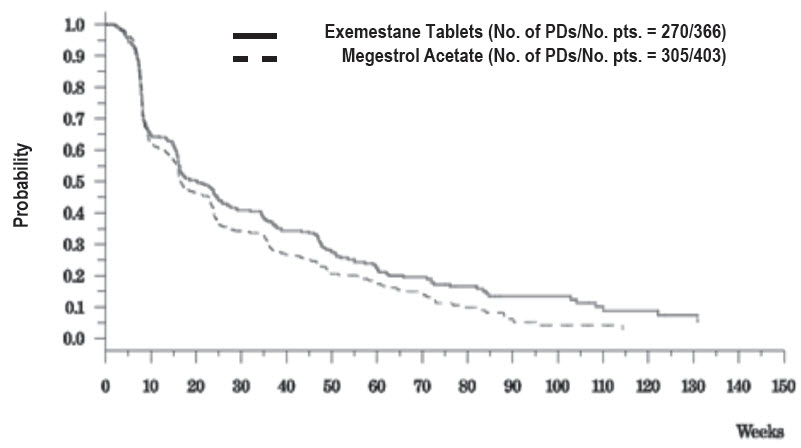
In the comparative study, adverse reactions were assessed for 358 patients treated with exemestane tablets and 400 patients treated with megestrol acetate. Fewer patients receiving exemestane tablets discontinued treatment because of adverse reactions than those treated with megestrol acetate (2% vs. 5%). Adverse reactions that were considered drug related or of indeterminate cause included hot flashes (13% vs. 5%), nausea (9% vs. 5%), fatigue (8% vs. 10%), increased sweating (4% vs. 8%), and increased appetite (3% vs. 6%) for exemestane tablets and megestrol acetate, respectively. The proportion of patients experiencing an excessive weight gain (>10% of their baseline weight) was significantly higher with megestrol acetate than with exemestane tablets (17% vs. 8%). Table 4 shows the adverse reactions of all CTC grades, regardless of causality, reported in 5% or greater of patients in the study treated either with exemestane tablets or megestrol acetate.
Table 4. Incidence (%) of Adverse Reactions of all GradesGraded according to Common Toxicity Criteria
and Causes Occurring in ≥5% of Advanced Breast Cancer Patients In Each Treatment Arm in the Comparative Study| Body system and Adverse Reaction by WHO ART dictionary | Exemestane Tablets
25 mg once daily (N=358) | Megestrol Acetate 40 mg QID (N=400) |
|---|
| Autonomic Nervous | | |
| Increased sweating | 6 | 9 |
| Body as a Whole | | |
| Fatigue | 22 | 29 |
| Hot flashes | 13 | 6 |
| Pain | 13 | 13 |
| Influenza-like symptoms | 6 | 5 |
| Edema (includes edema, peripheral edema, leg edema) | 7 | 6 |
| Cardiovascular | | |
| Hypertension | 5 | 6 |
| Nervous | | |
| Depression | 13 | 9 |
| Insomnia | 11 | 9 |
| Anxiety | 10 | 11 |
| Dizziness | 8 | 6 |
| Headache | 8 | 7 |
| Gastrointestinal | | |
| Nausea | 18 | 12 |
| Vomiting | 7 | 4 |
| Abdominal pain | 6 | 11 |
| Anorexia | 6 | 5 |
| Constipation | 5 | 8 |
| Diarrhea | 4 | 5 |
| Increased appetite | 3 | 6 |
| Respiratory | | |
| Dyspnea | 10 | 15 |
| Coughing | 6 | 7 |
Less frequent adverse reactions of any cause (from 2% to 5%) reported in the comparative study for patients receiving exemestane tablets 25 mg once daily were fever, generalized weakness, paresthesia, pathological fracture, bronchitis, sinusitis, rash, itching, urinary tract infection, and lymphedema.
Additional adverse reactions of any cause observed in the overall clinical trials program (N = 1058) in 5% or greater of patients treated with exemestane 25 mg once daily but not in the comparative study included pain at tumor sites (8%), asthenia (6%), and fever (5%). Adverse reactions of any cause reported in 2% to 5% of all patients treated with exemestane 25 mg in the overall clinical trials program but not in the comparative study included chest pain, hypoesthesia, confusion, dyspepsia, arthralgia, back pain, skeletal pain, infection, upper respiratory tract infection, pharyngitis, rhinitis, and alopecia.
Drugs that Induce CYP 3A4
Co-medications that induce CYP 3A4 (e.g., rifampicin, phenytoin, carbamazepine, phenobarbital, or St. John's wort) may significantly decrease exposure to exemestane. Dose modification is recommended for patients who are also receiving a strong CYP 3A4 inducer [see Dosage and Administration (2.2) and Clinical Pharmacology (12.3)].
Risk Summary
Based on findings in animal studies and its mechanism of action, exemestane tablets can cause fetal harm when administered to a pregnant woman [see Clinical Pharmacology (12.1)]. Limited human data from case reports are insufficient to inform a drug-associated risk. In animal reproduction studies, administration of exemestane to pregnant rats and rabbits caused increased incidence of abortions, embryo-fetal toxicity, and prolonged gestation with abnormal or difficult labor [see Data]. Advise pregnant women of the potential risk to a fetus.
The estimated background risk of major birth defects and miscarriage for the indicated population is unknown. In the US general population, the estimated background risk of major birth defects and miscarriage in clinically recognized pregnancies is 2-4% and 15-20%, respectively.
Data
Animal Data
In animal reproduction studies in rats and rabbits, exemestane caused embryo-fetal toxicity, and was abortifacient. Radioactivity related to14C-exemestane crossed the placenta of rats following oral administration of 1 mg/kg exemestane. The concentration of exemestane and its metabolites was approximately equivalent in maternal and fetal blood. When rats were administered exemestane from 14 days prior to mating until either days 15 or 20 of gestation, and resuming for the 21 days of lactation, an increase in placental weight was seen at 4 mg/kg/day (approximately 1.5 times the recommended human daily dose on a mg/m2 basis). Increased resorptions, reduced number of live fetuses, decreased fetal weight, retarded ossification, prolonged gestation and abnormal or difficult labor was observed at doses equal to or greater than 20 mg/kg/day (approximately 7.5 times the recommended human daily dose on a mg/m2 basis). Daily doses of exemestane, given to rabbits during organogenesis, caused a decrease in placental weight at 90 mg/kg/day (approximately 70 times the recommended human daily dose on a mg/m2 basis) and in the presence of maternal toxicity, abortions, an increase in resorptions, and a reduction in fetal body weight were seen at 270 mg/kg/day. No malformations were noted when exemestane was administered to pregnant rats or rabbits during the organogenesis period at doses up to 810 and 270 mg/kg/day, respectively (approximately 320 and 210 times the recommended human dose on a mg/m2 basis, respectively).
Risk Summary
There is no information on the presence of exemestane in human milk, or on its effects on the breastfed infant or milk production. Exemestane is present in rat milk at concentrations similar to maternal plasma [see Data]. Because of the potential for serious adverse reactions in breast-fed infants from exemestane tablets, advise a woman not to breastfeed during treatment with exemestane tablets and for 1 month after the final dose.
Data
Radioactivity related to exemestane appeared in rat milk within 15 minutes of oral administration of radiolabeled exemestane. Concentrations of exemestane and its metabolites were approximately equivalent in the milk and plasma of rats for 24 hours after a single oral dose of 1 mg/kg 14C-exemestane.
Pregnancy Testing
Pregnancy testing is recommended for females of reproductive potential within seven days prior to initiating exemestane tablets.
Contraception
Females
Exemestane tablets can cause fetal harm when administered to a pregnant woman [see Use in Specific Populations (8.1)]. Advise females of reproductive potential to use effective contraception during treatment with exemestane tablets and for 1 month after the final dose.
Infertility
Based on findings in animals, male and female fertility may be impaired by treatment with exemestane tablets [see Nonclinical Toxicology (13.1)].
Effect on Estrogens: Multiple doses of exemestane ranging from 0.5 to 600 mg/day were administered to postmenopausal women with advanced breast cancer. Plasma estrogen (estradiol, estrone, and estrone sulfate) suppression was seen starting at a 5-mg daily dose of exemestane, with a maximum suppression of at least 85% to 95% achieved at a 25-mg dose. Exemestane 25 mg daily reduced whole body aromatization (as measured by injecting radiolabeled androstenedione) by 98% in postmenopausal women with breast cancer. After a single dose of exemestane 25 mg, the maximal suppression of circulating estrogens occurred 2 to 3 days after dosing and persisted for 4 to 5 days.
Effect on Corticosteroids: In multiple-dose trials of doses up to 200 mg daily, exemestane selectivity was assessed by examining its effect on adrenal steroids. Exemestane did not affect cortisol or aldosterone secretion at baseline or in response to ACTH at any dose. Thus, no glucocorticoid or mineralocorticoid replacement therapy is necessary with exemestane treatment.
Other Endocrine Effects: Exemestane does not bind significantly to steroidal receptors, except for a slight affinity for the androgen receptor (0.28% relative to dihydrotestosterone). The binding affinity of its 17-dihydrometabolite for the androgen receptor, however, is 100 times that of the parent compound. Daily doses of exemestane up to 25 mg had no significant effect on circulating levels of androstenedione, dehydroepiandrosterone sulfate, or 17-hydroxyprogesterone, and were associated with small decreases in circulating levels of testosterone. Increases in testosterone and androstenedione levels have been observed at daily doses of 200 mg or more. A dose- dependent decrease in sex hormone binding globulin (SHBG) has been observed with daily exemestane doses of 2.5 mg or higher. Slight, nondose-dependent increases in serum luteinizing hormone (LH) and follicle-stimulating hormone (FSH) levels have been observed even at low doses as a consequence of feedback at the pituitary level. Exemestane 25 mg daily had no significant effect on thyroid function [free triiodothyronine (FT3), free thyroxine (FT4), and thyroid stimulating hormone (TSH)].
Coagulation and Lipid Effects: In study 027 of postmenopausal women with early breast cancer treated with exemestane (N=73) or placebo (N=73), there was no change in the coagulation parameters activated partial thromboplastin time [APTT], prothrombin time [PT], and fibrinogen. Plasma HDL cholesterol was decreased 6–9% in exemestane treated patients; total cholesterol, LDL cholesterol, triglycerides, apolipoprotein-A1, apolipoprotein- B, and lipoprotein-a were unchanged. An 18% increase in homocysteine levels was also observed in exemestane treated patients compared with a 12% increase seen with placebo.
Absorption: Following oral administration, exemestane appeared to be absorbed more rapidly in women with breast cancer than in the healthy women, with a mean tmax of 1.2 hours in the women with breast cancer and 2.9 hours in healthy women. Approximately 42% of radiolabeled exemestane was absorbed from the gastrointestinal tract. A high-fat breakfast increased AUC and Cmax of exemestane by 59% and 39%, respectively, compared to fasted state.
Distribution: Exemestane is distributed extensively into tissues. Exemestane is 90% bound to plasma proteins and the fraction bound is independent of the total concentration. Albumin and α11-acid glycoprotein both contribute to the binding. The distribution of exemestane and its metabolites into blood cells is negligible.
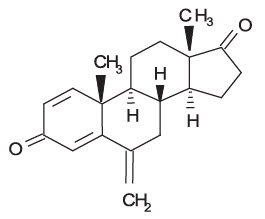
Metabolism: Exemestane is extensively metabolized, with levels of the unchanged drug in plasma accounting for less than 10% of the total radioactivity. The initial steps in the metabolism of exemestane are oxidation of the methylene group in position 6 and reduction of the 17-keto group with subsequent formation of many secondary metabolites. Each metabolite accounts only for a limited amount of drug-related material. The metabolites are inactive or inhibit aromatase with decreased potency compared with the parent drug. One metabolite may have androgenic activity [see Clinical Pharmacology (12.2)]. Studies using human liver preparations indicate that cytochrome P 450 3A4 (CYP 3A4) is the principal isoenzyme involved in the oxidation of exemestane. Exemestane is metabolized also by aldoketoreductases.
Elimination: Following administration of radiolabeled exemestane to healthy postmenopausal women, the cumulative amounts of radioactivity excreted in urine and feces were similar (42 ± 3% in urine and 42 ± 6% in feces over a 1-week collection period). The amount of drug excreted unchanged in urine was less than 1% of the dose.
Specific Populations
Geriatric: Healthy postmenopausal women aged 43 to 68 years were studied in the pharmacokinetic trials. Age-related alterations in exemestane pharmacokinetics were not seen over this age range.
Gender: The pharmacokinetics of exemestane following administration of a single, 25-mg tablet to fasted healthy males (mean age 32 years) were similar to the pharmacokinetics of exemestane in fasted healthy postmenopausal women (mean age 55 years).
Race: The influence of race on exemestane pharmacokinetics has not been evaluated.
Hepatic Impairment: The pharmacokinetics of exemestane have been investigated in subjects with moderate or severe hepatic impairment (Childs-Pugh B or C). Following a single 25-mg oral dose, the AUC of exemestane was approximately 3 times higher than that observed in healthy volunteers.
Renal Impairment: The AUC of exemestane after a single 25-mg dose was approximately 3 times higher in subjects with moderate or severe renal insufficiency (creatinine clearance <35 mL/min/1.73 m2) compared with the AUC in healthy volunteers.
Pediatric: The pharmacokinetics of exemestane have not been studied in pediatric patients.
Drug Interactions
Exemestane does not inhibit any of the major CYP isoenzymes, including CYP 1A2, 2C9, 2D6, 2E1, and 3A4. In a pharmacokinetic interaction study of 10 healthy postmenopausal volunteers pretreated with potent CYP 3A4 inducer rifampicin 600 mg daily for 14 days followed by a single dose of exemestane 25 mg, the mean plasma Cmax and AUC0–∞ of exemestane were decreased by 41% and 54%, respectively [see Dosage and Administration (2.2) and Drug Interactions (7)].
In a clinical pharmacokinetic study, coadministration of ketoconazole, a potent inhibitor of CYP 3A4, has no significant effect on exemestane pharmacokinetics. Although no other formal drug-drug interaction studies with inhibitors have been conducted, significant effects on exemestane clearance by CYP isoenzyme inhibitors appear unlikely.
Bone Effects
Advise patients that exemestane tablets lowers the level of estrogen in the body. This may lead to reduction in bone mineral density (BMD) over time. The lower the BMD, the greater the risk of osteoporosis and fracture [see Warnings and Precautions (5.1)].
Other Estrogen-Containing Agents
Advise patients that they should not take estrogen-containing agents while they are taking exemestane tablets as these could interfere with its pharmacologic action [see Warnings and Precautions (5.3)].
Use in Premenopausal Women
Advise patients that exemestane tablets is not for use for the treatment of breast cancer in premenopausal women [see Warnings and Precautions (5.5)].
Embryo-Fetal Toxicity
Advise pregnant women and females of reproductive potential that exposure during pregnancy or within 1 month prior to conception can result in fetal harm. Advise females to inform their healthcare provider of a known or suspected pregnancy [see Warnings and Precautions (5.6) and Use in Specific Populations (8.1)].
Advise females of reproductive potential to use effective contraception while taking exemestane tablets and for 1 month after the last dose [see Use in Specific Populations (8.3)].
Lactation
Advise women not to breastfeed during treatment with exemestane tablets and for 1 month after the last dose [see Use in Specific Populations (8.2)].
Manufactured by:
MSN Laboratories Private Limited
Telangana – 509 228,
INDIA
Distributed by:
Breckenridge Pharmaceutical, Inc.
Berlin, CT 06037
Revised: 10/2020