Safelite Autoglass Touch Point Sanitization Wipes
Product Images NDC 52261-7400

View Photos of Packaging, Regulatory Labels, and Product Appearance

Product Visual Gallery

This gallery contains 2 technical images submitted to the FDA as part of the official labeling for Safelite Autoglass Touch Point Sanitization Wipes (NDC 52261-7400). Unlike standard consumer photos, these assets often include clinical data figures, molecular chemical structures, and official manufacturer packaging layouts.

As provided by Cosco International, Inc., these visuals offer a comprehensive scientific overview of the product's physical and chemical identity, aiding pharmacists and researchers in product verification and study.

FDA Label Image

150 Count Label (150 Count Label)

150 Count Label (150 Count Label)
This is a Drug Facts label for Safelite AutoGlass brand Hand Sanitizer wipes. The wipes are intended for external use only and should not be used in or near the eyes. If a rash or irritation develops, the user should stop using the product and consult a doctor. The active ingredients are glycerin, urea, and water. The Hand Sanitizer is alcohol-free and non-irritating, and eliminates 99.99% of germs. The product is distributed by Safelite Autoglass and made in the USA.*
FDA Label Image

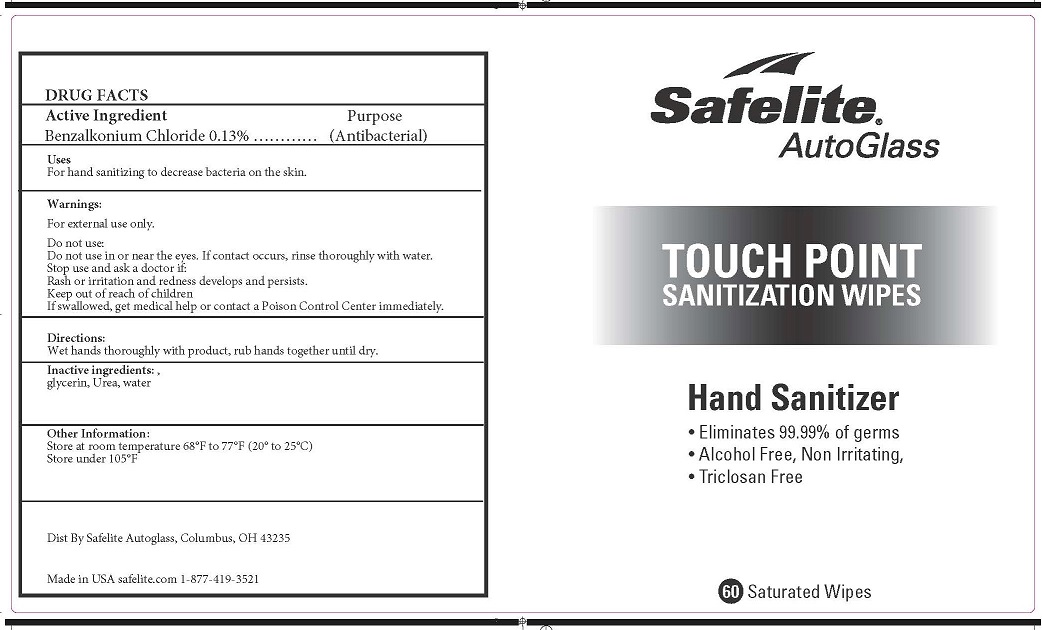
60 Count Label (60 Count Label)

60 Count Label (60 Count Label)
This is a hand sanitizer by Safelite Autoglass containing 0.13% Benzalkonium Chloride as an antibacterial agent. It is used for hand sanitizing to decrease bacteria on the skin. The product warns against contact with eyes, in case of skin irritation, and keep out of reach of children. Directions indicate wetting hands thoroughly with the sanitizer, rubbing hands together until dry. It also claims to eliminate 99.99% of germs and is alcohol-free and non-irritating. There is additional information about the product being triclosan-free and containing glycerin, urea, and water. It is distributed by Safelite Autoglass and can be purchased through their website.*

* These product label images have been analyzed using experimental machine learning. Please verify findings with the primary label text.