The antihypertensive effects of azilsartan medoxomil have been demonstrated in a total of seven double-blind, randomized studies, which included five placebo-controlled and four active comparator-controlled studies (not mutually exclusive). The studies ranged from six weeks to six months in duration, at doses ranging from 20 mg to 80 mg once daily. A total of 5941 patients (3672 given azilsartan medoxomil, 801 given placebo, and 1468 given active comparator) with mild, moderate or severe hypertension were studied. Overall, 51% of patients were male and 26% were 65 years or older; 67% were white and 19% were black.
Two 6-week, randomized, double-blind studies compared the effect on blood pressure of azilsartan medoxomil at doses of 40 mg and 80 mg, with placebo and with active comparators. Blood pressure reductions compared to placebo based on clinic blood pressure measurements at trough and 24-hour mean blood pressure by ambulatory blood pressure monitoring (ABPM) are shown in Table 1 for both studies. Azilsartan medoxomil, 80 mg, was statistically superior to placebo and active comparators for both clinic and 24-hour mean blood pressure measurements.
Table 1. Placebo Corrected Mean Change from Baseline in Systolic/Diastolic Blood Pressure at 6 Weeks (mm Hg)
|
| Study 1 N=1285
| Study 2 N=989
|
| Clinic Blood Pressure (Mean Baseline
157.4/92.5)
| 24 Hour Mean by ABPM
(Mean Baseline 144.9/88.7)
| Clinic Blood Pressure (Mean Baseline
159.0/91.8)
| 24 Hour Mean by ABPM
(Mean Baseline 146.2/87.6)
|
Azilsartan medoxomil 40 mg
| -14.6/-6.2
| -13.2/-8.6
| -12.4/-7.1
| -12.1/-7.7
|
Azilsartan medoxomil 80 mg
| -14.9/-7.5
| -14.3/-9.4
| -15.5/-8.6
| -13.2/-7.9
|
Olmesartan 40 mg
| -11.4/-5.3
| -11.7/-7.7
| -12.8/-7.1
| -11.2/-7.0
|
Valsartan 320 mg
| -9.5/-4.4
| -10.0/-7.0
|
|
|
In a study comparing azilsartan medoxomil to valsartan over 24 weeks, similar results were observed.
Most of the antihypertensive effect occurs within the first two weeks of dosing.
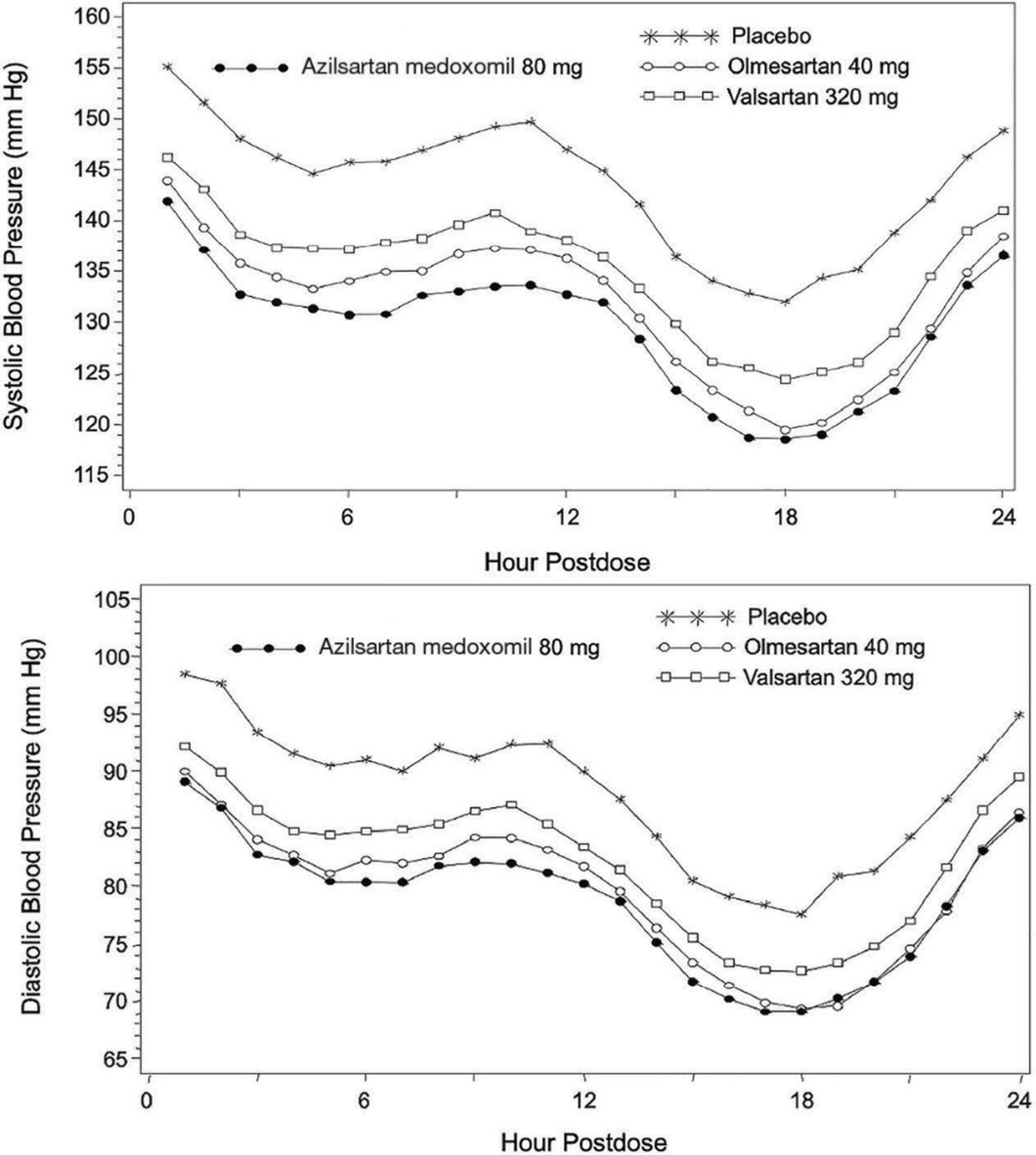
Figure 2 shows the 24-hour ambulatory systolic and diastolic blood pressure profiles at endpoint.
Figure 2. Mean Ambulatory Blood Pressure at 6 Weeks by Dose and Hour
Other studies showed similar 24-hour ambulatory blood pressure profiles.
Azilsartan medoxomil has a sustained and consistent antihypertensive effect during long-term treatment, as shown in a study that randomized patients to placebo or continued azilsartan medoxomil after 26 weeks. No rebound effect was observed following the abrupt cessation of azilsartan medoxomil therapy.
Azilsartan medoxomil was effective in reducing blood pressure regardless of the age, gender, or race of patients, but the effect, as monotherapy, was smaller, approximately half, in black patients, who tend to have low renin levels. This has been generally true for other angiotensin II antagonists and ACE inhibitors.
Azilsartan medoxomil has about its usual blood pressure lowering effect size when added to a calcium channel blocker (amlodipine) or a thiazide-type diuretic (chlorthalidone).
There are no trials of azilsartan medoxomil demonstrating reductions in cardiovascular risk in patients with hypertension, but at least one pharmacologically similar drug has demonstrated such benefits.