Description
Triamterene Capsules are potassium-sparing diuretics.
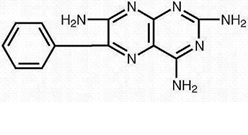
Triamterene-structure.jpg (Triamterene Structure)
Triamterene
Triamterene is 2,4,7-triamino-6-phenyl-pteridine. Its molecular weight is 253.27. At 50°C, triamterene is slightly soluble in water. It is soluble in dilute ammonia, dilute aqueous sodium hydroxide and dimethylformamide. It is sparingly soluble in methanol.
Each capsule for oral use, with opaque red cap and body, contains Triamterene USP,
50 mg or 100 mg, and is imprinted with AT 50 (for the 50-mg strength) and AT 100 (for the 100-mg strength) in white ink on both the cap and body. Inactive ingredients consist of Lactose monohydrate, Magnesium stearate, Gelatin, D&C Red No.33, FD&C yellow No.6, Titanium dioxide, Sodium lauryl sulfate, Shellac and Potassium hydroxide.
