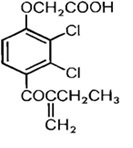
Dosage must be regulated carefully to prevent a more rapid or substantial loss of fluid or electrolyte than is indicated or necessary. The magnitude of diuresis and natriuresis is largely dependent on the degree of fluid accumulation present in the patient. Similarly, the extent of potassium excretion is determined in large measure by the presence and magnitude of aldosteronism.
Insufficient pediatric experience precludes recommendation for this age group.
Oral Use
Ethacrynic acid is available for oral use as 25 mg tablets.
Dosage
To Initiate Diuresis
In Adults
The smallest dose required to produce gradual weight loss (about 1 to 2 pounds per day) is recommended. Onset of diuresis usually occurs at 50 to 100 mg for adults. After diuresis has been achieved, the minimally effective dose (usually from 50 to 200 mg daily) may be given on a continuous or intermittent dosage schedule. Dosage adjustments are usually in 25 to 50 mg increments to avoid derangement of water and electrolyte excretion.
The patient should be weighed under standard conditions before and during the institution of diuretic therapy with this compound. Small alterations in dose should effectively prevent a massive diuretic response. The following schedule may be helpful in determining the smallest effective dose.
Day 1 — 50 mg once daily after a meal
Day 2 — 50 mg twice daily after meals, if necessary
Day 3 — 100 mg in the morning and 50 to 100 mg following the afternoon or evening meal, depending upon response to the morning dose.
A few patients may require initial and maintenance doses as high as 200 mg twice daily. These higher doses, which should be achieved gradually, are most often required in patients with severe, refractory edema.
In Pediatric Patients (excluding infants, seeCONTRAINDICATIONS):
The initial dose should be 25 mg. Careful stepwise increments in dosage of 25 mg should be made to achieve effective maintenance.
Maintenance Therapy
It is usually possible to reduce the dosage and frequency of administration once dry weight has been achieved.
Ethacrynic Acid may be given intermittently after an effective diuresis is obtained with the regimen outlined above. Dosage may be on an alternate daily schedule or more prolonged periods of diuretic therapy may be interspersed with rest periods. Such an intermittent dosage schedule allows time for correction of any electrolyte imbalance and may provide a more efficient diuretic response.
The chloruretic effect of this agent may give rise to retention of bicarbonate and a metabolic alkalosis. This may be corrected by giving chloride (ammonium chloride or arginine chloride). Ammonium chloride should not be given to cirrhotic patients.
Ethacrynic acid has additive effects when used with other diuretics. For example, a patient who is on maintenance dosage of an oral diuretic may require additional intermittent diuretic therapy, such as an organomercurial, for the maintenance of basal weight. The intermittent use of ethacrynic acid orally may eliminate the need for injections of organomercurials. Small doses of ethacrynic acid may be added to existing diuretic regimens to maintain basal weight. This drug may potentiate the action of carbonic anhydrase inhibitors, with augmentation of natriuresis and kaliuresis. Therefore, when adding ethacrynic acid, the initial dose and changes of dose should be in 25 mg increments, to avoid electrolyte depletion. Rarely, patients who failed to respond to ethacrynic acid have responded to older established agents.
While many patients do not require supplemental potassium, the use of potassium chloride or potassium-sparing agents, or both, during treatment with ethacrynic acid is advisable, especially in cirrhotic or nephrotic patients and in patients receiving digitalis.
Salt liberalization usually prevents the development of hyponatremia and hypochloremia. During treatment with ethacrynic acid, salt may be liberalized to a greater extent than with other diuretics. Cirrhotic patients, however, usually require at least moderate salt restriction concomitant with diuretic therapy.
Intravenous Use
Ethacrynate sodium is for intravenous use when oral intake is impractical or in urgent conditions, such as acute pulmonary edema.