Other Adverse Reactions
Injection Site Reactions
Patients treated with apomorphine hydrocloride subcutaneous injections during clinical studies, 26% of patients had injection site reactions, including bruising (16%), granuloma (4%), and pruritus (2%).
In addition to those in Table 1, the most common adverse reactions in pooled apomorphine hydrocloride trials (occurring in at least 5% of the patients) in descending order were injection site reaction, fall, arthralgia, insomnia, headache, depression, urinary tract infection, anxiety, congestive heart failure, limb pain, back pain, Parkinson's disease aggravated, pneumonia, confusion, sweating increased, dyspnea, fatigue, ecchymosis, constipation, diarrhea, weakness, and dehydration.
Risk Summary
There are no adequate data on the developmental risk associated with use of apomorphine hydrocloride in pregnant women. In animal reproduction studies, apomorphine had adverse developmental effects in rats (increased neonatal deaths) and rabbits (increased incidence of malformation) when administered during pregnancy at clinically relevant doses. These doses were also associated with maternal toxicity [see Data]. In the U.S. general population, the estimated background risk of major birth defects and miscarriage in clinically recognized pregnancies is 2% to 4% and 15% to 20%, respectively. The background risk of major birth defects and miscarriage for the indicated population is unknown.
Data
Animal Data
No adverse developmental effects were observed when apomorphine (0.3, 1, or 3 mg/kg/day) was administered by subcutaneous injection to pregnant rats throughout organogenesis; the highest dose tested is 1.5 times the maximum recommended human dose (MRHD) of 20 mg/day on a mg/m2 basis. Administration of apomorphine (0.3, 1, or 3 mg/kg/day) by subcutaneous injection to pregnant rabbits throughout organogenesis resulted in an increased incidence of malformations of the heart and/or great vessels at the mid and high doses; maternal toxicity was observed at the highest dose tested. The no-effect dose for adverse developmental effects is less than the MRHD on a mg/m2 basis.
Apomorphine (0.3, 1, or 3 mg/kg/day), administered by subcutaneous injection to females throughout gestation and lactation, resulted in increased offspring mortality at the highest dose tested, which was associated with maternal toxicity. There were no effects on developmental parameters or reproductive performance in surviving offspring. The no-effect dose for developmental toxicity (1 mg/kg/day) is less than the MRHD on a mg/m2 basis.
Risk Summary
There are no data on the presence of apomorphine in human milk, the effects of apomorphine on the breastfed infant, or the effects of apomorphine on milk production. The developmental and health benefits of breastfeeding should be considered along with the mother's clinical need for apomorphine hydrocloride and any potential adverse effects on the breastfed infant from apomorphine hydrocloride or from the underlying maternal condition.
Prolongation of the QTc Interval
In a thorough QT study at exposures similar to those achieved with the recommended dosing, apomorphine resulted in a prolongation of QTcF of 10 msec (90% upper confidence interval of 16 msec). The thorough QT study also identified a significant exposure-response relationship between apomorphine concentration and QTcF.
Decreases in Blood Pressure
Dose-dependent mean decreases in systolic blood pressure ranged from 5 mm Hg to 16 mm Hg after administration of apomorphine hydrocloride 2 mg and 10 mg, respectively. Dose-dependent mean decreases in diastolic blood pressure ranged from 3 mm Hg to 8 mm Hg after administration of apomorphine hydrocloride 2 mg and 10 mg, respectively. These changes were observed 20 minutes after dosing, and were maximal between 20 and 40 minutes after dosing. Lesser, but still noteworthy blood pressure decreases persisted up to at least 90 minutes after dosing. Effects on blood pressure are additive when apomorphine hydrocloride is coadministered with nitroglycerin or alcohol [see Drug Interactions (7.3, 7.4)].
Absorption
Apomorphine hydrochloride is a lipophilic compound that is rapidly absorbed (time to peak concentration ranges from 10 minutes to 60 minutes) following subcutaneous administration into the abdominal wall. After subcutaneous administration, apomorphine appears to have bioavailability equal to that of an intravenous administration. Apomorphine exhibits linear pharmacokinetics over a dose range of 2 mg to 8 mg following a single subcutaneous injection of apomorphine hydrocloride into the abdominal wall in patients with idiopathic Parkinson's disease.
Distribution
The plasma-to-whole blood apomorphine concentration ratio is equal to one. Mean (range) apparent volume of distribution was 218 L (123 L to 404 L). Maximum concentrations in cerebrospinal fluid (CSF) are less than 10% of maximum plasma concentrations and occur 10 minutes to 20 minutes later.
Metabolism and Elimination
The mean apparent clearance (range) is 223 L/hr (125 L/hr to 401 L/hr) and the mean terminal elimination half-life is about 40 minutes (range about 30 minutes to 60 minutes).
The route of metabolism in humans is not known. Potential routes of metabolism in humans include sulfation, N-demethylation, glucuronidation and oxidation. In vitro, apomorphine undergoes rapid autooxidation.
Specific Populations
The clearance of apomorphine does not appear to be influenced by age, gender, weight, duration of Parkinson's disease, levodopa dose, or duration of therapy.
Renal Impairment
In a study comparing renally-impaired subjects (moderately impaired as determined by estimated creatinine clearance) to healthy matched volunteers, the AUC0-∞ and Cmax values were increased by approximately 16% and 50%, respectively, following a single subcutaneous administration of apomorphine hydrocloride into the abdominal wall. The mean time to peak concentrations and the mean terminal half-life of apomorphine were unaffected by the renal status of the individual. Studies in subjects with severe renal impairment have not been conducted. The starting dose for patients with mild or moderate renal impairment should be reduced [see Dosage and Administration (2.4) and Use in Specific Populations (8.6)].
Hepatic Impairment
In a study comparing subjects with hepatic impairment (moderately impaired as determined by the Child-Pugh classification method) to healthy matched volunteers, the AUC0-∞ and Cmax values were increased by approximately 10% and 25%, respectively, following a single subcutaneous administration of apomorphine hydrocloride into the abdominal wall. Studies in subjects with severe hepatic impairment have not been conducted [see Dosage and Administration (2.5) and Use in Specific Populations (8.7)].
Drug Interaction Studies
Carbidopa/levodopa
Levodopa pharmacokinetics were unchanged when subcutaneous apomorphine hydrocloride and levodopa were co-administrated in patients. However, motor response differences were significant. The threshold levodopa concentration necessary for an improved motor response was reduced significantly, leading to an increased duration of effect without a change in the maximal response to levodopa therapy.
Ethanol and Nitroglycerin
Co-administration of low dose ethanol (0.3 g/kg) or nitroglycerin (0.4 mg) with apomorphine hydrocloride in healthy subjects did not have a significant impact on the pharmacokinetics of apomorphine, but high dose ethanol (0.6 g/kg), equivalent to approximately 3 standardized alcohol-containing beverages, increased the Cmax of apomorphine by about 63%. However, the hypotensive effect of apomorphine hydrocloride was increased by the concomitant use of alcohol or of sublingual nitroglycerin [see Warnings and Precautions (5.4) and Drug Interactions (7.2, 7.3)].
Other Drugs Eliminated Via Hepatic Metabolism
Based upon an in vitro study, cytochrome P450 enzymes play a minor role in the metabolism of apomorphine. In vitro studies have also demonstrated that drug interactions are unlikely due to apomorphine acting as a substrate, an inhibitor, or an inducer of cytochrome P450 enzymes.
COMT Interactions
A pharmacokinetic interaction of apomorphine hydrocloride with catechol-O-methyl transferase (COMT) inhibitors or drugs metabolized by this route is unlikely since apomorphine appears not to be metabolized by COMT.
Carcinogenesis
Lifetime carcinogenicity studies of apomorphine were conducted in male (0.1, 0.3, or 0.8 mg/kg/day) and female (0.3, 0.8, or 2 mg/kg/day) rats. Apomorphine was administered by subcutaneous injection for 22 months or 23 months, respectively. In males, there was an increase in Leydig cell tumors at the highest dose tested, which is less than the MRHD (20 mg) on a mg/m2 basis. This finding is of questionable significance because the endocrine mechanisms believed to be involved in the production of Leydig cell tumors in rats are not relevant to humans. No drug-related tumors were observed in females; the highest dose tested is similar to the MRHD on a mg/m2 basis.
In a 26-week carcinogenicity study in P53-knockout transgenic mice, there was no evidence of carcinogenic potential when apomorphine was administered by subcutaneous injection at doses up to 20 mg/kg/day (male) or 40 mg/kg/day (female).
Mutagenesis
Apomorphine was mutagenic in the in vitro bacterial reverse mutation (Ames) and the in vitro mouse lymphoma tk assays. Apomorphine was clastogenic in the in vitro chromosomal aberration assay in human lymphocytes and in the in vitro mouse lymphoma tk assay. Apomorphine was negative in the in vivo micronucleus assay in mice.
Impairment of Fertility
Apomorphine was administered subcutaneously at doses up to 3 mg/kg/day (approximately 1.5 times the MRHD on a mg/m2 basis) to male and female rats prior to and throughout the mating period and continuing in females through gestation day 6. There was no evidence of adverse effects on fertility or on early fetal viability. A significant decrease in testis weight was observed in a 39-week study in cynomolgus monkey at all subcutaneous doses tested (0.3, 1, or 1.5 mg/kg/day); the lowest dose tested is less than the MRHD on a mg/m2 basis.
In a published fertility study, apomorphine was administered to male rats at subcutaneous doses of 0.2, 0.8, or 2 mg/kg prior to and throughout the mating period. Fertility was reduced at the highest dose tested.
Study 1
Study 1 was a randomized, double-blind, placebo-controlled, parallel-group trial in 29 patients with advanced Parkinson's disease who had at least 2 hours of "off" time per day despite an optimized oral regimen for Parkinson's disease including levodopa and an oral dopaminergic agonist. Patients with atypical Parkinson's disease, psychosis, dementia, hypotension, or those taking dopamine antagonists were excluded from participation. In an office setting, hypomobility was allowed to occur by withholding the patients' Parkinson's disease medications overnight. The following morning, patients (in a hypomobile state) were started on study treatment in a 2:1 ratio (2 mg of apomorphine hydrocloride or placebo given subcutaneously). At least 2 hours after the first dose, patients were given additional doses of study medication until they achieved a "therapeutic response" (defined as a response similar to the patient's response to their usual dose of levodopa) or until 10 mg of apomorphine hydrocloride or placebo equivalent was given. At each injection re-dosing, the study drug dose was increased in 2 mg increments up to 4 mg, 6 mg, 8 mg, 10 mg of apomorphine hydrocloride) or placebo equivalent.
Of the 20 patients randomized to apomorphine hydrocloride, 18 achieved a "therapeutic response" at about 20 minutes. The mean apomorphine hydrocloride dose was 5.4 mg (3 patients on 2 mg, 7 patients on 4 mg, 5 patients on 6 mg, 3 patients on 8 mg, and 2 patients on 10 mg). In contrast, of the 9 placebo-treated patients, none reached a "therapeutic response." The mean change from baseline for UPDRS Part III score for apomorphine hydrocloride group (highest dose) was statistically significant compared to that for the placebo group (Table 2).
Table 2: Mean Change from Baseline in UPDRS Motor Score for Intent-to-Treat Population in Study 1| Treatment | Baseline UPDRS Motor Score | Mean Change from Baseline | Difference from placebo |
|---|
| Placebo | 36.3 | - 0.1 | NA |
| Apomorphine Hydrocloride | 39.7 | - 23.9 | - 23.8 |
Study 2
Study 2 used a randomized, placebo-controlled crossover design of 17 patients with Parkinson's disease who had been using apomorphine hydrocloride for at least 3 months. Patients received their usual morning doses of Parkinson's disease medications and were followed until hypomobility occurred, at which time they received either a single dose of subcutaneous apomorphine hydrocloride (at their usual dose) and placebo on different days in random order. UPDRS Part III scores were evaluated over time. The mean dose of apomorphine hydrocloride was 4 mg (2 patients on 2 mg, 9 patients on 3 mg, 2 patients on 4 mg, and 1 patient each on 4.5 mg, 5 mg, 8 mg, and 10 mg). The mean change from baseline UPDRS Part III score for the apomorphine hydrocloride group was statistically significant compared to that for the placebo group (Table 3).
Table 3: Mean Change from Baseline in UPDRS Motor Score for Intent-to-Treat Population in Study 2| Treatment | Baseline UPDRS Motor Score | Mean Change from Baseline | Difference from placebo |
|---|
| Placebo | 40.1 | - 3.0 | NA |
| Apomorphine Hydrocloride | 41.3 | - 20.0 | - 17.0 |
Study 3
Study 3 used a randomized withdrawal design in 4 parallel groups from 62 patients (apomorphine hydrocloride-35; Placebo-27) with Parkinson's disease who had been using apomorphine hydrocloride for at least 3 months. Patients were randomized to one of the following 4 treatments dosed once by subcutaneous administration: apomorphine hydrocloride at the usual dose (mean dose 4.6 mg), placebo at a volume matching the usual apomorphine hydrocloride dose, apomorphine hydrocloride at the usual dose + 2 mg (0.2 mL) (mean dose 5.8 mg), or placebo at a volume matching the usual apomorphine hydrocloride dose + 0.2 mL. Patients received their usual morning doses of Parkinson's disease medications and were followed until hypomobility occurred, at which time they received the randomized treatment. apomorphine hydrocloride doses ranged between 2 mg – 10 mg. The mean change from baseline for the apomorphine hydrocloride group for UPDRS Part III scores at 20 minutes post dosing was statistically significant compared to that for the placebo group (Table 4). Figure 2 describes the mean change from baseline in UPDRS Motor Scores over time for pooled apomorphine hydrocloride and placebo administration.
Table 4: Mean Change from Baseline in UPDRS Motor Score for Intent-to-Treat Population in Study 3| Treatment | Baseline UPDRS Motor Score | Mean Change from Baseline | Difference from placebo |
|---|
| Placebo (Pooled) | 40.6 | - 7.4 | NA |
| apomorphine hydrocloride (Pooled) | 42.0 | - 24.2 | - 16.8 |
| Figure 2: Mean Change from Baseline in UPDRS Motor Scores of Pooled apomorphine hydrocloride Groups and Placebo Group in Study 3 |
|
In Study 3, the mean changes from baseline for UPDRS Part III scores at 20 minutes post dosing for the apomorphine hydrocloride and higher dose apomorphine hydrocloride groups were 24 and 25, respectively. This result suggests that patients chronically treated at a dose of 4 mg might derive little additional benefit from a dose increment of 2 mg. There was also an increased incidence of adverse reactions in patients randomized to higher apomorphine hydrocloride dose.
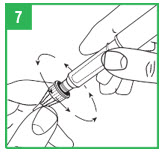
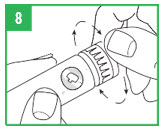
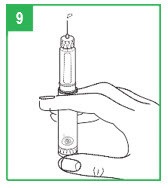
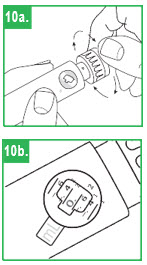
Administration with the APOKYN® Pen
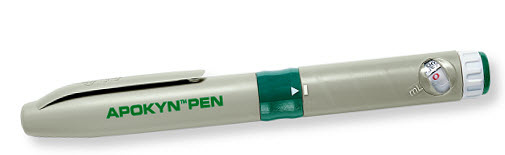
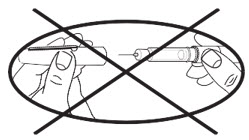
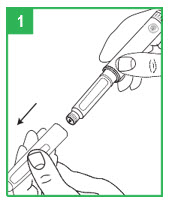
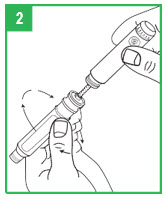
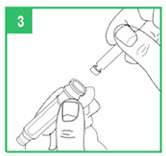
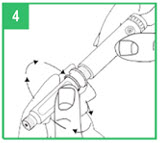
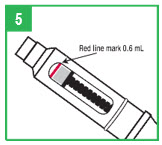
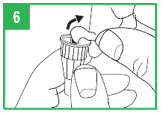
- Instruct patients and caregivers that the APOKYN® Pen is dosed in milliliters, not milligrams.
- Instruct patients and caregivers that do not already have an APOKYN® Pen, that an APOKYN® Pen is obtained separately from a different manufacturer.
Inform patients and caregivers that it is possible to dial in their usual dose of apomorphine hydrocloride even though the cartridge may contain less than that amount of drug. In this case, they will receive only a partial dose with the injection, and the amount left to inject will appear in the dosing window. To complete the correct dose, patients/caregivers will need to "re-arm" the device and dial in the correct amount of the remaining dose. Patients and caregivers should be alerted to the fact that there may be insufficient drug left in the cartridge to deliver a complete dose (for example, patients and caregivers should be urged to keep records of how many doses they have delivered for each cartridge, so that they can replace any cartridge that has an inadequate amount of drug remaining).
Instruct patients to rotate the injection site and to observe proper aseptic technique.
Advise patients that apomorphine hydrocloride is intended only for subcutaneous injection and must not be given intravenously because of the risk of serious complications such as thrombus formation and pulmonary embolism due to crystallization [see Warnings and Precautions (5.1)].
Hypersensitivity / Allergic Reactions
Advise patients that hypersensitivity/allergic reaction characterized by urticaria, rash, pruritus, and/or various manifestations of angioedema may occur because of apomorphine hydrocloride or any of its excipients including a sulfite (i.e., sodium metabisulfite). Inform patients with a sulfite sensitivity that they may experience various allergic-type reactions, including anaphylactic symptoms and life-threatening asthmatic attacks [see Warnings and Precautions (5.12)]. Advise patients who experience any hypersensitivity/allergic reaction to apomorphine hydrocloride that they should not take apomorphine hydrocloride again [see Contraindications (4)].
Nausea and Vomiting
Advise patients that they may experience severe nausea and/or vomiting and that they should begin taking trimethobenzamide 300 mg orally 3 times per day for 3 days prior to starting apomorphine hydrocloride injections. Advise patients that apomorphine hydrocloride taken with trimethobenzamide may increase the risks for somnolence, dizziness, and falls. Inform patients that their healthcare provider will tell them when trimethobenzamide can be discontinued [see Warnings and Precautions (5.2)].
Falling Asleep Suddenly and Sedation / Sleepiness
Alert patients to the potential sedating effects of apomorphine hydrocloride, including somnolence and falling asleep while engaged in activities of daily living. Instruct patients not to drive a car or engage in other potentially dangerous activities until they have gained sufficient experience with apomorphine hydrocloride to gauge whether or not it affects their mental and/or motor performance adversely. Advise patients that if increased somnolence or episodes of falling asleep during activities of daily living (e.g., watching television, passenger in a car, etc.) occur, they should not drive or participate in potentially dangerous activities until they have contacted their physician. Because of possible additive effects of alcohol use, advise patients to limit their alcohol intake [see Warnings and Precautions (5.3)].
Hypotension / Orthostatic Hypotension
Advise patients that they may develop postural (orthostatic) hypotension with or without symptoms such as dizziness, nausea, syncope, and sometimes sweating. Hypotension and/or orthostatic symptoms may occur more frequently during initial therapy or with an increase in dose at any time (cases have been seen after months of treatment). Instruct patients to rise slowly after sitting or lying down after taking apomorphine hydrocloride. Inform patients that alcohol and nitroglycerin (and possibly other vasodilators and antihypertensive medications) may potentiate the hypotensive effect of apomorphine hydrocloride [see Warnings and Precautions (5.4)]. Instruct patients ideally to lie down before taking sublingual nitroglycerin and to remain supine and avoid standing for at least 45 minutes after nitroglycerin. Instruct patients taking apomorphine hydrocloride to avoid alcohol while using apomorphine hydrocloride and of the increased hypotensive effects of apomorphine hydrocloride taken with nitroglycerin or by taking apomorphine hydrocloride after alcohol ingestion.
Falls
Alert patients that they may have increased risk for falling when using apomorphine hydrocloride [see Warnings and Precautions (5.5)].
Hallucinations and/or Psychotic-Like Behavior
Inform patients that hallucinations or other manifestations of psychotic-like behavior can occur. Tell patients if they have a major psychotic disorder, ordinarily they should not use apomorphine hydrocloride because of the risk of exacerbating the psychosis. Patients with a major psychotic disorder should also be aware that many treatments for psychosis may decrease the effectiveness of apomorphine hydrocloride [see Warnings and Precautions (5.6)].
Dyskinesia
Inform patients that apomorphine hydrocloride may cause and/or exacerbate pre-existing dyskinesias [see Warnings and Precautions (5.7)].
Impulse Control / Compulsive Behaviors
Patients and their caregivers should be alerted to the possibility that they may experience intense urges to spend money uncontrollably, intense urges to gamble, increased sexual urges, binge eating and/or other intense urges and the inability to control these urges while taking apomorphine hydrocloride [see Warnings and Precautions (5.8)].
Coronary Events
Inform patients that apomorphine hydrocloride may cause coronary events including angina and myocardial infarction and these outcomes could possibly be related to significant hypotension/orthostatic hypotension [see Warnings and Precautions (5.9)].
QTc Prolongation and Potential for Proarrhythymic Effects
Alert patients that apomorphine hydrocloride may cause QTc prolongation and might produce proarrhythmic effects that could cause torsades de pointes and sudden death. Palpitations and syncope may signal the occurrence of an episode of torsades de pointes [see Warnings and Precautions (5.10)].
Withdrawal-Emergent Hyperpyrexia and Confusion
Advise patients to contact their healthcare provider if they wish to discontinue apomorphine hydrocloride or decrease the dose of apomorphine hydrocloride [see Warnings and Precautions (5.11)].
Priapism
Advise patients that apomorphine hydrocloride may cause prolonged painful erections and that if this occurs they should seek medical attention immediately [see Warnings and Precautions (5.14)].
Injection Site Reactions
Inform patients that injections of apomorphine hydrocloride may result in injection site reactions including bruising, granuloma, and pruritus [see Adverse Reactions (6.1)].
This product's Prescribing Information may have been updated. For current full Prescribing Information, please visit www.usworldmeds.com.
Manufactured by:
Berkshire Sterile Manufacturing, Inc.
Lee, MA
Distributed by:
TruPharma, LLC
Tampa, FL 33609
APOKYN® is a registered trademark of BRITUSWIP.