Description:
Each Butalbital, Aspirin, and Caffeine tablet for oral administration contains:
Butalbital, USP 50 mg
Aspirin, USP 325 mg
Caffeine, USP 40 mg
Butalbital, 5-allyl-5-isobutyl-barbituric acid, a white odorless crystalline powder; is a short-to intermediate-acting barbiturate. Its structural formula is as follows:

Butalbital Structural Formula (Bac Blue 01)
Aspirin, salicylic acid acetate, is a non-opiate analgesic, anti-inflammatory and antipyretic agent. It occurs as a white, crystalline tabular or needle-like powder and is odorless or has a faint odor. Its structural formula is as follows:

Salicylic Acid Acetate Structural Formula (Bac Blue 02)
Caffeine, 1,3,7-trimethylxanthine, is a central nervous system stimulant which occurs as a white powder or white glistening needles. It also has a bitter taste. Its structural formula is as follows:
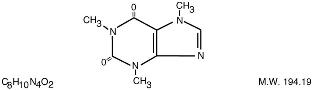
Caffeine Structural Formula (Bac Blue 03)
Inactive Ingredients: Hydrogenated Vegetable Oil, Microcrystalline Cellulose, Sodium Starch Glycolate, Starch 1500 and Talc.
