Levora
Product Images NDC 53002-1565

7 FDA label images from Rpk Pharmaceuticals, Inc. · Packaging, Regulatory Labels, and Product Appearance

Product Visual Gallery

This gallery contains 7 technical images submitted to the FDA as part of the official labeling for Levora (NDC 53002-1565). Unlike standard consumer photos, these assets often include clinical data figures, molecular chemical structures, and official manufacturer packaging layouts.

As provided by Rpk Pharmaceuticals, Inc., these visuals offer a comprehensive scientific overview of the product's physical and chemical identity, aiding pharmacists and researchers in product verification and study.

FDA Label Image

Chemical Structure (Levora 01)

Chemical Structure (Levora 01)
Chemical structure of Levora, an oral contraceptive product by RPK Pharmaceuticals, Inc. The structure shows a steroid backbone with several hydroxyl, methyl, and ketone functional groups.*
FDA Label Image

Chemical Structure (Levora 02)

Chemical Structure (Levora 02)
Chemical structure of the active ingredient shown on the Levora product image by RPK Pharmaceuticals, Inc. It depicts the molecular arrangement including hydroxyl groups and methyl groups characteristic of a steroidal compound.*
FDA Label Image

Figure 1 (Levora 03)

Figure 1 (Levora 03)
A horizontal bar chart depicting the number of women with a blood clot per 10,000 women years (WY) across four groups: Non-Pregnant Non-COC users (range 1-5), COC-Users (range 3-9), Pregnancy (range 5-20), and Postpartum (12 weeks only) with the highest range from 40 to 65. The chart includes a note on pregnancy data based on actual pregnancy duration and a model assumption of nine months duration with rates of 7 to 27 per 10,000 WY.*
FDA Label Image

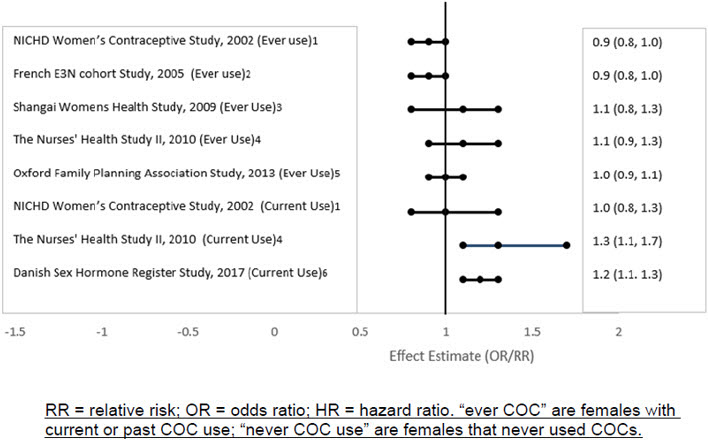
Figure 2 (Levora 03a)

Figure 2 (Levora 03a)
A forest plot depicting effect estimates (odds ratios or relative risks) from various studies comparing contraceptive use. The studies include NICHD Women's Contraceptive Study, French E3N cohort, Shanghai Women's Health, Nurses' Health Study II, Oxford Family Planning Association, and Danish Sex Hormone Register. Each study's effect estimate with confidence intervals is plotted against a vertical line at 1 on the x-axis labeled 'Effect Estimate (OR/RR)', showing comparisons of 'ever use' and 'current use' of combined oral contraceptives (COCs). A footnote explains the abbreviations RR, OR, HR, and defines "ever COC" and "never COC" users.*
FDA Label Image

Figure (Levora 04)

Figure (Levora 04)
An illustration showing a vertical scale indicating pregnancy rates per 100 women in one year, ranging from fewer than 1 to 85 or more pregnancies. Next to the scale are grouped contraceptive methods ranked by pregnancy frequency, from most effective (implants, injections, intrauterine devices, sterilization) to least effective (no birth control). Intermediate categories list birth control pills, skin patch, vaginal rings with hormones; condoms and diaphragm; and behavioral methods like abstinence during fertile days, spermicide, and withdrawal.*
FDA Label Image

Figure A (Levora 04a)

Figure A (Levora 04a)
Levora 0.15/30 oral contraceptive blister pack label showing a 28-day cycle with circular pill compartments arranged in four rows of seven. The label indicates active tablets contain levonorgestrel 0.15 mg and ethinyl estradiol 0.03 mg, with noted inactive tablets in the fourth week. Directions include following arrows for daily dosing from Sunday to Saturday.*
FDA Label Image

Label Image (Lbl530021565)

Label Image (Lbl530021565)
Label for Levora 0.15/0.03 mg tablets, a 28-day oral contraceptive regimen by RPK Pharmaceuticals, Inc. The label indicates a package containing 28 tablets with instructions to take one tablet daily as directed. It includes fields for patient and prescriber information, lot number, expiration date, and barcode.*

* About these descriptions: Image descriptions on this page are generated by automated AI analysis of the product label images from the manufacturer's FDA label submission (SPL). They are provided for reference only and may contain errors or omissions. Always rely on the printed label itself and the official FDA labeling, and consult a pharmacist or healthcare professional with any questions about this product.