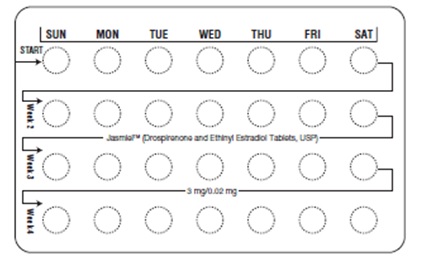
Jasmiel
Product Images NDC 53002-1783

View Photos of Packaging, Regulatory Labels, and Product Appearance

Product Visual Gallery

This gallery contains 7 technical images submitted to the FDA as part of the official labeling for Jasmiel (NDC 53002-1783). Unlike standard consumer photos, these assets often include clinical data figures, molecular chemical structures, and official manufacturer packaging layouts.

As provided by Rpk Pharmaceuticals, Inc., these visuals offer a comprehensive scientific overview of the product's physical and chemical identity, aiding pharmacists and researchers in product verification and study.

FDA Label Image

Figure 1 (Drospirenone Fig1)
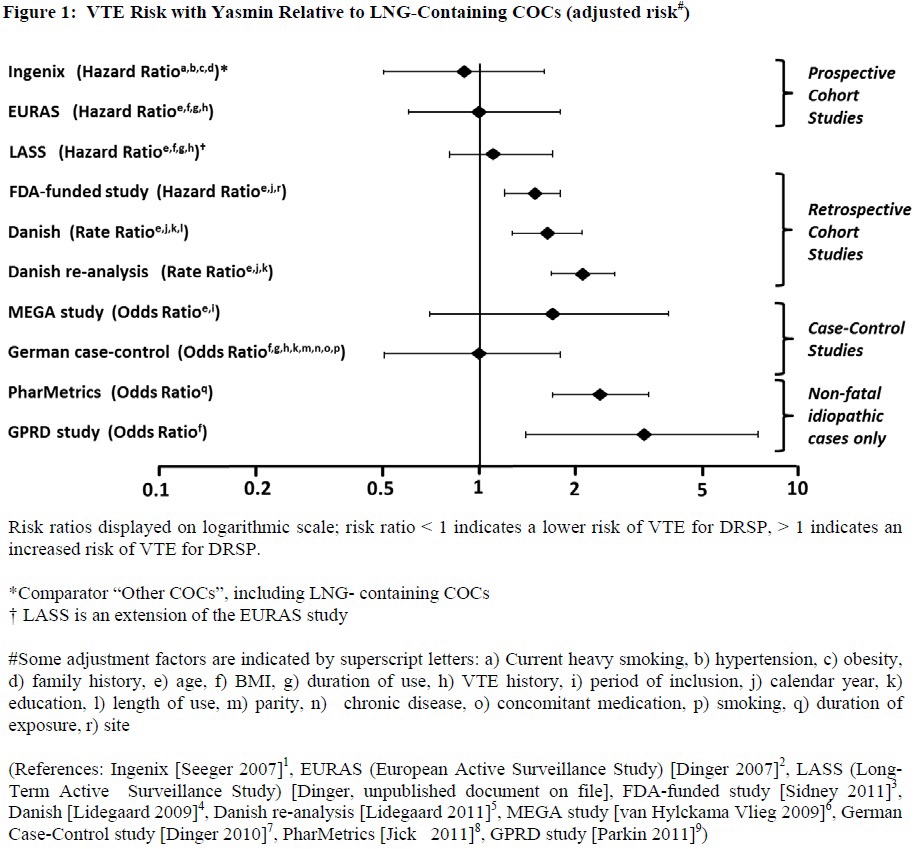
Figure 1 (Drospirenone Fig1)
This text provides a figure showing the adjusted risk of developing VTE with Yasmin compared to other LNG-containing COCs. The risk ratios are shown on a logarithmic scale, where a ratio <1 represents a lower risk with Yasmin, and a ratio >1 indicates increased risk. The text also includes references to several studies that have evaluated the risk of VTE associated with Yasmin and other COCs. Adjustment factors are indicated by superscript letters.*
FDA Label Image

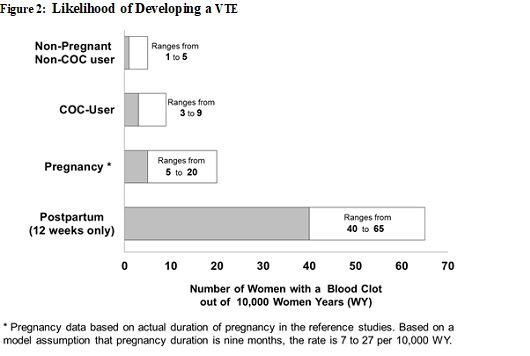
Figure 2 (Drospirenone Fig2)

Figure 2 (Drospirenone Fig2)
The text refers to a figure that shows the number of non-pregnant and non-COC users likely to develop a VIE (venous thromboembolism) based on a number of women with a blood clot out of 10,000 women years. The likelihood of developing VIE is also shown in postpartum ranges of up to 12 weeks. The data related to pregnancy is based on actual pregnancy duration in reference studies, with a model assumption of nine months leading to a rate of 7 to 27 per 10,000 women years.*
FDA Label Image

Figure3 (Drospirenone Fig3)

Figure3 (Drospirenone Fig3)
This text appears to be a list of different methods of birth control, including implants, injections, intrauterine devices, sterilization, birth control pills, skin patch, vaginal ring with hormones, condoms, diaphragm, no sex during the most fertile days of the monthly cycle, spermicide, withdrawal. The text also provides statistics regarding pregnancy rates, with fewer than 1 pregnancy per 100 pregnancies per year, and 10-20 pregnancies per 100 women per year. For women who do not want to become pregnant, choosing one of the available birth control methods can be a practical solution.*
FDA Label Image

Figure4 (Drospirenone Fig4)

FDA Label Image

Figure5 (Drospirenone Fig5)

Figure5 (Drospirenone Fig5)
This is a table showing the number of women with a blood clot out of 10,000 women years (WY) for different categories: Non-Pregnant Non-COC user, COC-user, Pregnancy, and Postpartum (12 weeks only). The values for Non-COC user and COC-user are missing. The pregnancy data is shown based on actual duration of pregnancy in the reference studies, and based on a model assumption that pregnancy duration is nine months, the rate is between 7 to 27 per 10,000 WY.*
FDA Label Image

Chemical Str (Drospirenone Str)

Chemical Str (Drospirenone Str)
Drospirenone and ethinyl estradiol are two synthetic hormones commonly found in combination oral contraceptive pills. They work to prevent pregnancy by suppressing ovulation, thickening cervical mucus, and altering the lining of the uterus. This combination is also used to treat acne in women who experience hormonal breakouts.*
FDA Label Image

Label Image (Lbl530021783)

* These product label images have been analyzed using experimental machine learning. Please verify findings with the primary label text.