Microgestin Fe 1/20
Product Images NDC 53002-2616

View Photos of Packaging, Regulatory Labels, and Product Appearance

Product Visual Gallery

This gallery contains 13 technical images submitted to the FDA as part of the official labeling for Microgestin Fe 1/20 (NDC 53002-2616). Unlike standard consumer photos, these assets often include clinical data figures, molecular chemical structures, and official manufacturer packaging layouts.

As provided by Rpk Pharmaceuticals, Inc., these visuals offer a comprehensive scientific overview of the product's physical and chemical identity, aiding pharmacists and researchers in product verification and study.

FDA Label Image

1 (Image 01)

FDA Label Image

2 (Image 02)

2 (Image 02)
This is a table that shows the expected and typical failure rates during the first year of continuous use of contraception methods. It indicates the percentage of women who are expected to experience unintended pregnancy if they use a particular method consistently and correctly. The table includes various contraception methods such as oral contraceptives, diaphragms, condoms, sterilization, etc. The data is adapted from a reference source - RA Hatcher et al.*
FDA Label Image

3 (Image 03)

3 (Image 03)
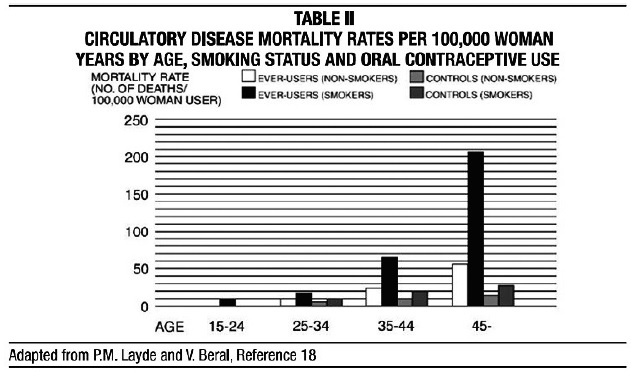
Cigarette smoking and oral contraceptives have a serious cardiovascular risk, particularly in women over 33 years of age who smoke 15 or more cigarettes per day. Women who use oral contraceptive are advised not to smoke.*
FDA Label Image

4 (Image 04)

FDA Label Image

5 (Image 05)

5 (Image 05)
This is a table presenting the annual number of birth or method-related deaths associated with control of fertility per 100,000 nonsterile women, categorized by method of control and age group. The table includes statistics for women aged 15-19, 20-24, 25-29, and 40-44. Fertility control methods presented in the table include no fertility control methods, oral contraceptives non-smoker, oral contraceptives smoker, IUD, condom, diaphragm/spermicide, and periodic abstinence. The deaths are either birth-related or method-related. The data is adapted from reference 41 by H.W. Ory.*
FDA Label Image

6 (Image 06)

6 (Image 06)
Cigarette smoking can lead to severe cardiovascular side effects when combined with oral contraceptives. The risk of such side effects is higher in older women, as well as in those who smoke heavily. Women above the age of 35 are at particular risk. Therefore, it is strongly recommended that women who are on oral contraceptives do not smoke.*
FDA Label Image

7 (Image 07)

7 (Image 07)
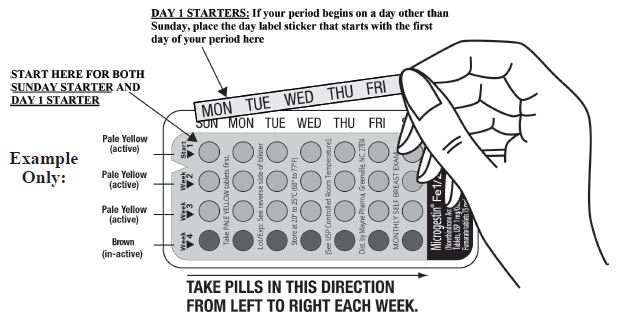
This text provides instructions for taking birth control pills. The first few lines mention using a day label sticker that corresponds with the first day of a person's menstrual period. The text then includes a chart with the days of the week and suggests taking pills left to right each week.*
FDA Label Image

8 (Image 08)

8 (Image 08)
Cigarette smoking while using oral contraceptives can lead to severe cardiovascular side effects. The risk is higher with age and heavy smoking (15 or more cigarettes per day) and is especially significant in women over 35 years old. Women who use oral contraceptives are strongly discouraged from smoking.*
FDA Label Image

9 (Image 09)

9 (Image 09)
Cigarette smoking can increase the possibility of severe cardiovascular complications when consuming oral contraceptives, particularly for females over 35 years of age and heavy smokers (15 or more cigarettes per day). Women who use oral contraceptives are recommended to avoid smoking.*
FDA Label Image

10 (Image 10)

10 (Image 10)
This data table shows the annual number of birth-related or method-related deaths per 100,000 nonsterile women by fertility control method, according to age. The table includes age ranges from 15 to 44 years old, broken down into 5-year increments. The methods of control and outcomes measured include no fertility control methods, oral contraceptives for non-smokers and smokers, TUD, condoms, diaphragm/spermicide, and periodic abstinence. The data also notes which deaths were birth-related versus method-related.*
FDA Label Image

11 (Image 11)

11 (Image 11)
This is a set of instructions for taking birth control pills. The text provides guidance on starting the pills on the first day of the menstrual cycle, and includes a sticker to label the starting day. There is also a chart to track pill-taking, which should occur from left to right each week.*
FDA Label Image

12 (Image 12)

FDA Label Image

Label Image (Lbl530022616)

* These product label images have been analyzed using experimental machine learning. Please verify findings with the primary label text.