Gabapentin
Product Images NDC 53002-3423

View Photos of Packaging, Regulatory Labels, and Product Appearance

Product Visual Gallery

This gallery contains 10 technical images submitted to the FDA as part of the official labeling for Gabapentin (NDC 53002-3423). Unlike standard consumer photos, these assets often include clinical data figures, molecular chemical structures, and official manufacturer packaging layouts.

As provided by Rpk Pharmaceuticals, Inc., these visuals offer a comprehensive scientific overview of the product's physical and chemical identity, aiding pharmacists and researchers in product verification and study.

FDA Label Image

1 (Image 1)

1 (Image 1)
A boxed formula for calculating creatinine clearance (CLCr) based on age, weight, serum creatinine, and gender, with a multiplication factor adjustment for female patients. It appears to be an excerpt from clinical or pharmacokinetic dosing information.*
FDA Label Image

1 (Image 2)

1 (Image 2)
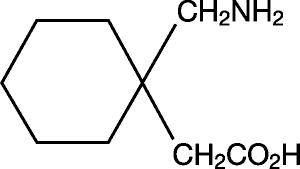
Chemical structure diagram of Gabapentin, showing its molecular configuration as used in the pharmaceutical product by RPK Pharmaceuticals, Inc., NDC 53002-3423.*
FDA Label Image

1 (Image 3)

1 (Image 3)
Gabapentin 600 mg capsules from RPK Pharmaceuticals, Inc. The label shows the brand name Gabapentin with strength 600 mg, dosage form capsules, and product NDC 53002-3423. The packaging is mainly white with purple and black text and includes typical prescription label information.*
FDA Label Image

1 (Image 4)

1 (Image 4)
Gabapentin 600 mg capsules in a blister pack with 14 capsules visible. The capsules are blue and white, provided by RPK Pharmaceuticals, Inc., labeled with product NDC 53002-3423.*
FDA Label Image

1 (Image 5)

1 (Image 5)
Chemical structure diagram showing a six-membered cyclohexane ring with two substituents: one labeled CH2NH2 and the other CH2CO2H, representing the active ingredient Gabapentin.*
FDA Label Image

1 (Image 6)

1 (Image 6)
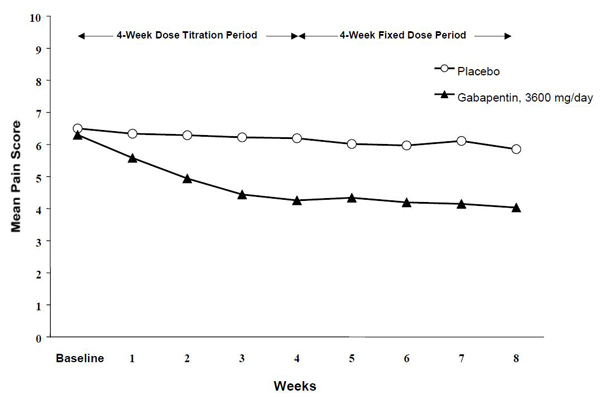
A line graph displaying mean pain scores over 8 weeks, comparing placebo and Gabapentin 3600 mg/day groups. The x-axis represents weeks, divided into a 4-week dose titration period and a 4-week fixed dose period. The y-axis measures mean pain scores from 0 to 10. Gabapentin shows a steady decrease in pain scores, while placebo remains relatively constant.*
FDA Label Image

2 (Image 7)

2 (Image 7)
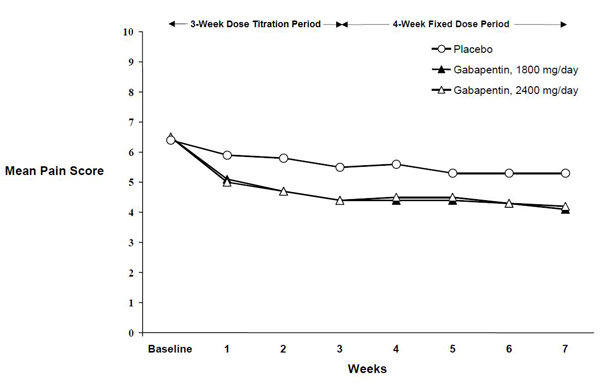
A line graph comparing mean pain scores over a 7 week period for placebo versus gabapentin at doses of 1800 mg/day and 2400 mg/day. The graph shows a 3-week dose titration period followed by a 4-week fixed dose period. Pain scores decrease more for gabapentin groups than placebo over time.*
FDA Label Image

3 (Image 8)

3 (Image 8)
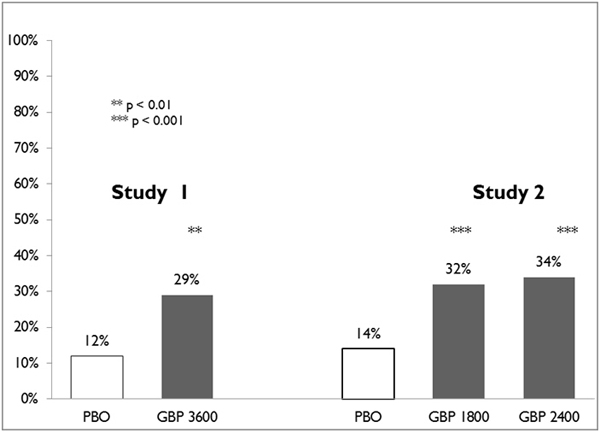
A bar chart comparing percentage outcomes in two studies labeled Study 1 and Study 2, with groups including placebo (PBO) and Gabapentin (GBP) at different dosages (3600 mg, 1800 mg, and 2400 mg). Statistical significance indicators (p < 0.01 and p < 0.001) are shown above certain bars.*
FDA Label Image

4 (Image 9)

4 (Image 9)
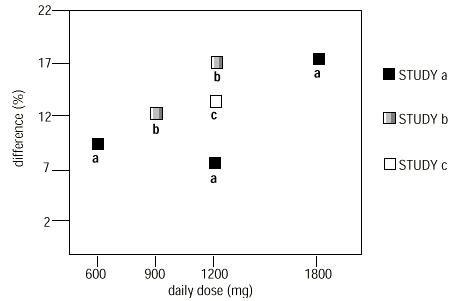
A scatter plot chart depicting differences (%) on the y-axis against daily dose (mg) on the x-axis for Gabapentin. Three studies labeled a, b, and c are shown with different markers. Study a is marked with black squares, study b with gray squares, and study c with white squares, illustrating variation in differences across doses from 600 mg to 1800 mg.*
FDA Label Image

Label Image (Lbl530023423)

Label Image (Lbl530023423)
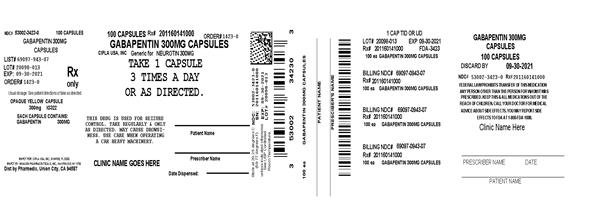
Gabapentin 300 mg capsules packaging label by RPK Pharmaceuticals, Inc. The label specifies a bottle containing 100 capsules. Directions instruct to take 1 capsule 3 times a day or as directed. The label includes dispensing information, lot number, expiration date, and placeholder fields for clinic and patient details. The capsules are described as yellow and opaque with 300 mg strength.*

* About these descriptions: Image descriptions on this page are generated by automated AI analysis of the product label images from the manufacturer's FDA label submission (SPL). They are provided for reference only and may contain errors or omissions. Always rely on the printed label itself and the official FDA labeling, and consult a pharmacist or healthcare professional with any questions about this product.