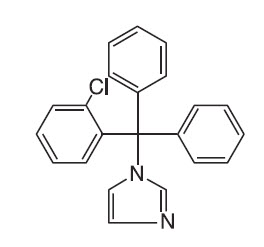
Risk Summary
There are no available data on topical betamethasone dipropionate or clotrimazole use in pregnant women to identify a clotrimazole and betamethasone dipropionate cream, 1%/0.05% (base) associated risk of major birth defects, miscarriage, or adverse maternal or fetal outcomes.
Observational studies suggest an increased risk of low birthweight infants with the use of potent or very potent topical corticosteroid during pregnancy. Advise pregnant women that clotrimazole and betamethasone dipropionate cream, 1%/0.05% (base)may increase the risk of having a low birthweight infant and to use clotrimazole and betamethasone dipropionate cream, 1%/0.05% (base) on the smallest area of skin and for the shortest duration possible.
There have been no reproduction studies performed in animals or humans with the combination of clotrimazole and betamethasone dipropionate. In an animal reproduction study, betamethasone dipropionate caused malformations (i.e., umbilical hernias, cephalocele, and cleft palate) in pregnant rabbits when given by the intramuscular route during organogenesis [see Data]. The available data do not allow the calculation of relevant comparisons between the systemic exposure of clotrimazole and/or betamethasone dipropionate observed in the animal studies to the systemic exposure that would be expected in humans after topical use of clotrimazole and betamethasone dipropionate cream, 1%/0.05% (base).
- The estimated background risk of major birth defects and miscarriage for the indicated population is unknown. All pregnancies have a background risk of birth defect, loss, or other adverse outcomes. In the U.S. general population, the estimated risk of major birth defects and miscarriage in clinically recognized pregnancies is 2 to 4% and 15 to 20%, respectively.
Data
Animal Data
Clotrimazole
Studies in pregnant rats treated during organogenesis with intravaginal doses up to 100 mg/kg/day revealed no evidence of fetotoxicity due to clotrimazole exposure.
No increase in fetal malformations was noted in pregnant rats receiving oral (gastric tube) clotrimazole doses up to 100 mg/kg/day during gestation Days 6 to 15. However, clotrimazole dosed at 100 mg/kg/day was embryotoxic (increased resorptions), fetotoxic (reduced fetal weights), and maternally toxic (reduced body weight gain) to rats. Clotrimazole dosed at 200 mg/kg/day was maternally lethal, and therefore, fetuses were not evaluated in this group. Also in this study, doses up to 50 mg/kg/day had no adverse effects on dams or fetuses. However, in the combined fertility, embryofetal development, and postnatal development study conducted in rats, 50 mg/kg/day clotrimazole was associated with reduced maternal weight gain and reduced numbers of offspring reared to 4 weeks [see Nonclinical Toxicology (13.1)].
Oral clotrimazole doses of 25, 50, 100, and 200 mg/kg/day did not cause malformations in pregnant mice. No evidence of maternal toxicity or embryotoxicity was seen in pregnant rabbits dosed orally during organogenesis with 60, 120, or 180 mg/kg/day.
Betamethasone Dipropionate
Betamethasone dipropionate caused malformations when given to pregnant rabbits during organogenesis by the intramuscular route at doses of 0.05 mg/kg/day. The abnormalities observed included umbilical hernias, cephalocele, and cleft palates.
Vasoconstrictor Assay
Studies performed with clotrimazole and betamethasone dipropionate cream, 1%/0.05% (base) indicate that these topical combination antifungal/corticosteroids may have vasoconstrictor potencies in a range that is comparable to high-potency topical corticosteroids. However, similar blanching scores do not necessarily imply therapeutic equivalence.
Mechanism of Action
Clotrimazole, an azole antifungal agent, inhibits 14-α-demethylation of lanosterol in fungi by binding to one of the cytochrome P-450 enzymes. This leads to the accumulation of 14-α-methylsterols and reduced concentrations of ergosterol, a sterol essential for a normal fungal cytoplasmic membrane. The methylsterols may affect the electron transport system, thereby inhibiting growth of fungi.
Activity In Vitro and In Vivo
Clotrimazole has been shown to be active against most strains of the following dermatophytes, both in vitro and in clinical infections, Epidermophyton floccosum, Trichophyton mentagrophytes, and Trichophyton rubrum [see Indications and Usage (1)].
Drug Resistance
Strains of dermatophytes having a natural resistance to clotrimazole have not been reported. Resistance to azoles, including clotrimazole, has been reported in some Candida species.
No single-step or multiple-step resistance to clotrimazole has developed during successive passages of Trichophyton mentagrophytes.