Digoxin
FDA Label NDC 53808-0165
13 label sections · Submitted to the FDA by Dept Health Central Pharmacy · Indications, Dosage, Usage, and Precautions
Structured Product Label
The following Structured Product Label (SPL) was submitted to the FDA by Dept Health Central Pharmacy for the product Digoxin (NDC 53808-0165). This document serves as the official prescribing information, containing essential scientific data and clinical materials required for healthcare providers and patients.
This specific version of the label includes detailed information regarding clinical pharmacology, mechanism of action, pharmacokinetics section: absorption, pharmacodynamics section, indications and usage, contraindications:, warnings, precautions, and other regulatory disclosures. Use the navigation below to review specific sections of the FDA submission.
Label Section Quick Index
Mechanism Of Action
Mechanism of Action: Digoxin inhibits sodium-potassium ATPase, an enzyme that regulates the quantity of sodium and potassium inside cells. Inhibition of the enzyme leads to an increase in the intracellular concentration of sodium and thus (by stimulation of sodium-calcium exchange) an increase in the intracellular concentration of calcium. The beneficial effects of digoxin result from direct actions on cardiac muscle, as well as indirect actions on the cardiovascular system mediated by effects on the autonomic nervous system. The autonomic effects include: (1) a vagomimetic action, which is responsible for the effects of digoxin on the sinoatrial and atrioventricular (AV) nodes; and (2) baroreceptor sensitization, which results in increased afferent inhibitory activity and reduced activity of the sympathetic nervous system and renin-angiotensin system for any given increment in mean arterial pressure. The pharmacologic consequences of these direct and indirect effects are: (1) an increase in the force and velocity of myocardial systolic contraction (positive inotropic action); (2) a decrease in the degree of activation of the sympathetic nervous system and renin-angiotensin system (neurohormonal deactivating effect); and (3) slowing of the heart rate and decreased conduction velocity through the AV node (vagomimetic effect). The effects of digoxin in heart failure are mediated by its positive inotropic and neu-rohormonal deactivating effects, whereas the effects of the drug in atrial arrhythmias are related to its vagomimetic actions. In high doses, digoxin increases sympathetic outflow from the central nervous system (CNS). This increase in sympathetic activity may be an important factor in digitalis toxicity.
Pharmacokinetics Section: Absorption
Pharmacokinetics:Absorption: Following oral administration, peak serum concentrations of digoxin occur at 1 to 3 hours.
Absorption of digoxin from digoxin tablets has been demonstrated to be 60% to 80% complete compared to an identical intravenous
dose of digoxin (absolute bioavailability) or LANOXICAPS® [Digoxin Solution in Capsules] (relative bioavailability). When digoxin
tablets are taken after meals, the rate of absorption is slowed, but the total amount of digoxin absorbed is usually unchanged. When
taken with meals high in bran fiber, however, the amount absorbed from an oral dose may be reduced. Comparisons of the systemic
availability and equivalent doses for oral preparations of digoxin are shown in Table 1.
In some patients, orally administered digoxin is converted to inactive reduction products (e.g., dihydrodigoxin) by colonic bacteria in
the gut. Data suggest that one in ten patients treated with digoxin tablets will degrade 40% or more of the ingested dose. As a result,
certain antibiotics may increase the absorption of digoxin in such patients. Although inactivation of these bacteria by antibiotics is
rapid, the serum digoxin concentration will rise at a rate consistent with the elimination half-life of digoxin. The magnitude of rise in
serum digoxin concentration relates to the extent of bacterial inactivation, and may be as much as two-fold in some cases.
Distribution: Following drug administration, a 6- to 8-hour tissue distribution phase is observed. This is followed by a much more
gradual decline in the serum concentration of the drug, which is dependent on the elimination of digoxin from the body. The peak
height and slope of the early portion, (absorption/distribution phases) of the serum concentration-time curve are dependent upon the
route of administration and the absorption characteristics of the formulation.
Clinical evidence indicates that the early high serum concentrations do not reflect the concentration of digoxin at its site of action,
but that with chronic use, the steady-state post-distribution serum concentrations are in equilibrium with tissue concentrations and
correlate with pharmacologic effects. In individual patients, these post-distribution serum concentrations may be useful in evaluating
therapeutic and toxic effects (see Dosage and Administration: Serum Digoxin Concentrations).
Digoxin is concentrated in tissues and therefore has a large apparent volume of distribution. Digoxin crosses both the blood-brain
barrier and the placenta. At delivery, the serum digoxin concentration in the newborn is similar to the serum concentration in the
mother. Approximately 25% of digoxin in the plasma is bound to protein. Serum digoxin concentrations are not significantly altered
by large changes in fat tissue weight, so that its distribution space correlates best with lean (i.e., ideal) body weight, not total body
weight.
Metabolism: Only a small percentage (16%) of a dose of digoxin is metabolized. The end metabolites, which include 3b-digoxigenin;
3-keto-digoxigenin, and their glucuronide and sulfate conjugates, are polar in nature and are postulated to be formed via hydrolysis,
oxidation, and conjugation. The metabolism of digoxin is not dependent upon the cytochrome P-450 system, and digoxin is not known
to induce or inhibit the cytochrome P-450 system.
Excretion: Elimination of digoxin follows first-order kinetics (that is, the quantity of digoxin eliminated at any time is proportional
to the total body content). Following intravenous administration to healthy volunteers, 50% to 70% of a digoxin dose is excreted
unchanged in the urine. Renal excretion of digoxin is proportional to glomerular filtration rate and is largely independent of urine
flow. In healthy volunteers with normal renal function, digoxin has a half-life of 1.5 to 2.0 days. The half-life in anuric patients
is prolonged to 3.5 to 5 days. Digoxin is not effectively removed from the body by dialysis, exchange transfusion, or during
cardiopulmonary bypass because most of the drug is bound to tissue and does not circulate in the blood.
Special Populations: Race differences in digoxin pharmacokinetics have not been formally studied. Because digoxin is primarily
eliminated as unchanged drug via the kidney and because there are no important differences in creatinine clearance among races,
pharmacokinetic differences due to race are not expected.
The clearance of digoxin can be primarily correlated with renal function as indicated by creatinine clearance. The Cockcroft and
Gault formula for estimation of creatinine clearance includes age, body weight, and gender. Table 5 that provides the usual daily
maintenance dose requirements of digoxin tablets based on creatinine clearance (per 70 kg) is presented in the DOSAGE AND
ADMINISTRATION section.
Plasma digoxin concentration profiles in patients with acute hepatitis generally fell within the range of profiles in a group of healthy
subjects.
Absorption of digoxin from digoxin tablets has been demonstrated to be 60% to 80% complete compared to an identical intravenous
dose of digoxin (absolute bioavailability) or LANOXICAPS® [Digoxin Solution in Capsules] (relative bioavailability). When digoxin
tablets are taken after meals, the rate of absorption is slowed, but the total amount of digoxin absorbed is usually unchanged. When
taken with meals high in bran fiber, however, the amount absorbed from an oral dose may be reduced. Comparisons of the systemic
availability and equivalent doses for oral preparations of digoxin are shown in Table 1.
| Product | Absolute Bioavailability | Equivalent Doses (mcg)* Amoung Dosage Forms |
|---|---|---|
| Digoxin Tablets | 60-80% | 62.5 125 250 500 |
| Digoxin Elixir Pediatric | 70-85% | 62.5 125 250 500 |
| Digoxin Solution in Capsules | 90-100% | 50 100 200 400 |
| Digoxin Injection/IV | 100% | 50 100 200 400 |
the gut. Data suggest that one in ten patients treated with digoxin tablets will degrade 40% or more of the ingested dose. As a result,
certain antibiotics may increase the absorption of digoxin in such patients. Although inactivation of these bacteria by antibiotics is
rapid, the serum digoxin concentration will rise at a rate consistent with the elimination half-life of digoxin. The magnitude of rise in
serum digoxin concentration relates to the extent of bacterial inactivation, and may be as much as two-fold in some cases.
Distribution: Following drug administration, a 6- to 8-hour tissue distribution phase is observed. This is followed by a much more
gradual decline in the serum concentration of the drug, which is dependent on the elimination of digoxin from the body. The peak
height and slope of the early portion, (absorption/distribution phases) of the serum concentration-time curve are dependent upon the
route of administration and the absorption characteristics of the formulation.
Clinical evidence indicates that the early high serum concentrations do not reflect the concentration of digoxin at its site of action,
but that with chronic use, the steady-state post-distribution serum concentrations are in equilibrium with tissue concentrations and
correlate with pharmacologic effects. In individual patients, these post-distribution serum concentrations may be useful in evaluating
therapeutic and toxic effects (see Dosage and Administration: Serum Digoxin Concentrations).
Digoxin is concentrated in tissues and therefore has a large apparent volume of distribution. Digoxin crosses both the blood-brain
barrier and the placenta. At delivery, the serum digoxin concentration in the newborn is similar to the serum concentration in the
mother. Approximately 25% of digoxin in the plasma is bound to protein. Serum digoxin concentrations are not significantly altered
by large changes in fat tissue weight, so that its distribution space correlates best with lean (i.e., ideal) body weight, not total body
weight.
Metabolism: Only a small percentage (16%) of a dose of digoxin is metabolized. The end metabolites, which include 3b-digoxigenin;
3-keto-digoxigenin, and their glucuronide and sulfate conjugates, are polar in nature and are postulated to be formed via hydrolysis,
oxidation, and conjugation. The metabolism of digoxin is not dependent upon the cytochrome P-450 system, and digoxin is not known
to induce or inhibit the cytochrome P-450 system.
Excretion: Elimination of digoxin follows first-order kinetics (that is, the quantity of digoxin eliminated at any time is proportional
to the total body content). Following intravenous administration to healthy volunteers, 50% to 70% of a digoxin dose is excreted
unchanged in the urine. Renal excretion of digoxin is proportional to glomerular filtration rate and is largely independent of urine
flow. In healthy volunteers with normal renal function, digoxin has a half-life of 1.5 to 2.0 days. The half-life in anuric patients
is prolonged to 3.5 to 5 days. Digoxin is not effectively removed from the body by dialysis, exchange transfusion, or during
cardiopulmonary bypass because most of the drug is bound to tissue and does not circulate in the blood.
Special Populations: Race differences in digoxin pharmacokinetics have not been formally studied. Because digoxin is primarily
eliminated as unchanged drug via the kidney and because there are no important differences in creatinine clearance among races,
pharmacokinetic differences due to race are not expected.
The clearance of digoxin can be primarily correlated with renal function as indicated by creatinine clearance. The Cockcroft and
Gault formula for estimation of creatinine clearance includes age, body weight, and gender. Table 5 that provides the usual daily
maintenance dose requirements of digoxin tablets based on creatinine clearance (per 70 kg) is presented in the DOSAGE AND
ADMINISTRATION section.
Plasma digoxin concentration profiles in patients with acute hepatitis generally fell within the range of profiles in a group of healthy
subjects.
Pharmacodynamics Section
Pharmacodynamic and Clinical Effects: The times to onset of pharmacologic effect and to peak effect of preparations of digoxin
tablets are shown in Table 2.
* Documented for ventricular response rate in atrial fibrillation, inotropic effects and electrocardiographic changes.
† Depending upon rate of infusion.
Hemodynamic Effects: Digoxin produces hemodynamic improvement in patients with heart failure. Short- and long-term therapy
with the drug increases cardiac output and lowers pulmonary artery pressure, pulmonary capillary wedge pressure, and systemic
vascular resistance. These hemodynamic effects are accompanied by an increase in the left ventricular ejection fraction and a decrease
in end-systolic and end-diastolic dimensions.
tablets are shown in Table 2.
| Product | Time to Onset of Effect* | Time to Peak Effect |
|---|---|---|
| Digoxin Tablets | 0.5 - 2 hours | 2 - 6 hours |
| Digoxin Elixir Pediatric | 0.5 - 2 hours | 2 - 6 hours |
| Digoxin Soultion in Capsules | 0.5 - 2 hours | 2 - 6 hours |
| Digoxin Injection/IV | 5-30 minutes | 1 - 4 hours |
† Depending upon rate of infusion.
Hemodynamic Effects: Digoxin produces hemodynamic improvement in patients with heart failure. Short- and long-term therapy
with the drug increases cardiac output and lowers pulmonary artery pressure, pulmonary capillary wedge pressure, and systemic
vascular resistance. These hemodynamic effects are accompanied by an increase in the left ventricular ejection fraction and a decrease
in end-systolic and end-diastolic dimensions.
Indications And Usage
INDICATIONS AND USAGE:Heart Failure: Digoxin is indicated for the treatment of mild to moderate heart failure. Digoxin increases left ventricular ejectionfraction and improves heart failure symptoms as evidenced by exercise capacity and heart failure-related hospitalizations andemergency care, while having no effect on mortality. Where possible, digoxin should be used with a diuretic and an angiotensinconvertingenzyme inhibitor, but an optimal order for starting these three drugs cannot be specified.Atrial Fibrillation: Digoxin is indicated for the control of ventricular response rate in patients with chronic atrial fibrillation
Contraindications:
CONTRAINDICATIONS:Digitalis glycosides are contraindicated in patients with ventricular fibrillation or in patients with a known hypersensitivity to digoxin.A hypersensitivity reaction to other digitalis preparations usually constitutes a contraindication to digoxin.
Warnings
WARNINGS:
Sinus Node Disease and AV Block: Because digoxin slows sinoatrial and AV conduction, the drug commonly prolongs the PR
interval. The drug may cause severe sinus bradycardia or sinoatrial block in patients with preexisting sinus node disease and may
cause advanced or complete heart block in patients with preexisting incomplete AV block. In such patients consideration should be
given to the insertion of a pacemaker before treatment with digoxin.
Accessory AV Pathway (Wolff-Parkinson-White Syndrome): After intravenous digoxin therapy, some patients with paroxysmal
atrial fibrillation or flutter and a coexisting accessory AV pathway have developed increased antegrade conduction across the
accessory pathway bypassing the AV node, leading to a very rapid ventricular response or ventricular fibrillation. Unless conduction
down the accessory pathway has been blocked (either pharmacologically or by surgery), digoxin should not be used in such patients.
The treatment of paroxysmal supraventricular tachycardia in such patients is usually direct-current cardioversion.
Use in Patients with Preserved Left Ventricular Systolic Function: Patients with certain disorders involving heart failure
associated with preserved left ventricular ejection fraction may be particularly susceptible to toxicity of the drug. Such disorders
include restrictive cardiomyopathy, constrictive pericarditis, amyloid heart disease, and acute cor pulmonale. Patients with idiopathic
hypertrophic subaortic stenosis may have worsening of the outflow obstruction due to the inotropic effects of digoxin.
Precautions
PRECAUTIONS:Use in Patients with Impaired Renal Function: Digoxin is primarily excreted by the kidneys; therefore, patients with impairedrenal function require smaller than usual maintenance doses of digoxin (see DOSAGE AND ADMINISTRATION). Because ofthe prolonged elimination half-life, a longer period of time is required to achieve an initial or new steady-state serum concentrationin patients with renal impairment than in patients with normal renal function. If appropriate care is not taken to reduce the dose ofdigoxin, such patients are at high risk for toxicity, and toxic effects will last longer in such patients than in patients with normal renalfunction.Use in Patients with Electrolyte Disorders: In patients with hypokalemia or hypomagnesemia, toxicity may occur despite serumdigoxin concentrations below 2 ng/mL, because potassium or magnesium depletion sensitizes the myocardium to digoxin. Therefore,it is desirable to maintain normal serum potassium and magnesium concentrations in patients being treated with digoxin. Deficienciesof these electrolytes may result from malnutrition, diarrhea, or prolonged vomiting, as well as the use of the following drugs orprocedures: diuretics, amphotericin B, corticosteroids, antacids, dialysis, and mechanical suction of gastrointestinal secretions.Hypercalcemia from any cause predisposes the patient to digitalis toxicity. Calcium, particularly when administered rapidly by theintravenous route, may produce serious arrhythmias in digitalized patients. On the other hand, hypocalcemia can nullity the effects ofdigoxin in humans; thus, digoxin may be ineffective until serum calcium is restored to normal. These interactions are related to thefact that digoxin affects contractility and excitability of the heart in a manner similar to that of calcium.Use in Thyroid Disorders and Hypermetabolic States: Hypothyroidism may reduce the requirements for digoxin. Heart failure and/or atrial arrhythmias resulting from hypermetabolic or hyperdynamic states (e.g., hyperthyroidism, hypoxia or arteriovenous shunt) arebest, treated by addressing the underlying condition. Atrial arrhythmias associated with hypermetabolic states are particularly resistantto digoxin treatment. Care must be taken to avoid toxicity if digoxin is used.Use in Patients with Acute Myocardial Infarction: Digoxin should be used with caution in patients with acute myocardialinfarction. The use of inotropic drugs in some patients in this setting may result in undesirable increases in myocardial oxygen demandand ischemia.Use During Electrical Cardioversion: It may be desirable to reduce the dose of digoxin for 1 to 2 days prior to electricalcardioversion of atrial fibrillation to avoid the induction of ventricular arrhythmias, but physicians must consider the consequencesof increasing the ventricular response if digoxin is withdrawn. If digitalis toxicity is suspected, elective cardioversion should bedelayed. If it is not prudent to delay cardioversion, the lowest possible energy level should be selected to avoid provoking ventriculararrhythmias.Laboratory Test Monitoring: Patients receiving digoxin should have their serum electrolytes and renal function (serum creatinineconcentrations) assessed periodically; the frequency of assessments will depend on the clinical setting. For discussion of serumdigoxin concentrations; see DOSAGE AND ADMINISTRATION section.Drug Interactions: Potassium-depleting diuretics are a major contributing factor to digitalis toxicity. Calcium, particularly ifadministered rapidly by the intravenous route, may produce serious arrhythmias in digitalized patients. Quinidine, verapamil,amiodarone, propafenone, indomethacin, itraconazole, alprazolam, and spironolactone raise the serum digox-in concentration dueto a reduction in clearance and/or in volume of distribution of the drug, with the implication that digitalis intoxication may result.Erythromycin and clarithromycin (and possibly other macrolide antibiotics) and tetracy-cline may increase digoxin absorptionin patients who inactivate digoxin by bacterial metabolism in the lower intestine, so that digitalis intoxication may result (seeCLINICAL PHARMACOLOGY: Absorption). Propantheline and diphenoxylate, by decreasing gut motility, may increase digoxinabsorption. Antacids, kaolin-pectin, sulfasalazine, neomycin, cholestyramine; certain anticancer drugs, and metoclopramide mayinterfere with intestinal digoxin absorption, resulting in unexpectedly low serum concentrations. Rifampin may decrease serumdigoxin concentration, especially in patients with renal dysfunction, by increasing the non-renal clearance of digoxin. There havebeen inconsistent reports regarding the effects of other drugs [e.g., quinine, penicillamine] on serum digoxin concentration. Thyroidadministration to a digitalized, hypothyroid patient may increase the dose requirement of digoxin. Concomitant use of digoxin andsympathomimetics increases the risk of cardiac arrhythmias. Succinylcholine may cause a sudden extrusion of potassium from musclecells, and may thereby cause arrhythmias in digitalized patients. Although beta-adrenergic blockers or calcium channel blockers anddigoxin may be useful in combination to control atrial fibrillation, their additive effects on AV node conduction can result in advancedor complete heart block.Due to the considerable variability of these interactions; the dosage of digoxin should be individualized when patients receivethese medications concurrently. Furthermore, caution should be exercised when combining digoxin with any drug that may causea significant deterioration in renal function, since a decline in glomerular filtration or tubular secretion may impair the excretion ofdigoxin.Drug/Laboratory Test Interactions: The use of therapeutic doses of digoxin may cause prolongation of the PR interval anddepression of the ST segment on the electrocardiogram. Digoxin may produce false positive ST-T changes on the electrocardiogramduring exercise testing. These electrophysiologic effects reflect an expected effect of the drug and are not indicative of toxicity.Carcinogenesis, Mutagenesis, Impairment of Fertility: There have been no long-term studies performed in animals to evaluatecarcinogenic potential; nor have studies been conducted to assess the mutagenic potential of digoxin or its potential to affect fertility.Pregnancy: Teratogenic Effects: Pregnancy Category C: Animal reproduction studies have not been conducted with digoxin. Itis also not known whether digoxin can cause fetal harm when administered to a pregnant woman or can affect reproductive capacity.Digoxin should be given to a pregnant woman only if clearly needed.Nursing Mothers: Studies have shown that digoxin concentrations in the mother's serum and milk are similar. However, theestimated exposure of a nursing infant to digoxin via breast feeding will be far below the usual infant maintenance dose. Therefore,this amount should have no pharmacologic effect upon the infant. Nevertheless, caution should be exercised when digoxin isadministered to a nursing woman.Pediatric Use: Newborn infants display considerable variability in their tolerance to digoxin. Premature and immature infants areparticularly sensitive to the effects of digoxin, and the dosage of the drug must not only be reduced but must be individualizedaccording to their degree of maturity. Digitalis glycosides can cause poisoning in children due to accidental ingestion.Geriatric Use: The majority of clinical experience gained with digoxin has been in the elderly population. This experience hasnot identified differences in response or adverse effects between the elderly and younger patients. However, this drug is known tobe substantially excreted by the kidney, and the risk of toxic reactions to this drug may be greater in patients with impaired renalfunction. Because elderly patients are more likely to have decreased renal function, care should be taken in dose selection, whichshould be based on renal function, and it may be useful to monitor renal function (see DOSAGE AND ADMINISTRATION).
Adverse Reaction
ADVERSE REACTIONS:
In general, the adverse reactions of digoxin are dose-dependent and occur at doses higher than those needed to achieve a therapeutic
effect. Hence, adverse reactions are less common when digoxin is used within the recommended dose range or therapeutic serum
concentration range and when there is careful attention to concurrent medications and conditions. Because some patients may be particularly susceptible to side effects with digoxin, the dosage of the drug should always be selected
carefully and adjusted as the clinical condition of the patient warrants. In the past, when high doses of digoxin were used and little
attention was paid to clinical status or concurrent medications, adverse reactions to digoxin were more frequent and severe. Cardiac
adverse reactions accounted for about one-half, gastrointestinal disturbances for about one-fourth, and CNS and other toxicity for
about one-fourth of these adverse reactions. However, available evidence suggests that the incidence and severity of digoxin toxicity
has decreased substantially in recent years. In recent controlled clinical trials, in patients with predominantly mild to moderate
heart failure, the incidence of adverse experiences was comparable in patients taking digoxin and in those taking placebo. In a large
mortality trial, the incidence of hospitalization for suspected digoxin toxicity was 2% in patients taking digoxin compared to 0.9%
in patients taking placebo. In this trial, the most common manifestations of digoxin toxicity included gastrointestinal and cardiac
disturbances; CNS manifestations were less common.
Adults: Cardiac: Therapeutic doses of digoxin may cause heart block in patients with pre-existing sinoatrial or AV conduction
disorders; heart block can be avoided by adjusting the dose of digoxin. Prophylactic use of a cardiac pacemaker may be considered if
the risk of heart block is considered unacceptable. High doses of digoxin may produce a variety of rhythm disturbances, such as firstdegree,
second-degree (Wenckebach), or third-degree heart block (including asystole); atrial tachycardia with block; AV dissociation;
accelerated junctional (nodal) rhythm; unifocal or multiform ventricular premature contractions (especially bigeminy or trigeminy);
ventricular tachycardia; and ventricular fibrillation. Digoxin produces PR prolongation and ST segment depression which should not
by themselves be considered digoxin toxicity. Cardiac toxicity can also occur at therapeutic doses in patients who have conditions
which may alter their sensitivity to digoxin (see WARNINGS and PRECAUTIONS).
Gastrointestinal: Digoxin may cause anorexia, nausea, vomiting, and diarrhea. Rarely, the use of digoxin has been associated with
abdominal pain, intestinal ischemia, and hemorrhagic necrosis of the intestines.
CNS: Digoxin can produce visual disturbances (blurred or yellow vision), headache, weakness, dizziness, apathy, confusion, and
mental disturbances (such as anxiety, depression, delirium; and hallucination).
Other: Gynecomastia has been occasionally observed following the prolonged use of digoxin. Thrombocytopenia and maculopapular
rash and other skin reactions have been rarely observed.
Table 4 summarizes the incidence of those adverse experiences listed above for patients treated with Digoxin Tablets or placebo
from two randomized, double-blind, placebo-controlled withdrawal trials. Patients in these trials were also receiving diuretics with
or without angiotensin-converting enzyme inhibitors. These patients had been stable on digoxin, and were randomized to digoxin
or placebo. The results shown in Table 4 reflect the experience inpatients following dosage titration with the use of serum digoxin
concentrations and careful follow-up. These adverse experiences are consistent with results from a large, placebo-controlled mortality
trial (DIG trial) wherein over half the patients were not receiving digoxin prior to enrollment.
Infants and Children: The side effects of digoxin in infants and children differ from those seen in adults in several respects.
Although digoxin may produce anorexia, nausea, vomiting, diarrhea, and CNS disturbances in young patients, these are rarely the
initial symptoms of overdosage. Rather, the earliest and most frequent manifestation of excessive dosing with digoxin in infants
and children is the appearance of cardiac arrhythmias, including sinus bradycardia. In children, the use of digoxin may produce any arrhythmia. The most common are conduction disturbances of supraventricular tachyarrhythmias, such as atrial tachycardia (with
or without block) and junctional (nodal) tachycardia. Ventricular arrhythmias are less common. Sinus bradycardia may be a sign of
impending digoxin intoxication, especially in infants, even in the absence of first-degree heart block. Any arrhythmia or alteration in
cardiac conduction that develops in a child taking digoxin should be assumed to be caused by digoxin, until further evaluation proves
otherwise.
In general, the adverse reactions of digoxin are dose-dependent and occur at doses higher than those needed to achieve a therapeutic
effect. Hence, adverse reactions are less common when digoxin is used within the recommended dose range or therapeutic serum
concentration range and when there is careful attention to concurrent medications and conditions. Because some patients may be particularly susceptible to side effects with digoxin, the dosage of the drug should always be selected
carefully and adjusted as the clinical condition of the patient warrants. In the past, when high doses of digoxin were used and little
attention was paid to clinical status or concurrent medications, adverse reactions to digoxin were more frequent and severe. Cardiac
adverse reactions accounted for about one-half, gastrointestinal disturbances for about one-fourth, and CNS and other toxicity for
about one-fourth of these adverse reactions. However, available evidence suggests that the incidence and severity of digoxin toxicity
has decreased substantially in recent years. In recent controlled clinical trials, in patients with predominantly mild to moderate
heart failure, the incidence of adverse experiences was comparable in patients taking digoxin and in those taking placebo. In a large
mortality trial, the incidence of hospitalization for suspected digoxin toxicity was 2% in patients taking digoxin compared to 0.9%
in patients taking placebo. In this trial, the most common manifestations of digoxin toxicity included gastrointestinal and cardiac
disturbances; CNS manifestations were less common.
Adults: Cardiac: Therapeutic doses of digoxin may cause heart block in patients with pre-existing sinoatrial or AV conduction
disorders; heart block can be avoided by adjusting the dose of digoxin. Prophylactic use of a cardiac pacemaker may be considered if
the risk of heart block is considered unacceptable. High doses of digoxin may produce a variety of rhythm disturbances, such as firstdegree,
second-degree (Wenckebach), or third-degree heart block (including asystole); atrial tachycardia with block; AV dissociation;
accelerated junctional (nodal) rhythm; unifocal or multiform ventricular premature contractions (especially bigeminy or trigeminy);
ventricular tachycardia; and ventricular fibrillation. Digoxin produces PR prolongation and ST segment depression which should not
by themselves be considered digoxin toxicity. Cardiac toxicity can also occur at therapeutic doses in patients who have conditions
which may alter their sensitivity to digoxin (see WARNINGS and PRECAUTIONS).
Gastrointestinal: Digoxin may cause anorexia, nausea, vomiting, and diarrhea. Rarely, the use of digoxin has been associated with
abdominal pain, intestinal ischemia, and hemorrhagic necrosis of the intestines.
CNS: Digoxin can produce visual disturbances (blurred or yellow vision), headache, weakness, dizziness, apathy, confusion, and
mental disturbances (such as anxiety, depression, delirium; and hallucination).
Other: Gynecomastia has been occasionally observed following the prolonged use of digoxin. Thrombocytopenia and maculopapular
rash and other skin reactions have been rarely observed.
Table 4 summarizes the incidence of those adverse experiences listed above for patients treated with Digoxin Tablets or placebo
from two randomized, double-blind, placebo-controlled withdrawal trials. Patients in these trials were also receiving diuretics with
or without angiotensin-converting enzyme inhibitors. These patients had been stable on digoxin, and were randomized to digoxin
or placebo. The results shown in Table 4 reflect the experience inpatients following dosage titration with the use of serum digoxin
concentrations and careful follow-up. These adverse experiences are consistent with results from a large, placebo-controlled mortality
trial (DIG trial) wherein over half the patients were not receiving digoxin prior to enrollment.
| Adverse Experience | Digoxin Patients (n=123) | Placebo Patients (n=125) |
|---|---|---|
| Cardiac Palpitation Ventricular Extrasystole Tachycardia Heart Arrest | 1 1 2 1 | 4 1 1 1 |
| Gastrointestional Anorexia Nausea Vomiting Diarrhea Abdominal pain | 1 4 2 4 0 | 4 2 1 1 6 |
| CNS Headache Dizziness Mental Disturbances | 4 6 5 | 4 5 1 |
| Other Rash Death | 2 4 | 1 3 |
Although digoxin may produce anorexia, nausea, vomiting, diarrhea, and CNS disturbances in young patients, these are rarely the
initial symptoms of overdosage. Rather, the earliest and most frequent manifestation of excessive dosing with digoxin in infants
and children is the appearance of cardiac arrhythmias, including sinus bradycardia. In children, the use of digoxin may produce any arrhythmia. The most common are conduction disturbances of supraventricular tachyarrhythmias, such as atrial tachycardia (with
or without block) and junctional (nodal) tachycardia. Ventricular arrhythmias are less common. Sinus bradycardia may be a sign of
impending digoxin intoxication, especially in infants, even in the absence of first-degree heart block. Any arrhythmia or alteration in
cardiac conduction that develops in a child taking digoxin should be assumed to be caused by digoxin, until further evaluation proves
otherwise.
Overdose Section
OVERDOSAGE:Treatment of Adverse Reactions Produced by Overdosage: Digoxin should be temporarily discontinued until the adversereaction resolves. Every effort should also be made to correct factors that may contribute to the adverse reaction (such as electrolytedisturbances or concurrent medications). Once the adverse reaction has resolved, therapy with digoxin may be reinstituted, following acareful reassessment of dose.Withdrawal of digoxin may be all that is required to treat the adverse reaction. However, when the primary manifestation of digoxinoverdosage is a cardiac arrhythmia, additional therapy may be needed.If the rhythm disturbance is a symptomatic bradyarrhythmia or heart block, consideration should be given to the reversal of toxicitywith DIGIBIND® [Digoxin Immune Fab (Ovine)] (see Massive Digitalis Overdosage subsection), the use of atropine, or theinsertion of a temporary cardiac pacemaker. However, asymptomatic bradycardia or heart block related to digoxin may require onlytemporary withdrawal of the drug and cardiac monitoring of the patient.If the rhythm disturbance is a ventricular arrhythmia, consideration should be given to the correction of electrolyte disorders,particularly if hyperkalemia (see Administration of Potassium subsection) or hypomagnesemia is present. DIGIBIND is a specificantidote for digoxin and may be used to reverse potentially life-threatening ventricular arrhythmias due to digoxin overdosage.Administration of Potassium: Every effort should be made to maintain the serum potassium concentration between 4.0 and5.5 mmol/L. Potassium is usually administered orally, but when correction of the arrhythmia is urgent and the serum potassiumconcentration is low, potassium may be administered cautiously by the intravenous route. The electrocardiogram should be monitoredfor any evidence of potassium toxicity (e.g., peaking of T waves) and to observe the effect on the arrhythmia. Potassium salts may bedangerous in patients who manifest bradycardia or heart block due to digoxin (unless primarily related to supraventricular tachycardia)and in the setting of massive digitalis overdosage (see Massive Digitalis Overdosage subsection).Massive Digitalis Overdosage: Manifestations of life-threatening toxicity include ventricular tachycardia or ventricular fibrillation,or progressive bradyarrhythmias, or heart block. The administration of more than 10 mg of digoxin in a previously healthy adult, ormore than 4 mg in a previously healthy child, or a steady-state serum concentration greater than 10 ng/mL often results in cardiacarrest.DIGIBIND should be used to reverse the toxic effects of ingestion of a massive overdose. The decision to administer DIGIBIND toa patient who has ingested a massive dose of digoxin but who has not yet manifested life-threatening toxicity should depend on thelikelihood that life-threatening toxicity will occur (see above).Patients with massive digitalis ingestion should receive large doses of activated charcoal to prevent absorption and bind digoxin inthe gut during enteroenteric recirculation. Emesis or gastric lavage may be indicated especially if ingestion has occurred within 30minutes of the patient's presentation at the hospital. Emesis should not be induced in patients who are obtunded. If a patient presentsmore than 2 hours after ingestion or already has toxic manifestations, it may be unsafe to induce vomiting or attempt passage of agastric tube, because such maneuvers may induce an acute vagal episode that can worsen digitalis-related arrhythmias.Severe digitalis intoxication can cause a massive shift of potassium from inside to outside the cell, leading to life-threateninghyperkalemia. The administration of potassium supplements in the setting of massive intoxication may be hazardous and should beavoided. Hyperkalemia caused by massive digitalis toxicity is best treated with DIGIBIND; initial treatment with glucose and insulinmay also be required if hyperkalemia itself is acutely life-threatening.
Dosage & Administration
DOSAGE AND ADMINISTRATION:General: Recommended dosages of digoxin may require considerable modification because of individual sensitivity of the patientto the drug, the presence of associated conditions, or the use of concurrent medications. In selecting a dose of digoxin, the followingfactors must be considered:1. The body weight of the patient. Doses should be calculated based upon lean (i.e., ideal) body weight.2. The patient's renal function, preferably evaluated on the basis of estimated creatinine clearance.3. The patient's age. Infants and children require different doses of digoxin than adults. Also, advanced age may be indicative ofdiminished renal function even in patients with normal serum creatinine concentration (i.e., below 1.5 mg/dL).4. Concomitant disease states, concurrent medications, or other factors likely to alter the pharmacokinetic or pharma-codynamicprofile of digoxin (see PRECAUTIONS).Serum Digoxin Concentrations: In general, the dose of digoxin used should be determined on clinical grounds. However,measurement of serum digoxin concentrations can be helpful to the clinician in determining the adequacy of digoxin therapy and inassigning certain probabilities to the likelihood of digoxin intoxication. About two-thirds of adults considered adequately digitalized (without evidence of toxicity) have serum digoxin concentrations ranging from 0.8 to 2 ng/mL. However, digoxin may produceclinical benefits even at serum concentrations below this range. About two-thirds of adult patients with clinical toxicity have serumdigoxin concentrations greater than 2 ng/mL. However, since one-third of patients with clinical toxicity have concentrations less than2 ng/mL, values below 2 ng/mL do not rule out the possibility that a certain sign or symptom is related to digoxin therapy. Rarely,there are patients who are unable to tolerate digoxin at serum concentrations below 0.8 ng/mL. Consequently, the serum concentrationof digoxin should always be interpreted in the overall clinical context, and an isolated measurement should not be used alone as thebasis for increasing or decreasing the dose of the drug.To allow adequate time for equilibration of digoxin between serum and tissue, sampling of serum concentrations should be done justbefore the next scheduled dose of the drug. If this is not possible, sampling should be done at least 6 to 8 hours after the last dose,regardless of the route of administration or the formulation used. On a once-daily dosing schedule, the concentration of digoxin will be10% to 25% lower when sampled at 24 versus 8 hours, depending upon the patient's renal function. On a twice-daily dosing schedule,there will be only minor differences in serum digoxin concentrations whether sampling is done at 8 or 12 hours after a dose.If a discrepancy exists between the reported serum concentration and the observed clinical response, the clinician should consider thefollowing possibilities:1. Analytical problems in the assay procedure.2. Inappropriate serum sampling time.3. Administration of a digitalis glycoside other than digoxin.4. Conditions (described in WARNINGS and PRECAUTIONS) causing an alteration in the sensitivity of the patient to digoxin.5. Serum digoxin concentration may decrease acutely during periods of exercise without any associated change in clinical efficacydue to increased binding of digoxin to skeletal muscle.Heart Failure: Adults: Digitalization may be accomplished by either of two general approaches that vary in dosage and frequency ofadministration, but reach the same endpoint in terms of total amount of digoxin accumulated in the body.1. If rapid digitalization is considered medically appropriate, it may be achieved by administering a loading dose based uponprojected peak digoxin body stores. Maintenance dose can be calculated as a percentage of the loading dose2. More gradual digitalization may be obtained by beginning an appropriate maintenance dose, thus allowing digoxin body stores toaccumulate slowly. Steady-state serum digoxin concentrations will be achieved in approximately five half-lives of the drug for theindividual patient. Depending upon the patient's renal function, this will take between 1 and 3 weeks.Rapid Digitalization with a Loading Dose: Peak digoxin body stores of 8 to 12 mcg/kg should provide therapeutic effect withminimum risk of toxicity in most patients with heart failure and normal sinus rhythm. Because of altered digoxin distribution andelimination, projected peak body stores for patients with renal insufficiency should be conservative (i.e., 6 to 10 mcg/kg) [seePRECAUTIONS].The loading dose should be administered in several portions, with roughly half the total given as the first dose. Additional fractions ofthis planned total dose may be given at 6- to-8-hour intervals, with careful assessment of clinical response before each additionaldose. If the patient's clinical response necessitates a change from the calculated loading dose of digoxin, then calculation of themaintenance dose should be based upon the amount actually given.A single initial dose of 500 to 750 mcg (0.5 to 0.75 mg) of digoxin tablets usually produces a detectable effect in 0.5 to 2 hours thatbecomes maximal in 2 to 6 hours. Additional doses of 125 to 375 mcg (0.125 to 0.375 mg) may be given cautiously at 6-to 8-hourintervals until clinical evidence of an adequate effect is noted. The usual amount of digoxin tablets that a 70 kg patient requires toachieve 8 to 12 mcg/kg peak body stores is 750 to 1250 mcg (0.75 to 1.25 mg).Digoxin Injection is frequently used to achieve rapid digitalization with conversion to digoxin tablets or digoxin solution in capsulesfor maintenance therapy. If patients are switched from intravenous to oral digoxin formulations, allowances must be made fordifferences in bioavailability when calculating maintenance dosages (see Table 1, CLINICAL PHARMACOLOGY).Maintenance Dosing: The doses of digoxin used in controlled trials in patients with heart failure have ranged from 125 to 500 mcg(0.125 to 0.5 mg) once daily. In these studies, the digoxin dose has been generally titrated according to the patient's age, lean bodyweight, and renal function. Therapy is generally initiated at a dose of 250 mcg (0.25 mg) once daily in patients under age 70 withgood renal function, at a dose of 125 mcg (0.125 mg) once daily in patients over age 70 or with impaired renal function, and at adose of 62.5 mcg (0.0625 mg) in patients with marked renal impairment. Doses may be increased every 2 weeks according to clinicalresponse.In a subset of approximately 1800 patients enrolled in the DIG trial (wherein dosing was based on an algorithm similar to that inTable 5) the mean (± SD) serum digoxin concentrations at 1 month and 12 months were 1.01 ± 0.47 ng/mL and 0.97 ± 0:43 ng/mL,respectively.The maintenance dose should be based upon the percentage of the peak body stores lost each day through elimination. The followingformula has had wide clinical use:Maintenance Dose = Peak Body Stores (i.e., Loading Dose) x % Daily Loss/100 Where: % Daily Loss = 14 + Ccr/5.(Ccr is creatinine clearance, corrected to 70 kg body weight or 1.73 m2 body surface area.)Example: Based on Table 5, a patient in heart failure with an estimated lean body weight of 70 kg and a Ccr of 60 mL/min should begiven a dose of 250 mcg (0.25 mg) daily of digoxin tablets, usually taken after the morning meal. If no loading dose is administered,steady-state serum concentrations in this patient should be anticipated at approximately 11 days.Infants and Children: In general, divided daily dosing is recommended for infants and young children (under age 10). In thenewborn period, renal clearance of digoxin is diminished and suitable dosage adjustments must be observed. This is especiallypronounced in the premature infant. Beyond the immediate newborn period, children generally require proportionally larger dosesthan adults on the basis of body weight or body surface area. Children over 10 years of age require adult dosages in proportion to theirbody weight. Some researchers have suggested that infants and young children tolerate slightly higher serum concentrations than doadults.In children with renal disease, digoxin must be carefully; titrated; based upon clinical response.It cannot be overemphasized that both the adult and pediatric dosage guidelines provided are based upon average patientresponse and substantial individual variation can be expected. Accordingly, ultimate dosage selection must be based uponclinical assessment of the patient.Atrial Fibrillation: Peak digoxin body stores larger than the 8 to 12 mcg/kg required for most patients with heart failure and normalsinus rhythm have been used for control of ventricular rate in patients with atrial fibrillation. Doses of digox-in used for the treatment of chronic atrial fibrillation should be titrated to the minimum dose that achieves the desired ventricular rate control without causingundesirable side effects. Data are not available to establish the appropriate resting or exercise target rates that should be achieved.Dosage Adjustment When Changing Preparations: The difference in bioavailability between digoxin injection or digoxin solutionin capsules and digoxin pediatric elixir or digoxin tablets must be considered when changing patients from one dosage form toanother.Doses of 100 mcg (0.1. mg) and 200 mcg (0.2 mg) of digoxin solution in capsules are approximately equivalent to 125 mcg(0.125 mg) and 250 mcg (0.25 mg) doses of digoxin tablets and digoxin pediatric elixir, respectively.
How Supplied:
HOW SUPPLIED:Digoxin Tablets USP, 0.125 mg are yellow, round, scored on one side with imprint "W 40" and are available in:Bottles of 100 tablets.Bottles of 1000 tablets.Bottles of 5000 tablets.Digoxin Tablets USP, 0.25 mg are white, round, scored on one side with imprint "WW 41" and are available in:Bottles of 100 tablets.Bottles of 1000 tablets.Bottles of 5000 tablets.Store at 20-25°C (68-77°F) [See USP Controlled Room Temperature] in a dry place.Dispense in a tight, light-resistant container as defined in the USP using a child-resistant closure.Lanoxicaps® is a registered trademark of GlaxoSmithKline.Manufactured By:West-ward Pharmaceutical Corp.Eatontown, NJ 07724Revised May 2008
Image From Drug Label Content
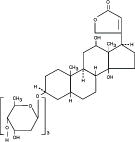
Image Label Content (Digoxin Tablets)
* Please review the disclaimer below.
