Pharmacokinetics in Adults:TRIZIVIR: In a single-dose, 3-way crossover bioavailability trial of 1 TRIZIVIR Tablet versus 1 ZIAGEN Tablet (300 mg), 1 EPIVIR Tablet (150 mg), plus 1 RETROVIR Tablet (300 mg) administered simultaneously in healthy subjects (n = 24), there was no difference in the extent of absorption, as measured by the area under the plasma concentration-time curve (AUC) and maximal peak concentration (Cmax), of all 3 components. One TRIZIVIR Tablet was bioequivalent to 1 ZIAGEN Tablet (300 mg), 1 EPIVIR Tablet (150 mg), plus 1 RETROVIR Tablet (300 mg) following single-dose administration to fasting healthy subjects (n = 24).
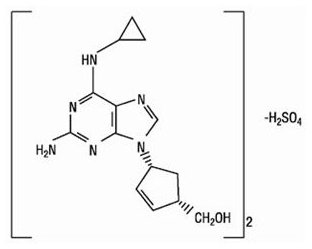
Abacavir: Following oral administration, abacavir is rapidly absorbed and extensively distributed. Binding of abacavir to human plasma proteins is approximately 50%. Binding of abacavir to plasma proteins was independent of concentration. Total blood and plasma drug-related radioactivity concentrations are identical, demonstrating that abacavir readily distributes into erythrocytes. The primary routes of elimination of abacavir are metabolism by alcohol dehydrogenase to form the 5′-carboxylic acid and glucuronyl transferase to form the 5′-glucuronide.
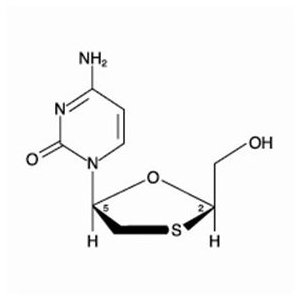
Lamivudine: Following oral administration, lamivudine is rapidly absorbed and extensively distributed. Binding to plasma protein is low. Approximately 70% of an intravenous dose of lamivudine is recovered as unchanged drug in the urine. Metabolism of lamivudine is a minor route of elimination. In humans, the only known metabolite is the trans-sulfoxide metabolite (approximately 5% of an oral dose after 12 hours).
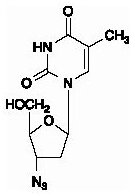
Zidovudine: Following oral administration, zidovudine is rapidly absorbed and extensively distributed. Binding to plasma protein is low. Zidovudine is eliminated primarily by hepatic metabolism. The major metabolite of zidovudine is GZDV. GZDV AUC is about 3-fold greater than the zidovudine AUC. Urinary recovery of zidovudine and GZDV accounts for 14% and 74% of the dose following oral administration, respectively. A second metabolite, 3′-amino-3′-deoxythymidine (AMT), has been identified in plasma. The AMT AUC was one-fifth of the zidovudine AUC.
In humans, abacavir, lamivudine, and zidovudine are not significantly metabolized by cytochrome P450 enzymes.
The pharmacokinetic properties of abacavir, lamivudine, and zidovudine in fasting subjects are summarized in Table 3.
Table 3. Pharmacokinetic Parametersa for Abacavir, Lamivudine, and Zidovudine in AdultsParameter | Abacavir | Lamivudine | Zidovudine |
Oral bioavailability (%) | 86 ± 25 | n = 6 | 86 ± 16 | n = 12 | 64 ± 10 | n = 5 |
Apparent volume of distribution (L/kg) | 0.86 ± 0.15 | n = 6 | 1.3 ± 0.4 | n = 20 | 1.6 ± 0.6 | n = 8 |
Systemic clearance (L/h/kg) | 0.80 ± 0.24 | n = 6 | 0.33 ± 0.06 | n = 20 | 1.6 ± 0.6 | n = 6 |
Renal clearance (L/h/kg) | .007 ± .008 | n = 6 | 0.22 ± 0.06 | n = 20 | 0.34 ± 0.05 | n = 9 |
Elimination half-life (h) | 1.45 ± 0.32 | n = 20 | 5 to 7b | 0.5 to 3b |
a Data presented as mean ± standard deviation except where noted. |
b Approximate range. |
Effect of Food on Absorption of TRIZIVIR: Administration with food in a single-dose bioavailability trial resulted in lower Cmax, similar to results observed previously for the reference formulations. The average [90% CI] decrease in abacavir, lamivudine, and zidovudine Cmax was 32% [24% to 38%], 18% [10% to 25%], and 28% [13% to 40%], respectively, when administered with a high-fat meal, compared with administration under fasted conditions. Administration of TRIZIVIR with food did not alter the extent of abacavir, lamivudine, and zidovudine absorption (AUC), as compared with administration under fasted conditions (n = 24) [see Dosage and Administration (2.1)].
Special Populations: Renal Impairment: TRIZIVIR: Because lamivudine and zidovudine require dose adjustment in the presence of renal insufficiency, TRIZIVIR is not recommended for use in patients with creatinine clearance <50 mL/min [see Use in Specific Populations (8.6)].
Hepatic Impairment: TRIZIVIR: TRIZIVIR is contraindicated for patients with impaired hepatic function because TRIZIVIR is a fixed-dose combination and the dosage of the individual components cannot be adjusted. Abacavir is contraindicated in patients with moderate to severe hepatic impairment and dose reduction is required in patients with mild hepatic impairment.
Pregnancy: See Use in Specific Populations (8.1).
Abacavir and Lamivudine: No data are available on the pharmacokinetics of abacavir or lamivudine during pregnancy.
Zidovudine: Zidovudine pharmacokinetics have been studied in a Phase 1 trial of 8 women during the last trimester of pregnancy. As pregnancy progressed, there was no evidence of drug accumulation. The pharmacokinetics of zidovudine were similar to that of nonpregnant adults. Consistent with passive transmission of the drug across the placenta, zidovudine concentrations in neonatal plasma at birth were essentially equal to those in maternal plasma at delivery. Although data are limited, methadone maintenance therapy in 5 pregnant women did not appear to alter zidovudine pharmacokinetics. In a nonpregnant adult population, a potential for interaction has been identified [see Use in Specific Populations (8.1)].
Nursing Mothers: See Use in Specific Populations (8.3).
Abacavir: No data are available on the pharmacokinetics of abacavir in nursing mothers.
Lamivudine: Samples of breast milk obtained from 20 mothers receiving lamivudine monotherapy (300 mg twice daily) or combination therapy (150 mg lamivudine twice daily and 300 mg zidovudine twice daily) had measurable concentrations of lamivudine.
Zidovudine: After administration of a single dose of 200 mg zidovudine to 13 HIV‑1-infected women, the mean concentration of zidovudine was similar in human milk and serum [see Use in Specific Populations (8.3)].
Pediatric Patients: TRIZIVIR is not intended for use in pediatric patients. TRIZIVIR is not recommended in adolescents who weigh less than 40 kg because it is a fixed-dose tablet that cannot be dose adjusted for this patient population.
Geriatric Patients: The pharmacokinetics of abacavir, lamivudine, and zidovudine have not been studied in subjects over 65 years of age.
Gender:
Abacavir: A population pharmacokinetic analysis in HIV-1-infected male (n = 304) and female (n = 67) subjects showed no gender differences in abacavir AUC normalized for lean body weight.
Lamivudine and Zidovudine: A pharmacokinetic trial in healthy male (n = 12) and female (n = 12) subjects showed no gender differences in zidovudine exposure (AUC∞) or lamivudine (AUC∞) normalized for body weight.
Race:
Abacavir: There are no significant differences between blacks and Caucasians in abacavir pharmacokinetics.
Lamivudine: There are no significant racial differences in lamivudine pharmacokinetics.
Zidovudine: The pharmacokinetics of zidovudine with respect to race have not been determined.
Drug Interactions: The drug interactions described below are based on trials conducted with the individual nucleoside analogues.
Cytochrome P450: In humans, abacavir, lamivudine, and zidovudine are not significantly metabolized by cytochrome P450 enzymes; therefore, it is unlikely that clinically significant drug interactions will occur with drugs metabolized through these pathways.
Glucuronyl Transferase: Due to the common metabolic pathways of abacavir and zidovudine via glucuronyl transferase, 15 HIV-1-infected subjects were enrolled in a crossover trial evaluating single doses of abacavir (600 mg), lamivudine (150 mg), and zidovudine (300 mg) alone or in combination. Analysis showed no clinically relevant changes in the pharmacokinetics of abacavir with the addition of lamivudine or zidovudine or the combination of lamivudine and zidovudine. Lamivudine exposure (AUC decreased 15%) and zidovudine exposure (AUC increased 10%) did not show clinically relevant changes with concurrent abacavir.
Lamivudine and Zidovudine: No clinically significant alterations in lamivudine or zidovudine pharmacokinetics were observed in 12 asymptomatic HIV-1-infected adult subjects given a single dose of zidovudine (200 mg) in combination with multiple doses of lamivudine (300 mg q 12 h).
Methadone: In a trial of 11 HIV-1-infected subjects receiving methadone-maintenance therapy (40 mg and 90 mg daily), with 600 mg of ZIAGEN twice daily (twice the currently recommended dose), oral methadone clearance increased 22% (90% CI: 6% to 42%) [see Drug Interactions (7.6)].
Ribavirin: In vitro data indicate ribavirin reduces phosphorylation of lamivudine, stavudine, and zidovudine. However, no pharmacokinetic (e.g., plasma concentrations or intracellular triphosphorylated active metabolite concentrations) or pharmacodynamic (e.g., loss of HIV-1/HCV virologic suppression) interaction was observed when ribavirin and lamivudine (n = 18), stavudine (n = 10), or zidovudine (n = 6) were coadministered as part of a multi-drug regimen to HIV-1/HCV co-infected subjects [see Warnings and Precautions (5.6)].
The effects of other coadministered drugs on abacavir, lamivudine, or zidovudine are provided in Table 4.
Table 4. Effect of Coadministered Drugs on Abacavir, Lamivudine, and Zidovudine AUCa Note: ROUTINE DOSE MODIFICATION OF ABACAVIR, LAMIVUDINE, AND ZIDOVUDINE IS NOT WARRANTED WITH COADMINISTRATION OF THE FOLLOWING DRUGS.Drugs That May Alter Lamivudine Blood Concentrations |
Coadministered Drug and Dose | Lamivudine Dose | n | Lamivudine Concentrations | Concentration of Coadministered Drug |
AUC | Variability |
Nelfinavir 750 mg q 8 h x 7 to 10 days | single 150 mg | 11 | ↑10% | 95% CI: 1% to 20% | ↔ |
Trimethoprim 160 mg/ Sulfamethoxazole 800 mg daily x 5 days | single 300 mg | 14 | ↑43% | 90% CI: 32% to 55% | ↔ |
Drugs That May Alter Zidovudine Blood Concentrations |
Coadministered Drug and Dose | Zidovudine Dose | n | Zidovudine Concentrations | Concentration of Coadministered Drug |
AUC | Variability |
Atovaquone 750 mg q 12 h with food | 200 mg q 8 h | 14 | ↑31% | Range 23% to 78%b | ↔ |
Clarithromycin 500 mg twice daily | 100 mg q 4 h x 7 days | 4 | ↓12% | Range ↓34% to ↑14% | Not Reported |
Fluconazole 400 mg daily | 200 mg q 8 h | 12 | ↑74% | 95% CI: 54% to 98% | Not Reported |
Methadone 30 to 90 mg daily | 200 mg q 4 h | 9 | ↑43% | Range 16% to 64%b | ↔ |
Nelfinavir 750 mg q 8 h x 7 to 10 days | single 200 mg | 11 | ↓35% | Range 28% to 41% | ↔ |
Probenecid 500 mg q 6 h x 2 days | 2 mg/kg q 8 h x 3 days | 3 | ↑106% | Range 100% to 170%b | Not Assessed |
Rifampin 600 mg daily x 14 days | 200 mg q 8 h x 14 days | 8 | ↓47% | 90% CI: 41% to 53% | Not Assessed |
Ritonavir 300 mg q 6 h x 4 days | 200 mg q 8 h x 4 days | 9 | ↓25% | 95% CI: 15% to 34% | ↔ |
Valproic acid 250 mg or 500 mg q 8 h x 4 days | 100 mg q 8 h x 4 days | 6 | ↑80% | Range 64% to 130%b | Not Assessed |
Drugs That May Alter Abacavir Blood Concentrations |
Coadministered Drug and Dose | Abacavir Dose | n | Abacavir Concentrations | Concentration of Coadministered Drug |
AUC | Variability |
Ethanol 0.7 g/kg | single 600 mg | 24 | ↑41% | 90% CI: 35% to 48% | ↔ |
↑ = Increase; ↓ = Decrease; ↔ = no significant change; AUC = area under the concentration versus time curve; CI = confidence interval. |
a See Drug Interactions (7) for additional information on drug interactions. |
b Estimated range of percent difference. |