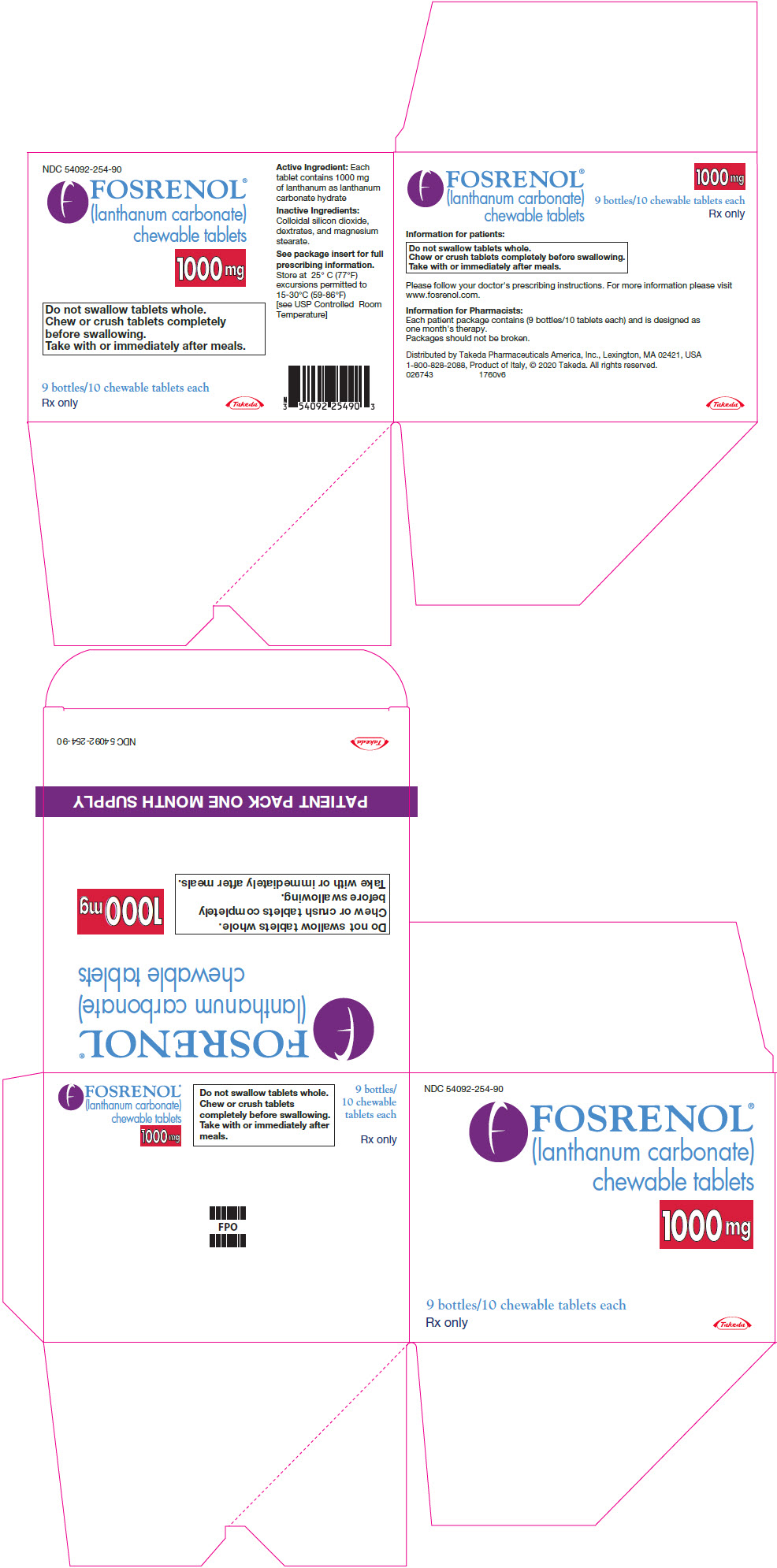
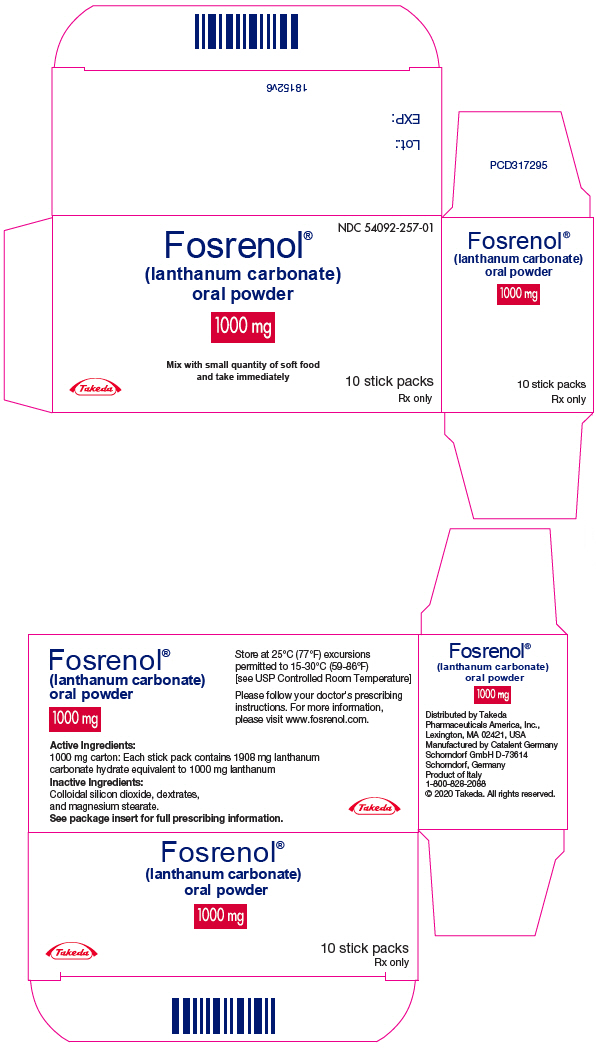
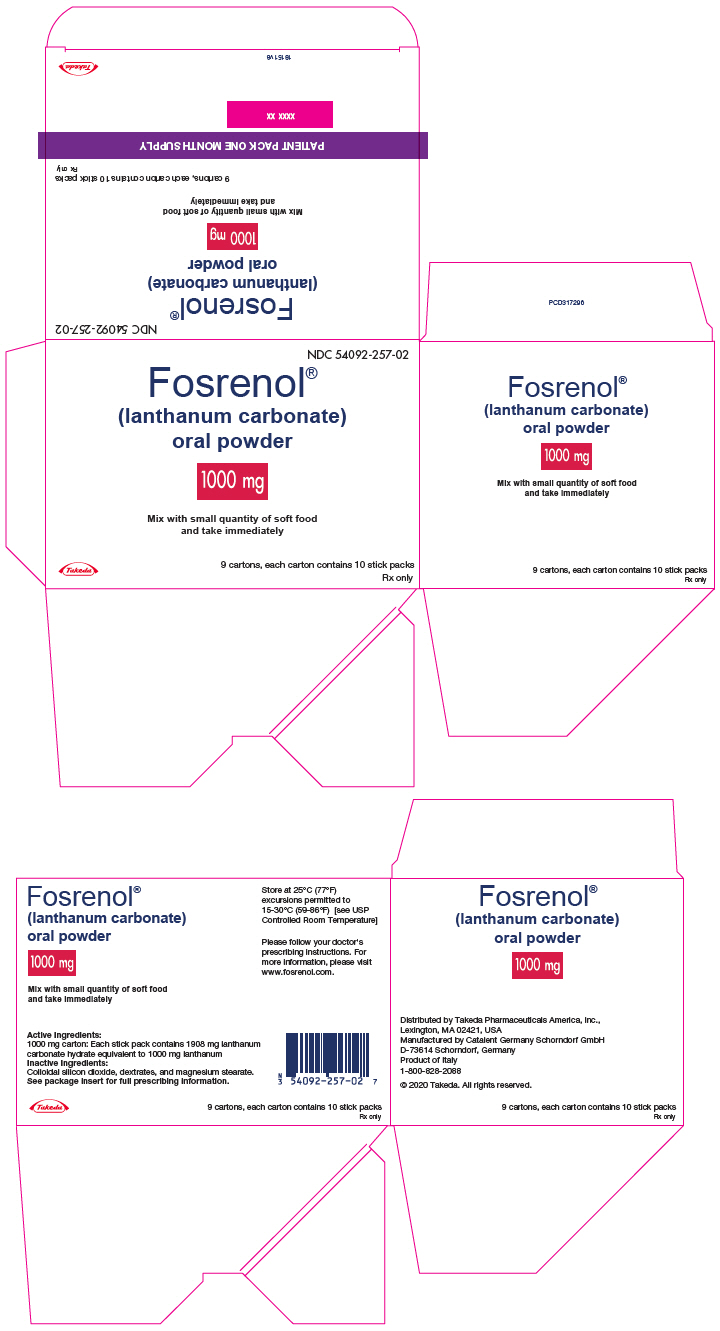
Information for FOSRENOL Chewable Tablets
Chew or crush FOSRENOL Chewable Tablets completely before swallowing. Do not swallow intact FOSRENOL Chewable Tablets.
Information for FOSRENOL Oral Powder
Sprinkle FOSRENOL Oral Powder on a small quantity of applesauce or other similar food and consume immediately. Do not open until ready to use. Do not store FOSRENOL Oral Powder for future use once mixed with food. Because FOSRENOL Oral Powder is insoluble, do not attempt to dissolve in liquid for administration.
Consider using the oral powder formulation in patients with poor dentition or who have difficulty chewing tablets.
Risk Summary
Available data from case reports with use of FOSRENOL in pregnant women are insufficient to identify a drug-associated risk of major birth defects, miscarriage, or adverse maternal or fetal outcomes. In animal reproduction studies, oral administration of lanthanum carbonate to pregnant rats and rabbits during organogenesis at doses 3 and 2.5 times, respectively, the maximum recommended human dose (MRHD), resulted in no adverse developmental effects. In rabbits, lanthanum carbonate doses 5 times the MRHD was associated with maternal toxicity and resulted in increased post-implantation loss, reduced fetal weights, and delayed fetal ossification (see Data). Deposition of lanthanum into developing bone, including growth plate, was observed in juvenile animals in long-term animal studies with lanthanum carbonate [see Use in Specific Populations (8.4)]. Use a non-lanthanum containing phosphate binder in a pregnant woman.
The estimated background risk of major birth defects and miscarriage for the indicated population is unknown. All pregnancies have a background risk of birth defect, loss, or other adverse outcomes. In the U.S. general population, the estimated background risk of major birth defect and miscarriage in clinically recognized pregnancies is 2% to 4% and 15% to 20%, respectively.
Data
Animal Data
In pregnant rats, oral administration of lanthanum carbonate at doses as high as 2,000 mg/kg/day during organogenesis resulted in no evidence of harm to the fetus. The MRHD for FOSRENOL is 5,725 mg, representing a dose of 95.4 mg/kg, or 3,530 mg/m2 for a 60-kg patient. The 2,000-mg/kg/day dose in the rat is equivalent to 12,000 mg/m2, 3 times the MRHD. In pregnant rabbits, oral administration of lanthanum carbonate at 1,500 mg/kg/day (18,000 mg/m2; 5 times the daily MRHD) during organogenesis was associated with increased postimplantation loss, reduced fetal weights, and delayed fetal ossification. No effects on the pregnant rabbits or fetuses were observed at 750 mg/kg/day (9,000 mg/m2; 2.5 times the MRHD).
In a pre- and postnatal development study in the rat, pregnant rats were dosed at up to 2,000 mg/kg/day (12,000 mg/m2/day; equivalent to 3 times the MRHD) from day 6 of pregnancy through 20 days postpartum (including lactation). At 2,000 mg/kg/day, no maternal toxicity was observed, nor were any changes seen with respect to gestational length or delivery; however, piloerection/pallor, delayed eye opening, decreased body weight, and delayed sexual development were observed in the offspring at 2,000 mg/kg/day. At 200 and 600 mg/kg/day (equivalent to 0.3 and 1 time the MRHD, respectively), slight delays in sexual development (delayed vaginal opening) were observed in the female offspring [see Nonclinical Toxicology (13.2)].
Risk Summary
There are no data on the presence of lanthanum carbonate from FOSRENOL in human milk, the effects on the breastfed infant, or the effects on milk production. Deposition of lanthanum into developing bone, including growth plate, was observed in juvenile animals in long-term animal studies with lanthanum carbonate [see Use in Specific Populations (8.4)]. Use a non-lanthanum containing phosphate binder in a lactating woman.
Absorption and Distribution - Following single- or multiple-dose oral administration of FOSRENOL to healthy subjects, the concentration of lanthanum in plasma was very low (bioavailability <0.002%). Following oral administration in patients, the mean lanthanum Cmax was 1.0 ng/mL. During long-term administration (52 weeks) in patients with ESRD, the mean lanthanum concentration in plasma was approximately 0.6 ng/mL. There was a minimal increase in plasma lanthanum concentrations with increasing doses within the therapeutic dose range. The timing of food intake relative to lanthanum administration (during and 30 minutes after food intake) has a negligible effect on the systemic level of lanthanum.
Systemic exposure to lanthanum was approximately 30% higher following administration of FOSRENOL Oral Powder when compared to FOSRENOL Chewable Tablets. However, systemic exposure to lanthanum from both formulations in this study was within the range seen in previous pharmacokinetic studies of Chewable Tablets in healthy individuals.
In vitro, lanthanum is highly bound (>99%) to human plasma proteins, including human serum albumin, α1-acid glycoprotein, and transferrin. Binding to erythrocytes in vivo is negligible in rats.
In animal studies, lanthanum concentrations in several tissues, particularly gastrointestinal tract, mesenteric lymph nodes, bone, and liver, increased over time to levels several orders of magnitude higher than those in plasma. The level of lanthanum in the liver was higher in renally impaired rats due to higher intestinal absorption. Lanthanum was found in the lysosomes and the biliary canal consistent with transcellular transport. Steady state tissue concentrations in bone and liver were achieved in dogs between 4 and 26 weeks. Relatively high levels of lanthanum remained in these tissues for longer than 6 months after cessation of dosing in dogs. There is no evidence from animal studies that lanthanum crosses the blood-brain barrier.
In 105 bone biopsies from patients treated with FOSRENOL for up to 4.5 years, rising levels of lanthanum were noted over time. Cases of lanthanum deposition in gastrointestinal mucosa, mainly after long term use, have been reported. The clinical significance of this is yet unknown. Estimates of elimination half-life from bone ranged from 2.0 to 3.6 years. Steady state bone concentrations were not reached during the period studied.
Metabolism and Elimination - Lanthanum is not metabolized. Lanthanum was cleared from plasma of patients undergoing dialysis with an elimination half-life of 53 hours following discontinuation of therapy.
No information is available regarding the mass balance of lanthanum in humans after oral administration. In rats and dogs, the mean recovery of lanthanum after an oral dose was about 99% and 94%, respectively, and was essentially all from feces. Biliary excretion is the predominant route of elimination for circulating lanthanum in rats. In healthy volunteers administered intravenous (IV) lanthanum as the soluble chloride salt (120 mcg), renal clearance was less than 2% of total plasma clearance.
Drug Interactions
FOSRENOL has a low potential for systemic drug-drug interactions because of the very low bioavailability of lanthanum and because it is not a substrate or inhibitor of major cytochrome P450 enzyme groups involved in drug metabolism (CYP1A2, CYP2C9/10, CYP2C19, CYP2D6, and CYP3A4/5).
FOSRENOL does not alter gastric pH; therefore, FOSRENOL drug interactions based on altered gastric pH are not expected.
In an in vitro investigation, lanthanum did not form insoluble complexes when mixed in simulated gastric fluid with warfarin, digoxin, furosemide, phenytoin, metoprolol, and enalapril. Clinical studies have shown that FOSRENOL (three doses of 1,000 mg on the day prior to exposure and one dose of 1,000 mg on the day of co-administration) administered 30 minutes earlier did not alter the pharmacokinetics of oral warfarin (10 mg), digoxin (0.5 mg), or metoprolol (100 mg). Potential pharmacodynamic interactions between lanthanum and these drugs (e.g., bleeding time or prothrombin time) were not evaluated. None of the drug interaction studies were done with the maximum recommended therapeutic dose of lanthanum carbonate. No drug interaction studies assessed the effects of drugs on phosphate binding by lanthanum carbonate.
Ciprofloxacin
In a randomized, two–way crossover study in healthy volunteers examining the interaction potential of a single oral dose of ciprofloxacin (750 mg) alone and with lanthanum carbonate (1 g three times a day), the maximum plasma concentration of ciprofloxacin was reduced by 56% and the area under the ciprofloxacin plasma concentration-time curve was reduced by 54%. The 24-hour urinary recovery of ciprofloxacin was reduced 52% by FOSRENOL [see Drug Interactions (7.2)].
Levothyroxine
In a single-dose crossover study of levothyroxine (1 mg) with or without simultaneous administration of a single dose of FOSRENOL (500 mg) in six euthyroid normal healthy volunteers, the area under the serum T4 concentration-time curve was decreased by 40% [see Drug Interactions (7.3)].
Fat-Soluble Vitamins
FOSRENOL appears not to affect the availability of fat-soluble vitamins (A, D, E, and K) or other nutrients [see Clinical Studies (14.2)].
Citrate
Citrate did not increase the absorption of lanthanum.
FOSRENOL Chewable Tablets manufactured by Patheon Manufacturing Services LLC,
5900 Martin Luther King Jr. Highway
Greenville, NC 27834
FOSRENOL Oral Powder manufactured by Catalent Germany Schorndorf GmbH,
Steinbeisstrasse 1-2
D-73614 Schorndorf
Germany
Distributed by:
Takeda Pharmaceuticals America, Inc.
Lexington, MA 02421
FOSRENOL® and the FOSRENOL Logo® are registered trademarks of Shire International Licensing BV.
© 2020 Takeda Pharmaceuticals U.S.A., Inc. All rights reserved.
Patented: see www.takeda.com/en-us/patents