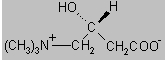
In a relative bioavailability study in 15 healthy adult male volunteers, CARNITOR® Tablets were found to be bio-equivalent to CARNITOR® Oral Solution. Following 4 days of dosing with 6 tablets of CARNITOR® 330 mg b.i.d. or 2 g of CARNITOR® oral solution b.i.d., the maximum plasma concentration (Cmax) was about 80 µmol/L and the time to maximum plasma concentration (Tmax) occurred at 3.3 hours.
The plasma concentration profiles of levocarnitine after a slow 3 minute intravenous bolus dose of 20 mg/kg of CARNITOR® were described by a two-compartment model. Following a single i.v. administration, approximately 76% of the levocarnitine dose was excreted in the urine during the 0-24h interval. Using plasma concentrations uncorrected for endogenous levocarnitine, the mean distribution half life was 0.585 hours and the mean apparent terminal elimination half life was 17.4 hours.
The absolute bioavailability of levocarnitine from the two oral formulations of CARNITOR®, calculated after correction for circulating endogenous plasma concentrations of levocarnitine, was 15.1 ± 5.3% for CARNITOR® Tablets and 15.9 ± 4.9% for CARNITOR® Oral Solution.
Total body clearance of levocarnitine (Dose/AUC including endogenous baseline concentrations) was a mean of 4.00 L/h.
Levocarnitine was not bound to plasma protein or albumin when tested at any concentration or with any species including the human.9
In a 9-week study, 12 ESRD patients undergoing hemodialysis for at least 6 months received CARNITOR® 20 mg/kg three times per week after dialysis. Prior to initiation of CARNITOR® therapy, mean plasma levocarnitine concentrations were approximately 20 µmol/L pre-dialysis and 6 µmol/L post-dialysis. The table summarizes the pharmacokinetic data (mean ± SD µmol/L) after the first dose of CARNITOR® and after 8 weeks of CARNITOR® therapy.
N=12 | Baseline | Single dose | 8 weeks |
Cmax | - | 1139 ± 240 | 1190 ± 270 |
Trough (pre-dialysis, pre-dose) | 21.3 ± 7.7 | 68.4 ± 26.1 | 190 ± 55 |
After one week of CARNITOR® therapy (3 doses), all patients had trough concentrations between 54 and 180 µmol/L (normal 40-50 µmol/L) and concentrations remained relatively stable or increased over the course of the study.
In a similar study in ESRD patients also receiving 20 mg/kg CARNITOR® 3 times per week after hemodialysis, 12- and 24-week mean pre-dialysis (trough) levocarnitine concentrations were 189 (N=25) and 243 (N=23) µmol/L, respectively.
In a dose-ranging study in ESRD patients undergoing hemodialysis, patients received 10, 20, or 40 mg/kg CARNITOR® 3 times per week following dialysis (N~30 for each dose group). Mean ± SD trough levocarnitine concentrations (µmol/L) by dose after 12 and 24 weeks of therapy are summarized in the table.
| 12 weeks | 24 weeks |
10 mg/kg | 116 ± 69 | 148 ± 50 |
20 mg/kg | 210 ± 58 | 240 ± 60 |
40 mg/kg | 371 ± 111 | 456 ± 162 |
While the efficacy of CARNITOR® to increase carnitine concentrations in patients with ESRD undergoing dialysis has been demonstrated, the effects of supplemental carnitine on the signs and symptoms of carnitine deficiency and on clinical outcomes in this population have not been determined.